
Tidepool Overview
Tidepool, widely known by its former name Aquarium, was a sophisticated MLOps platform engineered to accelerate the development and deployment of high-quality production AI systems. Its core mission was to empower machine learning teams by providing advanced tools to manage, analyze, and improve their datasets, with a strong focus on computer vision (CV) and natural language processing (NLP) applications. The platform was built on the principle of data-centric AI, which posits that the quality of the data is paramount to the performance of the model.
Tidepool enabled developers to move beyond simply tweaking model architectures and instead focus on systematically enhancing their training data. It provided a unified environment to find and fix issues within datasets and model predictions, such as labeling errors, data imbalances, and model failure cases. By identifying the most problematic data slices, teams could prioritize their data curation and annotation efforts, leading to more robust and accurate AI models in less time.
How to use Tidepool
The typical workflow on the Tidepool platform involved several key steps to iteratively improve a machine learning model:
- Data Integration: Users would begin by uploading their datasets (e.g., images, text documents) and corresponding model predictions to the platform via its API or web interface.
- Performance Visualization: Tidepool would then process this information, offering rich visualizations of the dataset and the model's performance. This allowed teams to explore where the model was succeeding and where it was failing.
- Error Analysis: The platform's powerful error analysis engine would automatically surface and cluster problematic data points. For example, it could identify that a self-driving car's object detection model consistently fails to recognize pedestrians in rainy conditions.
- Data Curation: Based on the insights from the error analysis, teams could use Tidepool's tools to filter, tag, and select the most impactful data for re-labeling or augmentation. This active learning loop ensured that annotation resources were spent on data that would most significantly improve the model.
- Retraining and Iteration: The newly curated and improved dataset would then be used to retrain the model. This iterative cycle of uploading predictions, analyzing errors, and curating data would be repeated until the desired model performance was achieved.
Core Features of Tidepool
- Data-Centric MLOps: A unified platform to manage the entire lifecycle of machine learning data, from ingestion to curation.
- Advanced Error Analysis: Automatically identified and grouped model failures, allowing teams to quickly understand the root causes of poor performance.
- Intelligent Data Curation: Active learning workflows to help select the most valuable data for annotation, maximizing the impact of labeling efforts.
- Rich Data & Model Visualization: Interactive tools to explore complex datasets and model predictions, including support for image bounding boxes, semantic segmentation masks, and text embeddings.
- Specialized for CV & NLP: Tailored features and workflows designed specifically for the challenges of computer vision and natural language processing tasks.
- Collaboration Hub: Provided a shared workspace for data scientists, ML engineers, and annotators to collaborate on improving model quality.
Use Cases for Tidepool
Tidepool was valuable across various industries that rely on high-performance AI:
- Autonomous Systems: Teams building self-driving cars or drones used Tidepool to find and fix edge cases in their perception models, improving safety and reliability.
- Medical Imaging: Hospitals and research institutions could enhance AI-powered diagnostic tools by identifying and correcting misclassifications in X-rays, MRIs, or pathology slides.
- Fintech: Used to improve fraud detection models by analyzing transaction data and identifying patterns where the model performed poorly.
- Content Moderation: Social media and content platforms could refine their models for detecting harmful content by focusing on ambiguous or context-dependent examples.
Advantages of Tidepool
The primary advantage of Tidepool was its ability to significantly shorten the time required to build production-ready AI. By focusing on the data, it allowed for more efficient and targeted model improvements. Its specialized tools for CV and NLP provided deeper insights than generic data platforms. This data-centric approach often led to more substantial gains in model accuracy and robustness compared to purely model-centric or code-centric efforts.
Pricing and Plans
Tidepool was a commercial product offered with enterprise-level pricing plans tailored to the specific needs of AI teams. Pricing typically depended on factors like data volume, the number of users, and the level of support required.
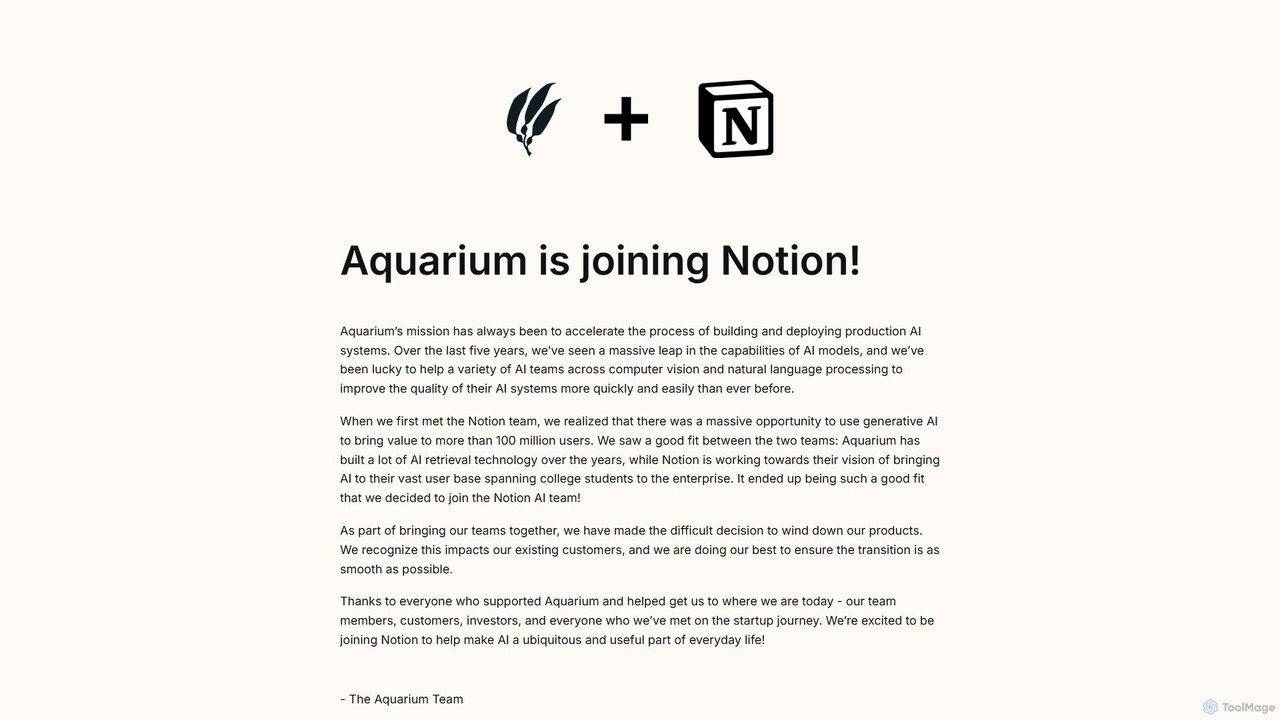
Please note: The Tidepool (Aquarium) team was acquired by Notion. As a result, the standalone Tidepool product has been discontinued and is no longer available for new customers. The team's expertise in AI retrieval technology is now being integrated into Notion's products.
Tidepool Alternatives
DataChain
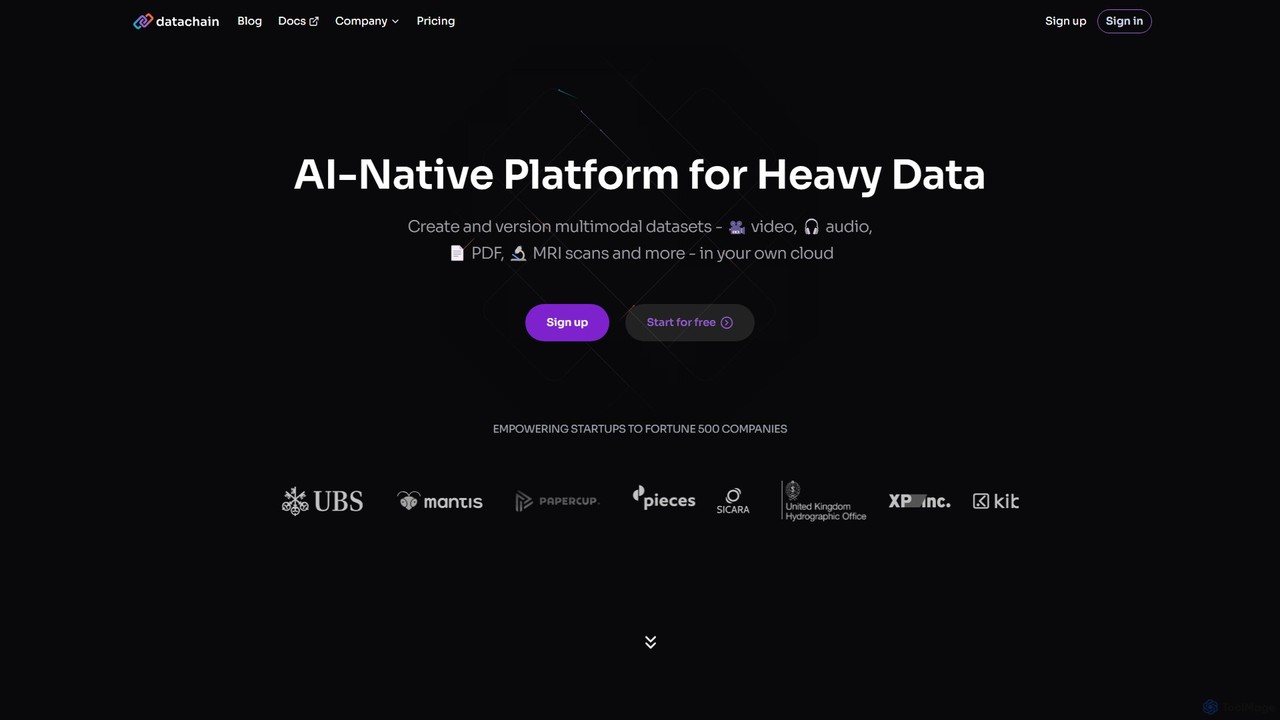
DataChain is a developer-first platform for managing "Heavy Data"—large-scale, unstructured, multimodal datasets. It enables teams to curate, enrich, and version data like videos, images, audio, and PDFs for AI applications, featuring Python-based ETL pipelines, full data lineage, and scalable processing from local IDE to cloud.
Database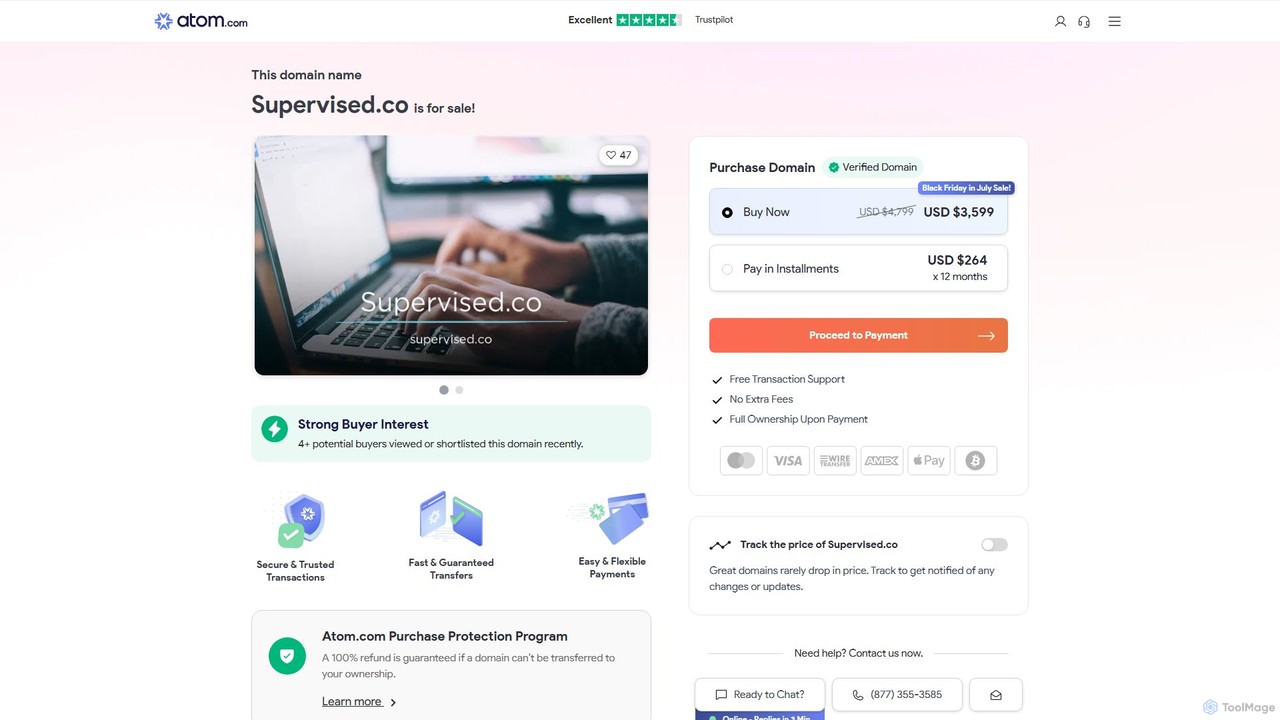
Supervised.co
Supervised.co is an end-to-end platform for building, training, and deploying supervised machine learning models. It simplifies the MLOps lifecycle with integrated data annotation, automated model training, and one-click API deployment, empowering teams to create high-performance AI solutions efficiently.
Data Annotation
Lightning AI
Lightning AI is a cloud platform designed to build, train, and deploy AI models at scale. It combines the popular open-source PyTorch Lightning framework with Lightning AI Studio, a collaborative, browser-based environment with zero setup. Access powerful GPUs, scale from a laptop to the cloud seamlessly, and accelerate your entire AI development workflow.
Platform As A Service (Paas)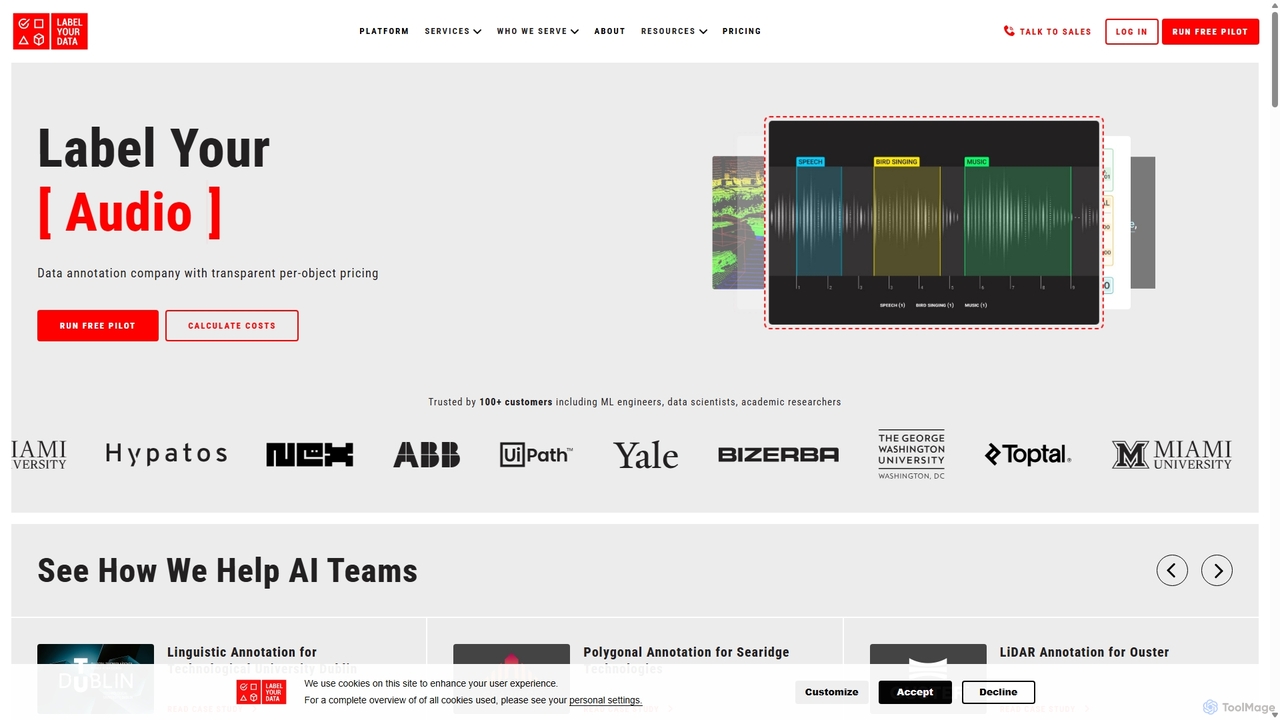
Label Your Data
A professional data annotation service and platform providing high-quality, accurate labeled datasets for machine learning. It supports diverse data types like images, video, text, and audio, offering flexible pricing, a self-serve platform, and fully managed services to scale AI projects of any size.
Data Management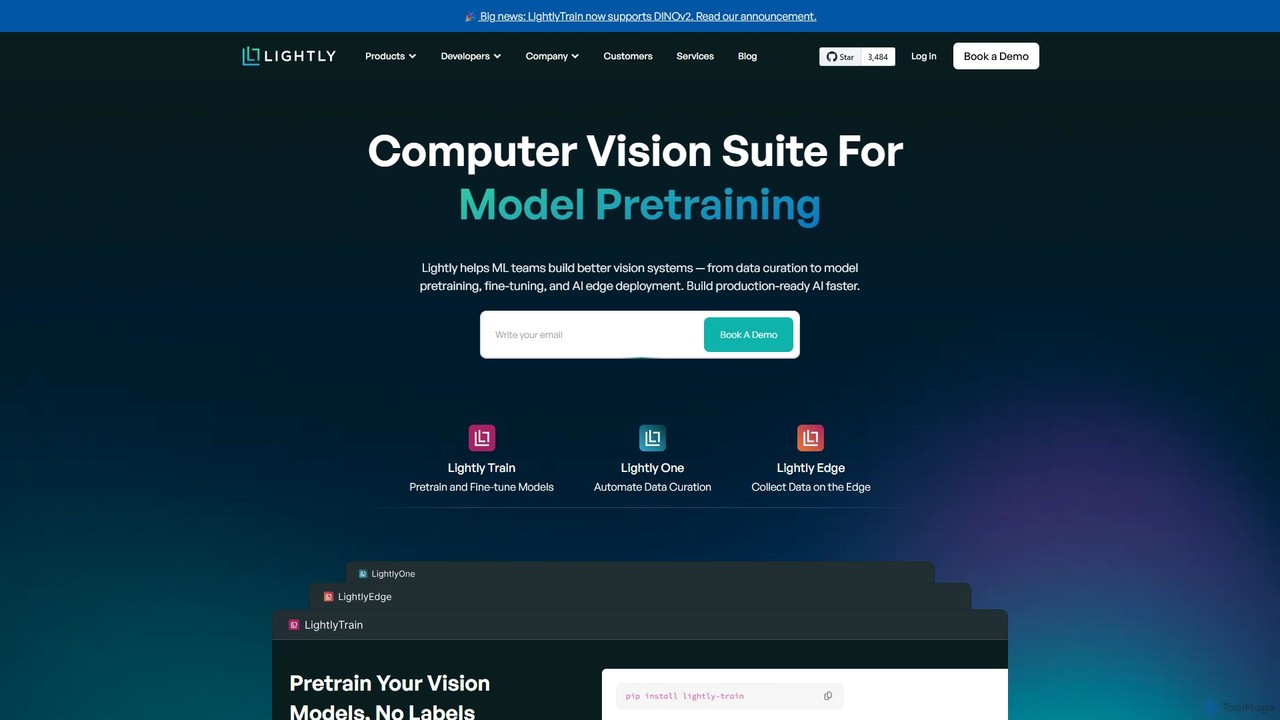
Lightly
Lightly is a comprehensive computer vision suite for machine learning teams. It streamlines the entire model development lifecycle, from intelligent data curation and selection on edge devices to efficient, label-free model pretraining and fine-tuning. By focusing on the most valuable data, Lightly helps build more accurate and production-ready AI models faster, while significantly reducing data labeling and storage costs.
Data ManagementTidepool Categories
Tidepool Embed Widget
Copy this embed code to place the badge on your blog, article, or product site and send readers directly to this ToolMage detail page.

Related AI tools
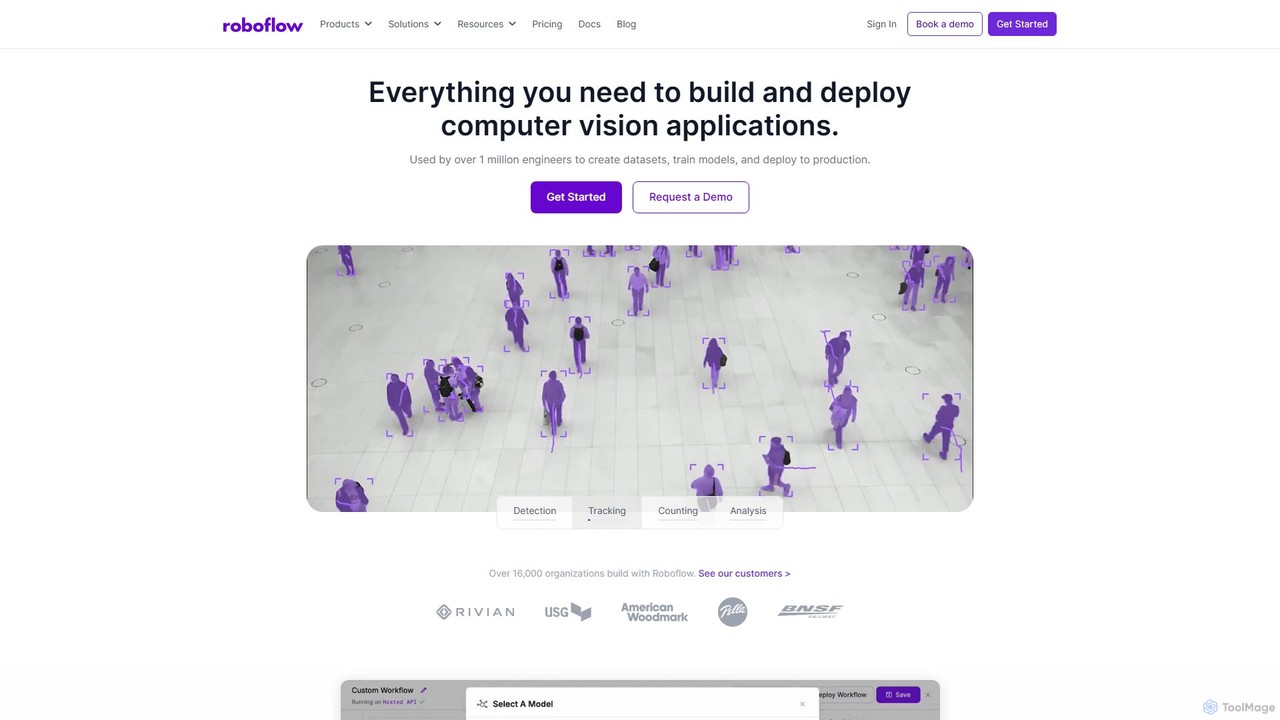
Roboflow
Roboflow is an end-to-end computer vision platform for developers and enterprises. It provides a comprehensive suite of tools to build, train, and deploy computer vision models at scale. From dataset creation and collaborative labeling to one-click model training and deployment to cloud or edge devices, Roboflow streamlines the entire MLOps lifecycle for vision AI, empowering over a million engineers to give their software the sense of sight.
Data Labeling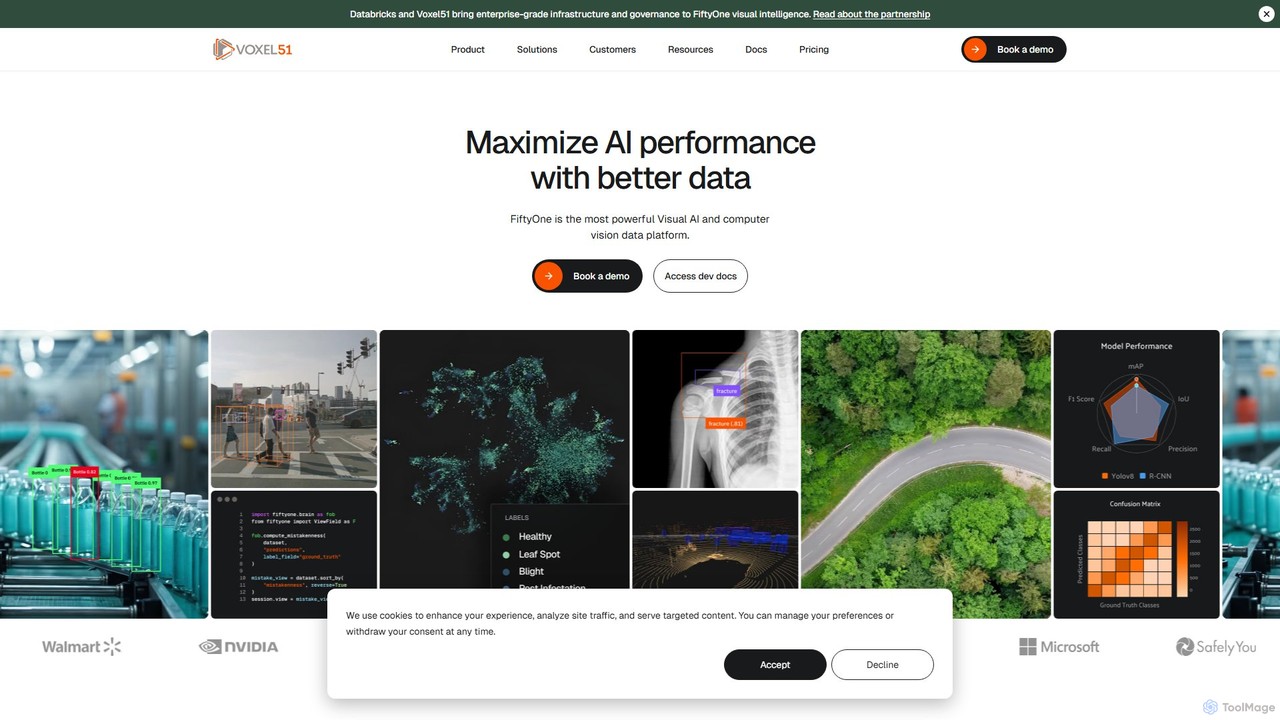
Voxel51
Voxel51 provides FiftyOne, an enterprise-grade computer vision and multimodal AI platform. It empowers developers and data scientists to curate, visualize, and evaluate complex datasets, leading to higher-performing models. By focusing on data-centric AI, FiftyOne streamlines workflows for data annotation, quality improvement, and model analysis, accelerating the entire development lifecycle.
MlopsSupervised.co
Supervised.co is an end-to-end platform for building, training, and deploying supervised machine learning models. It simplifies the MLOps lifecycle with integrated data annotation, automated model training, and one-click API deployment, empowering teams to create high-performance AI solutions efficiently.
Data AnnotationLightning AI
Lightning AI is a cloud platform designed to build, train, and deploy AI models at scale. It combines the popular open-source PyTorch Lightning framework with Lightning AI Studio, a collaborative, browser-based environment with zero setup. Access powerful GPUs, scale from a laptop to the cloud seamlessly, and accelerate your entire AI development workflow.
Platform As A Service (Paas)Label Your Data
A professional data annotation service and platform providing high-quality, accurate labeled datasets for machine learning. It supports diverse data types like images, video, text, and audio, offering flexible pricing, a self-serve platform, and fully managed services to scale AI projects of any size.
Data ManagementLightly
Lightly is a comprehensive computer vision suite for machine learning teams. It streamlines the entire model development lifecycle, from intelligent data curation and selection on edge devices to efficient, label-free model pretraining and fine-tuning. By focusing on the most valuable data, Lightly helps build more accurate and production-ready AI models faster, while significantly reducing data labeling and storage costs.
Data Management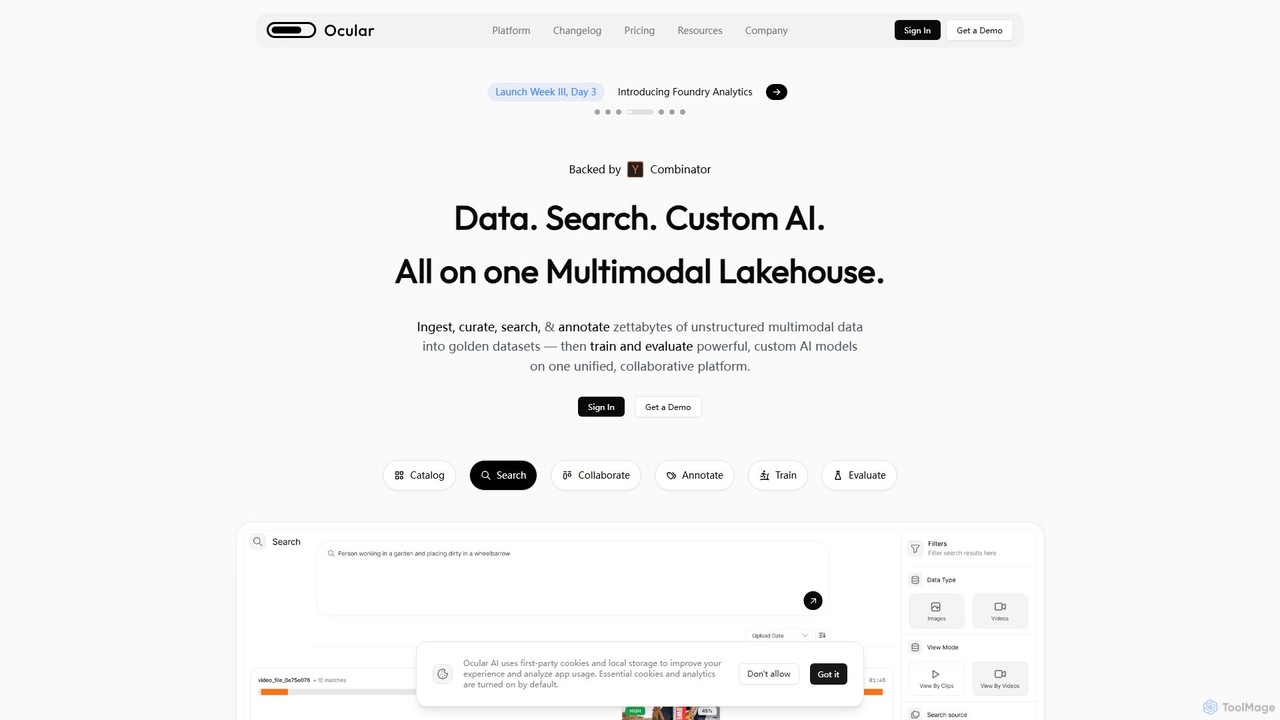
Ocular AI
Ocular AI is an end-to-end platform for the multimodal AI era, enabling teams to ingest, curate, search, and annotate zettabytes of unstructured data. It provides a unified multimodal lakehouse, advanced search, and tools for training and evaluating custom AI models, accelerating the entire AI development lifecycle.
Image Recognition
balise
Balise is an AI-powered data annotation platform designed to streamline the creation of high-quality training data for machine learning models. It offers a collaborative environment with intelligent tools for labeling images, text, video, and audio, accelerating the development cycle for computer vision and NLP projects.
Annotation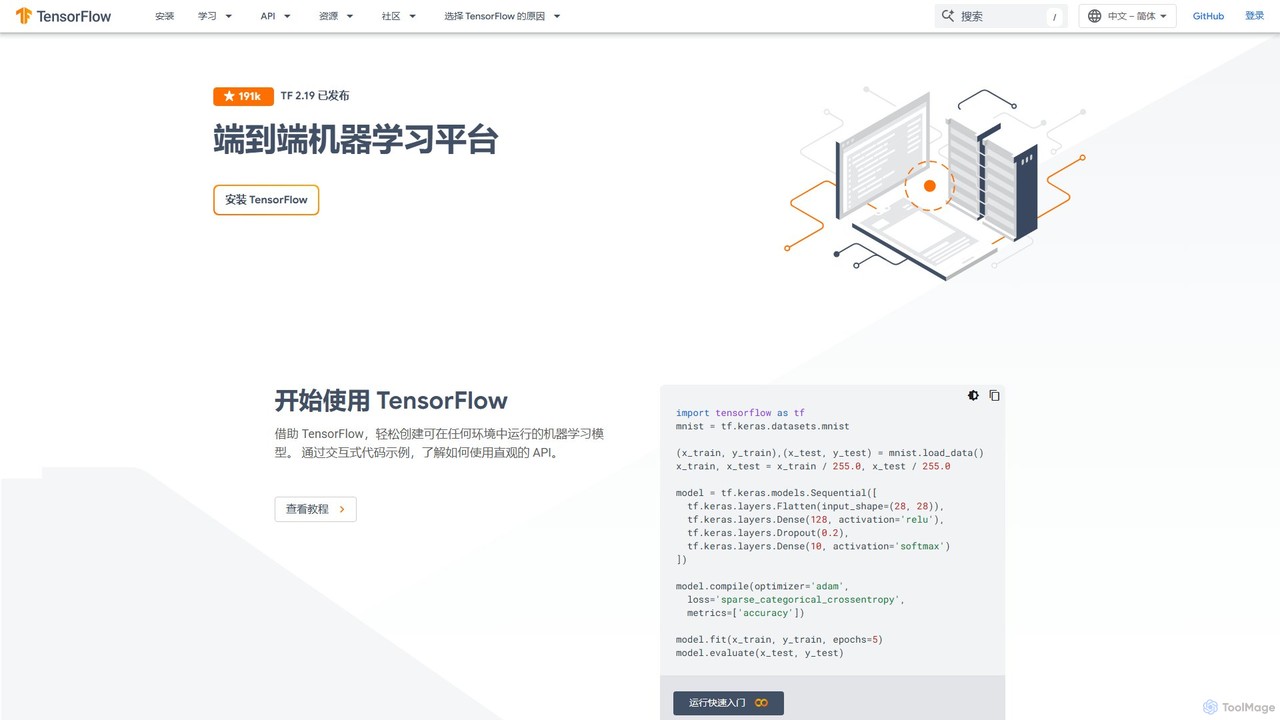
TensorFlow
TensorFlow is an end-to-end open-source platform for machine learning developed by Google. It provides a comprehensive, flexible ecosystem of tools, libraries, and community resources that lets researchers and developers build and deploy ML-powered applications. From beginners to experts, TensorFlow offers intuitive high-level APIs for easy model building and powerful low-level APIs for advanced research, enabling deployment across servers, edge devices, and browsers.
Frameworks
Jyek
Jyek is an AI agent platform that understands objectives, creates execution plans, uses tools, and delivers verifiable results for complex, multi-step tasks.
Automation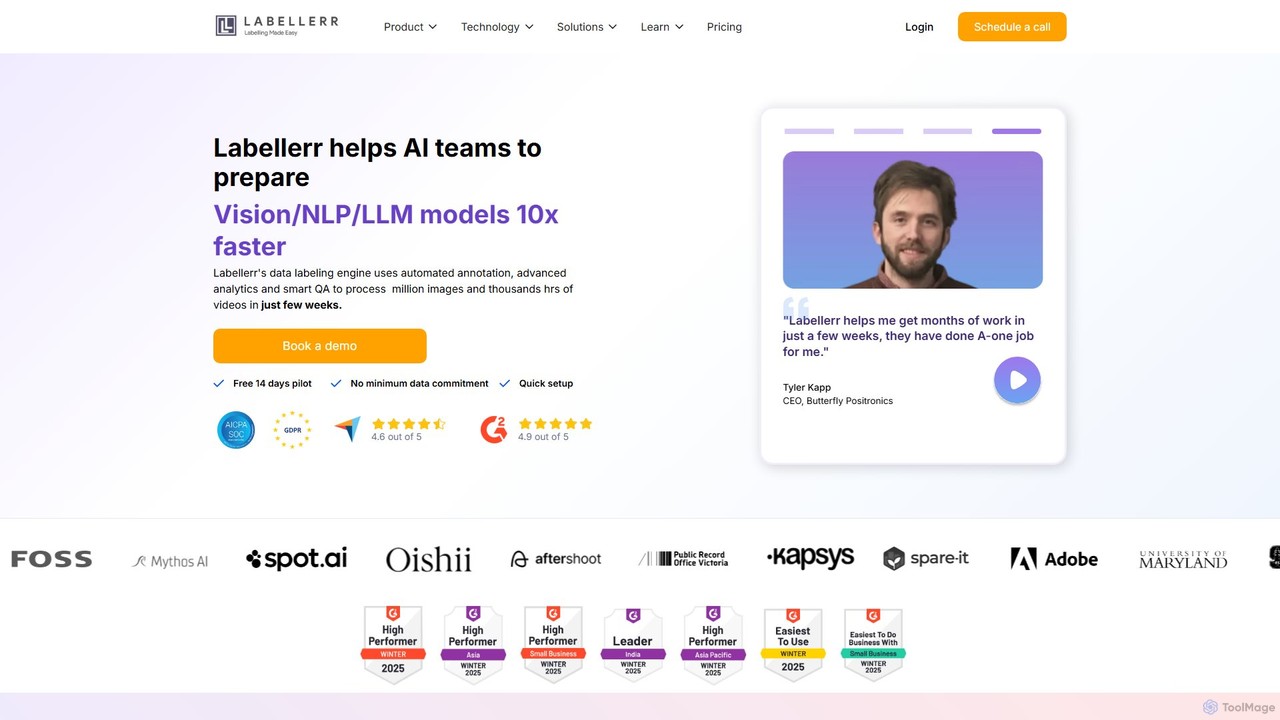
Labellerr
Labellerr is an AI-powered data labeling and annotation platform designed to accelerate the development of Vision, NLP, and LLM models. It offers automated annotation, smart quality assurance, and seamless MLOps integration to deliver 99% accurate labels up to 99x faster, significantly reducing data preparation time and development costs for AI teams.
Machine Learning Operations
Anyscale
Anyscale is a fully-managed compute platform for scaling AI and Python workloads. Built on the open-source Ray framework by its original creators, it empowers developers to build, run, and scale distributed applications, from LLM training to data processing, with optimized performance and cost-efficiency on any cloud.
Mlops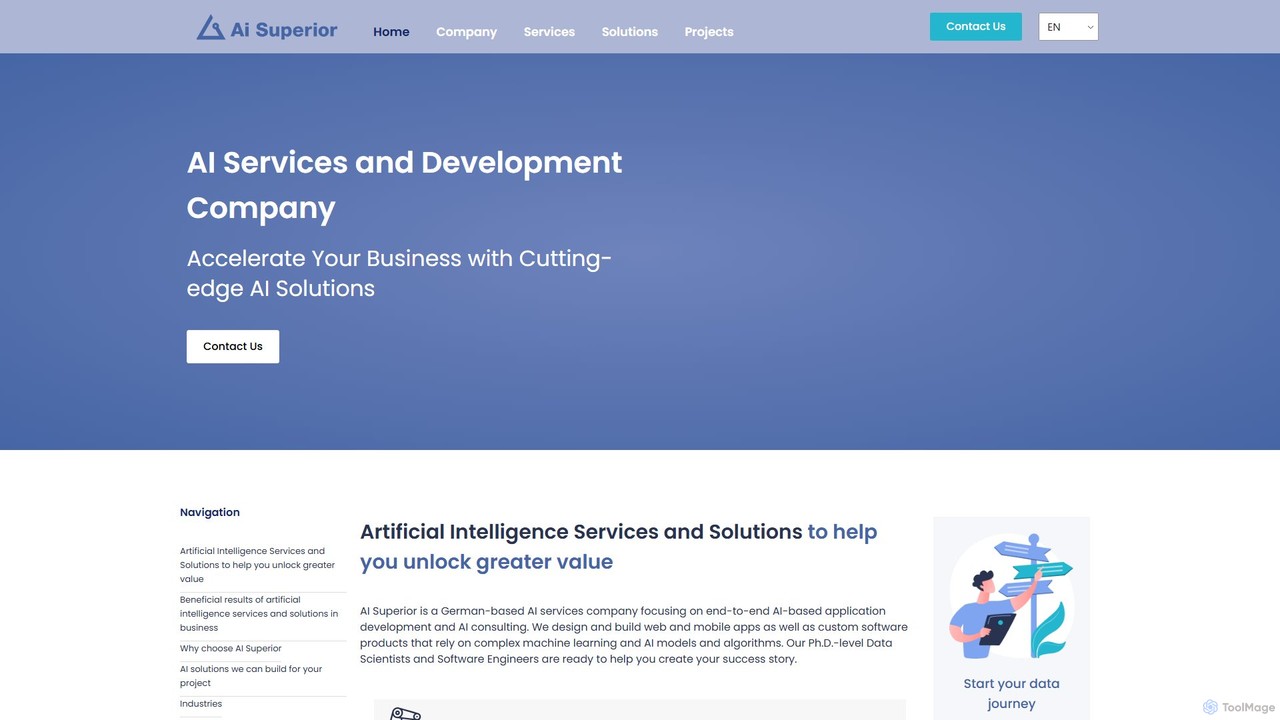
AI Superior
AI Superior is a German-based AI development and consulting company offering end-to-end custom AI solutions. They specialize in computer vision, NLP, predictive analytics, and generative AI for various industries, leveraging a team of PhD-level experts to transform business challenges into scalable, data-driven applications.
Ai Consulting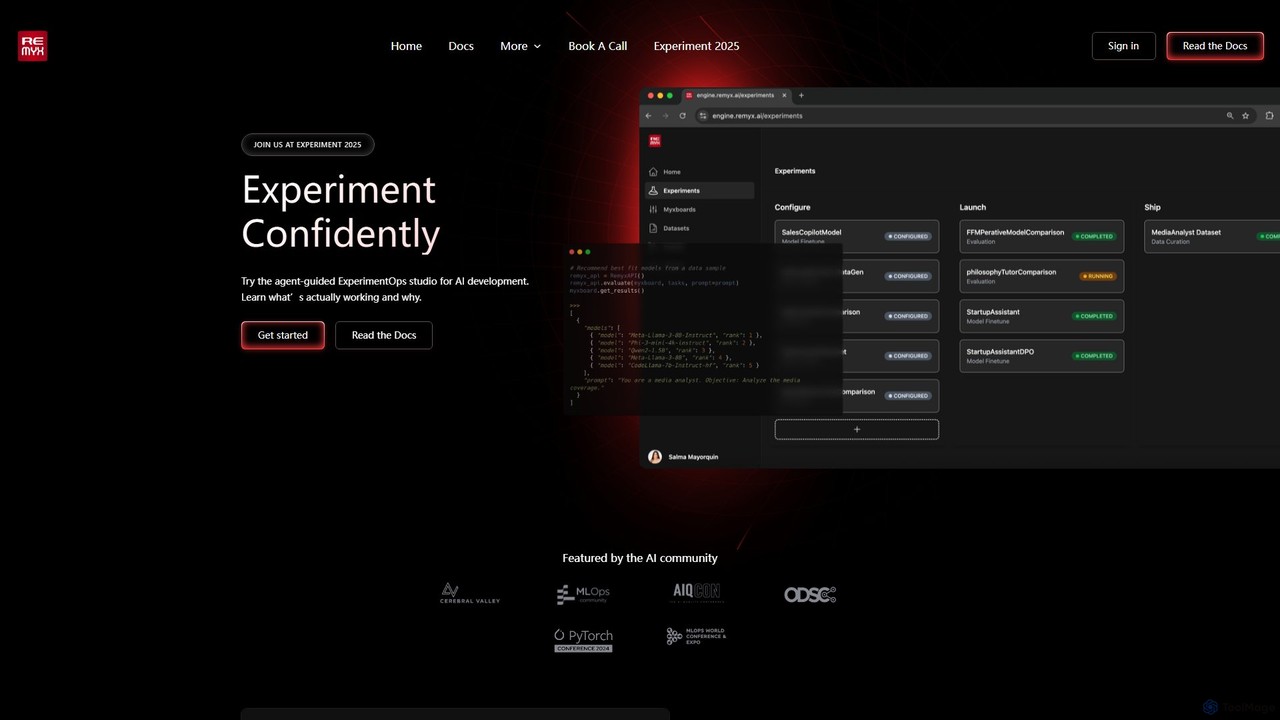
remyx
Remyx is an ExperimentOps platform designed for AI development. It helps AI and product teams operationalize knowledge by providing a collaborative studio for structured, reusable, and traceable experiments. By focusing on custom metrics and guided learning loops, Remyx accelerates the AI development lifecycle, ensuring that AI systems are aligned with real-world business goals and user impact.
Experimentation
thinkaiagency
thinkaiagency is a specialized development agency that transforms ideas into market-ready Minimum Viable Products (MVPs) in just 2-4 weeks. They focus on building scalable web and mobile applications with advanced AI integration, serving startups and businesses with a fast, cost-effective, and expert-driven approach. Their services range from custom LLMs and computer vision to predictive analytics.
Model Development
Tidepool Comments (0)
Sign in to comment.
Sign inNo comments yet.