Accessibility Best in category 1 results Communication Aids AI Tool

Popular AI tools in the Communication Aids field of Accessibility include Infinite Talk AI, etc., helping you quickly improve efficiency.

Infinite Talk AI

Infinite Talk AI

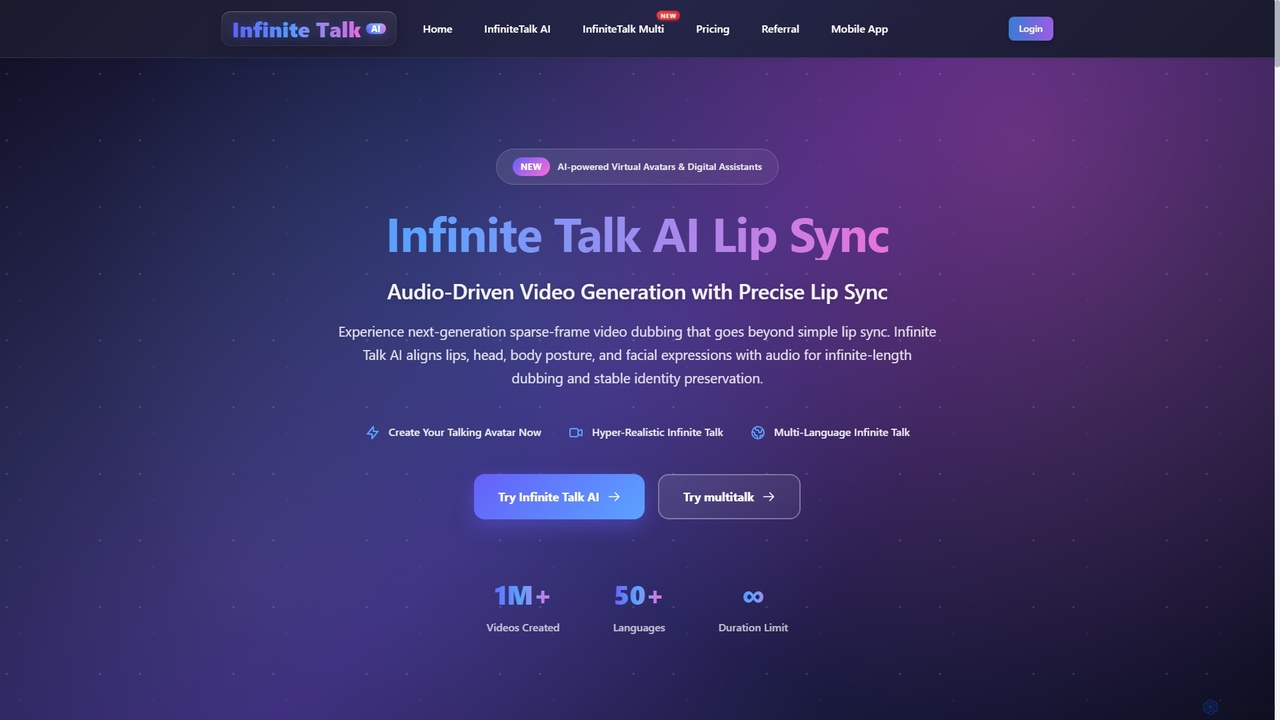
Infinite Talk AI is an advanced audio-driven lip-sync and motion alignment tool that transforms static images or existing …

19.3K

About Communication Aids

Communication Aids are AI-powered tools designed to bridge communication gaps and enhance accessibility for diverse users. These tools leverage advanced natural language processing (NLP) and speech recognition technologies to facilitate understanding and expression. They empower individuals with disabilities, language barriers, or specific communication needs to interact more effectively in various personal and professional settings. By transforming spoken words into text, text into speech, or translating languages, they foster more inclusive and efficient interactions.

Core Features

  • Speech-to-Text Transcription: Converts spoken language into written text in real-time or from audio files with high accuracy.
  • Text-to-Speech Synthesis: Transforms written text into natural-sounding spoken audio, offering customizable voices and accents.
  • Real-time Language Translation: Provides instant translation of spoken or written communication across multiple languages.
  • Simplified Language Generation: Rewrites complex text into simpler, easier-to-understand language for broader comprehension.
  • Augmentative and Alternative Communication (AAC): Offers digital interfaces and voice output for non-verbal individuals to express thoughts.

Applicable Scenarios

Communication Aids are invaluable for individuals with hearing impairments using speech-to-text for meetings, or those with visual impairments relying on text-to-speech for reading digital content. They also assist international teams with real-time translation during virtual conferences, ensuring seamless cross-cultural collaboration. Furthermore, educators use them to simplify complex learning materials for students with cognitive differences, promoting better comprehension.

How to Choose

When selecting Communication Aids, consider the specific communication barrier you aim to address, such as hearing, speech, or language. Evaluate the accuracy and naturalness of speech recognition or synthesis, the range of supported languages, and integration capabilities with existing platforms. Prioritize tools offering customizable features, robust privacy controls, and a user-friendly interface suitable for the target user's technical proficiency.

Communication AidsUse Cases

1

Real-time Meeting Transcription for Deaf/Hard of Hearing

An individual with hearing impairment uses an AI communication aid to transcribe live meeting discussions into text on their screen. This ensures full participation and understanding of conversations, allowing them to follow complex discussions and contribute effectively without relying solely on lip-reading or sign language interpreters. The tool provides immediate, accurate text, enhancing accessibility and inclusion in professional environments.

2

Text-to-Speech for Visually Impaired Reading

A visually impaired student utilizes a text-to-speech tool to convert digital textbooks and research papers into spoken audio. This enables them to access vast amounts of information independently, facilitating learning and academic success by listening to content that would otherwise be inaccessible. The customizable voices and reading speeds enhance their personalized learning experience.

3

Cross-Cultural Business Meeting Translation

A global team conducts a virtual meeting where participants speak different native languages. An AI communication aid provides real-time translation of spoken dialogue, displaying translated captions or audio overlays. This breaks down language barriers, ensuring all team members can understand and contribute to critical discussions, fostering seamless cross-cultural collaboration and decision-making.

4

Simplified Content Creation for Diverse Audiences

A content creator needs to make complex scientific articles accessible to a general audience or individuals with cognitive disabilities. They use a simplified language generation tool to rephrase technical jargon into clear, concise, and easy-to-understand language. This broadens their content's reach and impact, ensuring information is digestible for a wider demographic without losing its core meaning.

5

Assistive Communication for Non-Verbal Individuals

A non-verbal person uses an augmentative and alternative communication (AAC) app on a tablet to construct sentences and express their needs or thoughts. The app then vocalizes these sentences using a synthesized voice, enabling them to communicate effectively with caregivers, family, and the wider community. This significantly enhances their independence and social participation.

6

Automated Subtitle Generation for Video Content

A video producer uploads educational videos and uses an AI communication aid to automatically generate accurate subtitles in multiple languages. This enhances accessibility for viewers who are deaf or hard of hearing, or those who prefer to watch with subtitles, significantly expanding the video's audience reach. The automated process saves considerable time compared to manual transcription and translation.

Communication AidsFrequently Asked Questions