VideoCaption
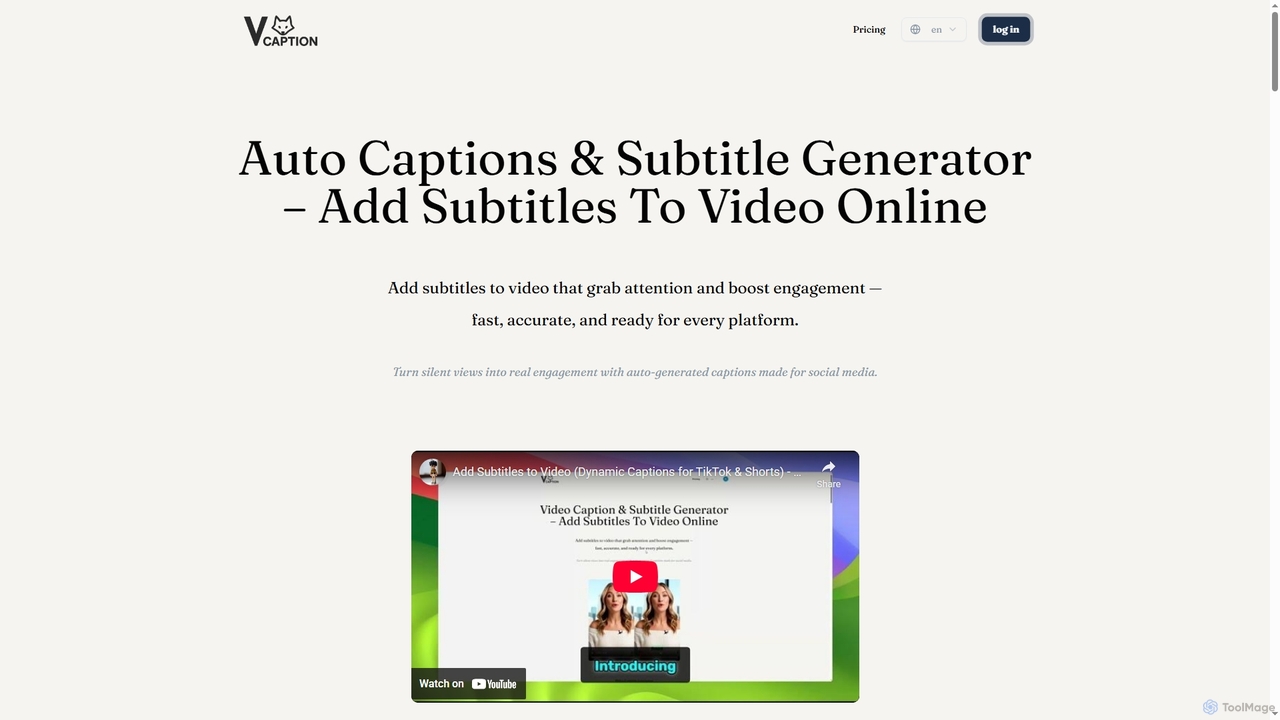
VideoCaption is an AI-powered online tool that automatically generates and adds stylish, accurate subtitles to your videos. Boost …
VideoCaption is an AI-powered online tool that automatically generates and adds stylish, accurate subtitles to your videos. Boost engagement and accessibility across social media, e-learning, and marketing platforms with ease. Transform silent views into meaningful interactions quickly and professionally.
Read Their Lips
An AI-powered tool that transcribes speech from video by analyzing lip movements. It's designed to extract dialogue from …
An AI-powered tool that transcribes speech from video by analyzing lip movements. It's designed to extract dialogue from silent footage or videos with poor audio quality, making it ideal for forensics, journalism, and content recovery.
About Captioning
AI Captioning tools are a specialized class of software that automatically generates text captions or subtitles for video, audio, and image content. Leveraging advanced Automatic Speech Recognition (ASR) and machine learning models, these tools transcribe spoken dialogue and identify important sounds, synchronizing the text with the media timeline. Their primary value lies in making digital content accessible to a wider audience, including individuals who are deaf or hard of hearing, while also improving user engagement and search engine optimization (SEO). Many tools also offer translation capabilities, breaking down language barriers for global content distribution.
Core Features
- Automatic Speech Recognition (ASR): Accurately converts spoken language from audio or video into written text.
- Timecode Synchronization: Automatically aligns the generated text with the precise timing of the corresponding audio or video segment.
- Speaker Identification: Distinguishes between different speakers in a conversation and labels the dialogue accordingly.
- Multi-language Support: Supports transcription and translation across a wide range of languages to reach a global audience.
- Customizable Output: Allows users to edit text, adjust timing, and export captions in standard formats like SRT or VTT.
Use Cases
These tools are widely used in media and entertainment for subtitling films and shows, in online education for making lectures accessible, and in digital marketing for increasing video engagement on social media platforms where content is often viewed without sound. Corporations also use them to caption training materials and archive virtual meetings.
How to Choose
When selecting an AI Captioning tool, consider its transcription accuracy rate for your specific content type and language. Evaluate the range of supported languages, integration options with your existing video editing or content management systems, and the level of customization available for the caption appearance. Finally, compare pricing models, such as per-minute rates versus monthly subscriptions, to find a solution that fits your budget and usage volume.

CaptioningUse Cases
Enhancing Accessibility for Online Courses
An e-learning platform provider uses an AI captioning tool to process its entire library of video lectures. The tool automatically generates and synchronizes subtitles for each course, making the content fully accessible to students who are deaf or hard of hearing. This also benefits non-native speakers and learners in noisy environments, leading to improved comprehension and a higher course completion rate. The platform saves hundreds of manual transcription hours per course.
Boosting Social Media Video Engagement
A digital marketing agency creates short-form video ads for clients on platforms like Instagram and Facebook. Since many users watch videos with the sound off, the agency uses an AI tool to quickly generate eye-catching, synchronized captions. This ensures the marketing message is delivered effectively even without audio, significantly increasing viewer retention and click-through rates. The process is automated, allowing the team to produce captioned content at scale.
Automating Subtitles for Media Production
A post-production studio works on tight deadlines for television series. Instead of manual transcription, editors upload video files to an AI captioning service to get a time-coded first draft of subtitles within minutes. This draft, which is typically over 95% accurate, is then quickly reviewed and refined by a human editor. This workflow reduces the initial subtitling effort by up to 80%, freeing up editors to focus on creative tasks.
Creating Searchable Corporate Meeting Archives
A multinational corporation records all its weekly virtual town halls and project meetings. An AI captioning tool is integrated with their video storage platform to automatically transcribe and caption every recording. This creates a fully searchable archive where employees can instantly find specific topics or decisions by searching for keywords within the video captions, eliminating the need to manually scrub through hours of footage.
Providing Live Captions for Virtual Events
An event management company hosts a large-scale international webinar with speakers and attendees from around the world. They employ a real-time AI captioning tool that provides live subtitles directly within the webinar platform. This ensures that all participants, including those with hearing impairments or non-native speakers, can follow the presentation in real-time. The tool also supports live translation, further enhancing global accessibility and inclusivity.
Generating Alt Text for Website Images
An e-commerce business needs to improve its website's accessibility and SEO. They use an AI captioning tool with image recognition capabilities to automatically generate descriptive alternative text (alt text) for thousands of product images. This allows screen readers used by visually impaired visitors to describe the products accurately. It also provides valuable keywords for search engines, improving the site's ranking in image search results.