
Accessibility Best in category 1 results Hearing Impairment AI Tool

Popular AI tools in the Hearing Impairment field of Accessibility include Ava, etc., helping you quickly improve efficiency.

Ava

Ava

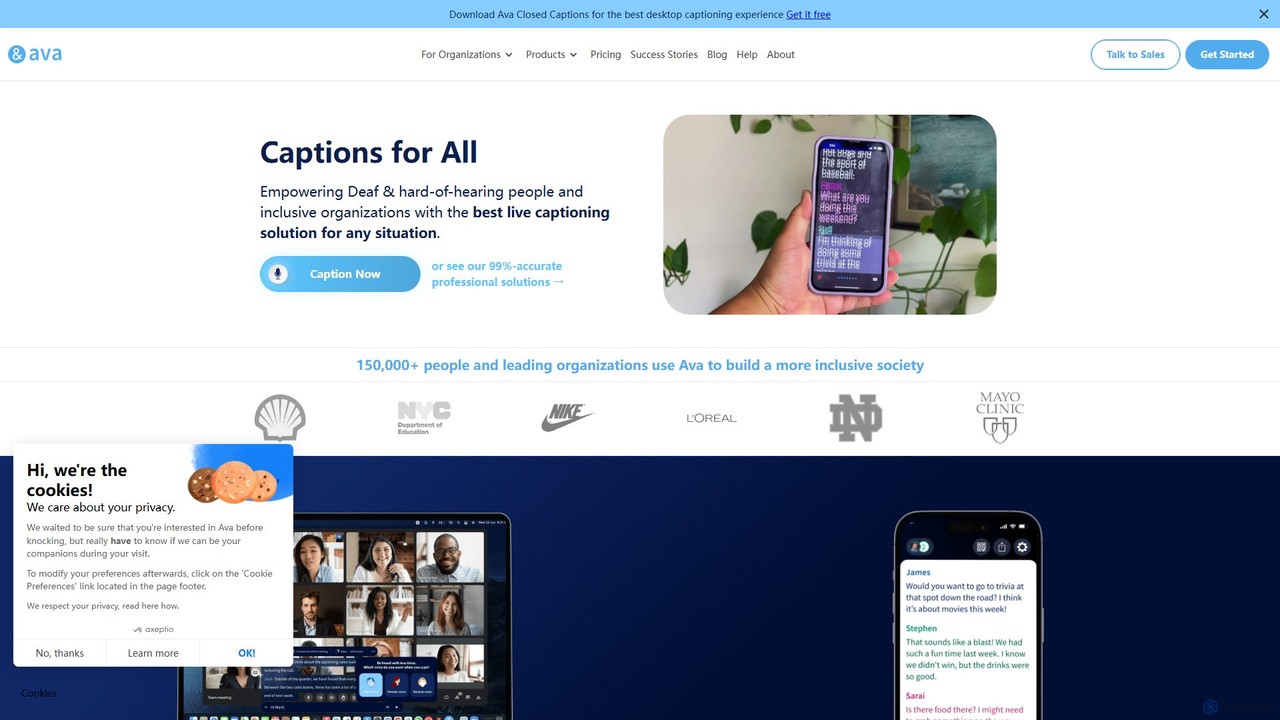
Ava is an AI-powered live captioning service designed to make conversations accessible for the Deaf and Hard-of-Hearing (HoH) …

186.9K

About Hearing Impairment

Hearing Impairment AI tools are a specialized category within accessibility solutions, leveraging artificial intelligence to assist individuals with hearing loss. These tools primarily convert auditory information into visual or tactile formats, enabling seamless communication and enhanced environmental awareness. They play a crucial role in fostering inclusion and improving daily life for the deaf and hard of hearing community.

Core Features

  • Real-time Transcription: Instantly converts spoken language into text, displayed on screens for easy comprehension during conversations or meetings.
  • Sound Recognition & Alerts: Identifies critical environmental sounds like doorbells, alarms, or phone rings, providing visual flashes or haptic feedback.
  • Automated Subtitling: Generates accurate captions for videos, live streams, and audio content, making media accessible.
  • Noise Reduction & Voice Enhancement: Advanced algorithms filter background noise and amplify specific voices, improving clarity for hearing aid users.

Use Cases

These tools are invaluable in diverse settings, from professional environments to personal daily life. They empower individuals to fully participate in meetings by providing live captions, enable independent media consumption through automated subtitles, and enhance safety at home with alerts for essential sounds, ensuring a more connected and secure experience.

How to Choose

When selecting AI tools for hearing impairment, prioritize accuracy of transcription and sound recognition, especially in varied acoustic environments. Consider real-time performance, language support, and customization options like alert types or vocabulary. Compatibility with existing devices such as smartphones or hearing aids, along with robust data privacy measures, are also vital considerations for optimal user experience.

Hearing ImpairmentUse Cases

1

Real-time Meeting Transcription for Professionals

Professionals with hearing impairment utilize AI real-time transcription tools during team meetings or online webinars. These tools instantly convert spoken content into text, ensuring they fully grasp discussion points, actively participate, and avoid missing critical information, thereby fostering an inclusive work environment.

2

Automated Video Subtitling for Media Accessibility

Media consumers and content creators leverage AI tools to automatically generate accurate subtitles for online videos, live streams, or educational courses. This not only enables individuals with hearing impairment to access content seamlessly but also enhances the overall accessibility and search engine optimization (SEO) of video materials.

3

Environmental Sound Recognition for Home Safety

Individuals with hearing impairment use AI-driven sound recognition systems at home to monitor critical environmental sounds such as doorbells, fire alarms, phone rings, or baby cries. The system converts these sounds into visual flashes or vibration alerts, significantly enhancing home safety and promoting independent living.

4

Personalized Communication Assistance in Daily Interactions

For one-on-one daily conversations, such as with doctors, bank staff, or family members, individuals use portable AI speech-to-text devices. These tools can adjust display speed and font size based on user preferences, ensuring conversation content is clearly visible and effectively reducing communication barriers.

5

Enhancing Educational Content Accessibility for Students

Students with hearing impairment in university lectures or online courses utilize AI real-time captioning tools to display the professor's spoken content synchronously as text. This allows students to fully acquire teaching information, take better notes, and participate in class discussions, ensuring an equitable learning experience.

6

Customer Service Interaction Support for Improved Experience

Individuals with hearing impairment use AI speech-to-text applications to communicate with service personnel in settings like banks, hospitals, or retail stores. The tool converts the service agent's spoken words into text in real-time, ensuring users clearly understand service terms, answers to questions, and instructions, leading to an accessible service experience.

Hearing ImpairmentFrequently Asked Questions