Ai Best in category 1 results Ai Ecosystem AI Tool

Popular AI tools in the Ai Ecosystem field of Ai include Neural Netwrk, etc., helping you quickly improve efficiency.

Neural Netwrk

Neural Netwrk

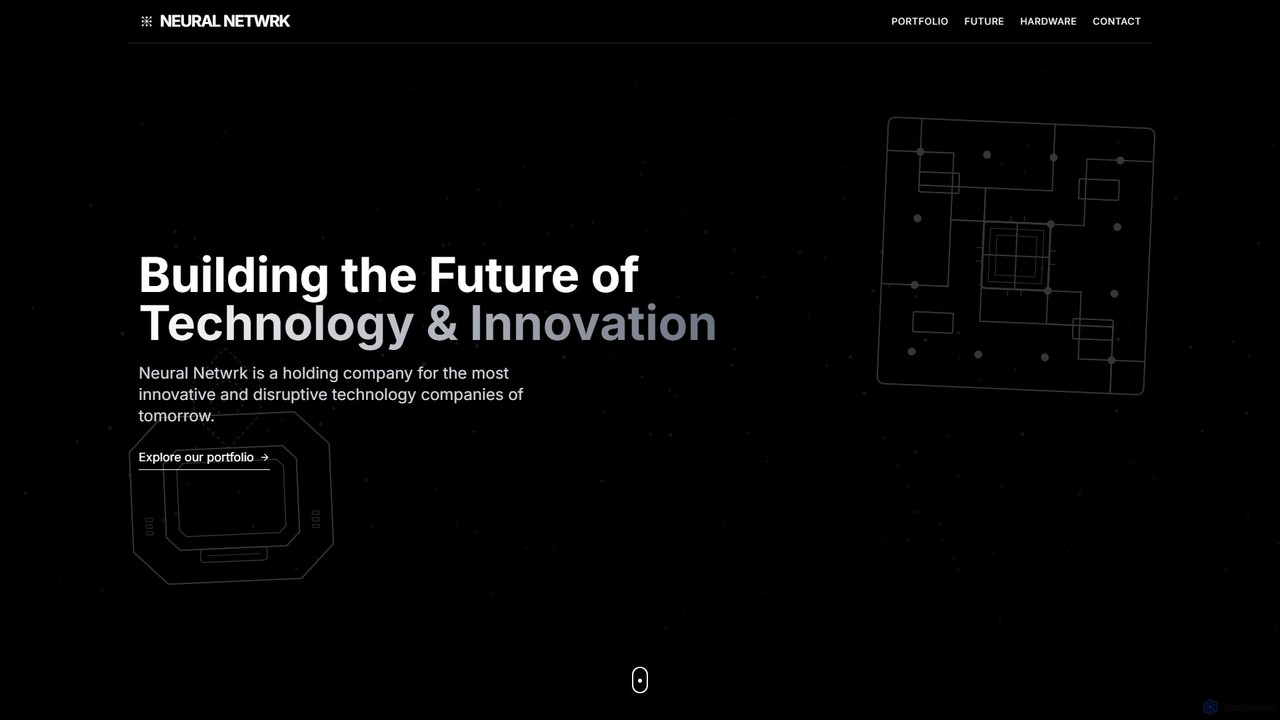
Neural Netwrk is a technology holding company that builds and invests in a portfolio of innovative and disruptive …

2.9K

About Ai Ecosystem

AI Ecosystems are integrated platforms that provide a comprehensive suite of AI models, developer tools, and APIs. These systems are designed to streamline the entire lifecycle of AI application development, from experimentation and training to deployment and management. They offer a unified environment where developers and businesses can access various foundational models and build custom AI-powered solutions. This centralized approach accelerates innovation by removing the complexity of managing disparate AI services and infrastructure.

Core Features

  • Unified Model Access: Provides access to a diverse range of pre-trained models (e.g., language, vision, code) through a consistent API.
  • Developer Tools & SDKs: Offers software development kits, libraries, and documentation to simplify integration into applications.
  • MLOps & Deployment Infrastructure: Includes tools for managing, scaling, monitoring, and deploying machine learning models in production environments.
  • Data Management & Processing: Provides capabilities for data storage, preprocessing, and connecting data sources for model fine-tuning.
  • Community & Marketplace: Often features a hub for sharing, discovering, and utilizing models, datasets, or applications built by a community of users.

Use Cases

AI Ecosystems are primarily used by developers, data scientists, and enterprises. They are ideal for building custom AI applications, integrating advanced AI capabilities into existing products, and conducting research that requires access to multiple state-of-the-art models. Common scenarios include creating specialized chatbots, developing AI-driven analytics platforms, and prototyping new generative AI products.

How to Choose

When selecting an AI Ecosystem, consider the variety and quality of the available models to ensure they fit your needs. Evaluate the clarity and robustness of the API documentation and SDKs. Assess the platform's scalability, performance, and reliability for production workloads. Finally, analyze the pricing structure (e.g., per-token, subscription) and available tools for cost management to ensure it aligns with your budget.

Ai EcosystemUse Cases

1

Develop a Custom Enterprise Chatbot

A software development team at a large financial firm uses an AI ecosystem to build a sophisticated internal chatbot. They leverage the platform's powerful language model API to understand complex employee queries about HR policies and IT support. The ecosystem's tools allow them to fine-tune the base model with internal company documents for higher accuracy. Finally, they use the integrated deployment services to host the chatbot securely within the company's infrastructure, providing instant, reliable support to thousands of employees.

2

Build a Generative AI Art Application

A startup founder wants to create a web application that generates unique art based on user prompts. They use an AI ecosystem that provides access to several leading image generation models via a single API. This allows them to offer users a variety of artistic styles. The ecosystem's SDKs accelerate the development of their web front-end, and its scalable infrastructure handles fluctuating user traffic without requiring the founder to manage servers. This enables a small team to launch a competitive product quickly.

3

Powering a Data Analytics Platform

A data science team enhances their business intelligence platform using an AI ecosystem. They connect their company's sales data to the ecosystem and use its natural language processing models to enable business users to ask questions in plain English, such as 'What were our top-selling products in Europe last quarter?'. The ecosystem processes the query, translates it into a database command, retrieves the data, and uses a text generation model to provide a summary. This democratizes data access and reduces the workload on the data science team.

4

Automating Content Creation Workflows

A digital marketing agency uses an AI ecosystem to automate its content creation pipeline. They build a workflow that calls multiple APIs: first, a language model generates blog post ideas and drafts. Next, another API call to an image model creates relevant visuals for the article. Finally, a text-to-speech model generates an audio version for a podcast. By orchestrating these services within a single ecosystem, they can produce high-quality, multi-format content at scale, significantly reducing manual effort and turnaround time.

5

Academic Research and Model Experimentation

A university research group studies the capabilities of different large language models. They use an AI ecosystem to access and benchmark various models from different providers through a standardized interface. This saves them the significant overhead of setting up and maintaining separate environments for each model. They can easily run the same set of experiments across all models, compare performance metrics, and publish their findings faster, accelerating the pace of AI research.

6

Enhancing E-commerce Product Discovery

An online retail company integrates an AI ecosystem to improve its search functionality. They use a vector embedding model from the ecosystem to convert their product descriptions and images into numerical representations. When a customer searches for 'summer dress with floral pattern,' the system converts the query into a vector and finds the most similar product vectors in their database. This provides more relevant search results than traditional keyword matching and helps customers discover products they love, boosting sales and customer satisfaction.

Ai EcosystemFrequently Asked Questions