
ToolMage
Sign in

Best 1 Ai Education AI tools for Ai

Popular Ai Education AI tools in Ai include DeepakNess, helping you work more efficiently.

DeepakNess
Free

DeepakNess

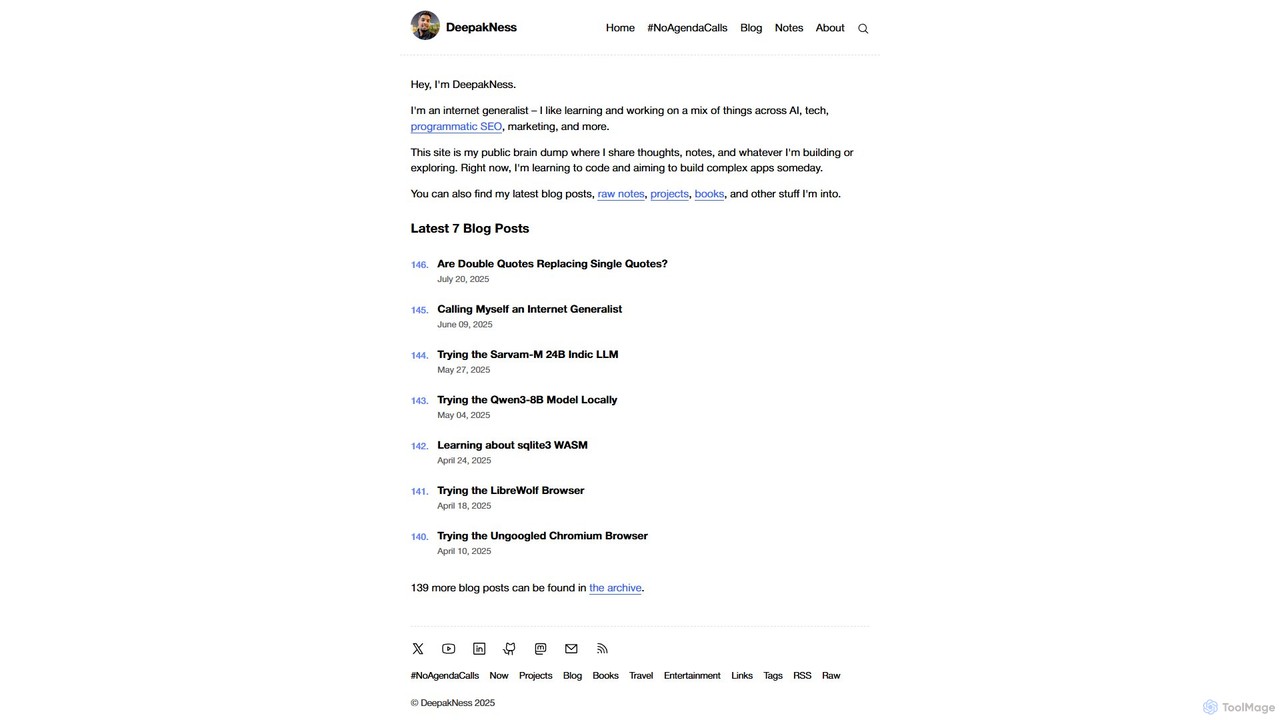
DeepakNess is a personal knowledge hub and blog by an 'internet generalist'. It offers in-depth articles, tutorials, and project explorations across AI, programmatic SEO, web development, and marketing. A valuable resource for developers, marketers, and tech enthusiasts seeking practical, hands-on insights.

Ai Education
Visits 148.6KFavorites 118Likes 120

About Ai Education

AI Education tools are a category of artificial intelligence-powered applications designed to transform learning, teaching, and administrative processes within educational settings. These tools leverage advanced algorithms and machine learning to offer personalized learning experiences, automate routine tasks, and provide intelligent insights. They aim to make education more accessible, efficient, and engaging for students, educators, and institutions by adapting to individual needs and optimizing instructional delivery.

Core Features

  • Personalized Learning Paths: AI analyzes student performance and learning styles to create customized study plans and content recommendations.
  • Intelligent Tutoring Systems: Provides real-time, adaptive guidance, explanations, and interactive practice, simulating a human tutor.
  • Automated Assessment & Feedback: Efficiently grades assignments, quizzes, and offers constructive, immediate feedback to students.
  • AI-powered Content Generation: Assists in creating educational materials such as summaries, practice questions, or lesson plan outlines.
  • Language Learning Assistants: Offers interactive conversational practice, pronunciation correction, and vocabulary building exercises.

Applicable Scenarios

AI Education tools are widely adopted across various educational sectors, from K-12 and higher education to corporate training and lifelong learning. They are particularly valuable for students requiring tailored support or advanced challenges, educators managing large class sizes, and institutions seeking to enhance learning outcomes and operational efficiency.

How to Choose

When selecting AI Education tools, consider the specific learning objectives and target audience. Evaluate the platform's ability to provide content customization and adapt to individual student progress. Assess its integration capabilities with existing Learning Management Systems (LMS) and the quality of its feedback mechanisms and performance analytics.

Ai Education use cases

1

Personalized Study Plans for University Students

University students struggling with complex subjects can utilize AI education platforms to receive tailored support. The AI analyzes their past performance and identifies weak areas, generating a customized study schedule with recommended resources and practice problems. This leads to targeted learning, improved comprehension, and better exam scores by addressing individual academic needs.

2

Automated Grading for High School Teachers

High school teachers managing large classes can significantly reduce their workload with AI assessment tools. These tools automatically grade objective questions and provide preliminary, rubric-based feedback on written assignments, flagging specific areas for the teacher's final review. This saves considerable time, allows for faster feedback delivery to students, and enables teachers to focus more on direct instruction.

3

Interactive Language Practice for Adult Learners

Adult learners aiming to improve conversational fluency in a new language benefit greatly from AI language tutors. These tools offer interactive practice sessions, correct pronunciation in real-time, and provide vocabulary expansion exercises. Users gain enhanced confidence in speaking, improve their accent, and expand their vocabulary through personalized, engaging interactions outside of traditional classroom settings.

4

Creating Adaptive Learning Modules for Corporate Training

Corporate training managers can leverage AI content generation platforms to develop highly effective and engaging training programs. The AI creates adaptive modules that adjust content difficulty and focus based on individual employee pre-assessments and ongoing progress. This results in more efficient skill acquisition, higher employee engagement, and measurable improvements in overall workforce performance and competency.

5

Supporting Students with Learning Difficulties

AI education assistants provide invaluable support for students with learning difficulties, such as dyslexia. These tools offer features like text-to-speech, simplified language options, and interactive comprehension checks, all adapting to the student's pace and specific needs. This significantly increases accessibility to learning materials, improves reading fluency, and enhances overall understanding for students facing unique educational challenges.

6

Generating Practice Questions for Exam Preparation

Students preparing for standardized tests or professional certifications can use AI question generators to access a vast array of relevant practice materials. These tools create unlimited unique practice questions based on specific topics or curriculum, complete with detailed explanations for both correct and incorrect answers. This ensures comprehensive preparation, helps identify knowledge gaps, and refines test-taking strategies effectively.

Ai Education FAQ

What are AI Education tools?

AI Education tools are applications that use artificial intelligence to enhance learning and teaching. They typically feature personalized learning paths, intelligent tutoring, and automated assessment. These tools aim to make education more adaptive, efficient, and engaging by tailoring content and support to individual student needs and streamlining educator tasks.

How do AI Education tools personalize learning?

AI Education tools personalize learning by analyzing student data, including performance, engagement, and learning styles. Using adaptive algorithms, they recommend customized content, adjust the difficulty of exercises, and create unique learning paths. This ensures that each student receives instruction and practice best suited to their individual pace and comprehension level, maximizing learning outcomes.

Who benefits most from AI Education tools?

A wide range of users benefits from AI Education tools. Students of all ages and abilities gain from personalized instruction and immediate feedback. Educators benefit from automated grading and content creation, reducing administrative burden. Institutions can improve learning outcomes and operational efficiency. Corporate trainers and lifelong learners also find value in adaptive, self-paced skill development.

What are the key considerations when choosing an AI Education platform?

When selecting an AI Education platform, consider its alignment with your specific learning objectives and target audience. Evaluate the tool's ability to offer true personalization and content adaptability. Check for seamless integration with existing educational systems (like LMS) and assess the quality and depth of its automated feedback and analytics reporting capabilities. Data privacy and security are also crucial.

How do AI Education tools differ from traditional e-learning platforms?

AI Education tools differ from traditional e-learning by offering dynamic, adaptive, and personalized experiences, whereas traditional e-learning is often static and content-delivery focused. AI tools provide real-time intelligent tutoring, automated and personalized feedback, and can generate new content or adjust learning paths on the fly. Traditional platforms primarily deliver pre-set courses without deep individual adaptation.