ToolMage
Sign in

Best 3 Consulting AI tools for Ai

Popular Consulting AI tools in Ai include Goodspeed, CrackedDevs, and BlueGiraffeLabs, helping you work more efficiently.

CrackedDevs
Paid

CrackedDevs

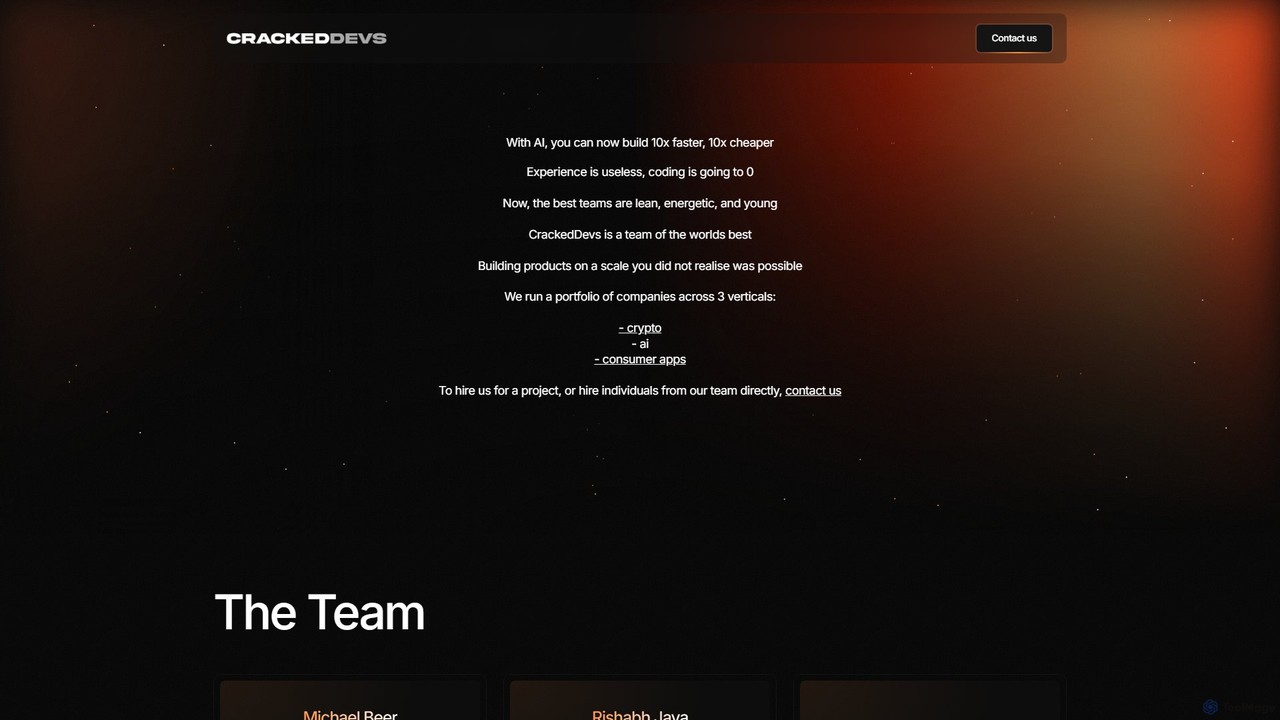
CrackedDevs is an elite development agency offering custom software solutions. Comprised of top-tier developers, designers, and hackathon winners, they specialize in building advanced applications in AI, Web3 (Solana, Polygon), and mobile, turning complex ideas into reality.

Consulting
Visits 3.8KFavorites 136Likes 147
Goodspeed
Paid

Goodspeed

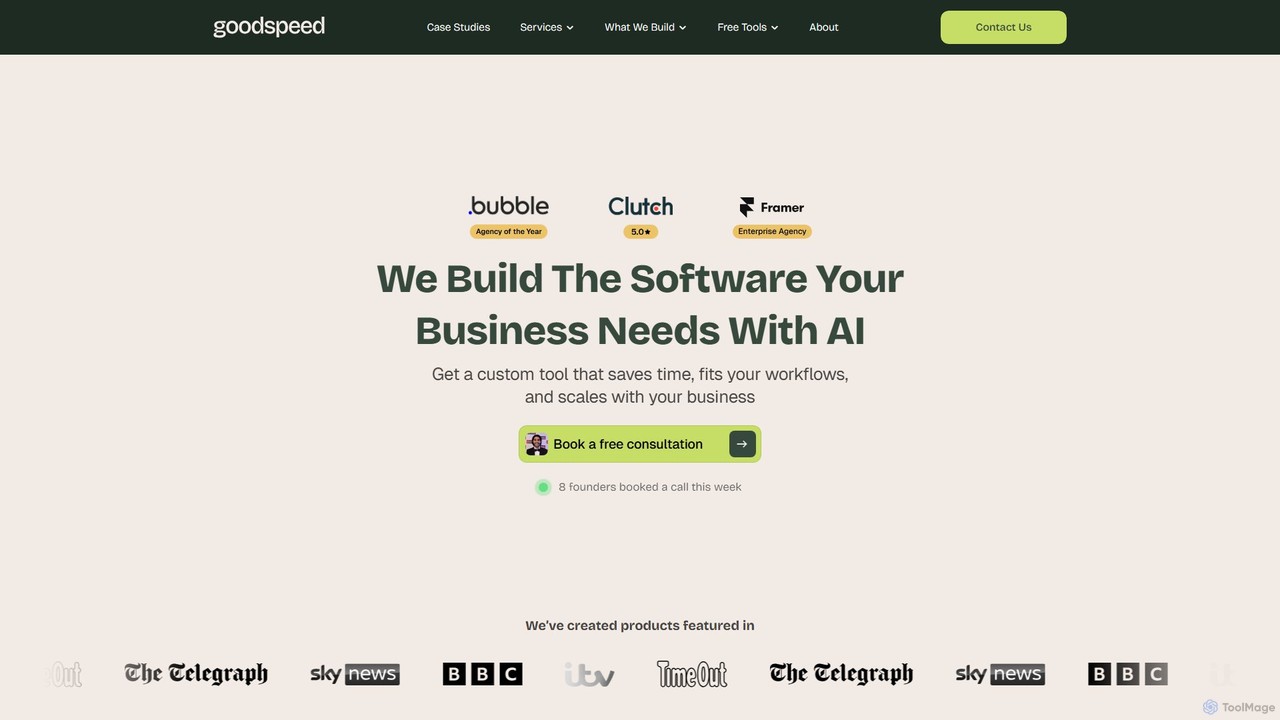
Goodspeed is a no-code and AI development agency that builds custom software, internal tools, and automated workflows for businesses. They transform inefficient processes into streamlined, custom-fit solutions, delivering high-quality products like dashboards, mobile apps, and client portals in weeks, not months, to save time and boost productivity.

Consulting
Visits 31.1KFavorites 108Likes 99
BlueGiraffeLabs

BlueGiraffeLabs

BlueGiraffeLabs is a women-led, independent research lab specializing in the design and development of innovative mobile applications with seamless AI integration. They offer full-stack development services, from app architecture and backend APIs to AI prompt engineering and frontend Flutter creation, focusing on delivering exceptional and fun user experiences.

Consulting
Visits 3.5KFavorites 118Likes 124

About Consulting

AI Consulting tools are a specialized class of AI systems designed to provide automated, data-driven strategic advice and business analysis. These tools leverage advanced algorithms and large language models, often trained on specific industry data, to simulate the problem-solving and recommendation capabilities of human consultants. They analyze complex datasets to identify trends, diagnose issues, and propose actionable strategies for growth, efficiency, and market positioning. This makes expert-level business intelligence and strategic guidance more accessible and scalable for organizations of all sizes.

Core Features

  • Strategic Recommendation Engine: Analyzes business data to generate actionable advice on topics like market entry, product pricing, and operational improvements.
  • Problem Diagnosis: Identifies root causes of business challenges, such as declining sales or supply chain inefficiencies, by processing relevant metrics.
  • Competitive & Market Analysis: Gathers and synthesizes real-time information on market trends, competitor activities, and customer sentiment to inform strategy.
  • Scenario Modeling: Simulates the potential outcomes of different business decisions, allowing users to forecast the impact of strategic changes before implementation.
  • Automated Reporting: Creates comprehensive reports with key findings, data visualizations, and clear, structured recommendations.

Use Cases

AI Consulting tools are particularly valuable for startups and small to medium-sized enterprises (SMEs) that need strategic guidance without the high cost of traditional consulting firms. They are also used within larger corporations by department heads, such as marketing managers optimizing campaign ROI, operations leaders streamlining processes, or finance teams seeking to improve profitability. These tools support data-informed decision-making across various business functions.

How to Choose

When selecting an AI Consulting tool, first consider its domain expertise; ensure it is trained on data relevant to your industry (e.g., e-commerce, SaaS, finance). Evaluate its data integration capabilities—how easily can it connect to your existing data sources like CRM, ERP, and analytics platforms? Assess the depth and clarity of its analytical models and recommendations. Finally, consider the user interface and the ease with which insights can be understood and acted upon by your team.

Featured tool rankings

Consulting use cases

1

Formulating a Go-to-Market Strategy for Startups

A startup founder needs to develop a comprehensive go-to-market (GTM) strategy but lacks the budget for a traditional consulting firm. By inputting their product details, target market hypotheses, and initial financial data into an AI Consulting tool, they receive a detailed analysis. The AI identifies the most promising customer segments, suggests optimal pricing models based on competitive analysis, and outlines a multi-channel marketing plan. The output includes a prioritized list of actions, projected customer acquisition costs, and key performance indicators (KPIs) to track, enabling the founder to launch with a data-backed plan, significantly reducing initial uncertainty and risk.

2

Optimizing Marketing Campaign ROI

A marketing manager for an e-commerce brand is running multiple digital campaigns across different platforms but is unsure about budget allocation. They connect their analytics platforms (e.g., Google Analytics, social media ads managers) to an AI Consulting tool. The tool analyzes performance data, including click-through rates, conversion rates, and customer lifetime value per channel. It then provides specific recommendations, such as 'Increase budget for Instagram Ads by 20% and reallocate funds from underperforming search keywords.' This allows the manager to make data-driven adjustments in near real-time, maximizing return on investment (ROI) without extensive manual analysis.

3

Identifying Operational Inefficiencies

An operations manager in a manufacturing company wants to improve production line efficiency. They upload data from their ERP and IoT sensors (e.g., machine uptime, production volume, error rates) to an AI consultant. The AI analyzes the entire workflow, identifies bottlenecks, and highlights patterns that humans might miss, such as a specific machine consistently underperforming during certain shifts. The tool provides a report with recommendations like 'Schedule preventative maintenance for Machine B before the afternoon shift' or 'Adjust conveyor belt speed by 5% to reduce material jams.' This proactive, data-driven approach helps reduce downtime and increase overall output.

4

Conducting Competitive Landscape Analysis

A product manager needs to stay ahead of the competition. They use an AI Consulting tool that continuously scrapes and analyzes public data, including competitor websites, press releases, customer reviews, and social media mentions. The AI synthesizes this information into a dynamic dashboard, highlighting key changes like a competitor's new pricing strategy, a surge in negative reviews for a rival product, or emerging market trends. The tool can send alerts for significant events, allowing the product manager to react swiftly and adjust their own product roadmap and marketing messages to maintain a competitive edge.

5

Assessing Financial Health for SMBs

A small business owner, without a dedicated finance team, connects their accounting software (like QuickBooks or Xero) to an AI Consulting tool. The tool automatically analyzes their financial statements—income statement, balance sheet, and cash flow. It benchmarks their performance against industry averages and provides insights in plain language, such as 'Your cost of goods sold is 15% higher than the industry average, consider renegotiating with suppliers.' It can also forecast cash flow for the next quarter and flag potential shortfalls, giving the owner timely, expert-level financial advice to improve profitability and stability.

6

Developing a Digital Transformation Roadmap

An IT leader at a mid-sized company is tasked with modernizing their technology stack. They use an AI consultant to analyze their current systems, business processes, and strategic goals. The AI assesses the existing infrastructure, identifies legacy systems that are creating bottlenecks, and recommends a phased adoption plan for new technologies (e.g., cloud migration, CRM implementation). The output is a detailed roadmap, including estimated costs, timelines, potential risks, and recommended vendors. This provides a clear, strategic framework for a complex initiative, helping to secure executive buy-in and guide a successful implementation.

Consulting FAQ

What are AI Consulting tools?

AI Consulting tools are software applications that use artificial intelligence to provide strategic business advice and analysis. Unlike traditional analytics tools that simply display data, these tools interpret information, identify underlying problems or opportunities, and generate actionable recommendations. They function like a virtual business consultant, leveraging data from various sources to offer guidance on strategy, marketing, operations, and finance, making high-level strategic insights more accessible to businesses of all sizes.

How to choose the right AI Consulting tool?

Choosing the right AI Consulting tool depends on your specific needs. Consider these factors:

  • Domain Specialization: Does the tool have expertise in your industry (e.g., e-commerce, healthcare, finance)? A specialized tool will provide more relevant insights.
  • Data Integration: Check if it can easily connect to your existing data sources, such as your CRM, ERP, or marketing analytics platforms.
  • Analytical Depth: Evaluate the complexity of its analysis. Does it offer basic diagnostics or advanced predictive modeling and scenario planning?
  • Usability and Clarity: The tool should present its findings and recommendations in a clear, understandable way, enabling your team to act on them without needing data science expertise.
What's the difference between AI Consulting and Business Intelligence (BI) tools?

The key difference lies in their function: descriptive vs. prescriptive. Business Intelligence (BI) tools are primarily descriptive; they collect and display historical data in dashboards and reports to show you 'what happened'. AI Consulting tools are prescriptive; they go a step further by analyzing that data to tell you 'why it happened' and 'what you should do next'. While a BI tool might show a sales decline, an AI Consulting tool would diagnose the potential causes (e.g., competitor pricing, ineffective ads) and recommend specific actions to reverse the trend.

Who can benefit from using AI Consulting tools?

A wide range of users can benefit from AI Consulting tools. Key groups include:

  • Startups and Small Businesses: They gain access to affordable, expert-level strategic advice that was previously only available to large corporations with big consulting budgets.
  • Department Managers: Marketing, sales, and operations managers in mid-to-large companies can use these tools for data-driven decision-making to optimize their specific functions.
  • Business Analysts and Strategists: These professionals can use AI consultants to automate data analysis and generate initial hypotheses, freeing up their time for more complex strategic thinking and implementation.
  • Entrepreneurs: Solo entrepreneurs and founders can use these tools as a strategic sounding board to validate ideas and formulate growth plans.
Is the advice from AI Consulting tools reliable?

The reliability of advice from AI Consulting tools depends heavily on two factors: the quality of the input data and the sophistication of the underlying AI model. If fed with accurate, comprehensive, and up-to-date data, a well-designed tool can provide highly reliable and valuable insights. However, the output is only as good as the input ('garbage in, garbage out'). It's best to view these tools as powerful decision-support systems that augment human expertise, not replace it entirely. Users should always apply their own critical thinking and domain knowledge to validate the AI's recommendations before making final decisions.