OpenMemory MCP
OpenMemory MCP is a local-first application designed to give your AI tools a persistent, private memory. It allows …
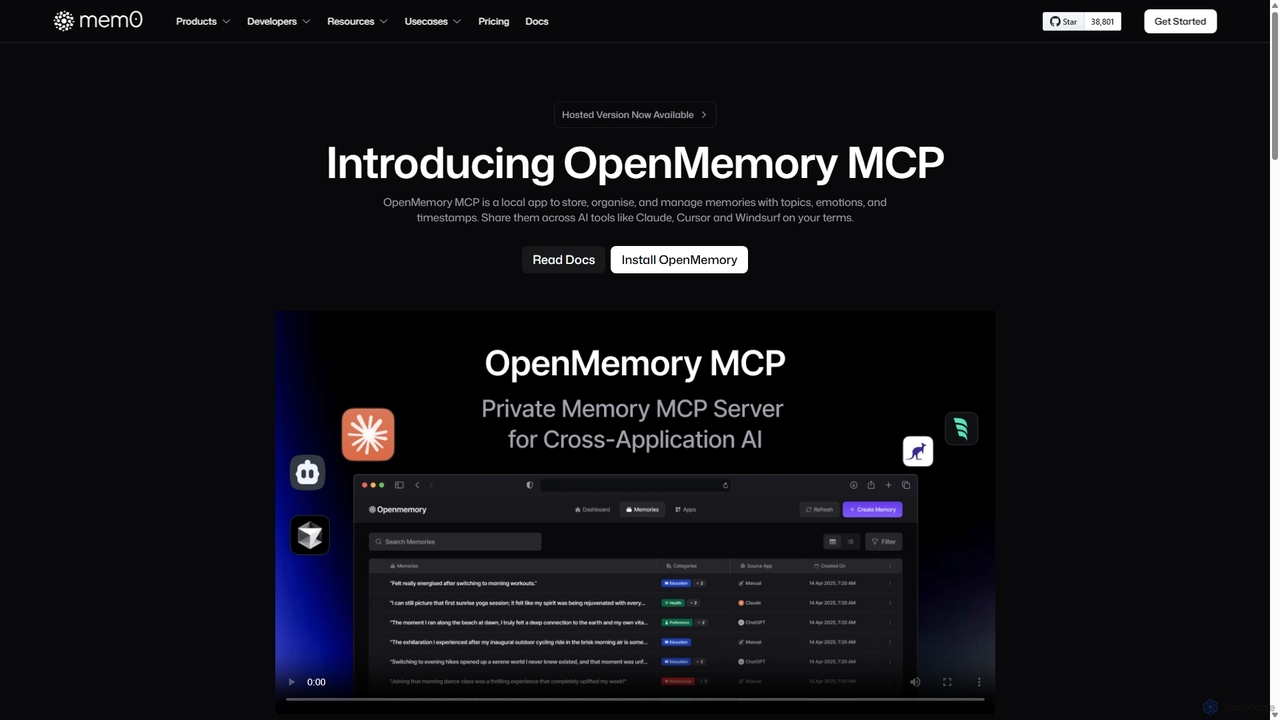
OpenMemory MCP is a local-first application designed to give your AI tools a persistent, private memory. It allows you to store, organize, and manage context like project details, code snippets, and personal preferences, sharing them securely across different AI applications like Claude and Cursor to enhance personalization and workflow continuity.
codegate
Codegate is an open-source security gateway and multiplexing framework for AI agentic systems. Developed by Stacklok, it provides …
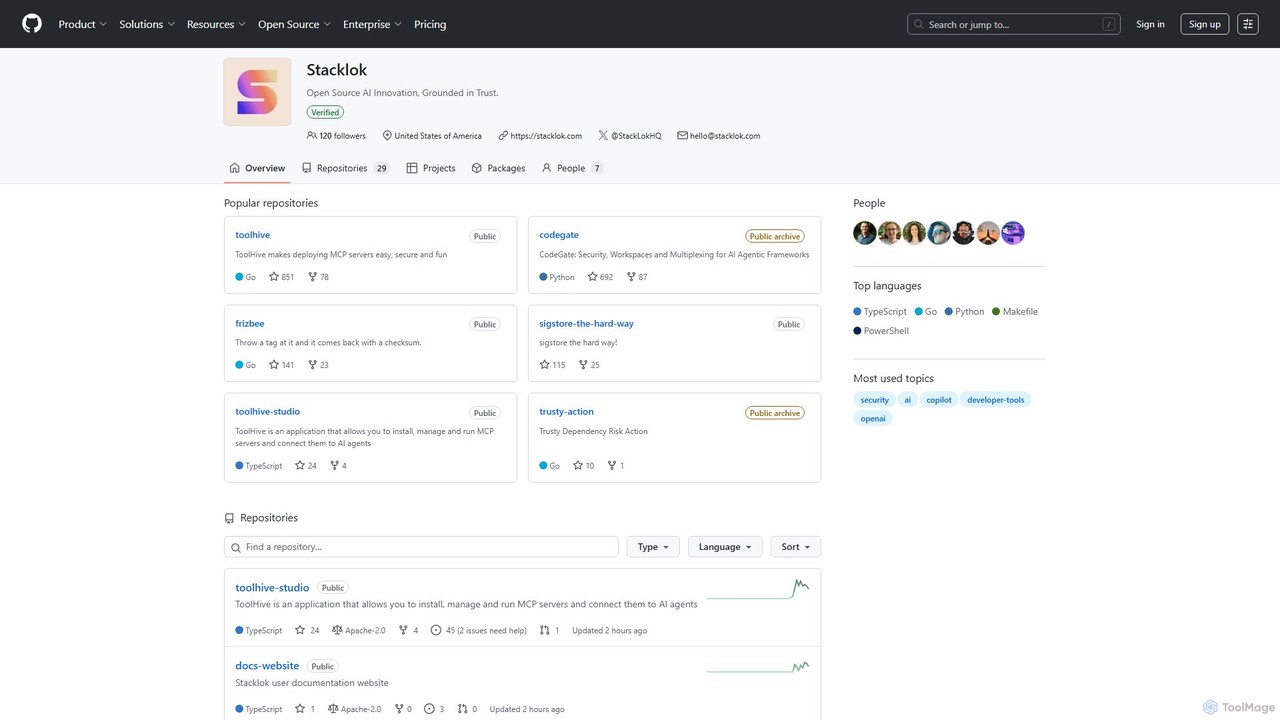
Codegate is an open-source security gateway and multiplexing framework for AI agentic systems. Developed by Stacklok, it provides secure workspaces and policy-based access control, enabling developers to build and manage complex multi-agent applications safely and efficiently.
Summon
Summon is a developer platform designed to make your product's APIs AI-ready. It enables you to effortlessly generate, …
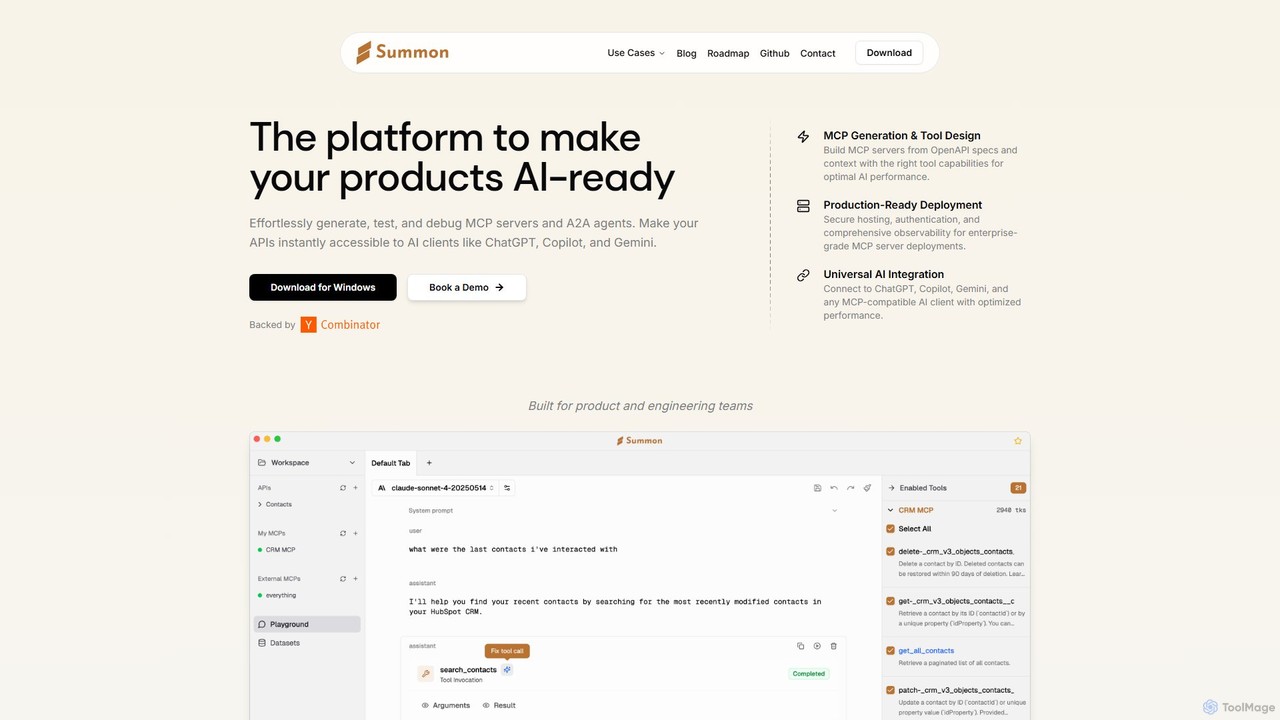
Summon is a developer platform designed to make your product's APIs AI-ready. It enables you to effortlessly generate, test, and deploy secure MCP servers from OpenAPI specs, making your services instantly accessible to major AI clients like ChatGPT, Copilot, and Gemini. By bridging the gap between your APIs and the AI ecosystem, Summon helps you unlock new distribution channels, increase user engagement, and provide seamless, AI-powered workflows for your customers.
LM Studio
LM Studio is a desktop application for Windows, macOS, and Linux that allows you to discover, download, and …
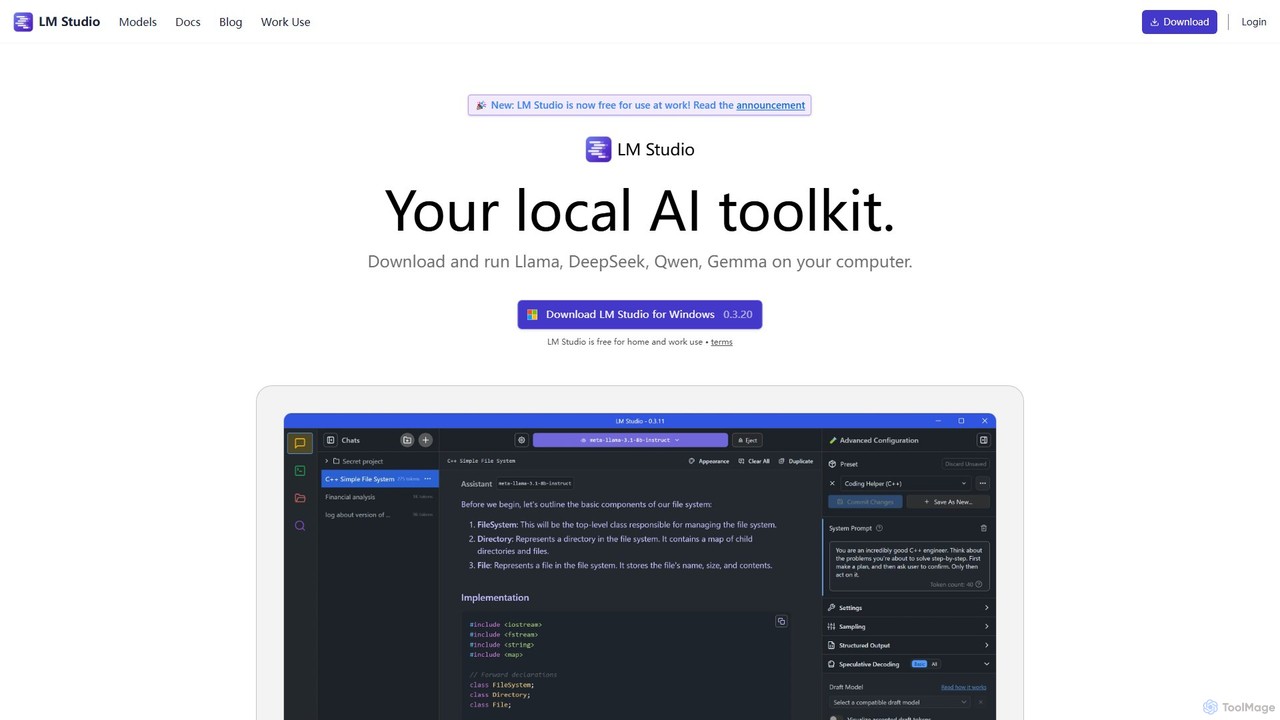
LM Studio is a desktop application for Windows, macOS, and Linux that allows you to discover, download, and run open-source Large Language Models (LLMs) entirely on your local machine. It offers a user-friendly interface, an OpenAI-compatible local server, and robust privacy features, making it ideal for developers, researchers, and anyone seeking a private AI experience.
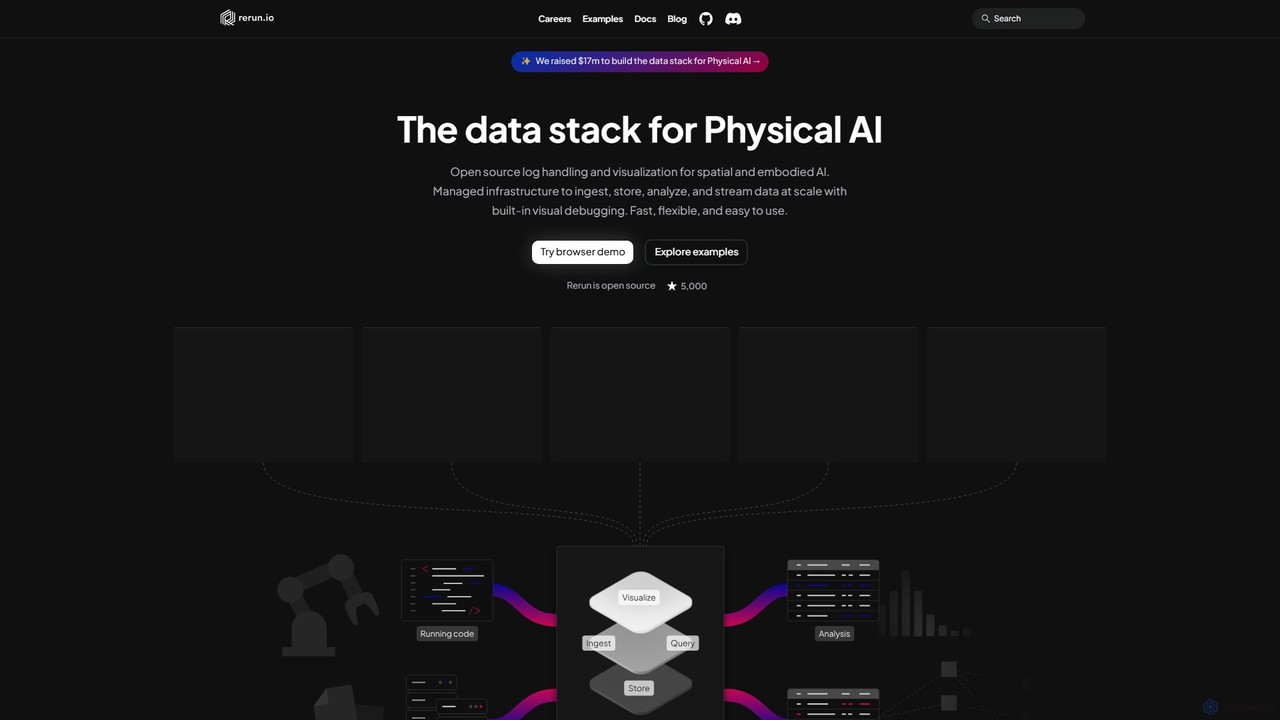
Rerun
Rerun is an open-source data stack for Physical AI, providing powerful logging and visualization tools for multimodal, time-series …
Rerun is an open-source data stack for Physical AI, providing powerful logging and visualization tools for multimodal, time-series data. Designed for robotics, computer vision, and spatial computing, it helps developers understand and debug complex systems with SDKs for Python, Rust, and C++.

pinokio
Pinokio is a desktop browser that allows you to install, run, and control AI applications and terminal-based apps …
Pinokio is a desktop browser that allows you to install, run, and control AI applications and terminal-based apps on your computer with a single click. It simplifies the complex setup of open-source AI models by automating environment creation, dependency management, and execution. This empowers users of all skill levels to experiment with powerful AI tools locally, ensuring privacy and full control over their data.
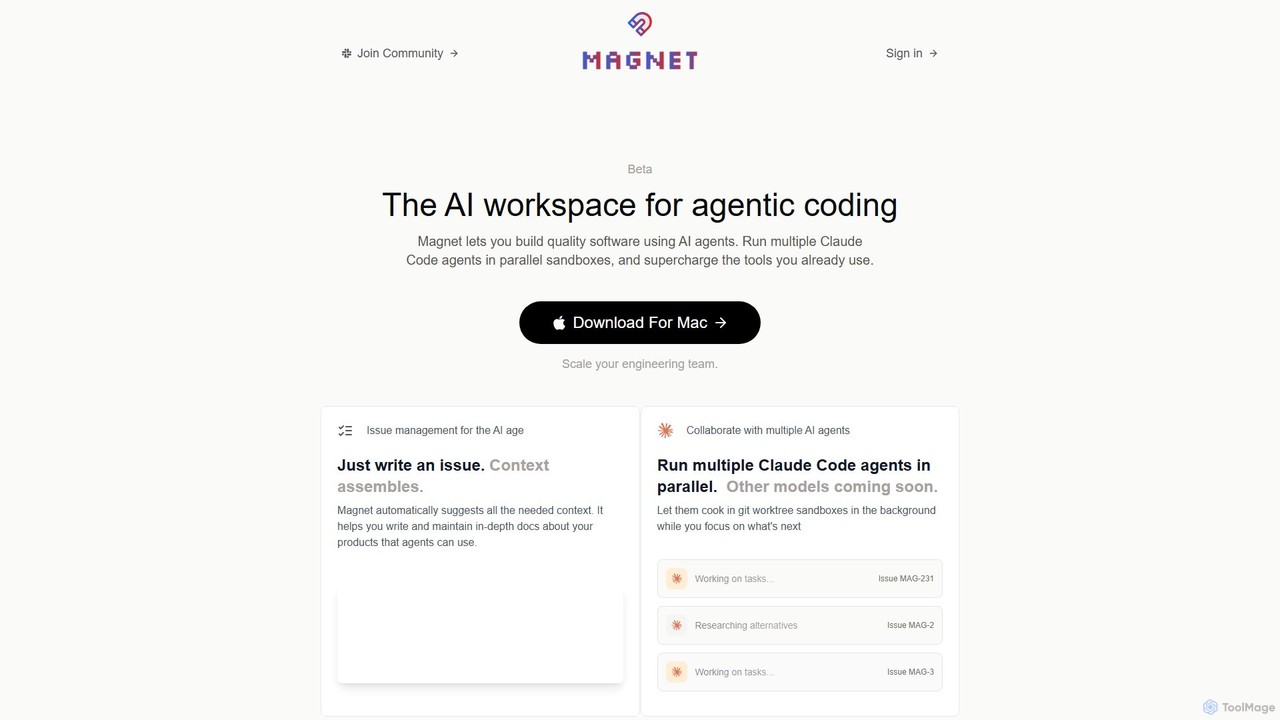
Magnet
Magnet is an AI-powered workspace for agentic coding, enabling developers to build software by orchestrating multiple AI agents. …
Magnet is an AI-powered workspace for agentic coding, enabling developers to build software by orchestrating multiple AI agents. It allows you to run Claude Code agents in parallel sandboxes, acting as a context engine to make development faster, cheaper, and more reliable. It's a native macOS application designed to supercharge your existing engineering workflows.
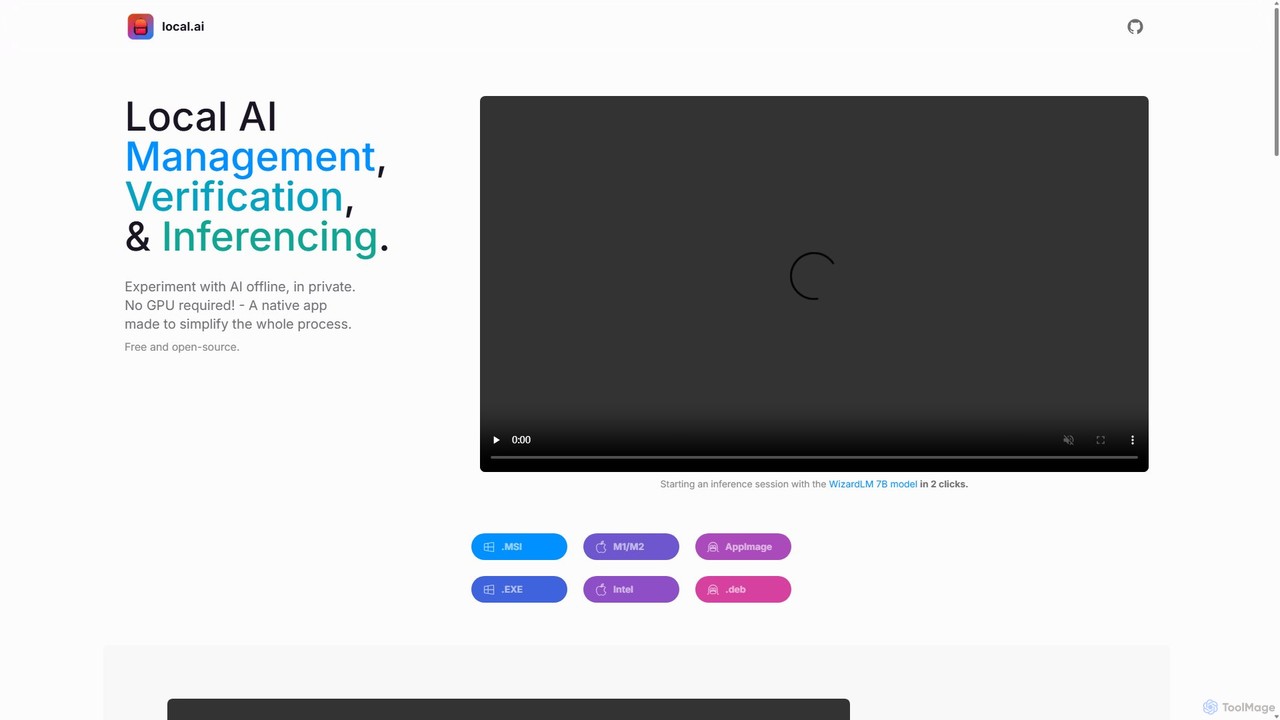
LocalAI
LocalAI is a free, open-source desktop application that allows you to run AI models privately and offline on …
LocalAI is a free, open-source desktop application that allows you to run AI models privately and offline on your computer. It simplifies AI experimentation without needing a GPU, offering features like model management, integrity verification, and a local inference server.
About Ai Infrastructure
AI Infrastructure provides the foundational hardware, software, and platforms necessary to build, train, deploy, and manage artificial intelligence models at scale. It encompasses specialized computing resources like GPUs, scalable data storage, and MLOps frameworks that streamline the entire machine learning lifecycle. This infrastructure is crucial for handling the immense computational and data requirements of modern AI, enabling developers and organizations to move from experimental models to production-grade applications efficiently. It acts as the essential power grid and plumbing for any serious AI development effort.
Core Features
- GPU/TPU Compute Provisioning: Provides on-demand access to specialized processors optimized for the parallel computations required in deep learning.
- MLOps Platforms: Offers integrated toolchains for automating model training, versioning, deployment, and monitoring (CI/CD for AI).
- Scalable Data Storage: Delivers high-throughput storage solutions designed to handle petabyte-scale datasets for model training.
- Model Serving Frameworks: Enables efficient deployment of trained models as scalable, low-latency APIs for real-time inference.
- Data Processing & Labeling Tools: Includes services and frameworks for preparing, cleaning, and annotating large datasets to ensure model quality.
Use Cases
AI Infrastructure is primarily used by Machine Learning Engineers, Data Scientists, and AI Researchers within technology companies, research institutions, and large enterprises. It is fundamental for projects like training large language models (LLMs), developing computer vision systems for autonomous vehicles, or deploying real-time fraud detection algorithms in the financial sector. Any organization building custom AI solutions, rather than just using off-the-shelf AI tools, relies on this infrastructure.
How to Choose
When selecting AI Infrastructure, consider four key factors. First, evaluate the available computing power, specifically the types of GPUs or TPUs offered and their performance. Second, assess the MLOps capabilities for automation and lifecycle management. Third, analyze the cost structure, comparing pay-as-you-go models with reserved instances for long-term projects. Finally, check for compatibility with your preferred machine learning frameworks like PyTorch or TensorFlow and integration with your existing cloud ecosystem.
Ai InfrastructureUse Cases
Training a Large Language Model (LLM)
An AI research lab needs to train a new foundation model from scratch. They utilize an AI infrastructure provider to provision a cluster of hundreds of high-performance GPUs. The platform allows them to manage a multi-terabyte text dataset, use distributed training frameworks to accelerate the process, and leverage an MLOps dashboard to track experiment metrics, manage checkpoints, and compare model performance. This setup reduces the training time from months to weeks and provides the necessary scalability to handle massive model parameters.
Deploying a Real-time Recommendation Engine
An e-commerce company wants to serve personalized product recommendations to millions of users. Their ML engineers use a model serving platform within their AI infrastructure to deploy a trained recommendation model as a scalable API. The platform handles auto-scaling to manage traffic spikes during sales events, provides low-latency inference to ensure a smooth user experience, and offers monitoring tools to detect model drift or performance degradation. This allows them to maintain a high-quality, responsive recommendation service without managing the underlying server complexity.
Building a Computer Vision Data Pipeline
An autonomous vehicle company collects petabytes of sensor data daily. Data scientists use AI infrastructure to build an automated data pipeline. This involves using scalable object storage to house the raw data, distributed computing frameworks to preprocess and transform it, and integrated data labeling services to annotate images for training. The infrastructure's ability to process massive datasets in parallel is critical for iterating on perception models quickly and improving the vehicle's safety and reliability.
Fine-tuning a Model for Enterprise Use
A financial services firm wants to use a generative AI model for internal knowledge management, but it needs to be trained on their proprietary data. They use a managed AI platform that provides a secure environment for fine-tuning. The infrastructure ensures data privacy and compliance. The MLOps tools allow them to version control the fine-tuned models, run evaluations to prevent harmful outputs, and deploy the specialized model as a secure internal API for employee use, all within a controlled and auditable environment.
Managing the Lifecycle of Multiple ML Models
A marketing technology company operates dozens of models for ad bidding and customer segmentation. Their DevOps team uses an MLOps platform to manage the entire lifecycle. The platform automates the retraining of models on new data, runs A/B tests to compare new versions against the current production model, and provides a central registry to track all deployed models. This systematic approach ensures models remain accurate and allows the team to manage a complex portfolio of AI services efficiently.
Providing AI-as-a-Service via API
An AI startup develops a proprietary algorithm for audio transcription. To monetize it, they use AI infrastructure to package the model into a secure, reliable, and scalable API. The infrastructure provider handles user authentication, rate limiting, billing integration, and provides a developer portal with documentation. This allows the startup to focus on improving their core AI model while the infrastructure handles the complexities of delivering it as a commercial service to thousands of developers and businesses.