
TicNote
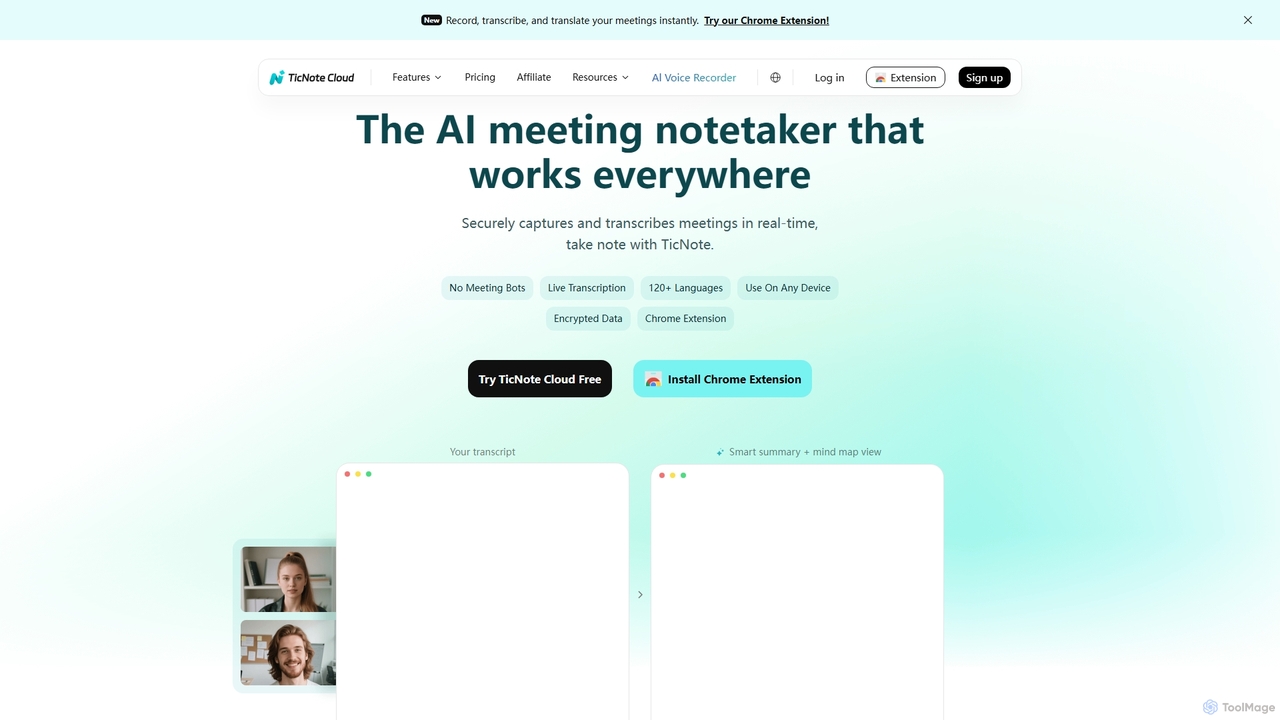
TicNote is an AI-powered meeting notetaker that transcribes, summarizes, and organizes conversations in real-time across 120+ languages. It …
TicNote is an AI-powered meeting notetaker that transcribes, summarizes, and organizes conversations in real-time across 120+ languages. It uses on-device AI to generate smart summaries, mind maps, and action items without meeting bots, enhancing productivity and knowledge management for professionals.
About Language Processing
Language Processing tools are a specialized category of AI designed to understand, interpret, and generate human language. They leverage Natural Language Processing (NLP), Understanding (NLU), and Generation (NLG) to analyze text and speech data at scale. These tools enable applications ranging from automated customer support and sentiment analysis to content summarization and real-time translation, transforming unstructured language data into actionable insights and structured information.
Core Features
- Sentiment Analysis: Automatically determines the emotional tone (positive, negative, neutral) within a piece of text.
- Named Entity Recognition (NER): Identifies and categorizes key information in text, such as names, places, and organizations.
- Text Summarization: Condenses long documents or articles into concise, coherent summaries without losing critical information.
- Machine Translation: Translates text from one language to another with high accuracy and contextual awareness.
- Text Generation: Creates new, human-like text based on input prompts or structured data.
Use Cases
These tools are widely used in customer service for analyzing feedback, in marketing for monitoring brand reputation on social media, and in legal and financial sectors for extracting key data from large volumes of documents like contracts and reports. They also power content creation workflows and global communication platforms.
How to Choose
When selecting a Language Processing tool, consider the specific tasks you need, such as translation versus analysis. Evaluate the range and accuracy of supported languages, its integration capabilities via API, and its performance benchmarks for your use case. Also, assess the pricing model based on your expected volume of data processing and required features.
Language ProcessingUse Cases
Automate Customer Feedback Analysis
A product manager for a global e-commerce company needs to understand customer sentiment across thousands of product reviews in multiple languages. Instead of manual reading, they use a Language Processing tool with sentiment analysis and entity recognition. The tool processes all reviews, identifies recurring topics (e.g., "shipping speed," "product quality"), and assigns a sentiment score to each. This provides a clear, data-driven dashboard of customer pain points and strengths, enabling the team to prioritize product improvements and reduce analysis time by over 90%.
Streamline Legal Document Review
A legal team at a large corporation regularly reviews hundreds of contracts to identify specific clauses, risks, and obligations. This manual process is time-consuming and prone to error. By implementing a Language Processing tool, they can automatically scan documents to extract key entities like party names, effective dates, and liability clauses. The tool can also summarize lengthy sections, allowing lawyers to quickly grasp the core content and focus their attention on critical areas, significantly accelerating the due diligence process.
Generate Multilingual Marketing Content
A marketing team aims to launch a global campaign across five different regions. Creating localized ad copy, social media posts, and email newsletters for each language is a major bottleneck. Using a Language Processing tool with advanced translation and text generation capabilities, they input their core English message. The tool not only translates the content but also adapts it to cultural nuances. It can then generate multiple variations of ad headlines and body text for A/B testing, enabling the team to deploy localized campaigns faster and more effectively.
Summarize Academic Research and Reports
A researcher or student needs to review dozens of academic papers and lengthy industry reports for a literature review. Reading each document in full is impractical. They use a Language Processing tool specialized in text summarization. By uploading the documents or providing URLs, the tool generates concise, structured summaries that highlight the key findings, methodology, and conclusions of each paper. This allows the researcher to quickly assess the relevance of each source and synthesize information from multiple documents efficiently.
Power Intelligent Chatbots and Voice Assistants
A company wants to improve its 24/7 customer support by deploying an intelligent chatbot on its website. They integrate a Language Processing API that provides Natural Language Understanding (NLU). This allows the chatbot to go beyond simple keyword matching. It can understand user intent, handle complex queries, remember context within a conversation, and escalate to a human agent when necessary. This results in a more natural, helpful user experience and a significant reduction in the workload for human support agents.
Monitor Brand Mentions and Social Media Trends
A public relations specialist needs to track brand perception and identify emerging trends in real-time. They use a Language Processing tool to monitor millions of social media posts, news articles, and forums. The tool automatically identifies mentions of their brand, competitors, and relevant keywords. It then performs sentiment analysis on each mention, providing an immediate overview of public opinion. This enables the PR team to quickly respond to negative feedback, amplify positive stories, and stay ahead of industry conversations.