ToolMage
Sign in

Best 3 Personalized Learning AI tools for Ai

Popular Personalized Learning AI tools in Ai include Studydrive, Board Infinity, and Augmental, helping you work more efficiently.

Board Infinity
Freemium

Board Infinity

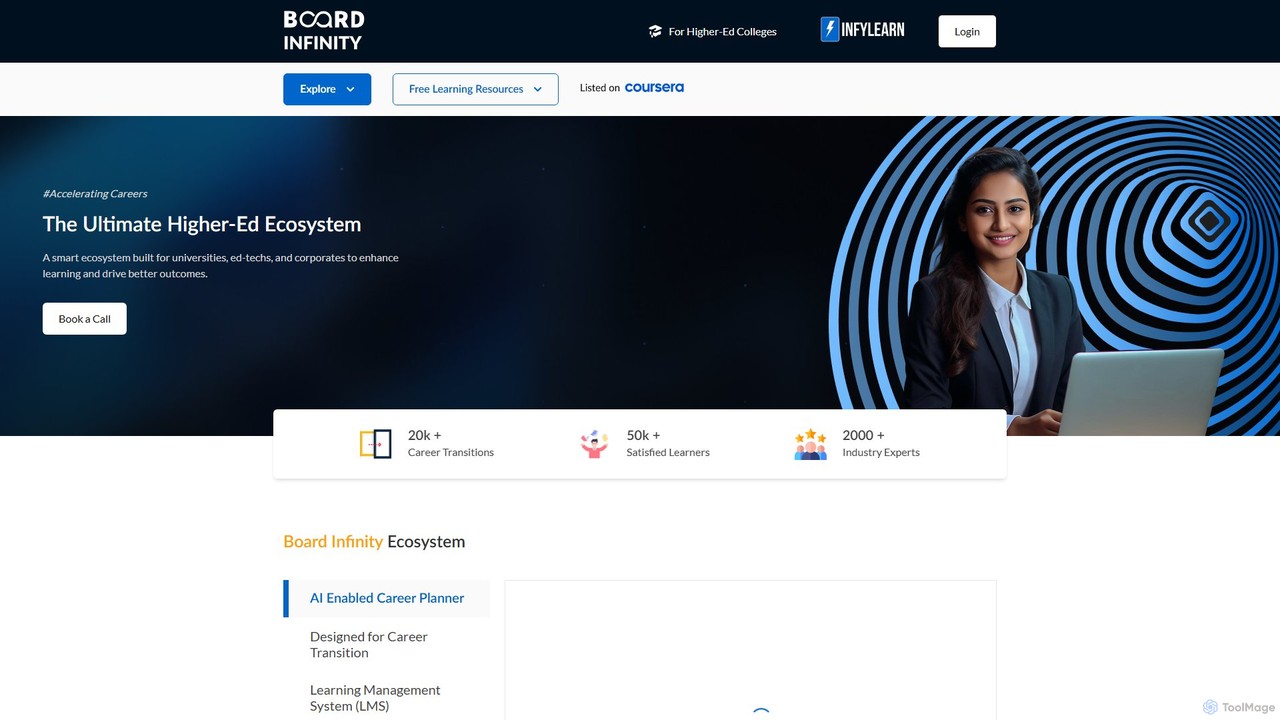
Board Infinity is an AI-powered EdTech platform designed to accelerate careers. It offers comprehensive courses in Data Science, Digital Marketing, and Full-Stack Development, combined with 1:1 personalized coaching from industry experts and robust job placement assistance. Its AI-enabled career planner helps learners identify the best path for their professional growth, making it a complete ecosystem for students, professionals, and higher-education institutions.

Personalized Learning
Visits 109.7KFavorites 104Likes 121
Augmental
Paid

Augmental

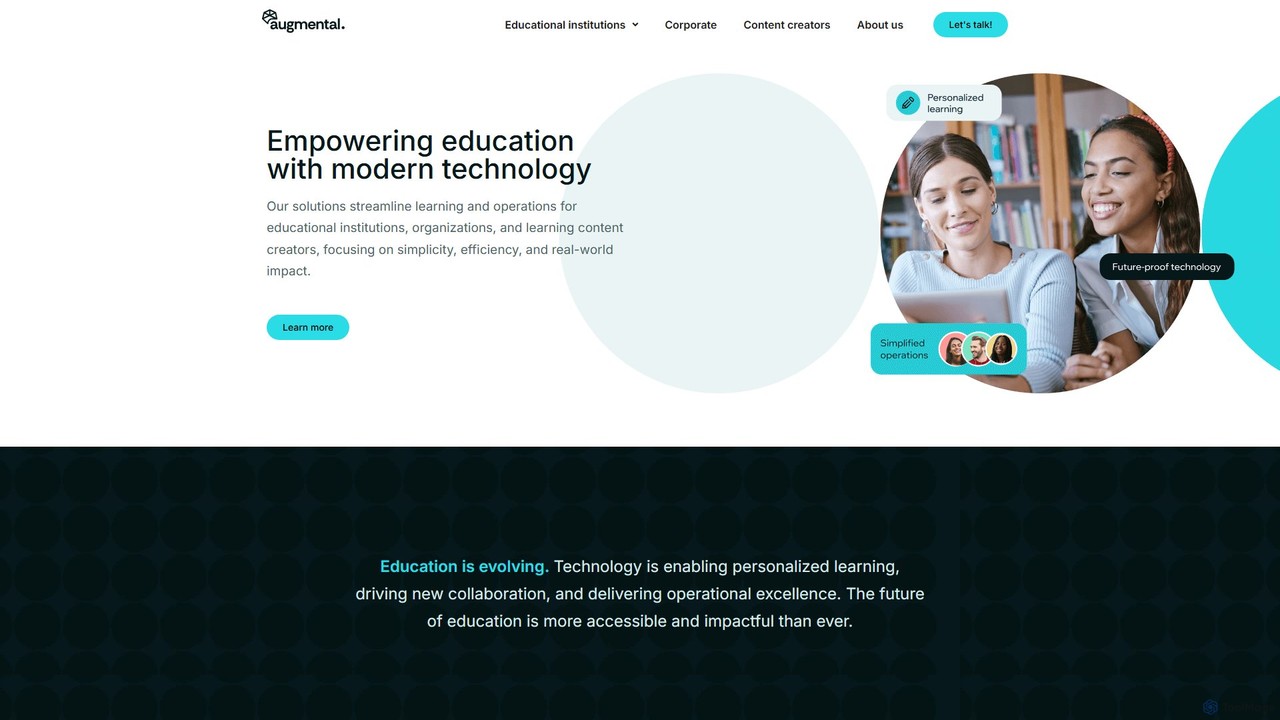
Augmental is an AI-native educational platform featuring the Learnloom LMS, designed to empower institutions and content creators. It automates course creation, provides personalized learning paths with AI tutoring, and offers deep analytics to enhance learner success and operational efficiency.

Personalized Learning
Visits 5.1KFavorites 82Likes 90
Studydrive
Freemium

Studydrive

Studydrive is a leading European learning platform for students, offering over a million shared study resources like notes and past exams. It enhances the learning experience with AI-powered tools, including automatic flashcard generation and document summaries. The platform also fosters a collaborative community for Q&A and provides career resources, making it an all-in-one solution for academic and professional success.

Personalized Learning
Visits 942.2KFavorites 131Likes 121

About Personalized Learning

Personalized Learning AI tools are advanced platforms that leverage artificial intelligence to tailor educational content, pace, and methods to individual learner needs. These tools analyze a student's performance, learning style, and preferences to deliver a uniquely adaptive educational experience. They aim to optimize learning outcomes by providing targeted resources and feedback, making education more engaging and effective.

Core Features

  • Adaptive Content Delivery: Dynamically adjusts learning materials and difficulty based on real-time progress.
  • Performance Analytics: Tracks student performance, identifies strengths, weaknesses, and learning patterns.
  • Personalized Recommendations: Suggests relevant resources, exercises, and learning paths for individual improvement.
  • Intelligent Tutoring Systems: Provides AI-driven guidance and explanations, simulating a one-on-one tutor.
  • Skill Gap Identification: Pinpoints specific knowledge gaps and recommends targeted interventions.

Use Cases

These tools are widely adopted in K-12 education, higher learning institutions, and corporate training environments. They empower educators to manage diverse classrooms more effectively and enable learners to progress at their own optimal speed. From mastering complex subjects to acquiring new professional skills, personalized learning AI enhances educational efficiency and engagement for students, employees, and lifelong learners alike.

How to Choose

When selecting Personalized Learning AI tools, consider the breadth of content adaptation, the accuracy of performance analytics, and the intuitiveness of the user interface. Evaluate its integration capabilities with existing learning management systems (LMS) and the level of customization offered for different curricula. Additionally, assess the quality of AI-driven feedback and the support for various learning modalities.

Featured tool rankings

Personalized Learning use cases

1

Enhancing K-12 Student Engagement and Mastery

For K-12 educators, personalized learning AI tools allow for differentiated instruction within a single classroom. Teachers can assign adaptive modules that cater to each student's current understanding and learning pace, ensuring advanced students are challenged while those needing extra support receive targeted assistance. This leads to improved subject mastery and increased student engagement by making learning relevant to individual progress.

2

Accelerating Corporate Skill Development

Corporate training departments utilize personalized learning platforms to rapidly upskill or reskill employees. The AI assesses an employee's existing knowledge and job role requirements, then curates a custom learning path focused on critical skills. This approach minimizes training time, maximizes knowledge retention, and ensures employees acquire the precise competencies needed for their roles, directly impacting productivity and career growth.

3

Supporting Higher Education Remedial Programs

Universities and colleges deploy personalized learning AI to support students requiring remedial assistance in foundational subjects like math or writing. The AI identifies specific areas of weakness for each student and provides tailored exercises and resources. This helps students quickly close knowledge gaps, build confidence, and succeed in their core coursework without requiring extensive one-on-one tutoring resources.

4

Facilitating Lifelong Learning and Personal Growth

Individual learners pursuing personal development or new hobbies benefit from personalized learning AI by receiving curated content that matches their interests and current skill level. Whether learning a new language, coding, or a musical instrument, the AI adapts the curriculum, suggests practice exercises, and tracks progress, making self-directed learning more structured, efficient, and rewarding.

5

Optimizing Content Creation for Educators

Educators and instructional designers use personalized learning AI to inform and optimize their content creation. By analyzing student interaction data and performance patterns across various modules, the AI highlights areas where content might be unclear or ineffective. This data-driven insight allows creators to refine existing materials and develop new content that is more impactful and tailored to common learning challenges.

6

Providing Adaptive Test Preparation

Students preparing for standardized tests (e.g., SAT, GRE, professional certifications) leverage personalized learning AI for highly efficient study. The AI diagnoses specific areas of weakness based on practice test results, then generates a customized study plan focusing on those topics. It provides adaptive practice questions and explanations, ensuring study time is spent on areas with the highest potential for improvement, leading to better scores.

Personalized Learning FAQ

What are Personalized Learning AI tools?

Personalized Learning AI tools are software applications that use artificial intelligence to adapt educational content, pace, and teaching methods to suit individual learners. They analyze a student's progress, learning style, and knowledge gaps to provide a highly customized educational experience, aiming to make learning more efficient and effective than traditional one-size-fits-all approaches.

How do Personalized Learning AI tools work?

These tools typically work by collecting data on a learner's interactions, responses, and performance. AI algorithms then process this data to build a profile of the learner's strengths, weaknesses, and preferred learning modalities. Based on this profile, the AI dynamically adjusts the curriculum, recommends specific resources, offers targeted feedback, and modifies the difficulty level of tasks to optimize the learning path for that individual.

What are the main benefits of using Personalized Learning AI?

The primary benefits include increased learner engagement, improved academic performance, and greater efficiency in skill acquisition. By tailoring content to individual needs, these tools reduce frustration, keep learners motivated, and ensure that time is spent on areas where it's most needed. They also provide valuable insights for educators and trainers, helping them understand collective and individual learning trends.

How do I choose the best Personalized Learning AI tool for my needs?

To choose the best tool, first define your specific learning goals and target audience (e.g., K-12, corporate, self-study). Evaluate the tool's adaptive capabilities, content quality, and the depth of its analytics. Consider its compatibility with existing systems (LMS), ease of use for both learners and administrators, and the level of support provided. Finally, compare pricing models and review user testimonials.

What is the difference between Personalized Learning AI and traditional adaptive learning?

While both adapt to learners, Personalized Learning AI goes beyond traditional adaptive learning by leveraging more sophisticated AI, machine learning, and natural language processing. Traditional adaptive systems often follow rule-based logic. AI-driven tools can understand nuanced learner behavior, predict future performance, offer more human-like tutoring, and generate novel content or explanations, providing a deeper, more dynamic, and truly individualized experience.