PhxTemplates
PhxTemplates offers production-ready Elixir Phoenix website templates and boilerplates designed to accelerate development. Featuring pre-built integrations with Stripe, …
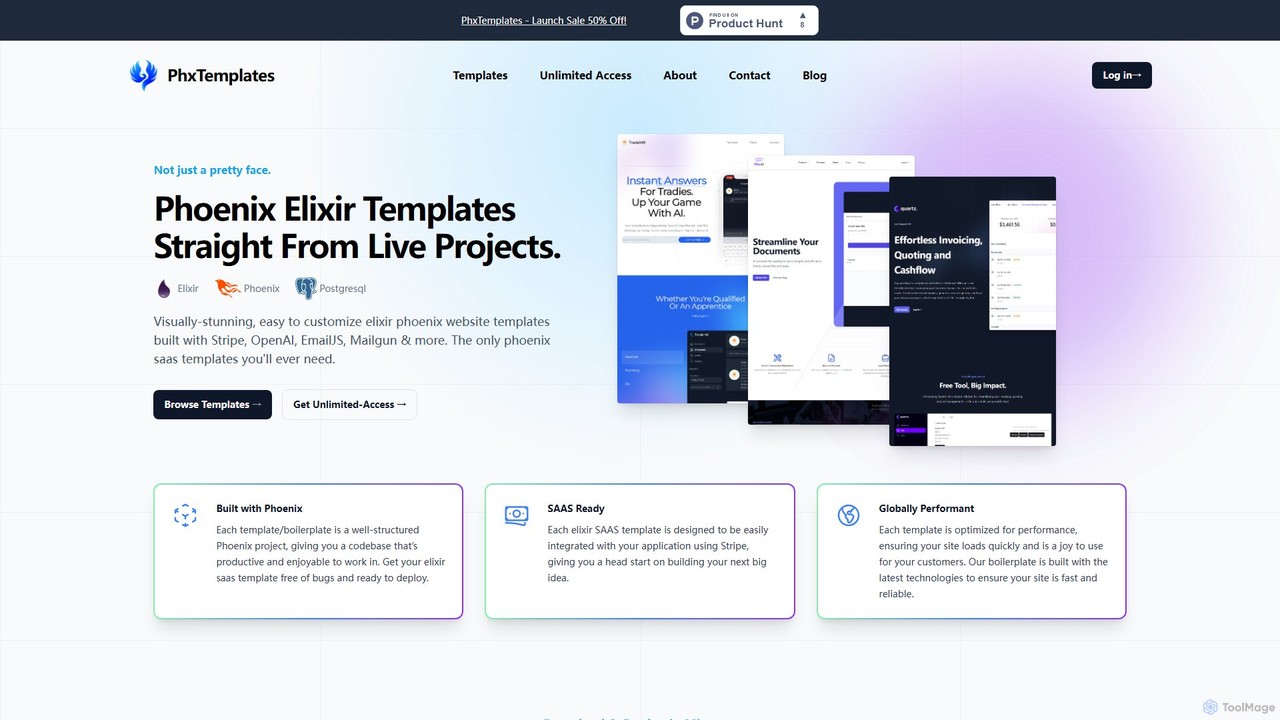
PhxTemplates offers production-ready Elixir Phoenix website templates and boilerplates designed to accelerate development. Featuring pre-built integrations with Stripe, OpenAI, and Mailgun, these templates are perfect for launching SaaS applications, AI-powered tools, blogs, and portfolios quickly. Save hundreds of development hours and launch your project in days, not weeks.
About Saas
AI SaaS (Software as a Service) refers to cloud-based applications that integrate artificial intelligence capabilities, delivered over the internet on a subscription model. These tools leverage advanced AI models like machine learning, natural language processing, and computer vision to automate complex tasks and provide intelligent insights. By offering AI functionalities as a service, AI SaaS solutions enable businesses to access cutting-edge technology without significant upfront investment in infrastructure or development. This model ensures scalability, automatic updates, and continuous innovation, making sophisticated AI accessible to a broader range of users and organizations.
Core Features
- Cloud-based Delivery: Access AI functionalities anytime, anywhere via the internet.
- Subscription Model: Flexible pricing based on usage or features, reducing capital expenditure.
- Integrated AI Capabilities: Embeds advanced machine learning, NLP, or computer vision directly into the software.
- Scalability & Elasticity: Easily adjust resources to meet fluctuating demand without manual intervention.
- Automatic Updates & Maintenance: Providers handle software updates, security patches, and infrastructure management.
Applicable Scenarios
AI SaaS tools are widely adopted across various industries and departments, from small businesses to large enterprises. They are particularly valuable for marketing teams seeking personalized campaign automation, customer service departments aiming to enhance support with intelligent chatbots, and data analysts needing predictive insights without complex model building. Developers also utilize AI SaaS APIs to integrate intelligent features into their own applications quickly.
How to Choose
Selecting an AI SaaS solution requires evaluating several key factors. Consider the specific AI capabilities you need, such as natural language understanding or predictive analytics, and ensure they align with your business goals. Assess its integration capabilities with your existing software ecosystem, data security protocols, and compliance standards. Evaluate the pricing model for scalability and cost-effectiveness, and review the vendor's support and update policies to ensure long-term reliability and performance.

SaasUse Cases
Automated Customer Service with AI Chatbots
Customer service departments leverage AI SaaS chatbots to handle routine inquiries, provide instant support, and guide users through common issues 24/7. This frees human agents to focus on complex problems, significantly reducing response times and improving customer satisfaction. The AI learns from interactions, continuously enhancing its ability to understand and resolve user queries efficiently.
Personalized Marketing Campaign Optimization
Marketing teams utilize AI SaaS platforms to analyze customer data, segment audiences, and personalize content delivery across various channels. These tools can predict customer behavior, recommend optimal campaign timings, and dynamically adjust messaging for higher engagement and conversion rates. This leads to more effective marketing spend and a deeper understanding of customer preferences.
Predictive Sales Forecasting and Lead Scoring
Sales organizations deploy AI SaaS solutions to forecast future sales trends, identify high-potential leads, and prioritize outreach efforts. By analyzing historical data and market indicators, these platforms provide actionable insights, helping sales teams focus on the most promising opportunities. This enhances sales efficiency and contributes to more accurate revenue projections.
Automated Content Generation for Digital Media
Content creators and marketers use AI SaaS writing assistants to generate drafts for articles, social media posts, ad copy, and product descriptions. These tools can produce multiple content variations quickly, optimize for SEO, and maintain brand voice. This accelerates content production cycles, allowing teams to scale their output and maintain a consistent online presence.
Streamlined HR Recruitment and Onboarding
HR departments adopt AI SaaS platforms to automate various stages of recruitment, from resume screening and candidate matching to interview scheduling. These tools can analyze applicant data to identify best-fit candidates, reduce bias, and streamline the onboarding process. This significantly cuts down recruitment time and costs while improving the quality of hires.
Real-time Financial Fraud Detection
Financial institutions and e-commerce businesses employ AI SaaS solutions to monitor transactions in real-time for suspicious activities indicative of fraud. These platforms use machine learning algorithms to detect anomalies and patterns that human analysts might miss, flagging potential fraud instantly. This protects both the business and its customers from financial losses and enhances security.