Asker-I
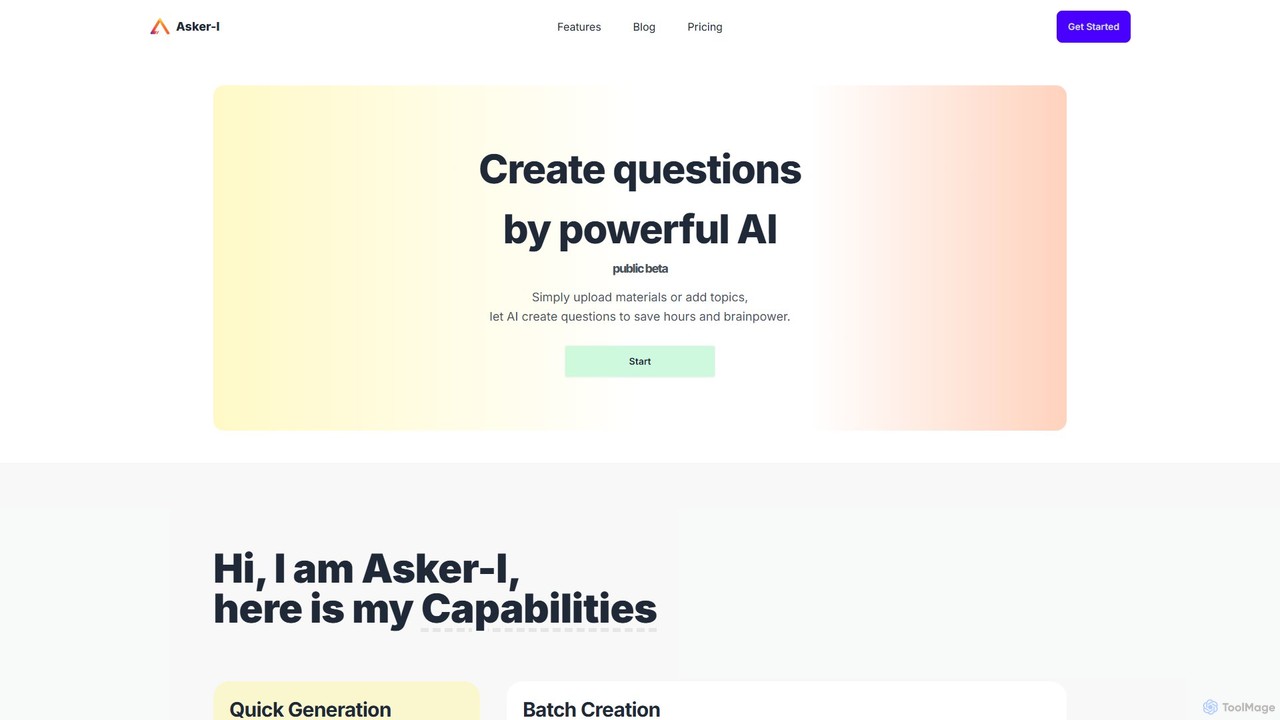
Asker-I is an AI-powered question generator that transforms your documents and topics into quizzes and assessments. Simply upload …
Asker-I is an AI-powered question generator that transforms your documents and topics into quizzes and assessments. Simply upload materials like TXT, DOCX, or PDF files, and the tool automatically creates various question types, including multiple-choice, fill-in-the-blank, and short answer. It's designed for educators, students, and professionals to save significant time and effort in creating learning and evaluation materials.
About Text Analysis
Text Analysis tools are AI-powered solutions designed to automatically extract, interpret, and organize meaningful information from unstructured text data. Leveraging advanced Natural Language Processing (NLP) techniques, these tools can identify patterns, sentiments, entities, and topics within vast amounts of textual content. They provide invaluable insights for businesses, researchers, and individuals seeking to understand customer feedback, market trends, or complex documents, transforming raw text into actionable intelligence.
Core Features
- Sentiment Analysis: Automatically detects the emotional tone (positive, negative, neutral) of text.
- Entity Recognition: Identifies and classifies key entities like names, organizations, locations, and dates.
- Topic Modeling: Discovers abstract topics present in a collection of documents.
- Keyword Extraction: Pulls out the most relevant words and phrases from text.
- Text Summarization: Generates concise summaries of longer documents or articles.
Use Cases
Text Analysis tools are indispensable for various sectors. Marketing teams use them to monitor brand mentions and public sentiment on social media, while customer service departments analyze feedback from surveys and reviews to pinpoint common issues and improve service quality. Researchers leverage these tools to quickly process academic papers, extracting key findings and identifying thematic connections across large datasets.
How to Choose
When selecting a Text Analysis tool, consider its NLP capabilities, such as the accuracy of sentiment analysis or entity recognition for your specific language and domain. Evaluate its scalability for handling large volumes of data, integration options with existing platforms, and the flexibility of its API. Finally, assess the user interface for ease of use and the availability of pre-trained models versus custom model training capabilities to match your technical expertise and specific analytical needs.

Text AnalysisUse Cases
Analyze Customer Feedback for Product Improvement
Product managers and customer experience teams utilize text analysis tools to process thousands of customer reviews, survey responses, and support tickets. By performing sentiment analysis and topic modeling, they can quickly identify recurring pain points, feature requests, and overall satisfaction levels. This enables data-driven decisions for prioritizing product enhancements and addressing critical user needs, leading to improved customer satisfaction and product market fit.
Monitor Brand Reputation on Social Media
Marketing and PR professionals leverage text analysis to continuously monitor social media platforms, news articles, and blogs for mentions of their brand, competitors, and industry trends. By analyzing the sentiment and context of these mentions, they can quickly detect potential PR crises, identify brand advocates, and understand public perception. This proactive approach allows for timely responses and strategic adjustments to communication strategies, safeguarding brand image and capitalizing on positive buzz.
Extract Key Information from Legal Documents
Legal professionals and paralegals use text analysis tools to efficiently review large volumes of contracts, legal briefs, and discovery documents. These tools can automatically identify and extract critical entities such as party names, dates, clauses, and obligations, as well as highlight potential risks or inconsistencies. This significantly reduces the manual effort and time required for document review, enhancing accuracy and accelerating legal processes, from due diligence to litigation support.
Identify Trends in Academic Research Papers
Researchers and academics employ text analysis to sift through vast libraries of scientific literature, journal articles, and conference proceedings. By applying topic modeling and keyword extraction, they can quickly identify emerging research trends, influential authors, and connections between disparate fields. This capability significantly accelerates literature reviews, helps in formulating new research questions, and ensures researchers stay abreast of the latest developments in their respective domains, saving countless hours of manual reading.
Enhance Content Strategy and SEO
Content creators and SEO specialists utilize text analysis tools to optimize their written content for search engines and audience engagement. By analyzing competitor content, identifying popular keywords, and assessing readability scores, these tools help in crafting more effective articles, blog posts, and website copy. They can also suggest related topics and improve content structure, leading to higher search engine rankings, increased organic traffic, and better audience retention by providing relevant and engaging material.
Automate Data Extraction from Unstructured Reports
Business analysts and data scientists frequently encounter unstructured reports, emails, and internal documents from which specific data points need to be extracted for analysis. Text analysis tools, particularly those with advanced entity recognition and pattern matching capabilities, can automate this tedious process. They can identify and pull out key figures, dates, product names, or project statuses, transforming qualitative data into structured formats. This automation saves significant time and reduces errors, enabling faster and more accurate data-driven decision-making across an organization.