ToolMage
Sign in

Best 1 Text Summarizer AI tools for Ai

Popular Text Summarizer AI tools in Ai include Studyflash, helping you work more efficiently.

Studyflash
Freemium

Studyflash

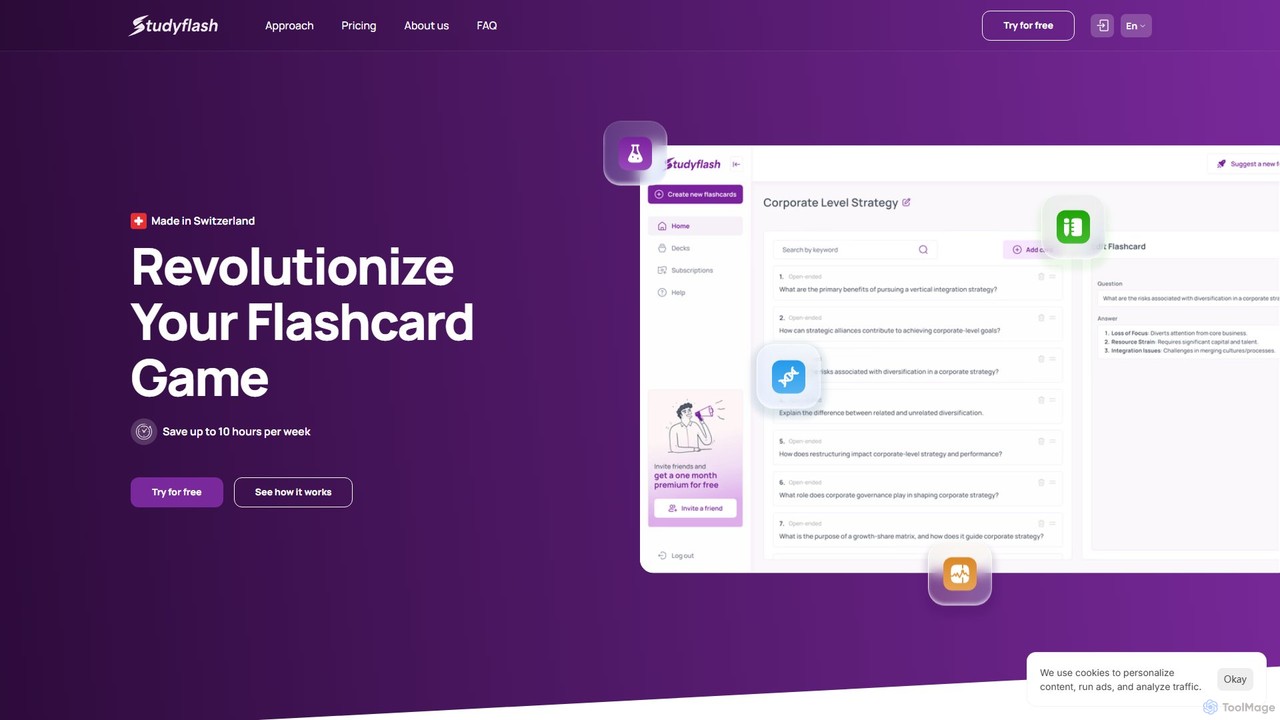
Studyflash is an AI-powered learning platform that automatically generates flashcards from your study materials. Simply upload lecture slides, notes, or summaries, and the AI creates optimized flashcards in seconds. It saves students hours of manual work and enhances learning with scientifically-proven techniques like spaced repetition and active recall.

Text Summarizer
Visits 196KFavorites 96Likes 89

About Text Summarizer

Text Summarizers are AI-powered tools designed to condense lengthy documents, articles, or web pages into shorter, coherent summaries while retaining the core information. Leveraging advanced Natural Language Processing (NLP) techniques, these tools can quickly extract key sentences or generate new, concise paragraphs. They significantly enhance productivity by enabling users to grasp essential insights from vast amounts of text without extensive reading, making information consumption more efficient across various professional and academic fields.

Core Features

  • Extractive Summarization: Identifies and extracts the most important sentences or phrases directly from the original text to form a summary.
  • Abstractive Summarization: Generates new sentences and phrases that convey the main ideas, often paraphrasing the original content for greater conciseness.
  • Customizable Length: Allows users to specify the desired length of the summary, either by word count, percentage, or number of sentences.
  • Multi-language Support: Capable of processing and summarizing texts in various languages, catering to a global user base.
  • Key Phrase Extraction: Beyond summarization, some tools can identify and list the most relevant keywords and phrases within the document.

Use Cases

Text Summarizers are invaluable for professionals and students alike. Content creators use them to quickly distill research findings, while business analysts condense lengthy reports into executive summaries. Students leverage these tools to create study notes from academic papers, and journalists can rapidly grasp the essence of breaking news articles.

How to Choose

When selecting a Text Summarizer, consider the summarization method (extractive vs. abstractive) that best suits your needs, as abstractive models offer more nuanced summaries but can be more complex. Evaluate its accuracy and coherence, especially for your specific text types. Look for features like customizable output length, support for multiple languages, and integration capabilities with your existing workflows. Finally, assess the pricing model and user interface for ease of use and cost-effectiveness.

Featured tool rankings

Text Summarizer use cases

1

Summarize Research Papers for Academics

Academics and students often face an overwhelming volume of research papers and journals. A text summarizer allows them to quickly condense lengthy scientific articles into digestible summaries, highlighting key findings, methodologies, and conclusions. This saves significant time during literature reviews, helping them to efficiently identify relevant studies and build comprehensive bibliographies without reading every word of every paper.

2

Condense Business Reports for Executives

Executives and managers frequently receive extensive business reports, market analyses, and project updates. Using a text summarizer, they can rapidly extract the most critical information, such as key performance indicators, strategic recommendations, and potential risks, from these long documents. This enables quick decision-making and efficient communication of essential points to stakeholders, streamlining internal reporting processes.

3

Generate Social Media Content from Articles

Content marketers and social media managers need to create engaging posts from longer blog articles, news pieces, or press releases. A text summarizer helps them to instantly generate short, catchy summaries or bullet points that capture the essence of the original content. This facilitates rapid content creation for platforms like Twitter, LinkedIn, or Instagram, ensuring consistent engagement and saving valuable time in content repurposing.

4

Extract Key Information from Legal Documents

Legal professionals, including lawyers and paralegals, often deal with voluminous legal briefs, contracts, and case files. A text summarizer can assist in quickly identifying the most pertinent clauses, arguments, and facts within these complex documents. This capability is crucial for preparing for court, reviewing contracts, or conducting due diligence, significantly reducing the manual effort required to sift through dense legal text.

5

Process Customer Feedback and Reviews

Customer service teams and product managers need to analyze large volumes of customer feedback, reviews, and support tickets to identify common issues and sentiment. A text summarizer can condense these diverse inputs into thematic summaries, highlighting recurring problems, feature requests, or areas of satisfaction. This provides actionable insights for product development and service improvement, without manually reading every single piece of feedback.

6

Create Study Notes from Textbooks and Lectures

Students preparing for exams or reviewing course material can utilize text summarizers to transform long textbook chapters, lecture transcripts, or online educational resources into concise study notes. The tool extracts or generates summaries of core concepts, definitions, and examples, making it easier to review and memorize essential information. This personalized approach to note-taking enhances learning efficiency and retention.

Text Summarizer FAQ

What is a Text Summarizer?

A Text Summarizer is an AI-powered tool that automatically condenses longer pieces of text into shorter, more manageable versions while preserving the main ideas and critical information. These tools leverage Natural Language Processing (NLP) algorithms to either extract key sentences directly from the original content (extractive summarization) or generate entirely new, concise sentences that convey the core message (abstractive summarization). They are widely used to save time, improve information retention, and quickly grasp the essence of documents.

How do AI Text Summarizers work?

AI Text Summarizers primarily work using Natural Language Processing (NLP) and machine learning models. Extractive summarizers identify and rank sentences based on their importance (e.g., keyword frequency, position, sentence structure) and then stitch the highest-ranked sentences together. Abstractive summarizers, on the other hand, use more advanced neural networks (like transformer models) to understand the text's meaning and then generate new, coherent sentences that convey the summary, similar to how a human would paraphrase. Both methods aim to reduce text length while maintaining informational value.

What are the main benefits of using a Text Summarizer?

The primary benefits of using a Text Summarizer include significant time-saving, especially when dealing with large volumes of information. They help improve comprehension by presenting only the most crucial points, reducing cognitive load. For content creators, they streamline the process of repurposing content for different platforms. Additionally, summarizers can enhance productivity in research, academic studies, and business intelligence by allowing users to quickly scan and prioritize documents based on their summarized content.

What is the difference between extractive and abstractive summarization?

The main difference lies in how summaries are generated. Extractive summarization works by identifying and extracting existing sentences or phrases directly from the original text that are deemed most important. The summary is a collection of these original snippets. In contrast, abstractive summarization involves generating new sentences and phrases that capture the core meaning of the original text, often paraphrasing or rephrasing content. Abstractive summaries can be more concise and human-like but are also more complex to develop and can sometimes introduce inaccuracies if the AI misinterprets context.

Can Text Summarizers handle different languages and document types?

Yes, many modern AI Text Summarizers are designed to handle multiple languages, thanks to advancements in multilingual NLP models. Their effectiveness can vary by language, but most popular languages are well-supported. Regarding document types, they can process a wide range, including news articles, academic papers, legal documents, business reports, emails, and web pages. The quality of the summary often depends on the clarity and structure of the original text, with well-structured documents yielding better results.