Waikay
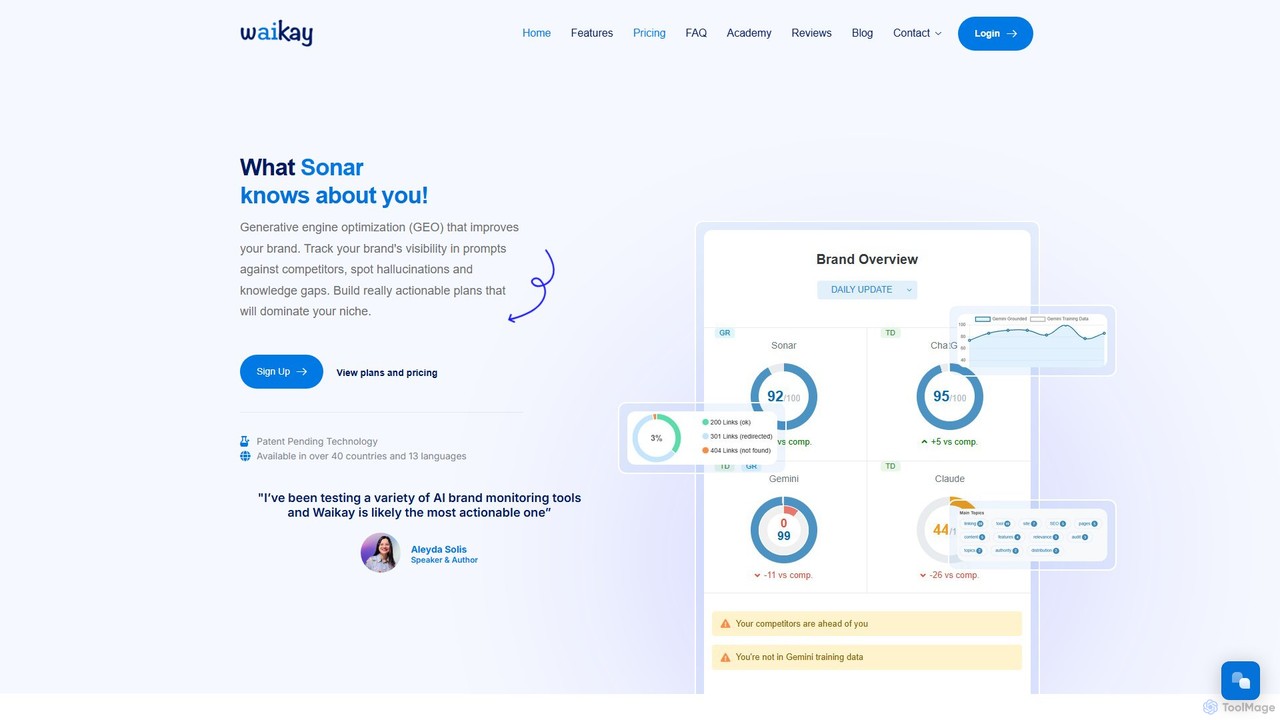
Waikay is a Generative Engine Optimization (GEO) platform that helps you monitor, analyze, and improve your brand's visibility …
Waikay is a Generative Engine Optimization (GEO) platform that helps you monitor, analyze, and improve your brand's visibility and reputation within Large Language Models (LLMs) like ChatGPT, Gemini, and Claude. Track your brand against competitors, identify AI hallucinations and knowledge gaps, and receive actionable plans to dominate your niche in the new era of AI-driven search and information discovery.
BrandBeacon
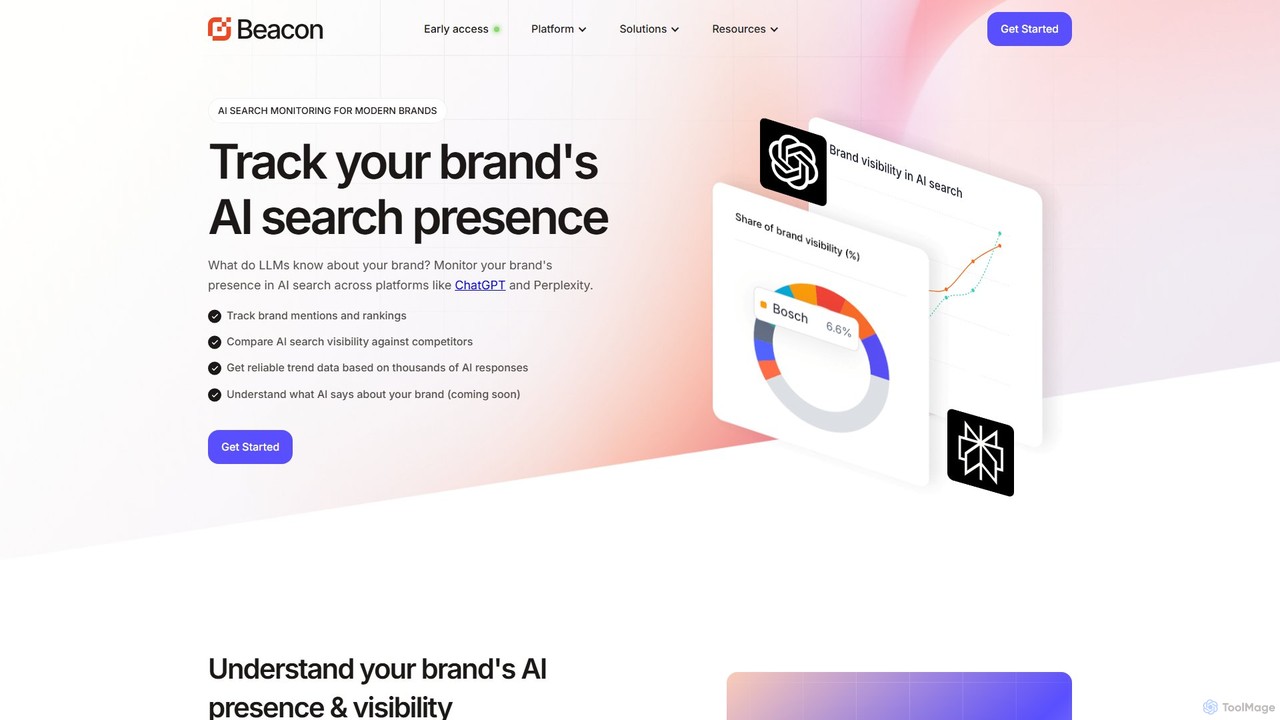
BrandBeacon is an AI search monitoring and visibility platform that helps brands track their presence across major AI …
BrandBeacon is an AI search monitoring and visibility platform that helps brands track their presence across major AI engines like ChatGPT, Perplexity, and Claude. It provides real-time analytics, competitive benchmarking, and actionable insights for marketing teams to optimize their AI SEO and brand strategy in the new era of search.
Vibe Scan
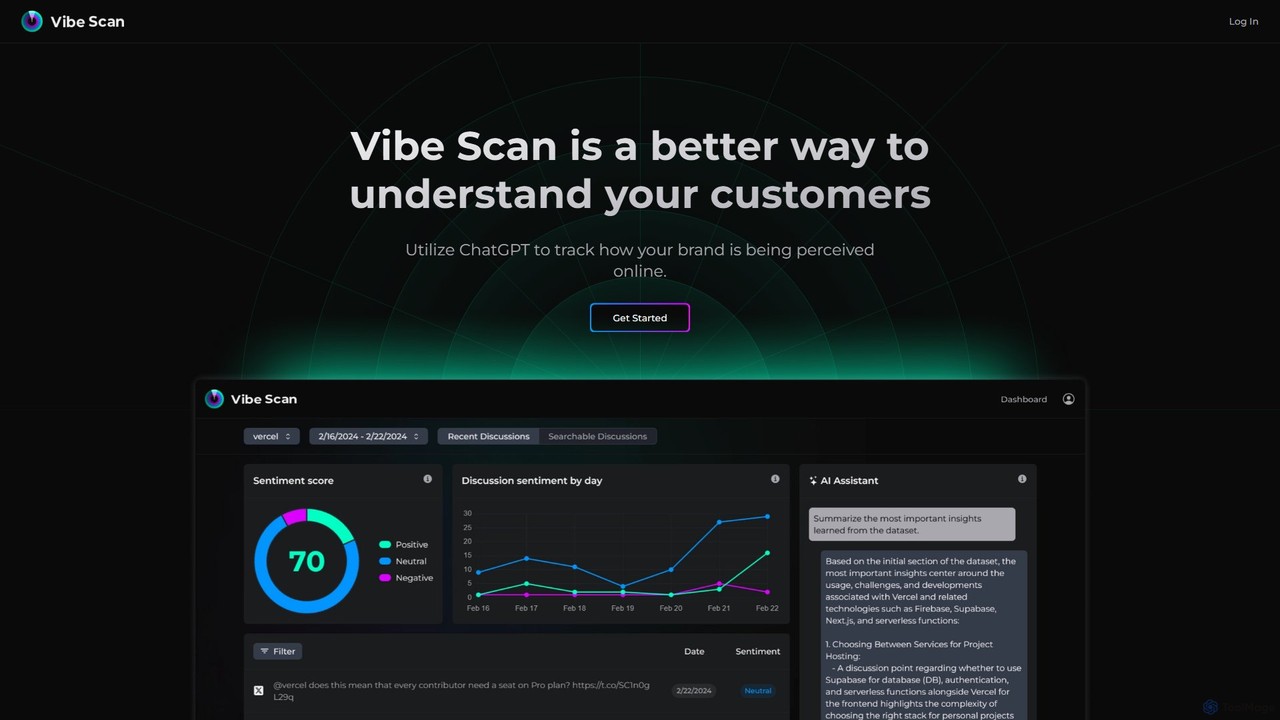
Vibe Scan is an AI-powered sentiment analysis tool that helps brands understand their online perception. It utilizes ChatGPT …
Vibe Scan is an AI-powered sentiment analysis tool that helps brands understand their online perception. It utilizes ChatGPT to scour the internet, track discussions, and aggregate them into a single dashboard. Monitor your brand's sentiment score, track competitors, and gain actionable insights with a personal AI assistant to improve your online reputation.
YouScan
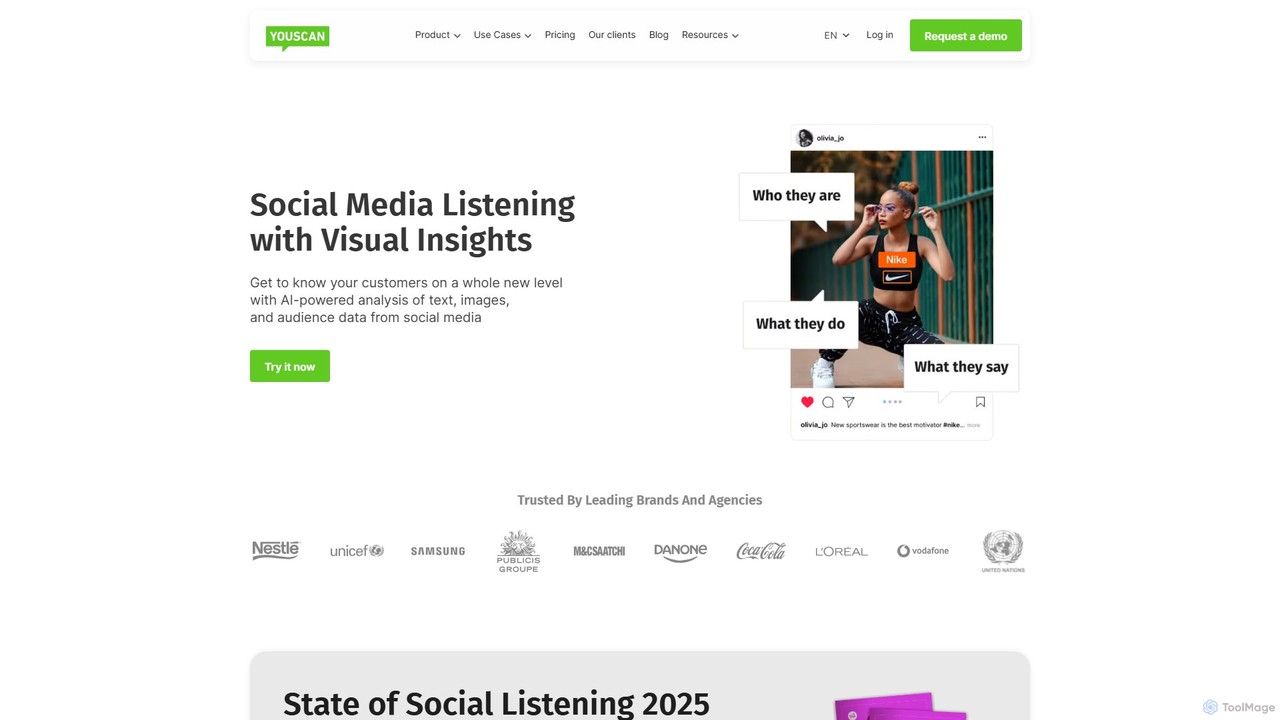
YouScan is an AI-powered social media listening platform that helps businesses analyze consumer opinions and manage brand reputation. …
YouScan is an AI-powered social media listening platform that helps businesses analyze consumer opinions and manage brand reputation. It features industry-leading image recognition technology (Visual Insights) to detect logos, objects, and scenes in images. With its Insights Copilot, users can gain deep consumer insights from text and visual data across social media, blogs, and news sources, enabling effective brand management, competitor analysis, and trend spotting.
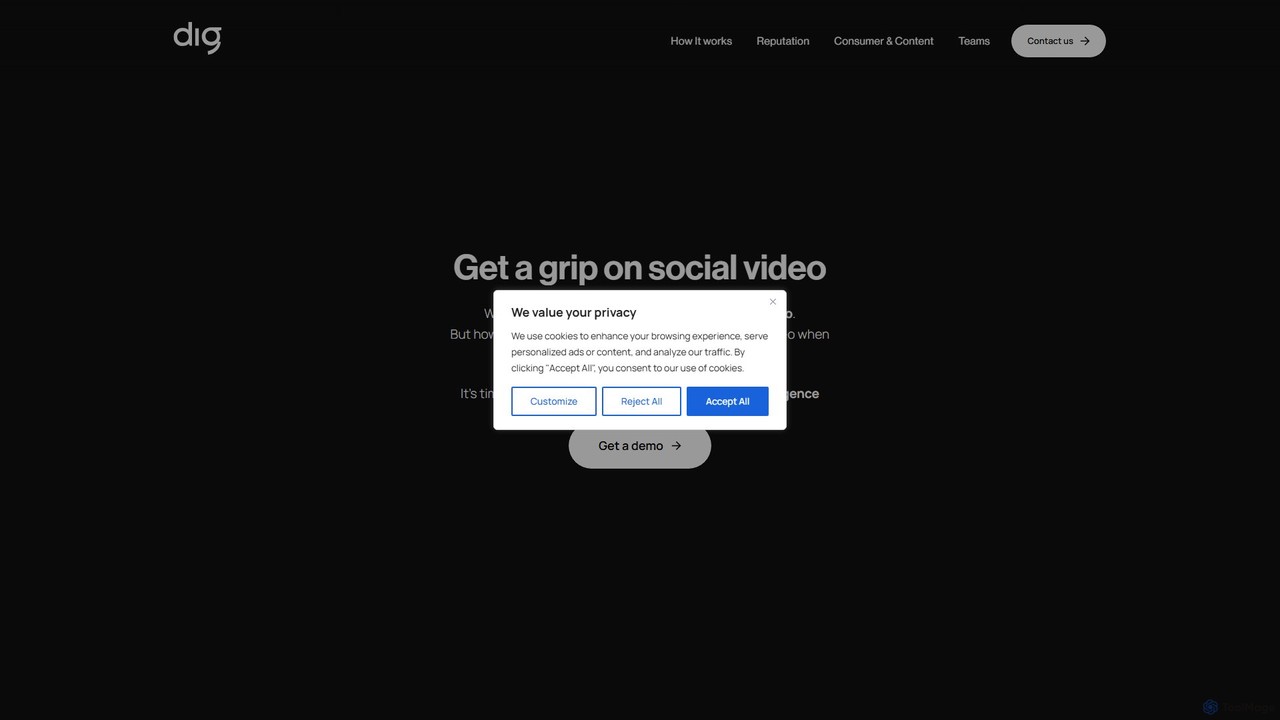
Dig
Dig is a Social Video Intelligence platform that helps brands monitor and analyze video content across all social …
Dig is a Social Video Intelligence platform that helps brands monitor and analyze video content across all social channels. It decodes spoken words, visuals, and text within videos to track brand reputation, detect emerging narratives, combat disinformation, and gain consumer insights, providing a 'Video-First' approach to social listening.
About Brand Management
AI Brand Management tools are a specialized category of analytics software designed to monitor, analyze, and protect a brand's online reputation and perception. Leveraging natural language processing (NLP) and computer vision, these tools automatically track brand mentions, sentiment, and visual identity across the web. They empower businesses to proactively manage public opinion, respond to customer feedback, and maintain a consistent brand image. This focused analysis provides deeper insights than general web analytics, focusing specifically on the qualitative aspects of brand health.
Core Features
- Social Listening & Mention Tracking: Automatically monitors social media, news sites, forums, and blogs for brand keywords and mentions.
- Sentiment Analysis: Utilizes NLP to classify mentions as positive, negative, or neutral to gauge public perception in real-time.
- Visual Brand Monitoring: Employs image recognition to detect logo usage and visual brand consistency across digital platforms.
- Reputation Scoring: Aggregates various data points to provide a quantifiable score of overall brand health and risk.
- Competitor Benchmarking: Tracks competitors' brand presence, share of voice, and sentiment for comparative analysis.
Use Cases
These tools are essential for marketing teams, public relations (PR) specialists, and corporate communications departments. They are used for crisis management by detecting negative sentiment spikes, for measuring campaign performance by tracking brand lift, and for market research by identifying consumer trends and unfiltered feedback related to the brand.
How to Choose
When selecting a tool, consider the scope of its data sources (social media, news, reviews), the accuracy of its sentiment analysis engine, its integration capabilities with CRM or marketing platforms, and the granularity of its reporting and real-time alerting features. Also, evaluate the user interface for ease of generating actionable insights.

Brand ManagementUse Cases
Proactive Crisis Management and Reputation Protection
A public relations manager for a global airline uses an AI brand management tool to receive real-time alerts for spikes in negative sentiment. The system detects a rapidly spreading customer complaint on social media about baggage handling. This immediate notification allows the communications team to investigate the issue and issue a public statement within an hour, containing the narrative and mitigating wider reputational damage before it escalates into a major news story.
Measure Marketing Campaign Impact on Brand Perception
A marketing team for a new consumer tech product launches a major influencer campaign. They use an AI brand management tool to track mentions of the campaign hashtag and product name. The tool's dashboard visualizes a significant shift in public sentiment from neutral/unknown to 75% positive during the campaign week. It also identifies which influencer's content generated the most positive engagement, providing clear data on the campaign's ROI in terms of brand lift and informing future influencer collaborations.
Analyze Competitor Brand Strategy and Positioning
A product strategist at a SaaS company continuously monitors their top three competitors. The AI tool aggregates all public mentions, categorizing them by topics like 'pricing', 'customer support', and 'feature requests'. This analysis reveals that a key competitor is receiving widespread praise for its new integration feature. This insight allows the strategist to prioritize a similar integration in their own product roadmap to remain competitive and address market demand.
Ensure Visual Brand Consistency Across Channels
A brand manager for a global retail franchise uses a tool's visual monitoring feature. The AI scans social media for images geo-tagged at their store locations. It uses logo detection to identify instances where franchisees are using outdated logos or non-compliant promotional materials. The manager receives a weekly report with flagged images, allowing them to efficiently contact the specific locations to correct the branding inconsistencies and maintain a unified global brand image.
Identify Customer Service Improvement Areas
A customer experience lead for an e-commerce company analyzes all negative brand mentions from the past quarter. The AI tool automatically categorizes these mentions, revealing that 'slow shipping' and 'difficult returns process' are the two most frequent complaints, accounting for 60% of negative sentiment. This data provides a clear, evidence-based directive to the logistics and support teams to prioritize improvements in these specific areas, directly addressing the largest sources of customer dissatisfaction.
Discover User-Generated Content (UGC) for Marketing
A social media manager for a fashion brand sets up a stream to track positive mentions and tagged photos. The AI tool filters this content, highlighting high-quality customer photos that align with the brand's aesthetic. The manager can then efficiently review this curated feed, reach out to users for permission to repurpose their content, and integrate authentic UGC into official marketing campaigns, building social proof and increasing engagement at a lower cost than producing original content.