ToolMage
Sign in

Best 2 Reporting AI tools for Analytics

Popular Reporting AI tools in Analytics include Audity and IgnitionStack, helping you work more efficiently.

IgnitionStack
Paid

IgnitionStack

IgnitionStack is a production-ready SaaS boilerplate built with Next.js 15, Supabase, and Stripe, designed to help developers and entrepreneurs launch their SaaS products in days, not months. It saves over 200 hours of development time with pre-configured authentication, payments, internationalization, and a robust architecture.

Chatbot Builder
Visits 6.4KFavorites 50Likes 39
Audity
Freemium

Audity

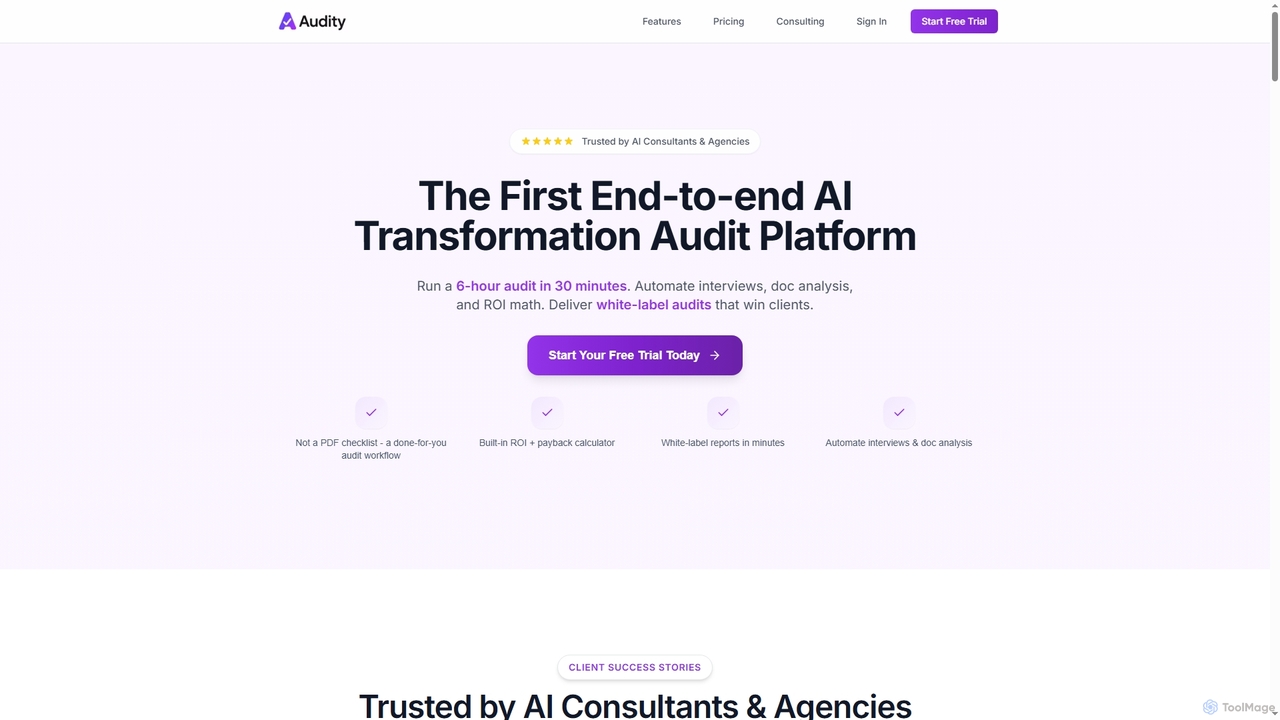
Audity is an AI-powered platform for business transformation consultants and automation agencies. It automates comprehensive business audits, quantifies ROI, and generates professional, white-labeled deliverables in minutes, streamlining lead qualification and accelerating deal closures.

Reporting
Visits 7KFavorites 166Likes 142

About Reporting

AI Reporting tools are specialized platforms that leverage artificial intelligence to automate the collection, analysis, and visualization of business data. As a crucial component within the broader analytics landscape, these tools transform complex datasets into clear, actionable reports, enabling stakeholders to quickly grasp performance metrics and make data-driven decisions. They significantly enhance efficiency by reducing manual effort in data aggregation and presentation.

Core Features

  • Automated Report Generation: Automatically compiles data from various sources and generates comprehensive reports on a scheduled basis.
  • Interactive Dashboards: Provides dynamic, customizable dashboards with real-time data visualization for easy exploration and drill-down analysis.
  • Natural Language Querying: Allows users to ask questions in plain language and receive instant, data-driven answers and visualizations.
  • Predictive Insights: Utilizes AI algorithms to identify trends, forecast future outcomes, and highlight potential risks or opportunities within reports.
  • Anomaly Detection: Automatically flags unusual patterns or outliers in data, drawing attention to critical performance shifts.

Applicable Scenarios

AI reporting tools are indispensable for various roles and industries. Marketing teams use them to track campaign performance and ROI, while sales managers rely on them for pipeline analysis and forecasting. Financial analysts leverage these tools to monitor financial health and generate compliance reports, and operations managers use them to optimize supply chain efficiency and resource allocation.

How to Choose

When selecting an AI reporting tool, consider its data source integration capabilities to ensure compatibility with your existing systems. Evaluate the level of customization offered for dashboards and reports, and assess the robustness of its AI features, such as predictive analytics and natural language processing. Scalability, ease of use, and the vendor's support and security protocols are also crucial factors for long-term effectiveness.

Reporting use cases

1

Automating Monthly Sales Performance Reports

Sales managers utilize AI reporting tools to automatically compile sales data from CRM systems, generate interactive dashboards, and highlight key trends in revenue, lead conversion, and regional performance. This automation saves hours of manual data aggregation each month, allowing managers to focus on strategic planning and coaching their teams based on real-time, accurate insights.

2

Monitoring Marketing Campaign ROI in Real-time

Marketing teams integrate data from various ad platforms (Google Ads, Facebook Ads) and analytics tools into AI reporting platforms. These tools then visualize campaign performance, calculate ROI, identify top-performing channels, and automatically generate reports that highlight areas for optimization. This enables marketers to make agile, data-driven adjustments to maximize budget efficiency and campaign effectiveness.

3

Generating Real-time Financial Health Dashboards

Financial analysts connect accounting software, ERP systems, and investment platforms to AI reporting tools. These tools then create dynamic dashboards that provide instant insights into cash flow, expenses, revenue, and profitability. With AI-driven anomaly detection, they can quickly spot unusual financial patterns, aiding proactive financial management and risk mitigation for the organization.

4

Personalized Customer Behavior Insights Reporting

E-commerce businesses and customer service departments leverage AI reporting tools to analyze customer purchase history, browsing patterns, and interaction data. These tools generate segmented reports that reveal personalized customer behavior insights, informing targeted marketing campaigns, product recommendations, and improved customer experience strategies, leading to higher engagement and conversion rates.

5

Optimizing Operational Efficiency Through Performance Reports

Operations managers deploy AI reporting tools to monitor production metrics, supply chain performance, inventory levels, and resource utilization across various departments. The tools generate visual reports that highlight bottlenecks, inefficiencies, and areas for process improvement. This data-driven approach enables managers to make informed decisions to streamline operations, reduce costs, and enhance overall productivity.

6

HR Workforce Analytics and Engagement Reporting

HR departments utilize AI reporting tools to analyze employee engagement, turnover rates, recruitment metrics, and workforce diversity data. These tools generate comprehensive reports that identify trends in employee satisfaction, predict potential attrition, and highlight areas for talent development. This enables HR professionals to develop data-driven strategies for talent management, retention, and improving overall workplace satisfaction.

Reporting FAQ

What are AI Reporting tools?

AI Reporting tools are software solutions that leverage artificial intelligence to automate and enhance the process of creating, analyzing, and distributing business reports. They go beyond traditional reporting by offering features like natural language querying, predictive insights, and automated anomaly detection, transforming raw data into easily digestible and actionable intelligence for decision-makers across an organization.

How do AI Reporting tools differ from traditional Business Intelligence (BI) tools?

While both AI reporting and traditional BI tools focus on data analysis and visualization, AI reporting tools integrate advanced machine learning capabilities. Traditional BI tools primarily present historical data through dashboards and static reports, requiring manual setup and interpretation. AI reporting tools, however, can automate report generation, offer predictive analytics, detect anomalies autonomously, and allow for natural language interaction, providing deeper, more proactive insights with less manual effort.

What are the key benefits of using AI Reporting tools?

The primary benefits of AI reporting tools include enhanced efficiency through automation, saving significant time and resources previously spent on manual data compilation. They offer deeper insights by identifying complex patterns and making predictions that human analysts might miss. Improved accuracy reduces errors, while real-time data access ensures decisions are based on the most current information. Furthermore, their user-friendly interfaces, often with natural language processing, make data accessible to a wider range of users.

What data sources can AI Reporting tools integrate with?

AI Reporting tools are designed for extensive data integration to provide a holistic view of business performance. They typically connect with a wide array of sources, including CRM systems (e.g., Salesforce), ERP platforms (e.g., SAP, Oracle), marketing automation tools (e.g., HubSpot), financial software (e.g., QuickBooks), cloud storage (e.g., Google Drive, Dropbox), databases (e.g., SQL, NoSQL), and even simple spreadsheets. This broad connectivity ensures all relevant data can be consolidated for comprehensive reporting.

Who typically uses AI Reporting tools?

AI Reporting tools are utilized by a diverse range of professionals across various departments. Business analysts and data scientists leverage them for in-depth insights and predictive modeling. Marketing managers and sales teams use them to track campaign performance and pipeline health. Financial analysts rely on them for financial health monitoring and compliance. Executives and senior leadership use them for high-level strategic decision-making, while HR professionals apply them for workforce analytics and engagement reporting. Essentially, anyone needing data-driven insights benefits from these tools.

What are the future trends for AI Reporting tools?

The future of AI reporting tools is moving towards even greater automation and intelligence. We can expect enhanced predictive capabilities, allowing for more accurate forecasting and proactive risk management. Natural Language Generation (NLG) will become more sophisticated, enabling tools to write narrative reports from data automatically. Deeper integration with other AI tools, such as advanced analytics and prescriptive AI, will create more comprehensive and actionable insights, further democratizing data access and empowering non-technical users to leverage complex data effectively.