Analytics Best in category 1 results Risk Management AI Tool

Popular AI tools in the Risk Management field of Analytics include AnChain.AI, etc., helping you quickly improve efficiency.

AnChain.AI

AnChain.AI

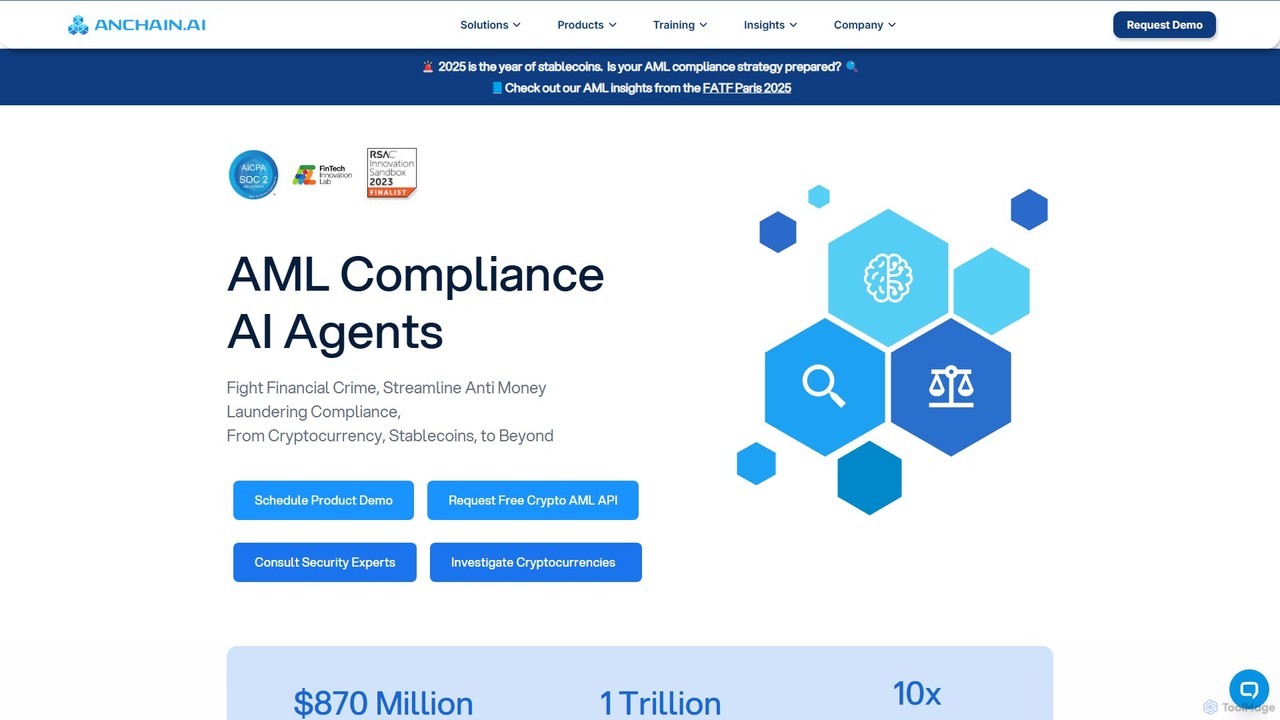
AnChain.AI is an AI-powered platform dedicated to fighting financial crime. It provides comprehensive solutions for Anti-Money Laundering (AML) …

8.5K

About Risk Management

Risk Management AI tools are advanced platforms that leverage artificial intelligence to identify, assess, monitor, and mitigate potential risks across various organizational functions. These tools utilize machine learning algorithms and predictive analytics to analyze vast datasets, detect subtle patterns, and forecast future risk events with greater accuracy than traditional methods. Their primary value lies in enabling proactive decision-making, enhancing resilience, and safeguarding assets against financial, operational, cybersecurity, and compliance threats.

Core Features

  • Predictive Risk Modeling: Analyzes historical data and real-time information to forecast potential risks and their impact.
  • Anomaly Detection: Automatically identifies unusual patterns or deviations that may indicate emerging threats or fraudulent activities.
  • Compliance Monitoring: Continuously tracks regulatory changes and internal policies, alerting to potential non-compliance issues.
  • Threat Intelligence Integration: Gathers and processes external threat data to provide a comprehensive view of the risk landscape.
  • Automated Risk Reporting: Generates customizable reports and dashboards for stakeholders, highlighting key risk indicators and mitigation strategies.

Applicable Scenarios

Financial institutions use these tools for credit risk assessment and fraud detection, while manufacturing companies apply them to supply chain disruption prediction. Cybersecurity teams leverage AI for real-time threat detection and vulnerability management, and legal departments utilize them for regulatory compliance monitoring. These tools empower organizations to move from reactive to proactive risk strategies.

How to Choose

When selecting a Risk Management AI tool, consider its specific risk domain coverage (e.g., financial, cyber, operational), data integration capabilities with existing systems, and the transparency of its AI models. Evaluate the level of automation offered, the customization options for reporting, and the vendor's expertise in your industry's regulatory landscape. Scalability and user-friendliness for non-technical users are also crucial.

Risk ManagementUse Cases

1

Proactive Financial Fraud Detection

Financial analysts use AI risk management tools to monitor transaction data in real-time, identifying unusual spending patterns or suspicious activities that deviate from normal customer behavior. This allows banks to flag and investigate potential fraud attempts before significant losses occur, reducing financial exposure and protecting customer accounts.

2

Supply Chain Disruption Prediction

Manufacturing and logistics managers deploy these tools to analyze global events, supplier performance data, and weather patterns. The AI predicts potential disruptions like material shortages or shipping delays, enabling companies to proactively adjust inventory, re-route shipments, or identify alternative suppliers, minimizing operational impact.

3

Real-time Cybersecurity Threat Identification

Security operations centers (SOC) leverage AI risk management to continuously monitor network traffic, system logs, and user behavior for anomalies. The AI can detect sophisticated cyber threats, zero-day exploits, or insider threats that bypass traditional security measures, providing immediate alerts for rapid response and containment.

4

Regulatory Compliance Monitoring & Reporting

Compliance officers in highly regulated industries (e.g., healthcare, finance) use AI tools to track evolving regulations and internal policy adherence. The AI automatically scans documents, transactions, and communications, flagging potential non-compliance issues and generating audit-ready reports, significantly reducing manual effort and compliance risk.

5

Credit Risk Assessment Automation

Lending institutions utilize AI risk management platforms to evaluate loan applications by analyzing a vast array of applicant data, including credit history, financial behavior, and external economic indicators. The AI provides a more accurate and rapid credit risk score, streamlining the lending process and reducing default rates.

6

Operational Hazard Prediction in Industrial Settings

Plant managers in energy or heavy industry sectors employ AI tools to monitor sensor data from machinery, environmental conditions, and maintenance logs. The AI predicts equipment failures, safety hazards, or operational inefficiencies before they occur, allowing for preventative maintenance and avoiding costly downtime or accidents.

Risk ManagementFrequently Asked Questions