ToolMage
Sign in

Best 15 Website Analytics AI tools for Analytics

Popular Website Analytics AI tools in Analytics include Intellimize, Simple Analytics, Flowpoint, Webyn, GEO Ready, Uncle Optimizer, WebLens, RowebAI, Backlink Manager, and Winlab, helping you work more efficiently.

Winlab
Freemium

Winlab

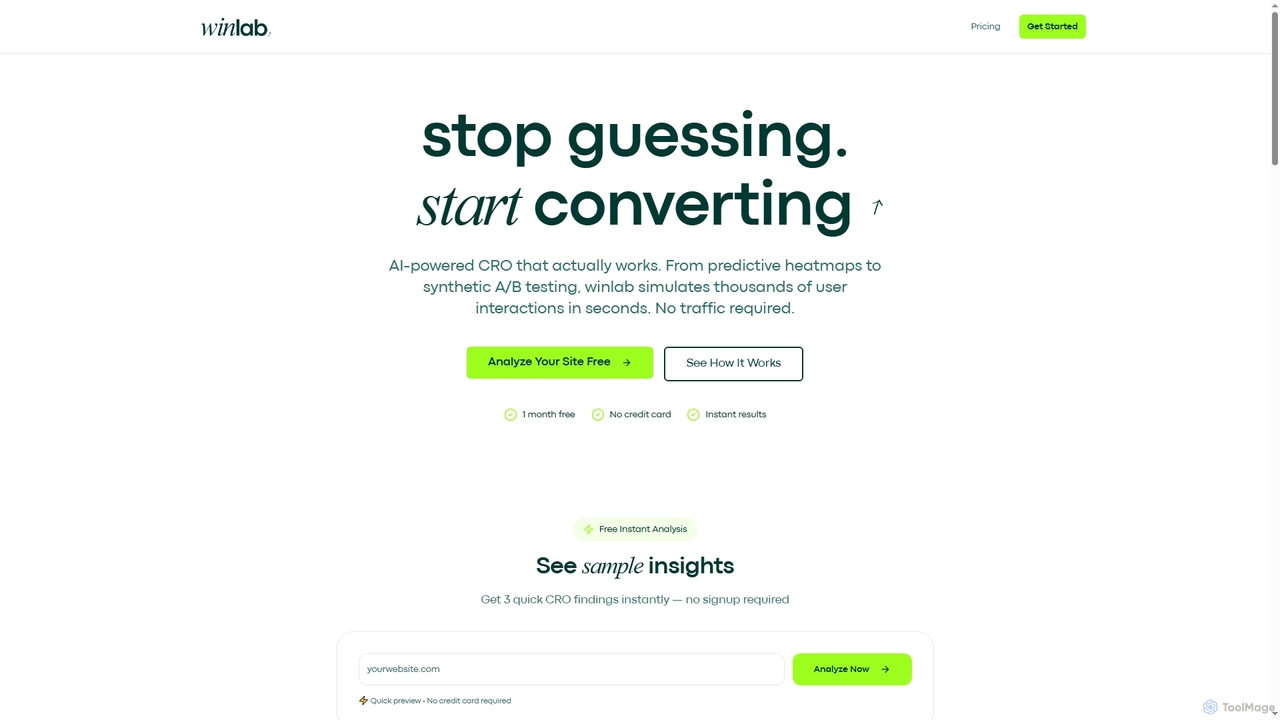
Winlab is an AI-powered Conversion Rate Optimization (CRO) platform that simulates thousands of user interactions in seconds to provide actionable insights for website improvement. It offers predictive heatmaps, synthetic A/B testing, AI buyer personas, and message-market fit analysis without requiring live traffic.

Website Analytics
Visits 4.6KFavorites 24Likes 30
Blopai
Freemium

Blopai

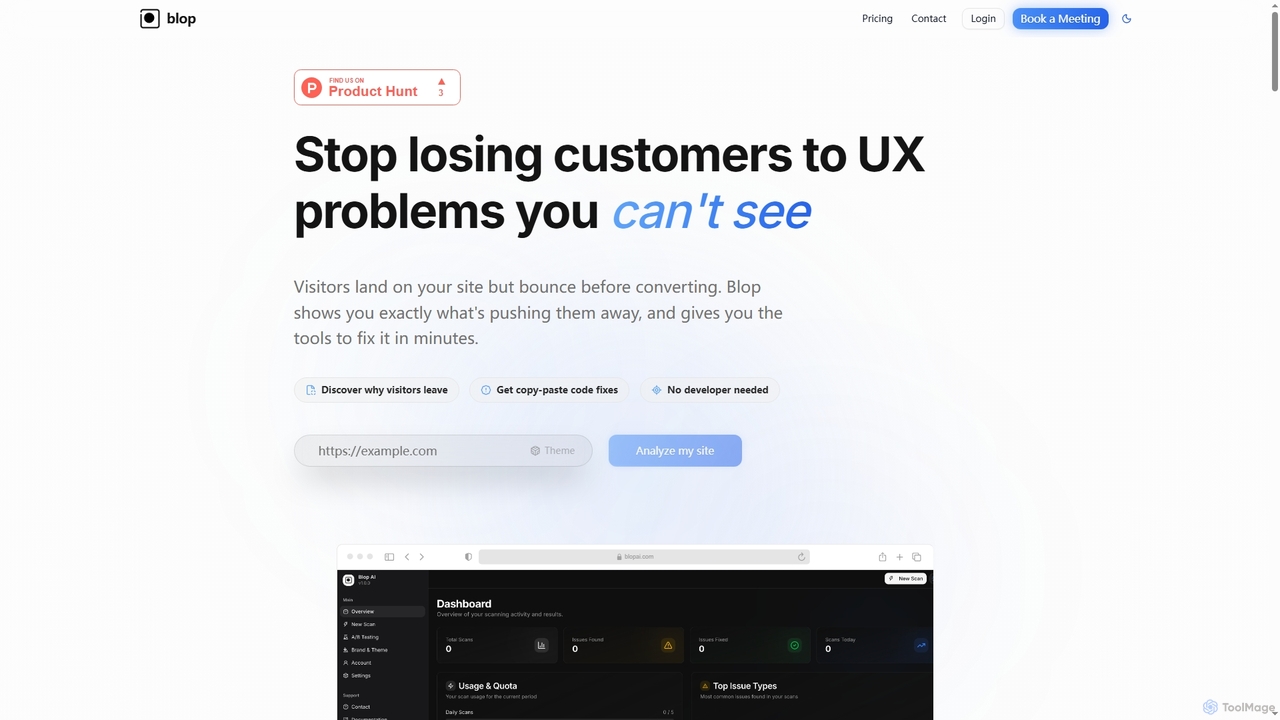
Blopai is an AI-powered UX analysis tool that identifies website usability issues, accessibility problems, and design flaws. It provides automated, code-ready fixes and actionable insights to improve conversion rates and user experience in minutes.

Website Analytics
Visits 4.1KFavorites 68Likes 78
GEO Ready
Freemium

GEO Ready

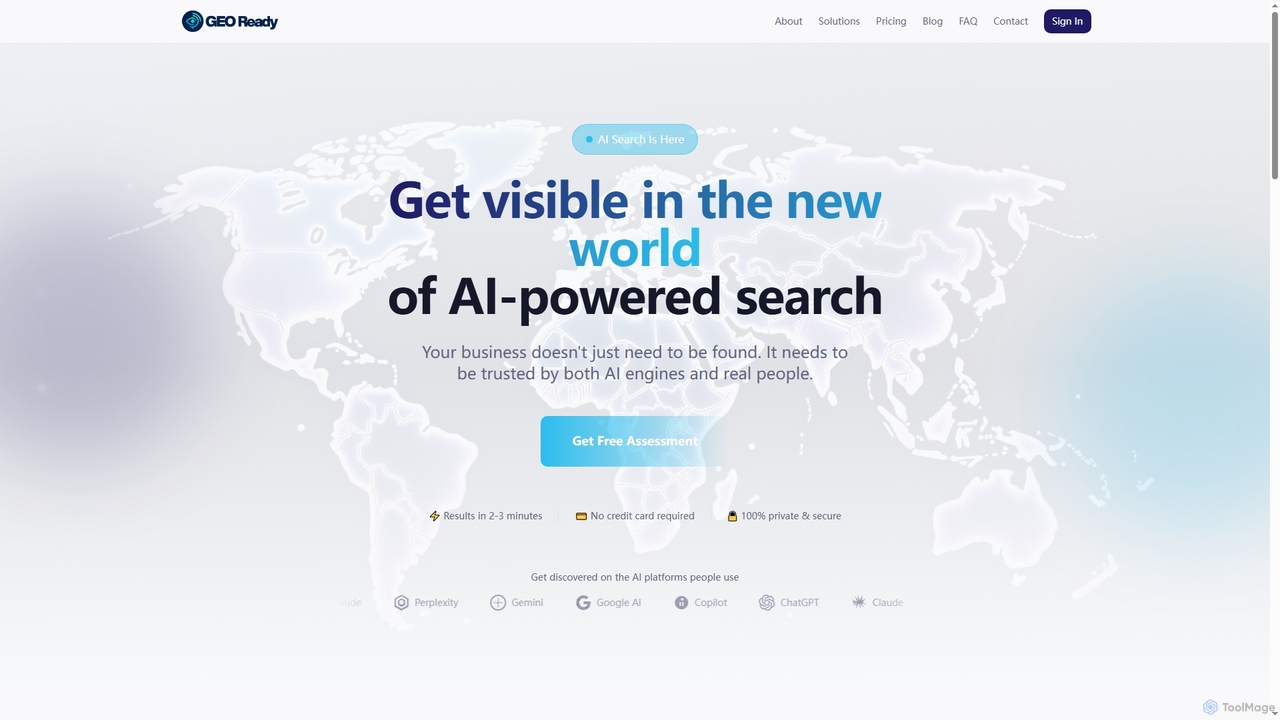
GEO Ready is an AI tool that helps businesses optimize their websites to be found, trusted, and recommended by AI search engines like ChatGPT, Claude, and Gemini. It provides assessments and actionable insights to improve visibility in the new era of generative AI search.

Website Analytics
Visits 6KFavorites 59Likes 51
Hasl
Freemium

Hasl

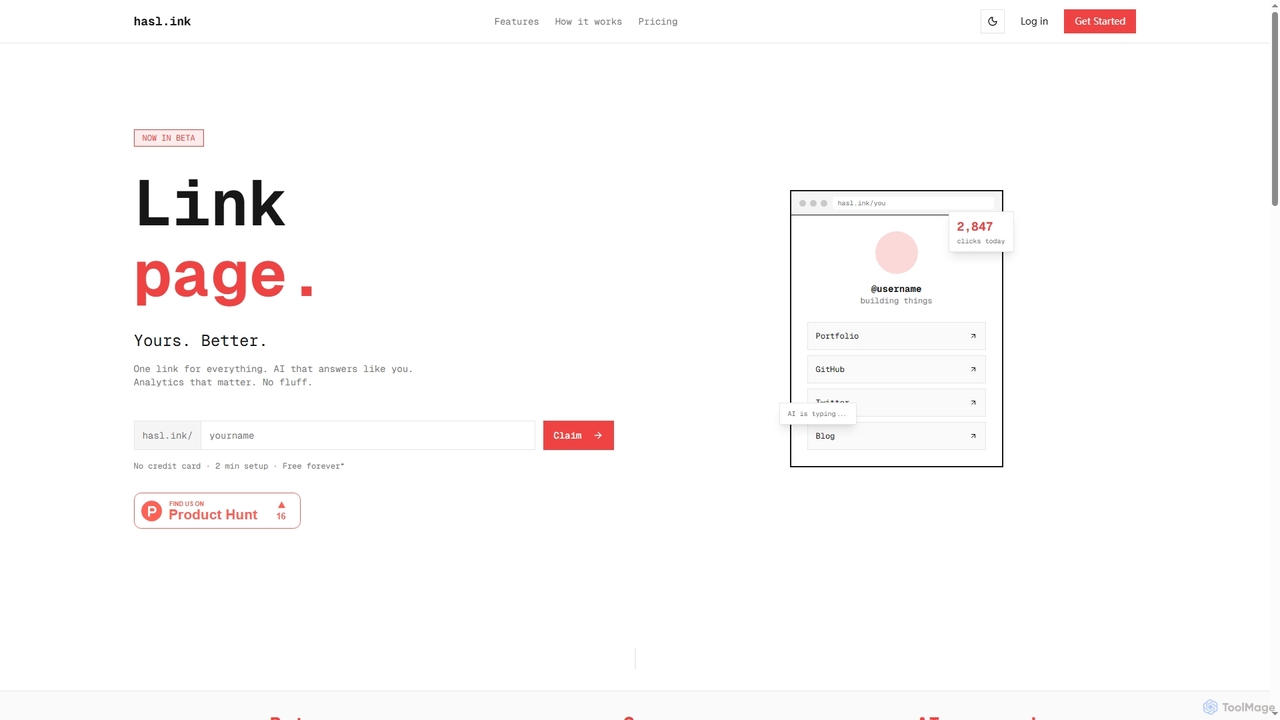
Hasl is an AI-powered link-in-bio tool that allows users to create a personalized, all-in-one link page. It features an AI chat assistant trained to answer questions like you, robust analytics, and extensive customization options, all designed for quick setup and optimal performance.

Chatbot
Visits 4KFavorites 105Likes 106
Plainora
Freemium

Plainora

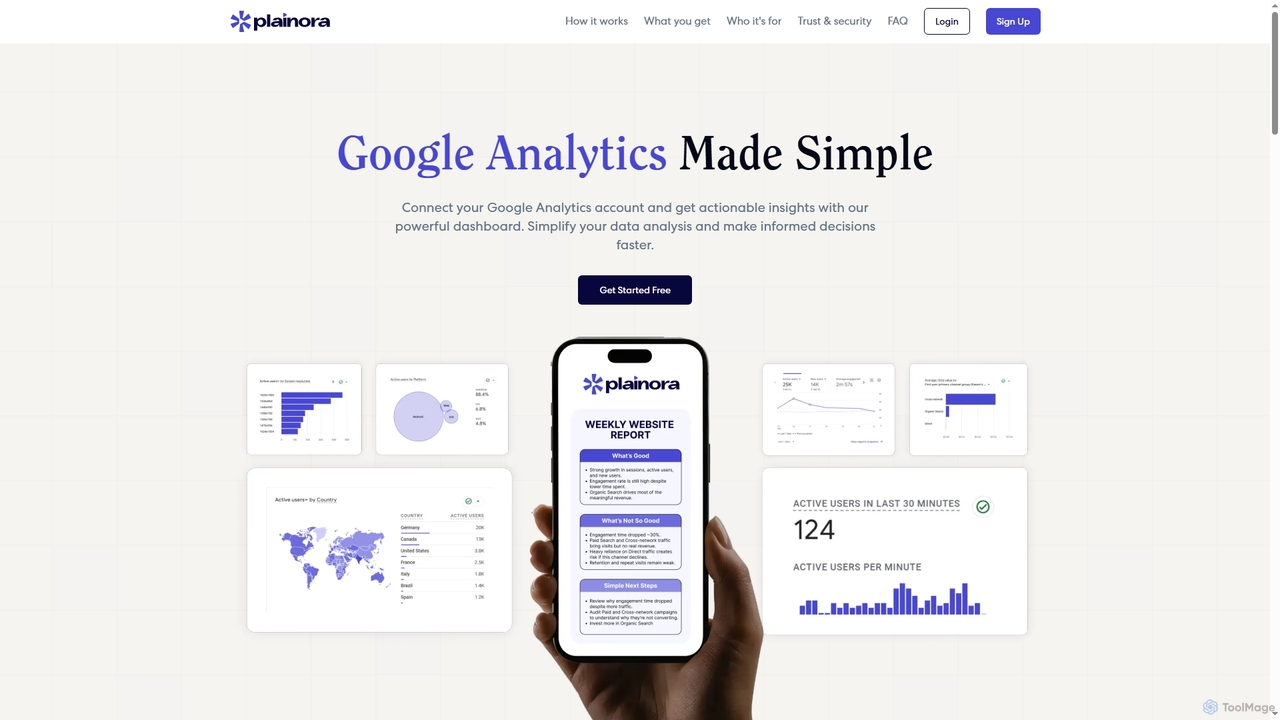
An AI-powered tool that simplifies Google Analytics (GA4) by transforming complex data into easy-to-understand, actionable reports. Connect your account to receive weekly plain-English summaries on traffic trends, conversions, and user insights, helping you make informed decisions quickly.

Website Analytics
Visits 4KFavorites 136Likes 132
AgentShield
Freemium

AgentShield

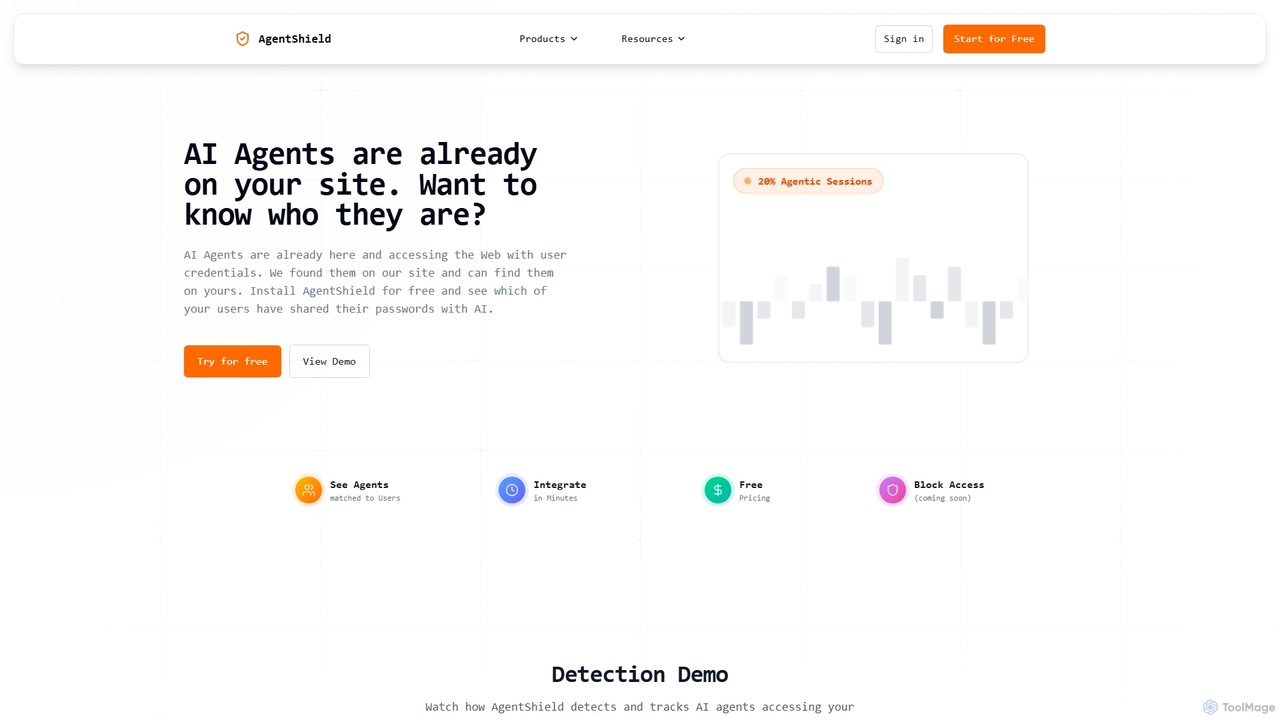
AgentShield is an advanced AI agent detection and protection solution designed to identify and track AI agents accessing your website using user credentials. It offers free, easy installation and real-time, cryptographically verified detection, helping businesses understand who is sharing their site access with AI.

Website Analytics
Visits 4.2KFavorites 103Likes 104
Backlink Manager
Freemium

Backlink Manager

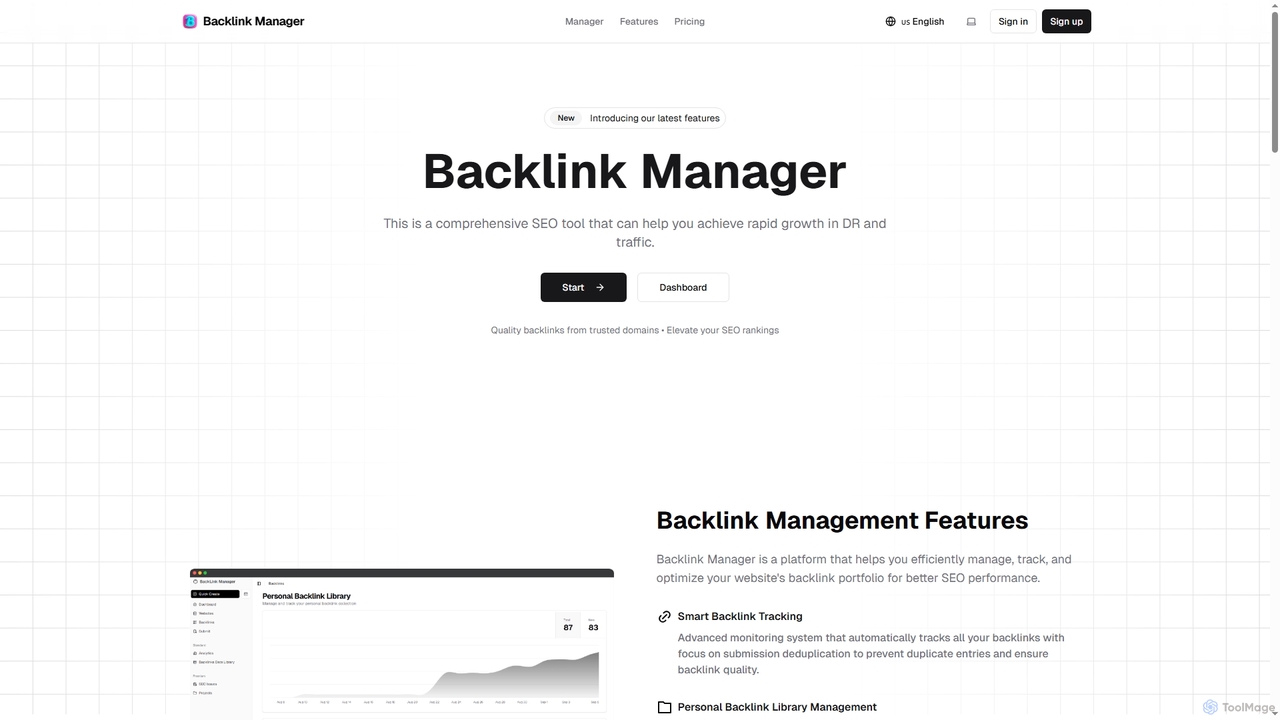
Backlink Manager is a comprehensive SEO tool designed to streamline the management, tracking, and optimization of your website's backlink portfolio. It helps businesses achieve rapid growth in Domain Rating (DR) and organic traffic through smart tracking, quality analysis, and efficient organization of link-building efforts.

Website Analytics
Visits 4.7KFavorites 120Likes 126
RowebAI
Freemium

RowebAI

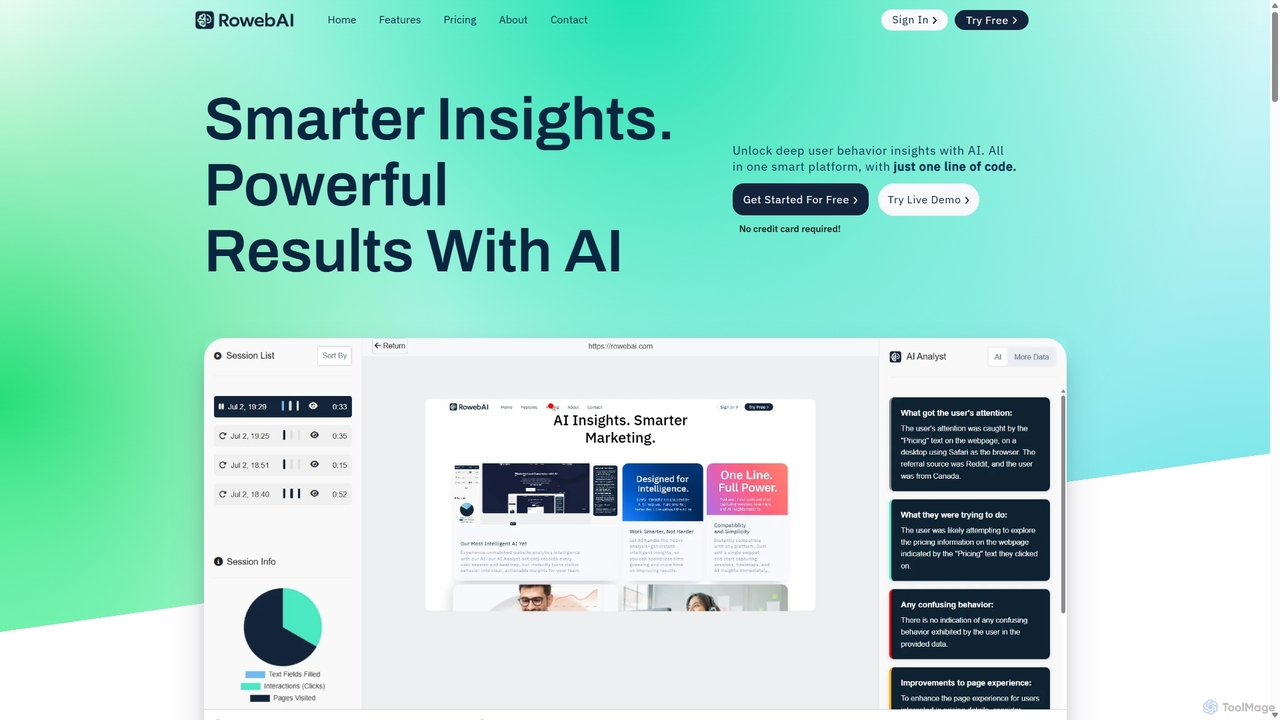
RowebAI is an AI-powered platform that provides deep insights into user behavior through website heatmaps and session recordings. It automatically analyzes visitor interactions, identifies patterns, and generates actionable summaries to help businesses optimize user experience, improve conversion rates, and make data-driven decisions without slowing down their website.

Website Analytics
Visits 4.8KFavorites 130Likes 108
Simple Analytics
Freemium

Simple Analytics

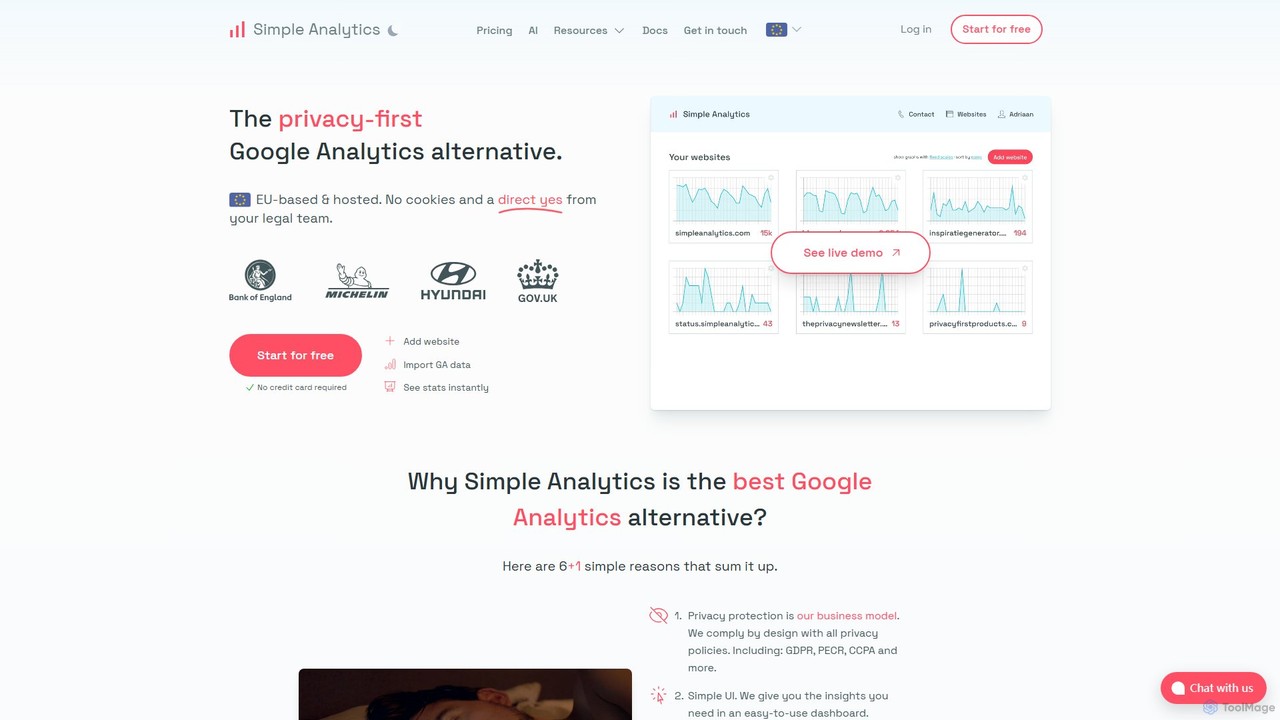
Simple Analytics is the privacy-first alternative to Google Analytics. It offers a clean, simple dashboard and powerful insights without using cookies or collecting personal data. A standout feature is its AI assistant, allowing you to chat with your analytics to get instant answers. Based in the EU and fully GDPR compliant, it provides accurate, lightweight tracking that respects your visitors and improves your website's speed.

Website Analytics
Visits 102KFavorites 130Likes 131
Uncle Optimizer
Freemium

Uncle Optimizer

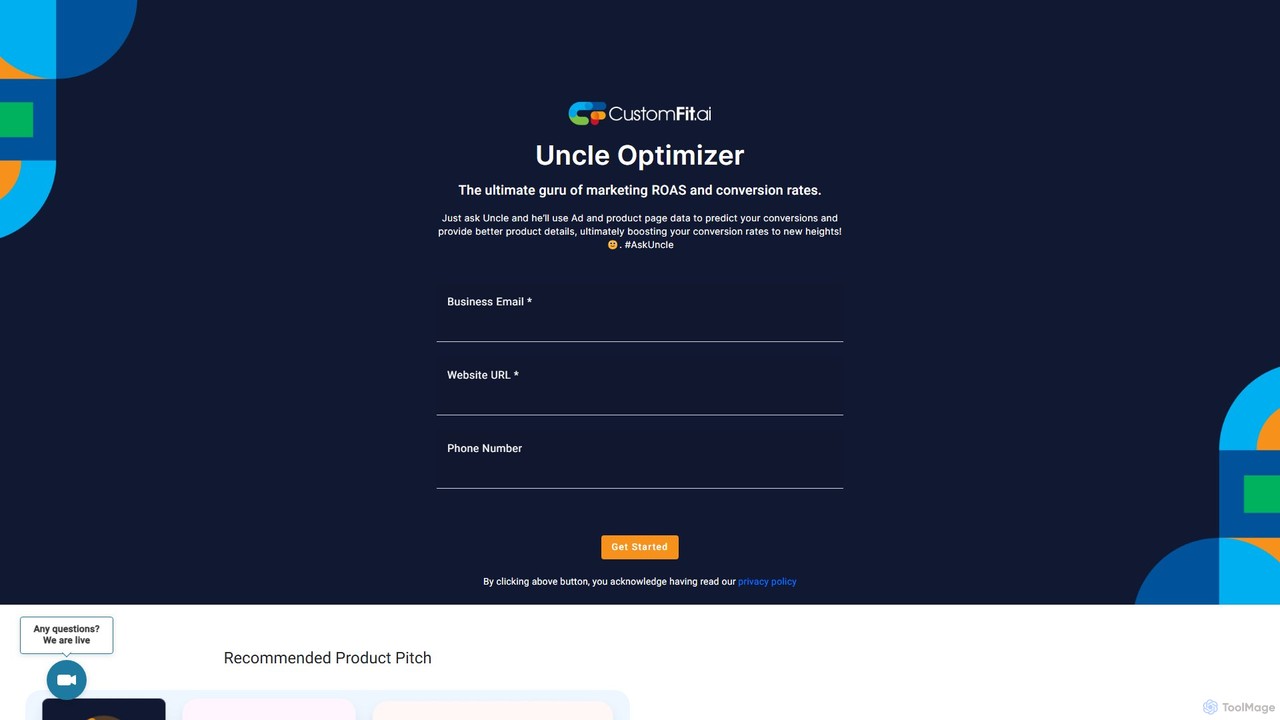
Uncle Optimizer is an AI-powered tool designed for D2C brands to analyze and optimize website conversion rates. It calculates a conversion score for your landing pages based on ad and product data, providing actionable recommendations to improve product details, boost conversions, and increase marketing ROAS.

Website Analytics
Visits 5.2KFavorites 121Likes 126
WebLens
Paid

WebLens

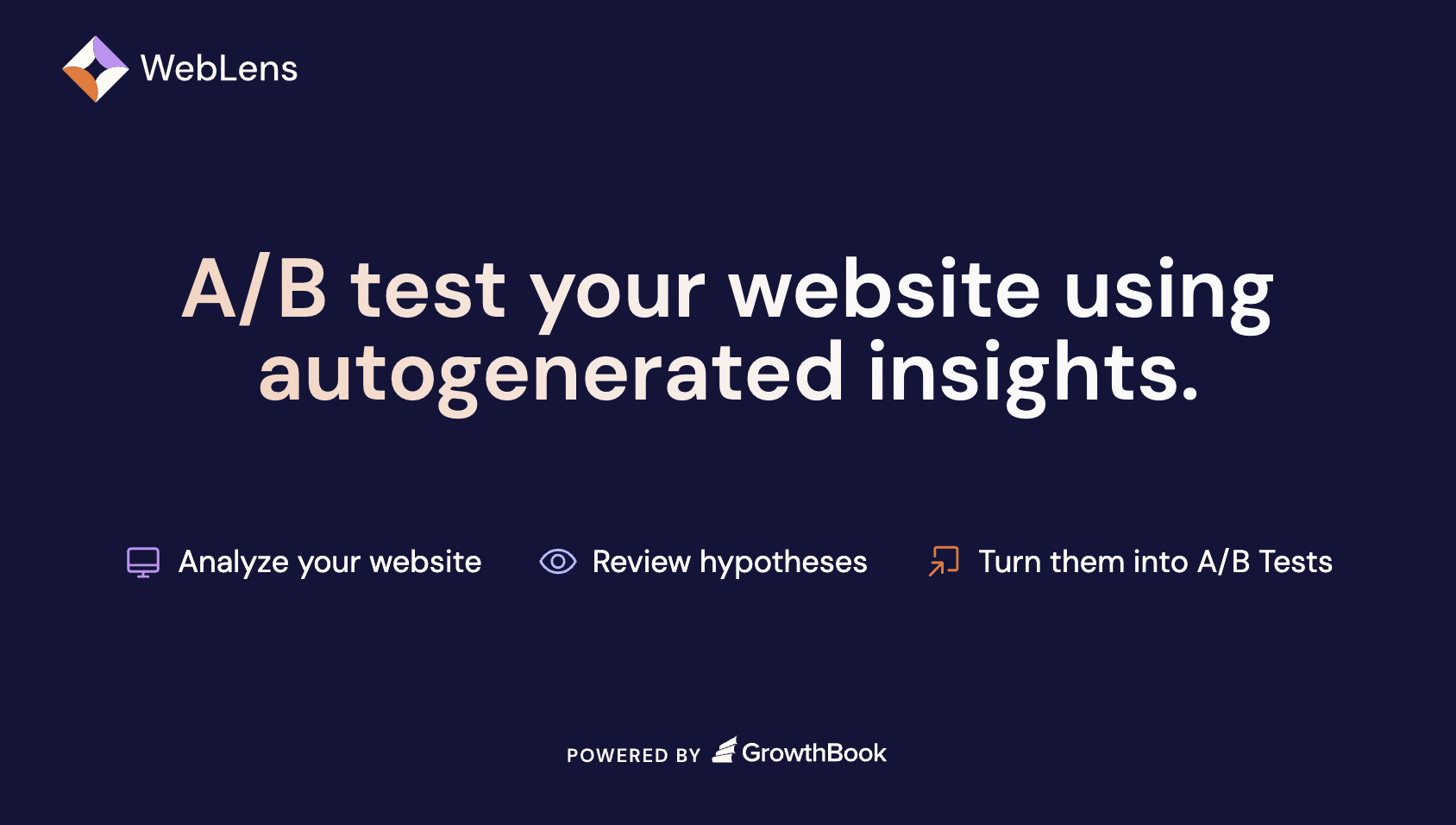
WebLens is an AI-powered platform for website analysis and A/B testing. It automatically analyzes your site to generate data-driven hypotheses for improvement. Seamlessly turn these insights into A/B tests, powered by GrowthBook's robust engine, to enhance user experience and boost conversion rates without extensive manual effort.

Website Analytics
Visits 4.9KFavorites 132Likes 133
Flowpoint
Freemium

Flowpoint

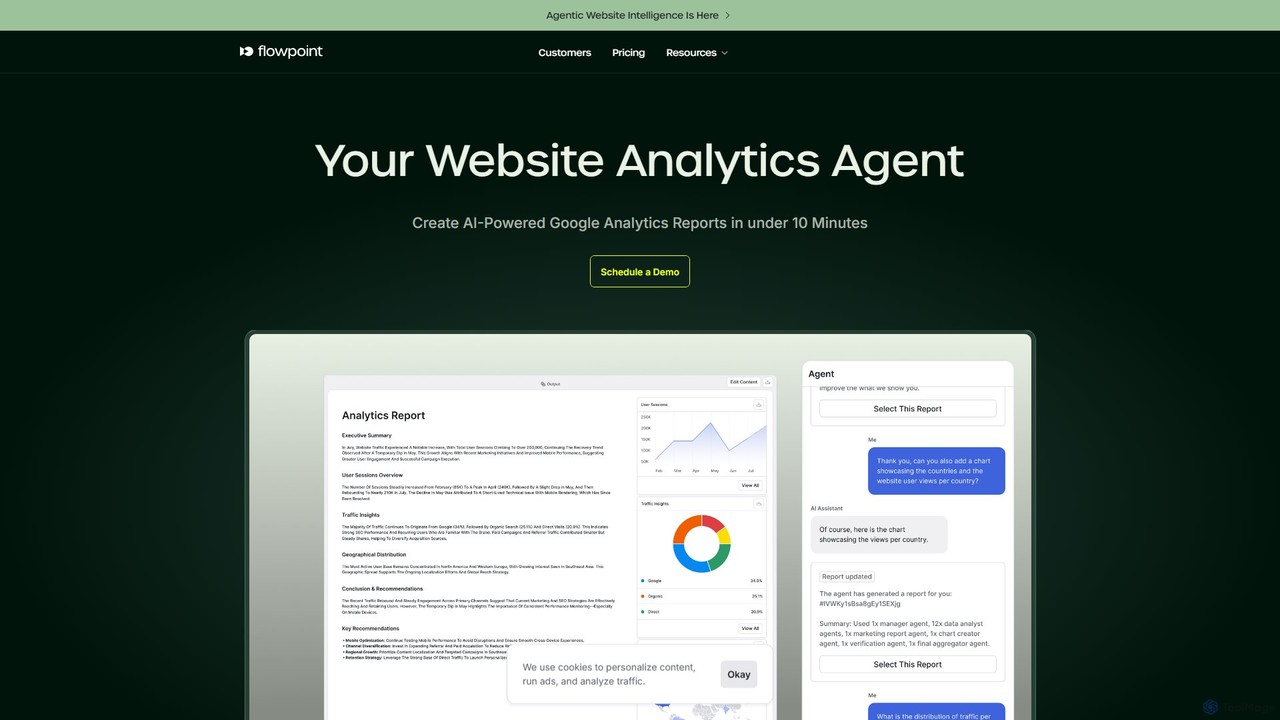
Flowpoint is an AI-powered agentic process builder designed for website intelligence. It automates website analytics by connecting to data sources like Google Analytics, using AI agents to analyze data and generate in-depth reports in minutes. This no-code platform empowers marketers to optimize website performance, improve ROI, and gain actionable insights without requiring technical expertise.

Website Analytics
Visits 50.5KFavorites 146Likes 136
Intellimize
Paid

Intellimize

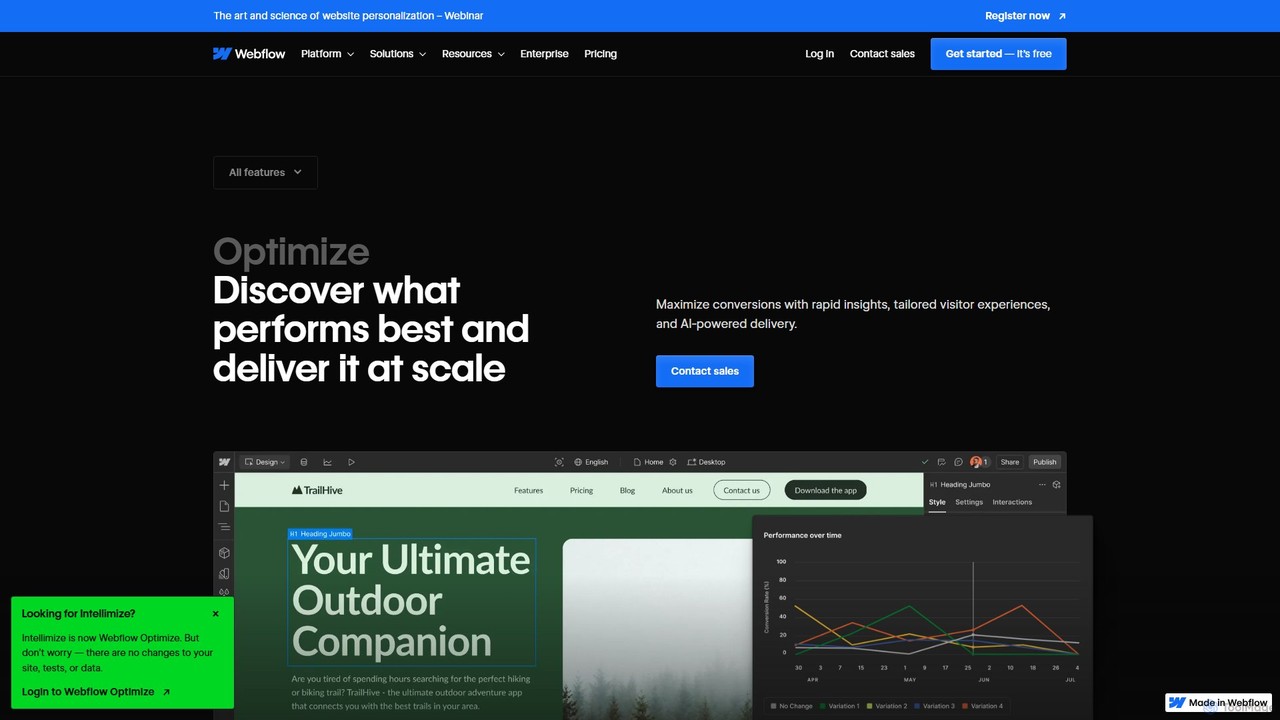
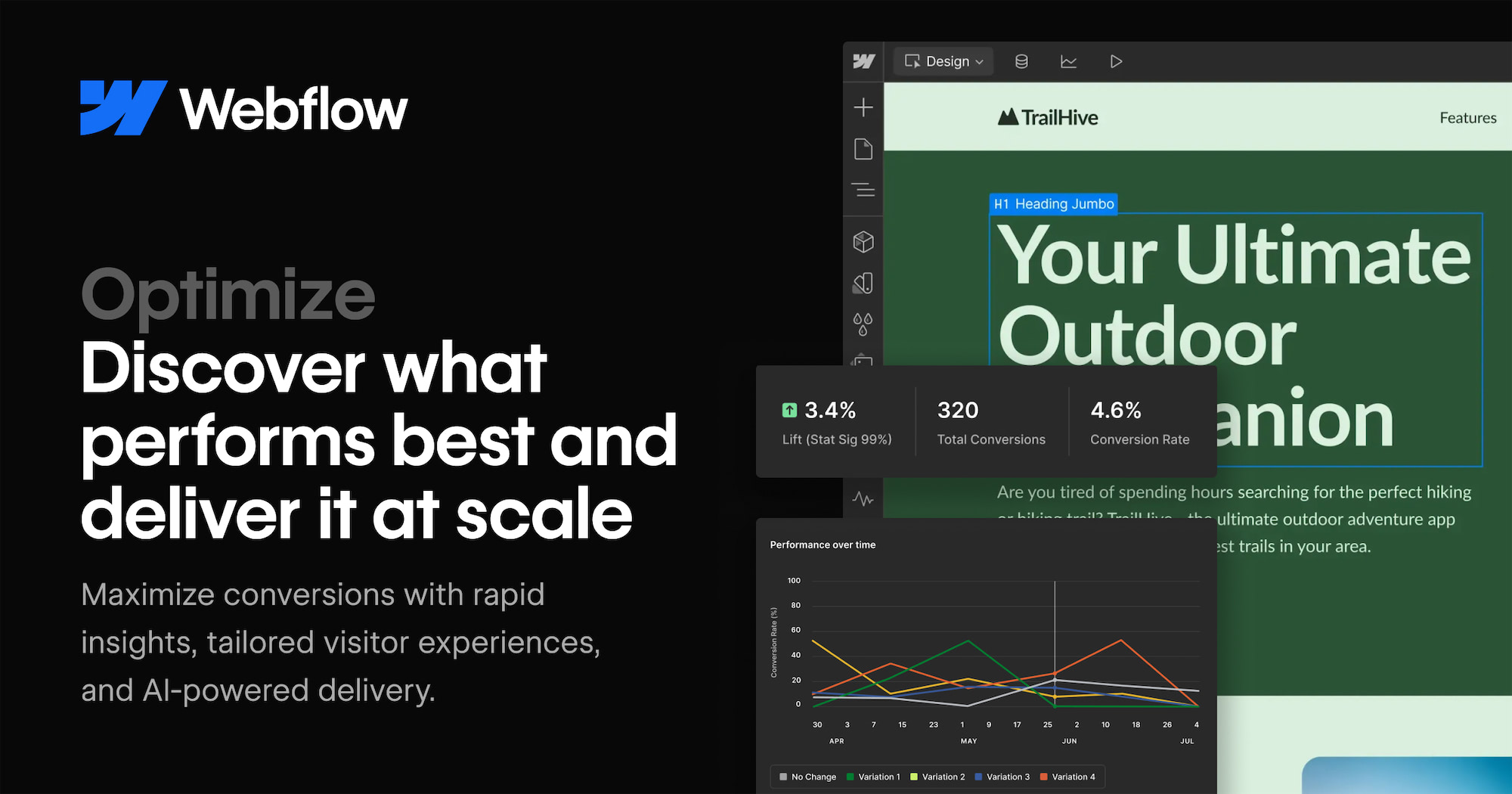
Intellimize is an AI-powered website optimization and personalization platform designed to maximize conversions. It uses machine learning to automatically test variations of website content, headlines, and CTAs, delivering personalized experiences to each visitor in real-time. This intelligent approach accelerates testing and drives significant revenue growth.

Website Analytics
Visits 6.7MFavorites 111Likes 112
Webyn
Paid

Webyn

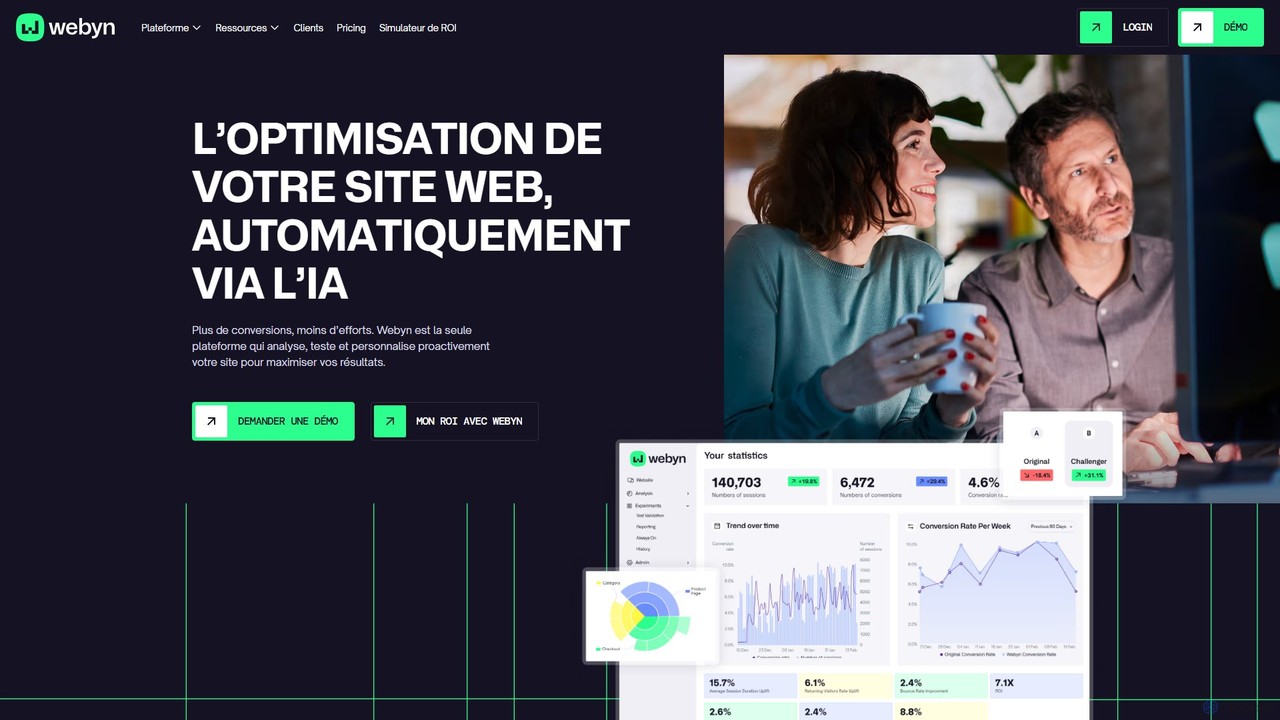
Webyn is an AI-powered platform for automated A/B testing, real-time personalization, and conversion rate optimization (CRO). It analyzes user behavior to identify conversion barriers and delivers tailored website experiences to boost engagement, increase conversions, and maximize ROI for e-commerce and digital businesses.

Website Analytics
Visits 8.4KFavorites 111Likes 142
crovert
Freemium

crovert

crovert is an AI-powered platform that automates conversion rate optimization (CRO), effectively replacing the need for dedicated development and design teams. It analyzes user behavior, runs automated A/B tests, personalizes content, and implements winning variations instantly to significantly boost website conversions, leads, and revenue for businesses of all sizes.

Website Analytics
Visits 4.1KFavorites 127Likes 116

About Website Analytics

Website Analytics tools are AI-powered platforms designed to collect, process, and analyze data on user behavior and website performance. Leveraging advanced machine learning algorithms, these tools go beyond basic metrics to uncover hidden patterns, predict future trends, and provide actionable insights. They empower businesses to optimize user experience, enhance marketing strategies, and make data-driven decisions to improve conversion rates and overall digital presence.

Core Features

  • AI-Driven Anomaly Detection: Automatically identifies unusual spikes or drops in traffic, conversions, or other key metrics, alerting users to potential issues or opportunities.
  • Predictive Visitor Segmentation: Uses machine learning to group visitors based on predicted future behavior, enabling highly targeted marketing and personalization efforts.
  • Automated Conversion Funnel Optimization: Analyzes user journeys to pinpoint exact drop-off points and suggests data-backed improvements to increase conversion rates.
  • Behavioral Pattern Recognition: Identifies complex user navigation paths and engagement patterns that human analysts might miss, revealing insights into user intent.
  • Personalized Content Recommendations: Based on individual user behavior and preferences, AI suggests relevant content or product recommendations in real-time.

Applicable Scenarios

E-commerce managers utilize these tools to optimize product pages and checkout flows, identifying friction points that lead to abandoned carts. Content creators and publishers leverage them to understand audience engagement with different content types, tailoring future strategies for maximum impact. Digital marketing agencies employ AI website analytics to refine campaign performance, attributing conversions accurately and optimizing ad spend across various channels.

How to Choose

When selecting an AI Website Analytics tool, consider its data integration capabilities with existing platforms like CRM or marketing automation systems. Evaluate the depth and transparency of its AI insights, ensuring you understand how recommendations are generated. Assess the level of customization for dashboards and reports, as well as its scalability to handle growing traffic volumes. Finally, review its data privacy compliance features, especially concerning GDPR and CCPA.

Featured tool rankings

Website Analytics use cases

1

Optimizing E-commerce Conversion Funnels

An e-commerce manager uses an AI website analytics tool to analyze the entire customer journey from product discovery to purchase. The AI identifies specific pages or steps in the checkout process where users frequently abandon their carts, suggesting A/B test variations for button colors, call-to-action texts, or form fields. This leads to data-backed improvements, significantly reducing bounce rates and increasing overall sales conversions.

2

Predicting User Churn for Subscription Services

A SaaS company leverages AI website analytics to monitor user engagement patterns and predict which subscribers are at risk of churning. The tool analyzes factors like login frequency, feature usage, and time spent on key pages. Based on these predictions, the marketing team can proactively send targeted re-engagement emails or offer personalized incentives to retain valuable customers before they decide to cancel their subscriptions.

3

Personalizing Website Content in Real-time

A content strategist for a news portal employs AI website analytics to understand individual visitor preferences and browsing history. The AI dynamically adjusts the homepage layout and recommends articles tailored to each user's interests, even for first-time visitors based on their initial interactions. This personalization enhances user experience, increases time on site, and boosts ad impressions.

4

Automated Anomaly Detection for Site Performance

A web administrator uses an AI website analytics platform to continuously monitor website traffic, server response times, and error rates. The AI automatically detects unusual spikes in traffic from unexpected sources or sudden drops in page load speed, immediately alerting the administrator. This proactive detection allows for rapid response to potential DDoS attacks, server issues, or critical bugs, minimizing downtime and maintaining site integrity.

5

Understanding Cross-Channel User Journeys

A digital marketer integrates an AI website analytics tool with their advertising platforms and CRM to gain a holistic view of the customer journey. The AI tracks how users interact with ads, navigate the website, and eventually convert, even across different devices. This comprehensive insight helps the marketer optimize budget allocation, refine messaging for each touchpoint, and accurately attribute conversions to the most effective channels.

6

Enhancing A/B Testing with AI-Driven Insights

A product manager uses AI website analytics to not only run A/B tests but also to gain deeper insights into why one variation performs better than another. The AI analyzes user behavior on both versions, identifying subtle differences in interaction patterns, scroll depth, or click paths that contribute to the outcome. This allows for more informed design decisions and faster iteration cycles, leading to more impactful website improvements.

Website Analytics FAQ

What are AI Website Analytics tools?

AI Website Analytics tools are advanced platforms that use artificial intelligence and machine learning to collect, analyze, and interpret website data. Unlike traditional analytics, they can identify complex patterns, predict user behavior, and provide actionable recommendations automatically. Their core purpose is to help businesses understand user interactions, optimize website performance, and drive better business outcomes through data-driven insights.

How do AI Website Analytics differ from traditional analytics?

Traditional website analytics primarily focus on reporting historical data and require manual interpretation to find insights. AI Website Analytics, however, leverage machine learning to automate pattern recognition, detect anomalies, and even predict future trends. They offer proactive recommendations, personalized insights, and can process vast amounts of data more efficiently, moving beyond simple metrics to provide deeper, more actionable intelligence without extensive manual analysis.

What are the main benefits of using AI in website analytics?

The main benefits include automated insight generation, saving significant time for analysts. AI can detect subtle anomalies and complex behavioral patterns that human eyes might miss. It enables predictive analytics for user churn or conversion likelihood, allowing for proactive strategies. Furthermore, AI-powered tools can personalize user experiences in real-time and optimize marketing efforts with greater precision, leading to improved ROI and a better understanding of the customer journey.

How to choose the right AI Website Analytics tool for my business?

To choose the right tool, first assess your specific needs: what data do you need to analyze, and what insights are most critical? Consider its integration capabilities with your existing tech stack (CRM, CMS, marketing automation). Evaluate the transparency and explainability of its AI models, ensuring you trust its recommendations. Look for features like real-time reporting, custom dashboards, and robust data privacy compliance. Finally, compare pricing models and customer support options.

How do AI Website Analytics tools handle data privacy and compliance?

Reputable AI Website Analytics tools prioritize data privacy by implementing features like data anonymization, pseudonymization, and strict access controls. They are designed to comply with global regulations such as GDPR, CCPA, and other regional data protection laws. Many offer options for consent management, data retention policies, and secure data storage. Users should always verify a tool's specific privacy policy and compliance certifications to ensure it meets their legal and ethical requirements.