ToolMage
Sign in

Best 42 Workflow Management AI tools for Business

Popular Workflow Management AI tools in Business include MindStudio, aiflow.ai, Relay.app, Albato, Documentero, Agentic, H Company, Adaptive, Sola, and Wordware, helping you work more efficiently.

Essai

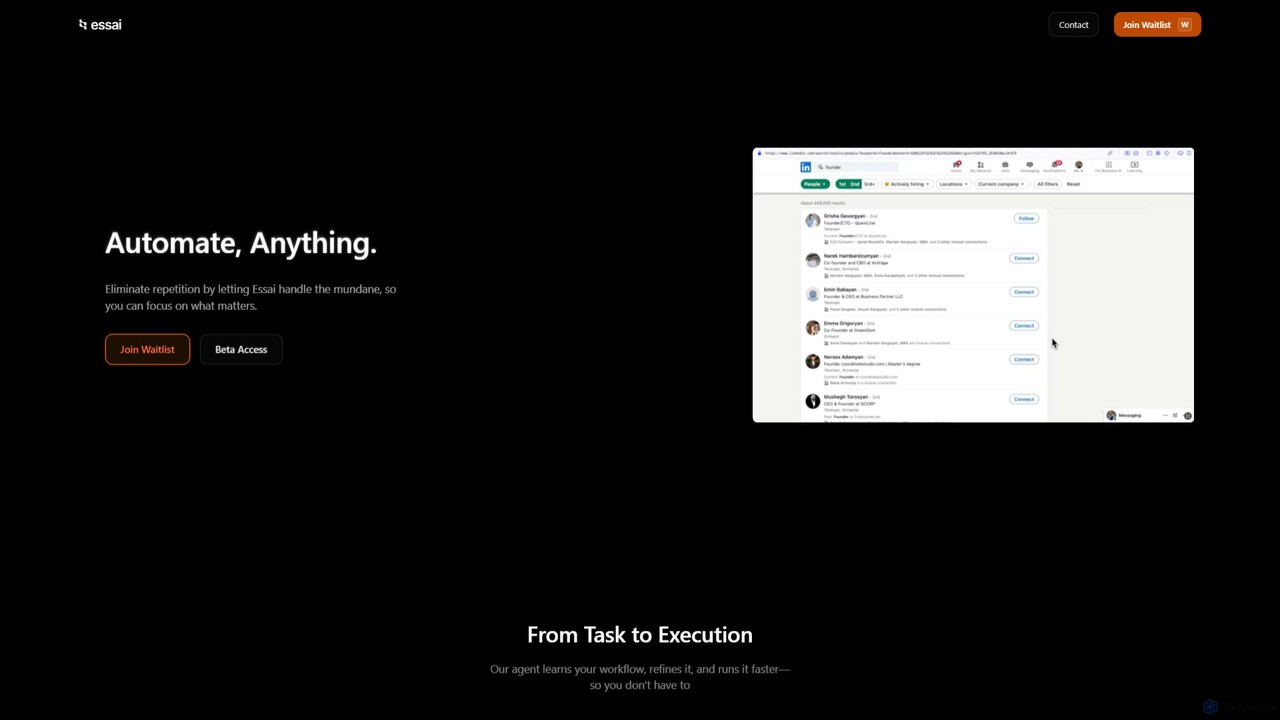
Essai

Essai is an AI-powered automation platform that learns and executes your repetitive digital tasks. By observing your keystrokes and clicks, the Essai agent identifies patterns, builds workflows, and runs them on your behalf, freeing you to focus on more strategic work. It seamlessly integrates across various applications and industries to streamline operations.

Workflow Management
Visits 7KFavorites 144Likes 129
reworks
Freemium

reworks

reworks is an AI-powered platform designed to automate content repurposing and optimize business workflows. It intelligently transforms existing assets into various new formats and streamlines repetitive tasks, helping teams maximize efficiency and scale their operations.

Workflow Management
Visits 6KFavorites 130Likes 133
xantonai
Freemium

xantonai

xantonai is an AI-powered, no-code platform designed for business process automation. It enables users to build intelligent workflows, create custom AI agents, and integrate hundreds of applications to streamline operations, enhance productivity, and reduce manual errors without writing a single line of code.

Workflow Management
Visits 5.9KFavorites 140Likes 136
NodeCodeStudio
Freemium

NodeCodeStudio

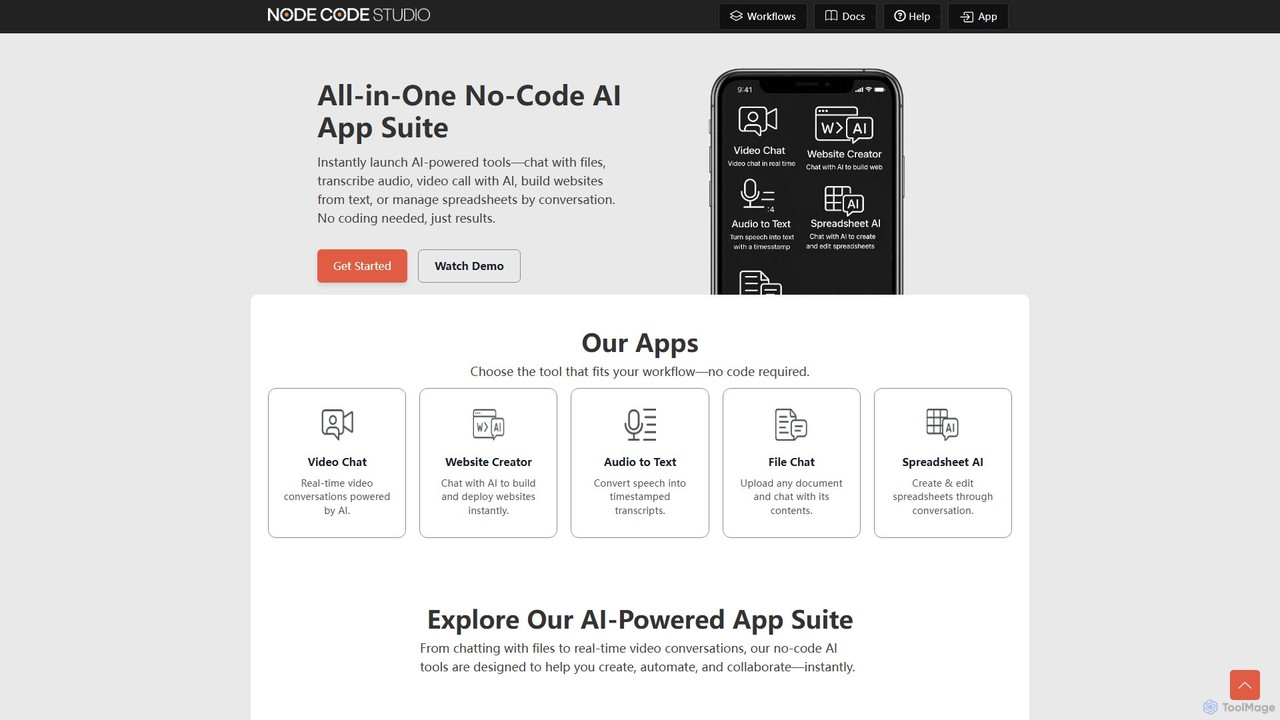
NodeCodeStudio is an all-in-one no-code AI suite that allows users to instantly launch AI-powered tools and build custom automation workflows. Create everything from chatbots and websites to spreadsheet managers and audio transcribers using a visual, node-based editor without writing a single line of code.

Workflow Management
Visits 5.9KFavorites 130Likes 147
Anysolve
Freemium

Anysolve

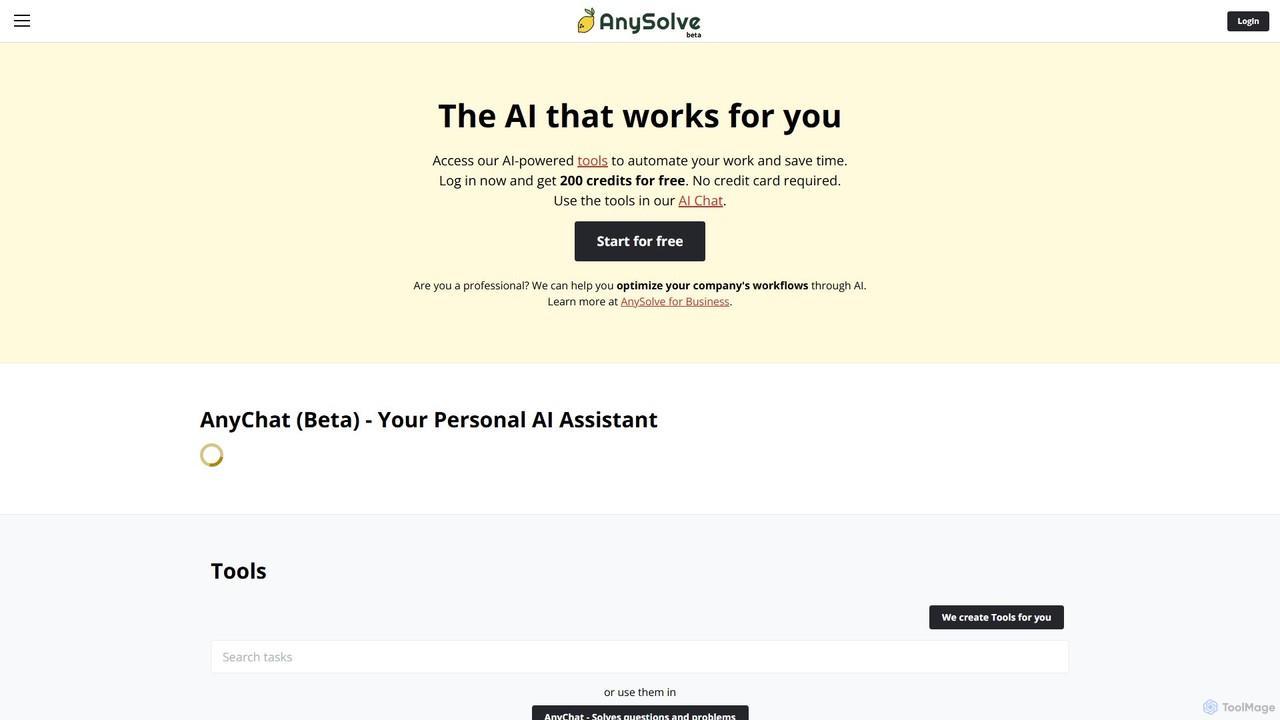
Anysolve is a versatile AI platform that allows users to discover, use, and create custom AI tools without any coding. It functions as a comprehensive hub for automating various professional and personal tasks, from writing and data analysis to image generation, by integrating powerful models like GPT and Stability AI.

Workflow Management
Visits 7.8KFavorites 120Likes 124
Albato
Freemium

Albato

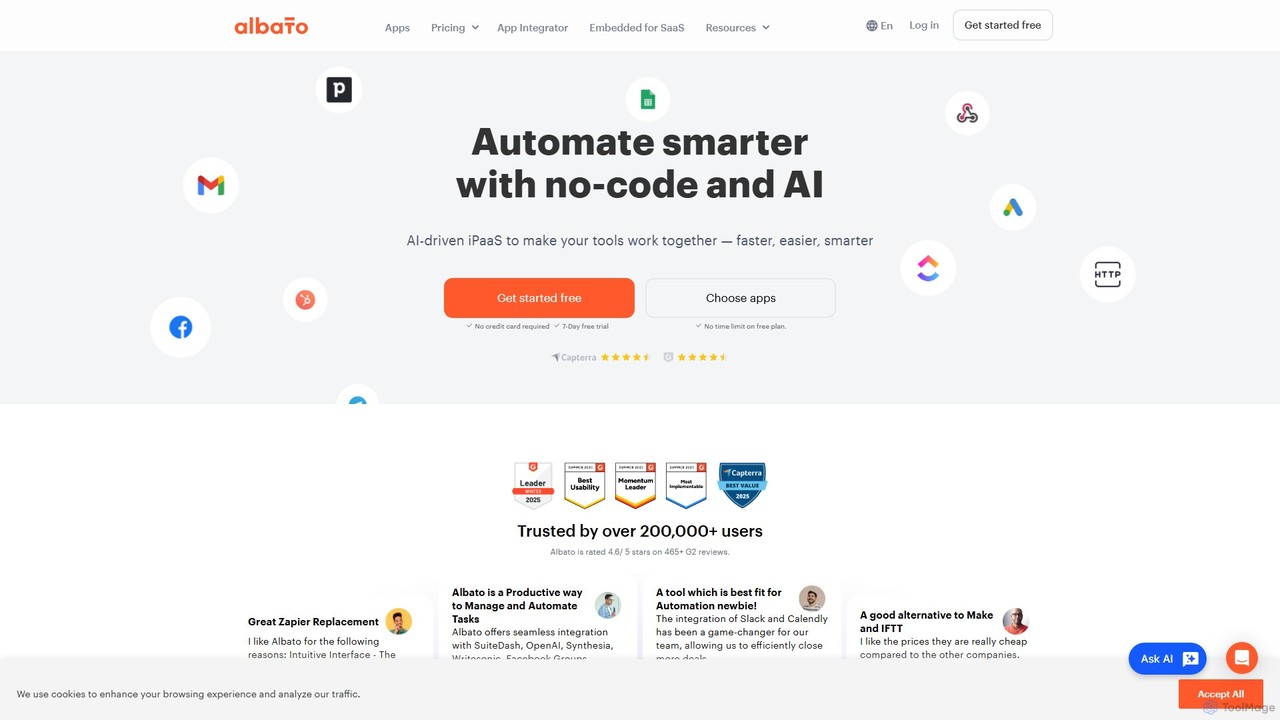
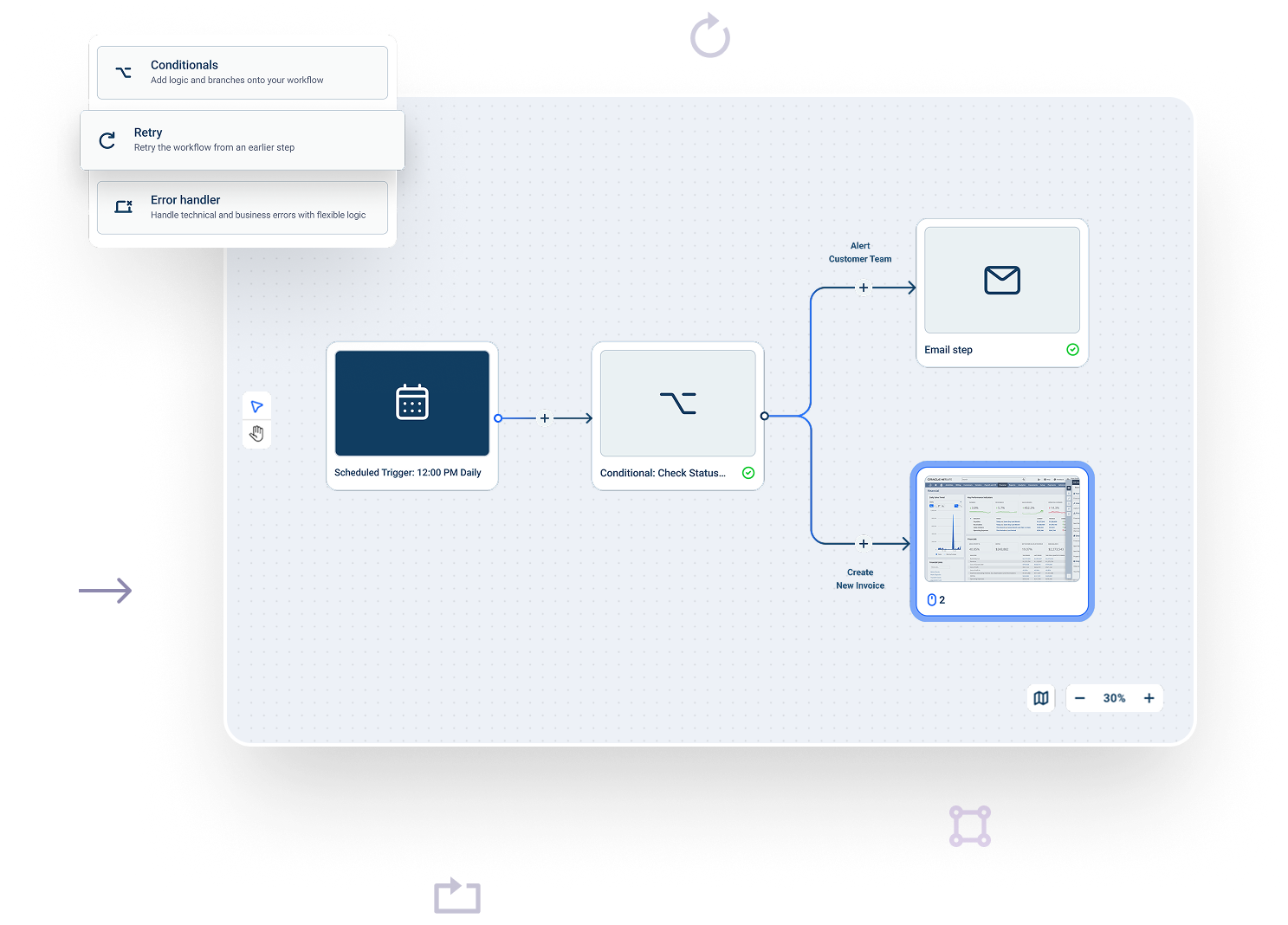
Albato is an AI-driven, no-code integration platform (iPaaS) that empowers users to connect over 800 applications and automate complex workflows effortlessly. It serves as a powerful alternative to Zapier and Make, offering an intuitive interface, extensive app library, and the ability to build custom integrations. Ideal for businesses of all sizes, Albato simplifies data synchronization, task automation, and process management, enhancing productivity and efficiency without requiring any coding knowledge.

Workflow Management
Visits 185.2KFavorites 146Likes 154
Knowlee
Freemium

Knowlee

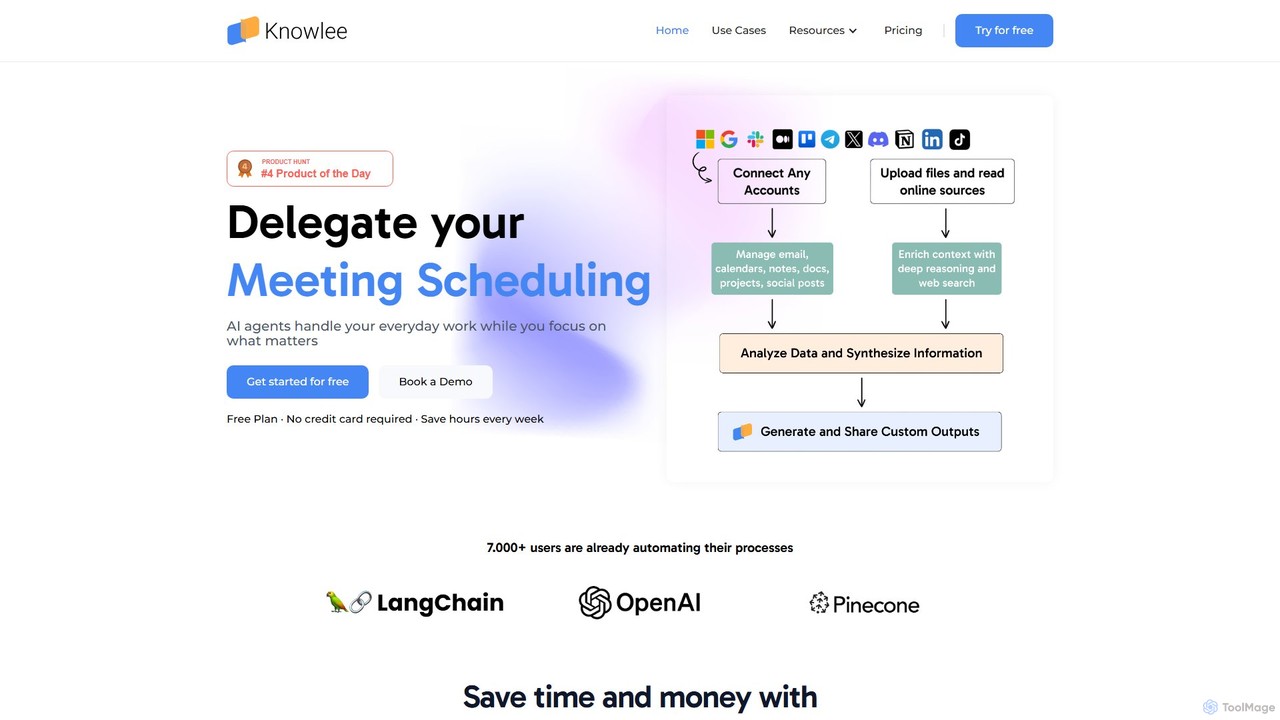
Knowlee is a no-code AI automation platform that enables you to build and deploy a team of AI agents. These agents can automate tasks across sales, marketing, HR, and project management by integrating with your existing tools like Google Workspace, Slack, and Notion. Streamline workflows, enhance productivity, and unlock new operational efficiencies without writing a single line of code.

Workflow Management
Visits 8.7KFavorites 144Likes 145
aiflow.ai
Freemium

aiflow.ai

aiflow.ai is a no-code platform for building and automating AI-powered workflows. Visually connect your favorite apps and AI models to streamline tasks, from content creation and data analysis to customer support, boosting productivity and innovation for your business.

Workflow Management
Visits 1.2MFavorites 175Likes 142
Toolbuilder
Freemium

Toolbuilder

Toolbuilder is a no-code platform that empowers users to create and deploy custom AI applications, chatbots, and automated workflows without writing a single line of code. Connect to top AI models, integrate your own data, and build specialized tools for your business needs in minutes.

Workflow Management
Visits 5.8KFavorites 142Likes 165
Magpai
Freemium

Magpai

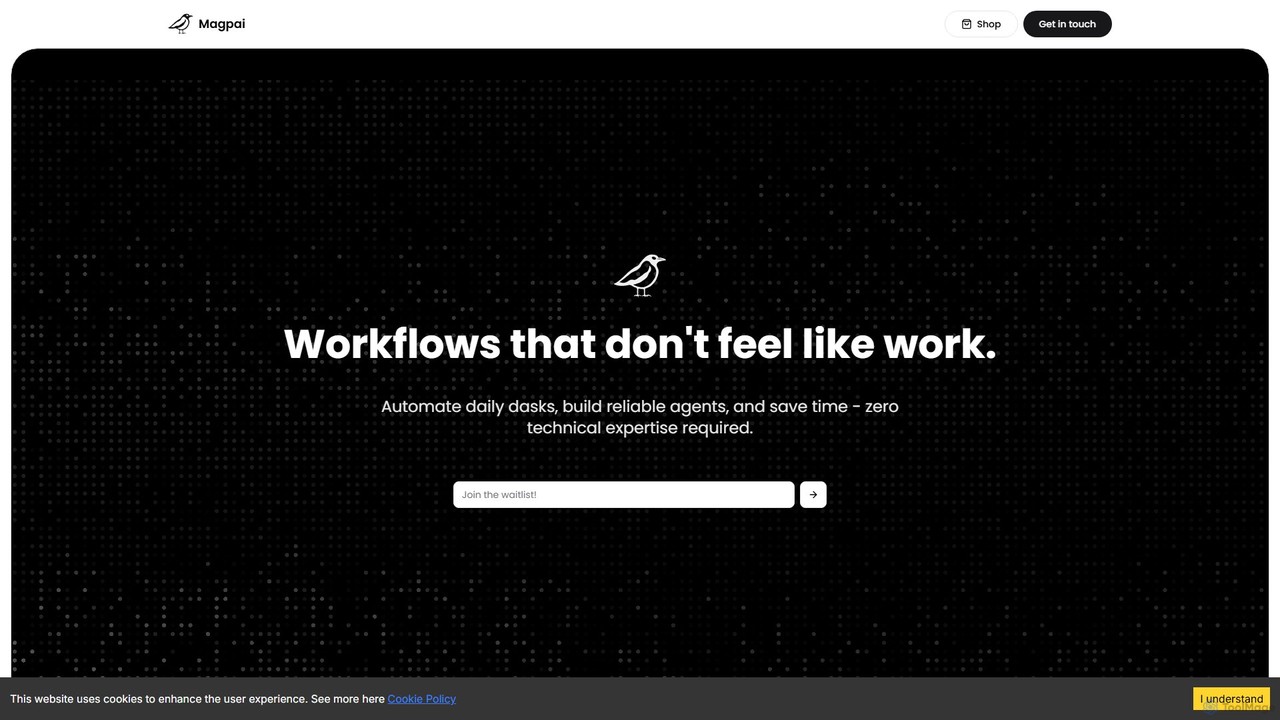
Magpai is a user-friendly, no-code AI platform designed to automate daily tasks and build custom workflows. Positioned as the 'Canva of automation,' it allows anyone, regardless of technical skill, to create powerful AI agents and streamline business processes through an intuitive drag-and-drop interface. It serves various industries, from marketing to manufacturing, offering both a DIY platform and expert-built solutions.

Workflow Management
Visits 5.7KFavorites 139Likes 144
Concierge AI
Freemium

Concierge AI

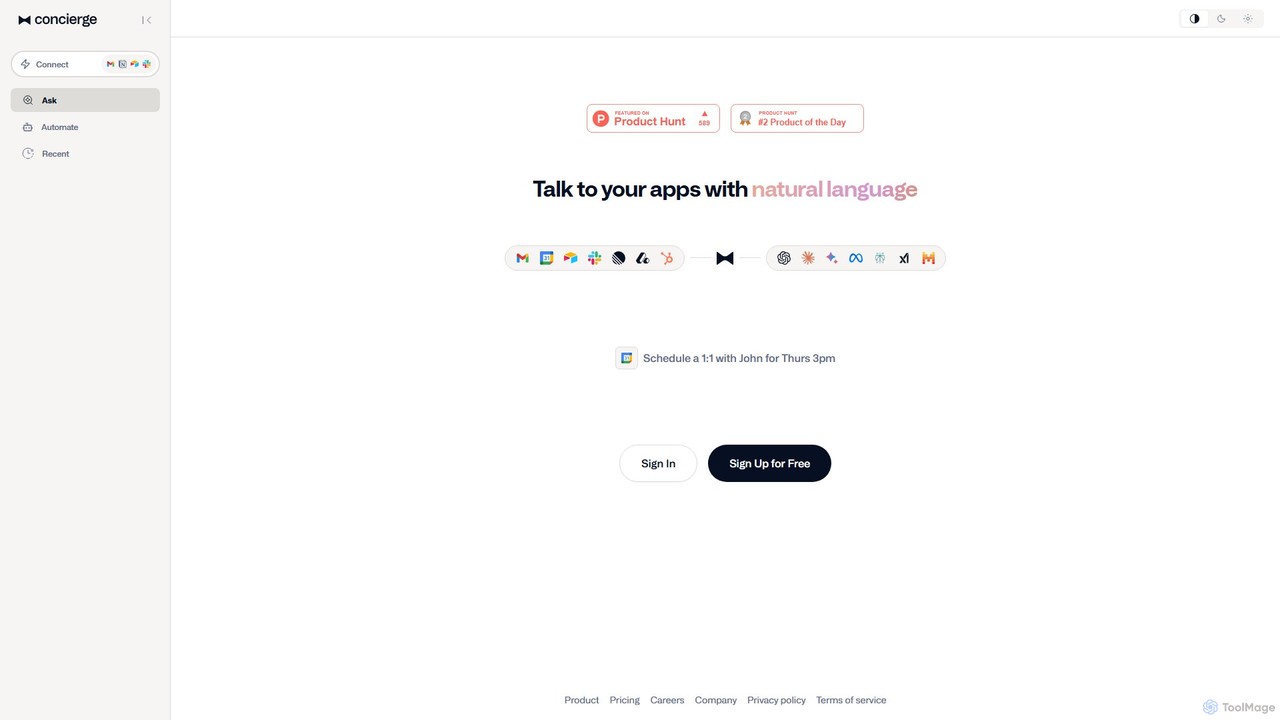
Concierge AI is an intelligent assistant that connects to your applications, allowing you to manage tasks, schedule meetings, and automate workflows using simple natural language commands. It acts as a central hub for your digital tools, boosting productivity for individuals and teams.

Workflow Management
Visits 5.9KFavorites 107Likes 117
RetroFix
Paid

RetroFix

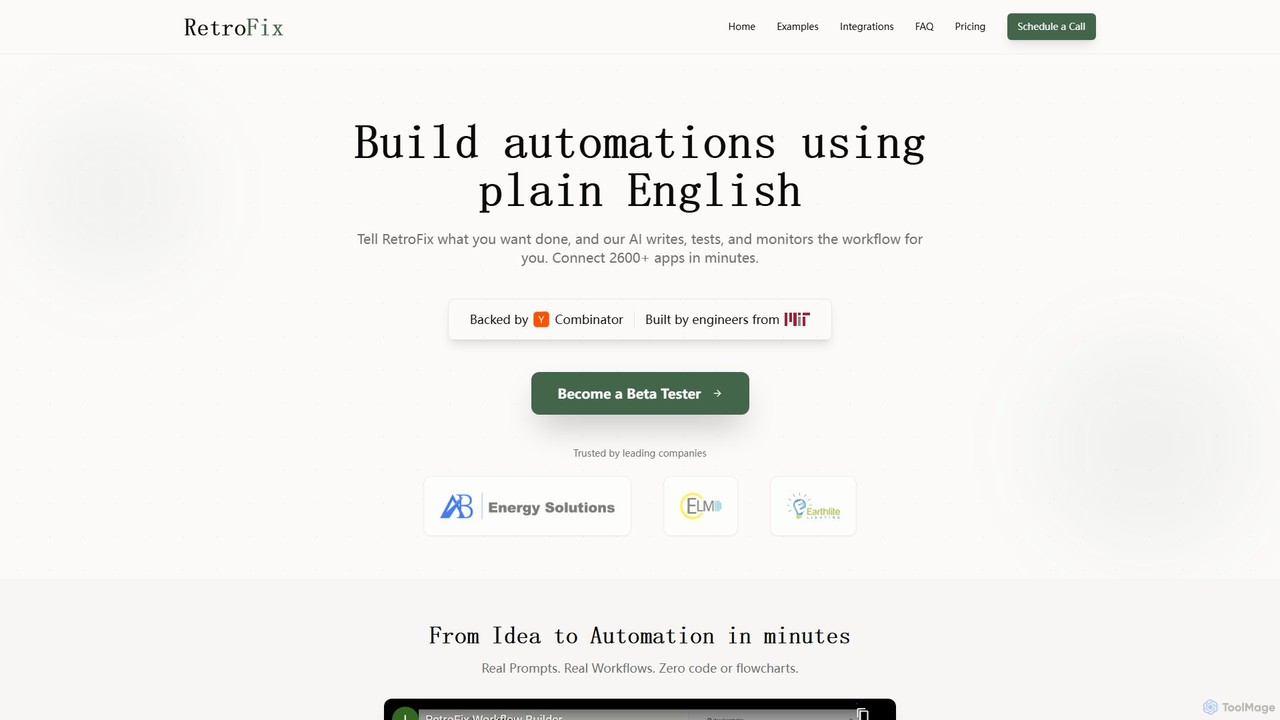
RetroFix is an AI-powered automation platform that lets you build complex workflows using plain English. Simply describe the task you want to automate, and RetroFix's AI will write, test, and monitor the entire process. It connects with over 2600 applications, eliminating the need for code or complex flowcharts.

Workflow Management
Visits 8.1KFavorites 128Likes 152
Prompteus
Paid

Prompteus

Prompteus is an AI orchestration platform for modern teams, designed to build, manage, and scale AI workflows. It bridges Large Language Models (LLMs), human-in-the-loop decisions, and existing business tools, with a strong focus on security, compliance, and collaboration between technical and non-technical users.

Workflow Management
Visits 5.9KFavorites 108Likes 115
AI Studio
Freemium

AI Studio

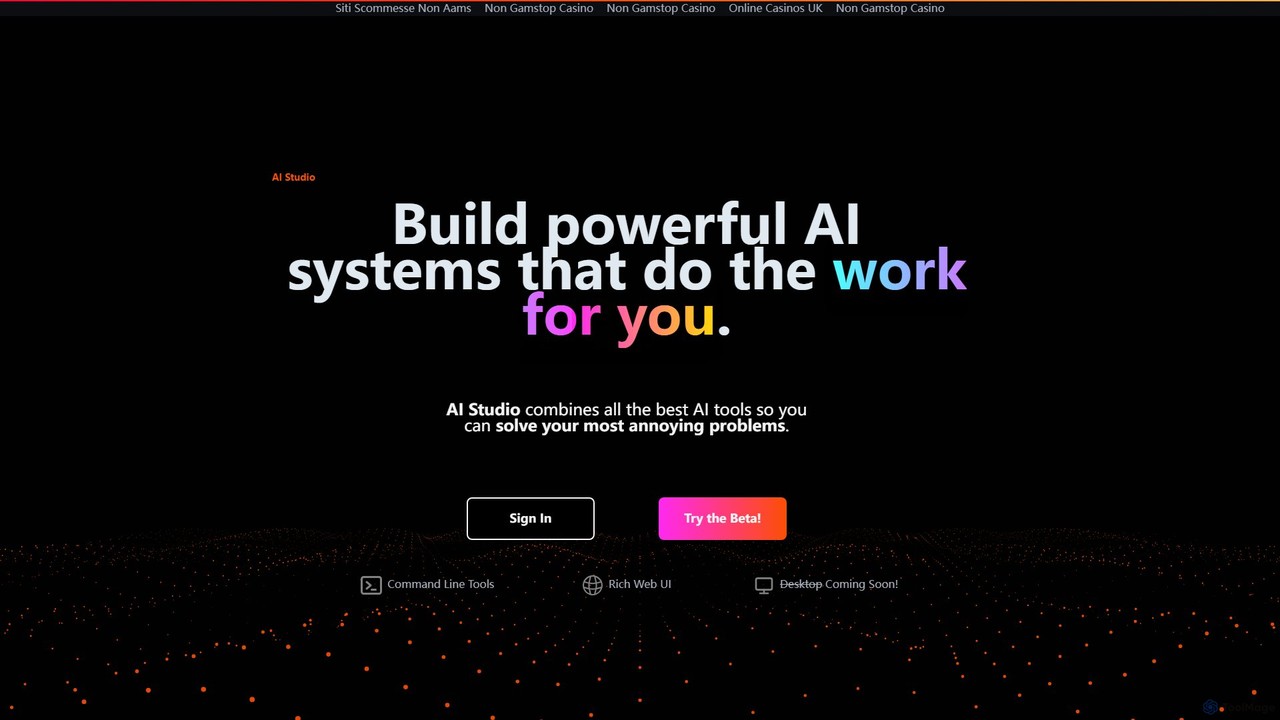
AI Studio is a no-code platform that empowers users to build powerful, custom AI systems. It integrates the best AI tools into a visual, node-based editor, allowing you to automate tedious tasks like web research, data analysis, content creation, and more, without writing a single line of code.

Workflow Management
Visits 6.2KFavorites 114Likes 115
Sola
Paid

Sola

Sola is an AI-powered Robotic Process Automation (RPA) platform designed for enterprises. It transforms repetitive tasks into intelligent, adaptive automations using a no-code visual editor. Sola enables business users to build, manage, and scale complex workflows by simply recording their screen actions, significantly reducing development time and increasing operational efficiency.

Workflow Management
Visits 55.1KFavorites 165Likes 143
Documentero
Freemium

Documentero

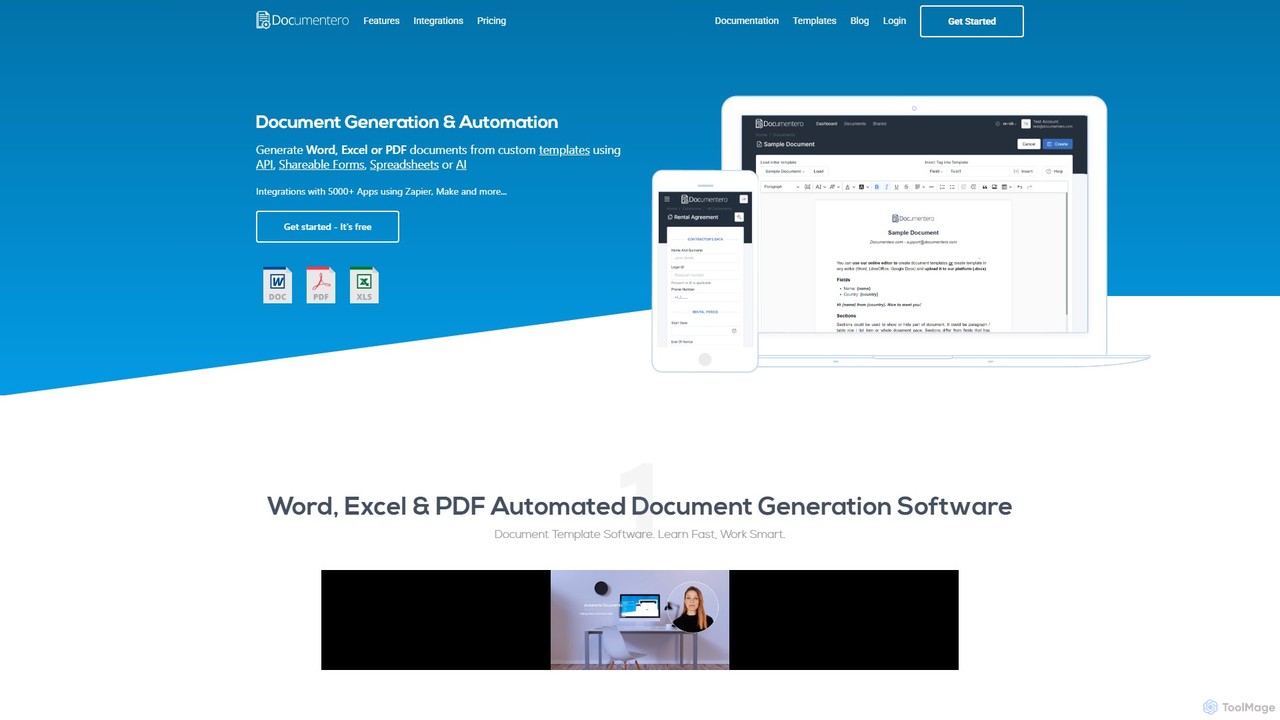
Documentero is a powerful document automation platform that enables users to generate personalized Word (.docx) and Excel (.xlsx) documents from templates and data. It streamlines the creation of contracts, invoices, reports, and more, saving time and ensuring accuracy.

Workflow Management
Visits 125.7KFavorites 115Likes 110
Aguru
Paid

Aguru

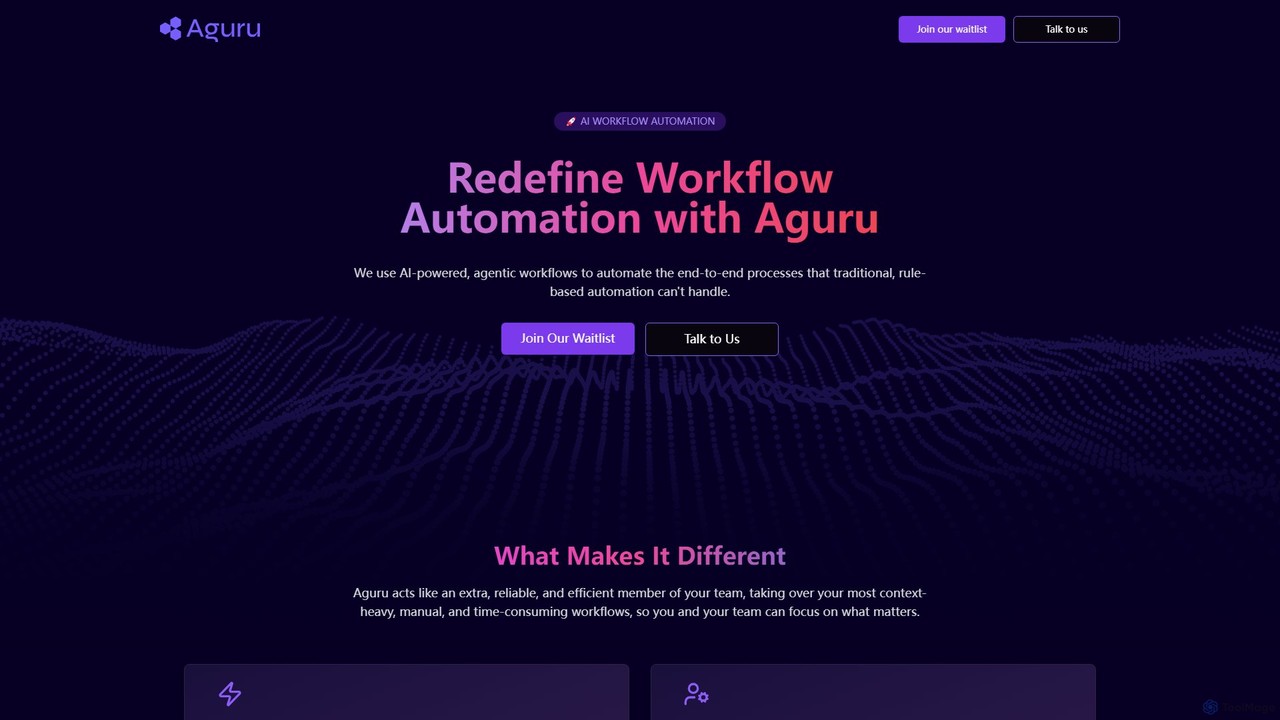
Aguru provides AI-powered workflow automation agents that handle complex, end-to-end business processes. Unlike traditional rule-based tools, Aguru's agents understand context, manage exceptions, and integrate across your entire tech stack, acting as an efficient, reliable member of your team.

Workflow Management
Visits 7.1KFavorites 145Likes 142
Respell
Freemium

Respell

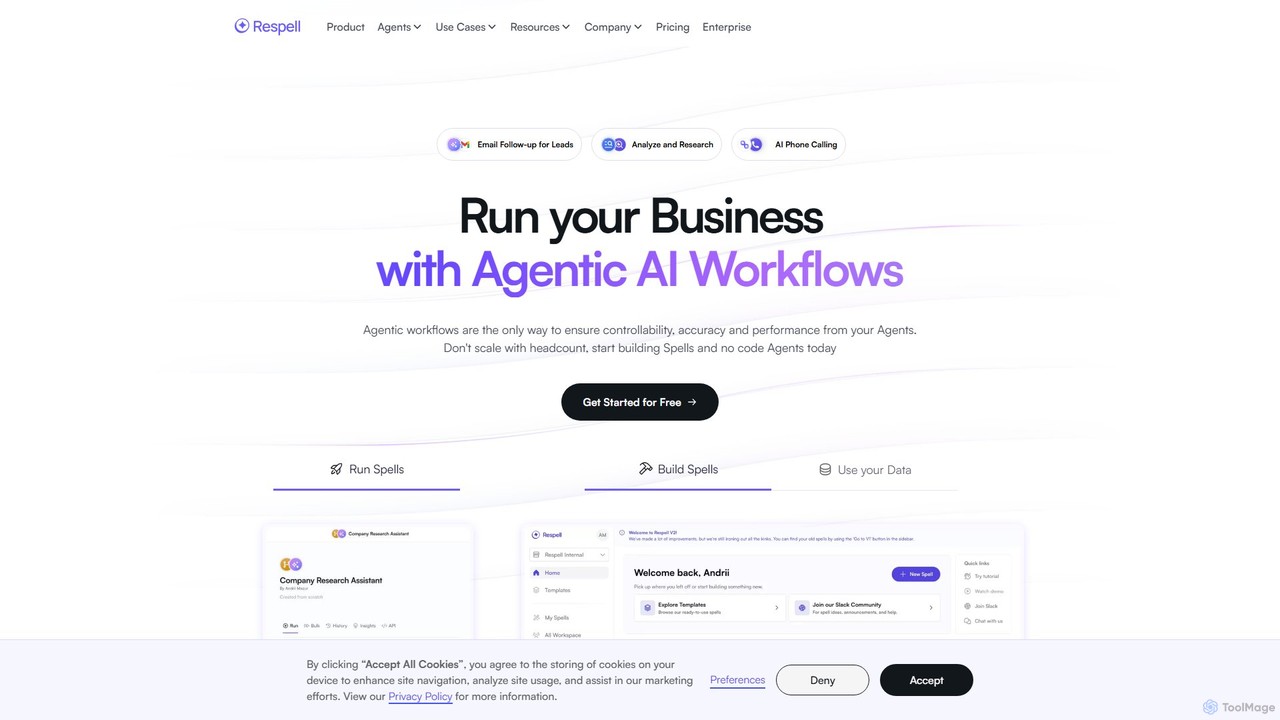
Respell is a no-code platform for building and deploying agentic AI workflows to automate complex business processes. It integrates with hundreds of apps like Salesforce and Slack, allowing teams in sales, marketing, and support to automate tasks like lead generation, data analysis, and customer outreach, thereby increasing efficiency and reducing manual work.

Workflow Management
Visits 7.6KFavorites 130Likes 143

About Workflow Management

AI Workflow Management tools are applications that use artificial intelligence to design, automate, and optimize business processes. These tools go beyond simple rule-based automation by leveraging machine learning to analyze data, predict outcomes, and make intelligent decisions for task routing and resource allocation. They empower organizations to build dynamic, self-improving workflows that adapt to changing conditions, significantly reducing manual intervention and operational bottlenecks. This results in increased efficiency, fewer errors, and better visibility across complex business operations.

Core Features

  • Intelligent Process Automation: Uses AI to handle complex decision-making and automate tasks that traditionally require human judgment.
  • Process Mining & Analytics: Analyzes workflow data to identify inefficiencies, discover bottlenecks, and suggest data-driven optimizations.
  • Predictive Task Management: Forecasts task completion times, potential delays, and resource requirements to enable proactive management.
  • No-Code/Low-Code Builder: Provides intuitive visual interfaces for non-technical users to design, build, and modify complex workflows.
  • Dynamic Task Routing: Automatically assigns tasks to the most suitable team member based on skill, availability, and current workload.

Use Cases

These tools are widely used across various departments. For instance, marketing teams use them to automate multi-channel campaign execution, HR departments streamline employee onboarding and offboarding processes, and finance teams manage complex approval chains for invoices and expenses. They are also critical in IT for managing support ticket resolution and in operations for optimizing supply chain logistics.

How to Choose

When selecting an AI Workflow Management tool, consider its integration capabilities with your existing software stack (e.g., CRM, ERP). Evaluate the sophistication of its AI features—whether you need basic automation or advanced predictive analytics. Assess the user-friendliness of the workflow builder, especially for non-technical team members. Finally, consider the tool's scalability to ensure it can support your company's growth and increasing process complexity.

Featured tool rankings

Workflow Management use cases

1

Automating Client Onboarding Process

A Customer Success Manager at a SaaS company uses an AI workflow tool to standardize and automate the client onboarding journey. When a deal is marked 'Closed-Won' in the CRM, the workflow automatically triggers a sequence of actions: it sends a personalized welcome email, creates a new project in their project management tool, assigns initial setup tasks to the implementation team, and schedules a kick-off call. The AI component can even analyze client data to suggest a customized onboarding plan, ensuring a smooth and efficient experience that reduces manual setup time by over 80%.

2

Streamlining Content Marketing Pipeline

A content marketing manager uses a workflow tool to manage the entire content lifecycle, from ideation to publication. A new idea triggers a workflow that creates a task for a writer. Once the draft is submitted, it's automatically routed to an editor. After approval, it moves to a designer for visuals. The AI can assist by suggesting SEO keywords, checking for plagiarism, and even scheduling the approved content for publication on the blog and social media channels at optimal times. This automation reduces coordination overhead and shortens the content delivery cycle significantly.

3

Intelligent IT Support Ticket Routing

An IT Helpdesk Manager implements an AI workflow to manage incoming support tickets. When a user submits a ticket via email or a portal, the AI uses Natural Language Processing (NLP) to analyze the content, identify the issue's category (e.g., hardware, software, network), and assess its urgency. Based on this analysis, the workflow automatically assigns the ticket to the IT specialist with the relevant expertise and lowest current workload. This eliminates manual triage, speeds up response times, and ensures issues are handled by the most qualified person from the start.

4

Automating Financial Approval Processes

A finance controller for a mid-sized company sets up a workflow to handle invoice approvals. When an invoice is received, an AI-powered OCR feature extracts key data like vendor, amount, and due date. The workflow then checks this against the purchase order system. If it matches and is below a certain threshold (e.g., $5,000), it's automatically approved for payment. If it's above the threshold or has a discrepancy, it's routed to the appropriate department head for manual review. This automation drastically reduces payment cycle times and minimizes the risk of human error.

5

Optimizing E-commerce Order Fulfillment

An operations manager for an online store uses a workflow automation tool to streamline order processing. When a new order is placed, the workflow confirms payment, checks inventory levels across multiple warehouses, and selects the optimal fulfillment center based on shipping costs and delivery speed. It then automatically generates a picking list for the warehouse staff and prints a shipping label. Once the item is shipped, the workflow updates the order status in the e-commerce platform and sends a tracking number to the customer. This end-to-end automation ensures faster shipping and fewer manual errors.

6

Managing Software Development Sprints

A Scrum Master in a tech company uses a workflow tool integrated with their code repository and issue tracker (like Jira). When a developer creates a pull request, the workflow automatically moves the corresponding Jira ticket to 'In Review'. It assigns reviewers based on a predefined code-owner list. Once the pull request is approved and merged, the ticket is moved to 'Ready for QA'. The AI can also generate sprint performance reports by analyzing ticket cycle times and developer workloads, providing insights for process improvement in future sprints.

Workflow Management FAQ

What is AI Workflow Management?

AI Workflow Management is a category of software that uses artificial intelligence to automate, monitor, and optimize business processes. Unlike traditional workflow tools that follow static, predefined rules, AI-powered systems can interpret unstructured data (like emails), make predictive decisions, and learn from past performance to suggest process improvements. Their primary goal is to handle complex, dynamic tasks, reduce manual intervention, and increase operational efficiency across an organization.

How to choose the right AI Workflow Management tool?

To choose the right tool, consider these factors:

  • Integration Capabilities: Ensure it seamlessly connects with your core business applications like CRM, ERP, and communication platforms.
  • Ease of Use: Look for a tool with an intuitive, visual, no-code/low-code interface so that non-technical team members can build and manage workflows.
  • AI Feature Set: Determine if you need basic rule-based automation or more advanced capabilities like process mining, predictive analytics, and NLP.
  • Scalability and Performance: Select a platform that can handle your current volume of tasks and can scale as your business grows and your processes become more complex.
What's the difference between Workflow Management and Project Management tools?

The key difference lies in their focus. Workflow Management tools are designed for automating and optimizing repeatable, ongoing business processes (e.g., employee onboarding, invoice approvals). They focus on efficiency and consistency. Project Management tools, on the other hand, are for managing unique, time-bound projects with a specific start and end (e.g., launching a new website, organizing an event). They focus on planning, collaboration, and tracking progress towards a specific goal. While some tools have overlapping features, their core purposes are distinct.

What are the key benefits of using AI in workflow management?

Using AI in workflow management offers several key benefits:

  • Increased Efficiency: AI automates complex and repetitive tasks, freeing up employees to focus on more strategic work.
  • Reduced Human Error: Automation minimizes mistakes in data entry, task routing, and process execution, leading to higher quality outcomes.
  • Proactive Optimization: AI can analyze process data to identify bottlenecks and suggest improvements, enabling continuous optimization rather than reactive fixes.
  • Smarter Decision-Making: Predictive analytics can forecast potential delays or resource shortages, allowing managers to make informed decisions proactively.
Who can benefit from using AI Workflow Management tools?

A wide range of roles and departments can benefit. Operations managers can use them to streamline supply chains and fulfillment. HR departments can automate onboarding and offboarding processes. Marketing teams can manage complex campaign workflows. Finance departments can accelerate approval cycles. Essentially, any team or organization that relies on structured, repeatable processes can leverage these tools to improve efficiency, reduce errors, and gain better control over their operations.