Pinspire
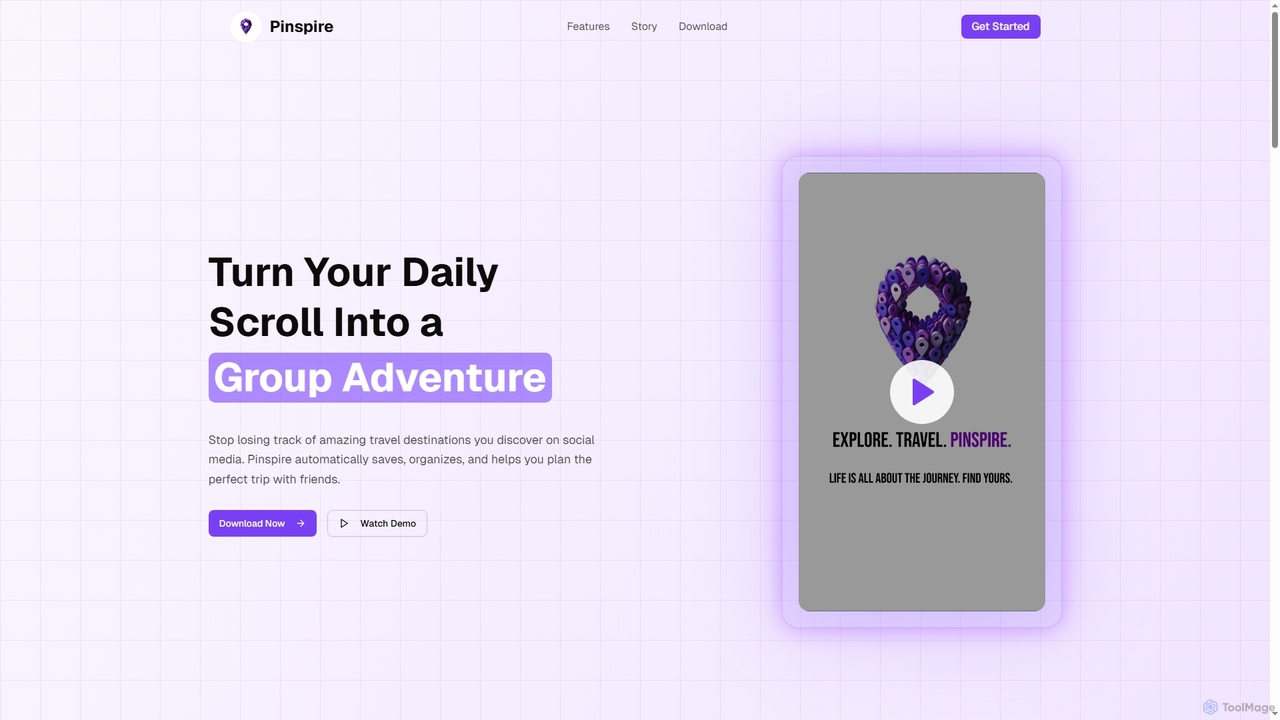
Pinspire helps you effortlessly save, organize, and collaboratively plan dream trips from travel inspiration found on social media. Turn your daily scroll into organized adventures with friends.
Itinerary PlanningPopular Itinerary Planning AI tools in Collaboration include Pinspire, helping you work more efficiently.

Pinspire helps you effortlessly save, organize, and collaboratively plan dream trips from travel inspiration found on social media. Turn your daily scroll into organized adventures with friends.
Itinerary PlanningItinerary Planning tools are AI-powered platforms designed to automate and optimize the creation and management of travel or event schedules. Leveraging advanced algorithms, these tools analyze various factors like destinations, user preferences, time constraints, and budgets to generate efficient and personalized plans. They significantly streamline the planning process, making complex coordination tasks within the broader scope of collaboration much simpler and more accessible for individuals, families, and professional teams.
These tools are invaluable for a wide range of users, from individual travelers planning a leisure vacation to professional event managers coordinating complex conferences or corporate retreats. They assist travel agencies in crafting bespoke tours for clients, business professionals in organizing multi-city trips with tight schedules, and families in planning holidays that cater to diverse interests. By automating tedious research, scheduling, and logistical coordination, they free up significant time and mental effort, allowing users to focus on enjoying their experience or making more strategic decisions.
When selecting an Itinerary Planning tool, consider its integration capabilities with other essential travel services, such as flight booking platforms, hotel reservation systems, and local transport apps, to ensure a cohesive experience. Evaluate the depth and accuracy of its personalization features, its ability to provide real-time updates for various travel elements, and the comprehensiveness of its global destination database. Assess the ease of use for its collaborative features, especially if planning with a group, and its mobile accessibility for on-the-go adjustments. Finally, compare its pricing model against the range of functionalities offered and its capacity to handle complex multi-stop or multi-participant itineraries.

A parent uses an AI itinerary planner to coordinate a family vacation involving children and grandparents. The tool helps balance activities for different age groups, suggests kid-friendly attractions, optimizes travel routes between destinations, and manages accommodation bookings, ensuring everyone's preferences are considered while staying within budget.
A solo traveler or family uses an AI itinerary planner to generate a multi-day vacation plan. By inputting destinations, preferred activities (e.g., museums, beaches), budget, and travel pace, the AI automatically suggests optimized routes, schedules daily activities, and recommends restaurants, saving hours of manual research and ensuring a cohesive, enjoyable trip.
A business professional frequently travels between multiple cities for meetings and presentations. The AI tool automatically generates the most efficient flight and ground transport schedules, suggests hotels near meeting venues, and integrates calendar appointments, minimizing travel time and maximizing productivity during complex business trips.
A business traveler needs to visit multiple clients in different cities within a tight schedule. An AI itinerary planner integrates with their calendar, identifies meeting locations, and then generates the most efficient travel routes, suggests optimal flight/train times, and even books accommodations, minimizing travel time and maximizing productivity during the trip.
An event manager is organizing a three-day conference with multiple speakers, workshops, and networking sessions. The itinerary planning AI assists in scheduling each segment, allocating resources, managing venue transitions, and distributing real-time updates to attendees and staff, ensuring a smooth and well-coordinated event flow.
An event organizer plans a multi-track conference with numerous speakers, sessions, and venues. An AI itinerary planning tool helps by automatically scheduling sessions to avoid conflicts, optimizing room assignments based on attendance projections, and generating personalized agendas for attendees, significantly reducing the complexity and time involved in manual scheduling.
A specialized travel agency utilizes AI itinerary planning to design unique tour packages for groups with specific interests, such as culinary tours or adventure trips. The tool helps curate destinations, activities, and dining experiences, manages group bookings, and provides a shareable, interactive itinerary for all participants, enhancing customer satisfaction.
A project manager oversees a large software development project with interdependent tasks and multiple team members. An AI itinerary planning tool (often integrated into project management software) helps by automatically sequencing tasks, identifying critical paths, allocating resources based on availability and skill, and flagging potential delays, ensuring the project stays on track and within budget.
An individual planning a solo backpacking trip across a new region uses the AI planner to discover off-the-beaten-path attractions, optimize daily routes for hiking or sightseeing, and find budget-friendly accommodations. The tool learns from their preferences to suggest unique experiences and provides safety alerts, making the adventure more tailored and secure.
A team leader needs to assign daily tasks to team members, considering individual workloads, skill sets, and project deadlines. An AI itinerary planning tool can optimize daily schedules for each team member, ensuring an equitable distribution of work, prioritizing critical tasks, and providing a clear overview of who is working on what, enhancing overall team efficiency and accountability.
A logistics manager for a field service company needs to schedule and route technicians to multiple customer locations daily. An AI itinerary planning tool takes into account technician availability, customer locations, service priorities, and real-time traffic conditions to generate the most efficient routes, minimizing fuel costs and travel time, and maximizing the number of service calls completed per day.
Friends planning an extended road trip across several states leverage an AI itinerary planner to map out the optimal driving route, identify scenic stops, suggest overnight accommodations, and estimate fuel costs. The tool also recommends attractions along the way and provides real-time traffic updates, ensuring a smooth and enjoyable journey with minimal detours.
AI Itinerary Planning tools are specialized software applications that use artificial intelligence to assist in creating, optimizing, and managing travel or event schedules. They analyze user preferences, logistical constraints, and real-time data to generate personalized and efficient plans. These tools aim to simplify complex scheduling, reduce manual planning effort, and enhance the overall experience for travelers and event organizers.
AI Itinerary Planning tools are software solutions that use artificial intelligence to automate and optimize the creation and management of schedules, routes, and plans. They analyze various data points like user preferences, real-time conditions, and resource availability to generate efficient and personalized itineraries for travel, projects, events, or daily tasks. These tools aim to reduce manual planning effort and enhance coordination.
To choose the best tool, consider its core functionalities like route optimization, personalization capabilities, and real-time update accuracy. Evaluate its integration with other travel services, ease of collaborative sharing for group planning, and the comprehensiveness of its destination database. Also, assess its mobile accessibility, pricing model, and whether it supports your specific type of travel (e.g., business, leisure, group tours).
AI Itinerary Planning tools offer significant advantages over manual planning by automating complex calculations, integrating real-time data, and providing dynamic optimization. While manual planning is time-consuming and prone to human error, AI tools can process vast amounts of information quickly, adapt to unforeseen changes (like traffic or weather), and suggest optimal solutions that might not be obvious to a human planner, leading to more efficient and less stressful outcomes.
When choosing an AI itinerary planning tool, prioritize features like robust customization options for different types of plans (e.g., travel, project, event). Look for strong integration capabilities with existing calendars, communication platforms, or project management software. Real-time data integration for dynamic adjustments, collaborative editing features for team use, and a user-friendly interface are also crucial. Advanced tools may offer budget tracking and personalized recommendations based on AI learning.
AI Itinerary Planning tools can automate numerous tasks, including generating optimized routes between multiple locations, suggesting personalized activities and dining options, and estimating travel times and costs. They can also manage bookings for flights, hotels, and activities, provide real-time alerts for schedule changes, and facilitate collaborative editing among multiple participants, significantly reducing manual effort.
These tools enhance coordination by providing a centralized platform for all planning details, reducing miscommunication and ensuring everyone is on the same page. They save significant time by automating research and scheduling, minimize stress through proactive alerts for changes, and improve efficiency by optimizing routes and resource allocation. This leads to smoother trips and more successful events with fewer last-minute issues.
A wide range of users can benefit from AI Itinerary Planning tools. This includes frequent travelers (both leisure and business) seeking optimized routes and personalized experiences, project managers needing to coordinate complex tasks and resources, event organizers managing intricate schedules, and logistics companies aiming to streamline delivery or service routes. Essentially, anyone who deals with complex scheduling and seeks to save time and improve efficiency will find these tools valuable.
While general collaboration software (like project management tools) offers broad features for team communication and task management, AI Itinerary Planning tools are specifically designed for the unique complexities of travel and event logistics. They incorporate specialized AI algorithms for route optimization, personalized recommendations, and real-time travel data, which general collaboration tools lack. Their focus is on the "what, when, and where" of a journey or event, rather than general task coordination.
AI Itinerary Planning tools often integrate seamlessly with other collaboration platforms to enhance workflow efficiency. Common integrations include calendar applications (Google Calendar, Outlook) for automatic event syncing, project management software (Asana, Trello) for task scheduling, and communication tools (Slack, Microsoft Teams) for sharing updates. This connectivity allows for a centralized view of plans, reduces manual data entry, and ensures all team members are aligned, making them a powerful component of a broader collaborative ecosystem.