ToolMage
Sign in

Best 4 Brainstorming AI tools for Collaboration

Popular Brainstorming AI tools in Collaboration include tldraw, Visual AI, Ritual, and SPAICE, helping you work more efficiently.

Visual AI

Visual AI

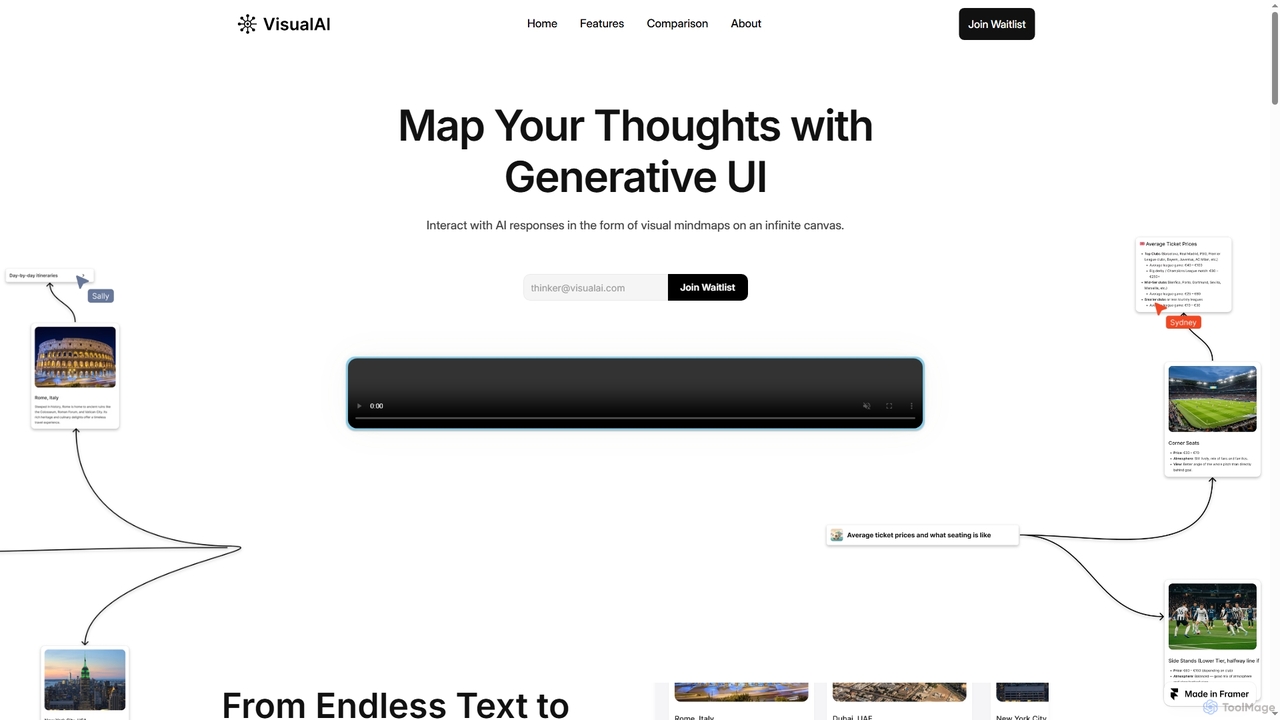
Visual AI is an innovative platform that transforms linear AI text responses into dynamic, visual clarity. It automatically structures information into interconnected nodes, enriching data with relevant visuals to enhance understanding and retention. Designed for non-linear thinkers, it offers an infinite collaborative workspace for brainstorming, prototyping, and evolving ideas.

Brainstorming
Visits 4.2KFavorites 99Likes 111
Ritual
Freemium

Ritual

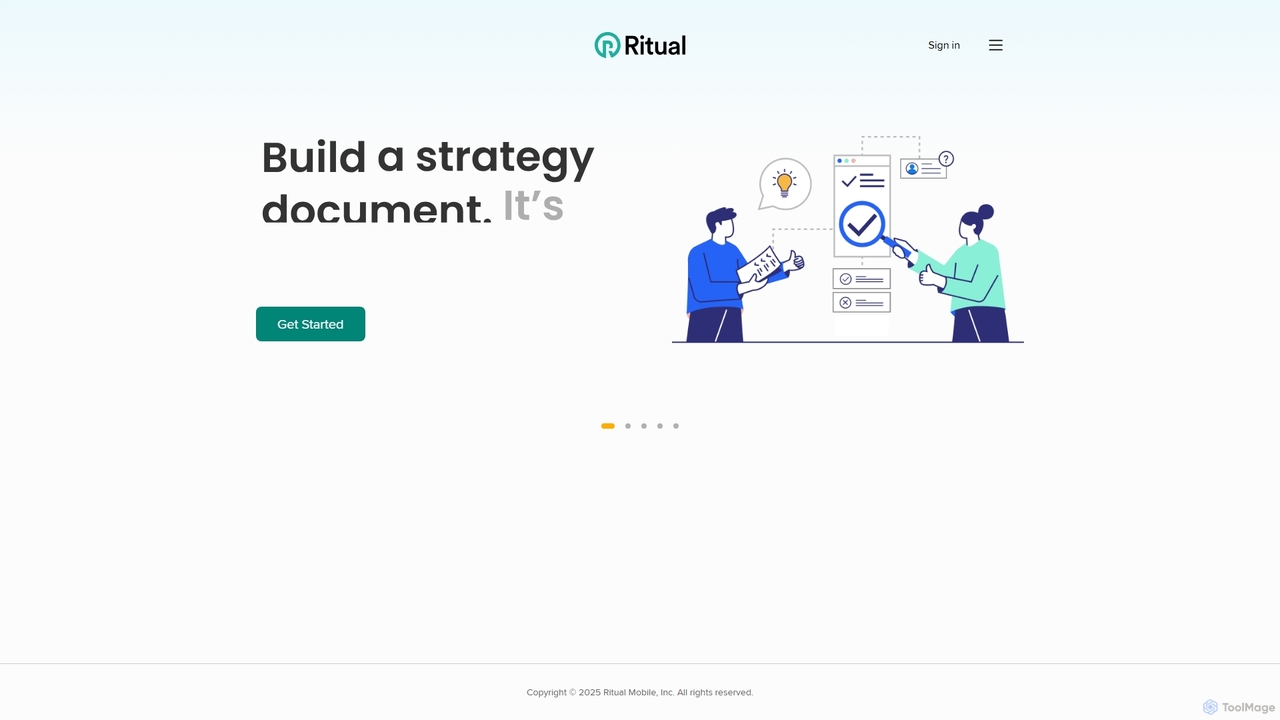
Ritual is an AI-powered collaborative workspace designed to transform ideas into actionable plans. It helps teams brainstorm, refine concepts, and generate structured recommendations, streamlining the entire process from ideation to execution. By leveraging AI, Ritual enhances creativity, improves decision-making, and boosts overall team productivity.

Strategic Planning
Visits 4.2KFavorites 133Likes 134
tldraw
Freemium

tldraw

tldraw is a free, AI-powered collaborative whiteboard that transforms your rough sketches into functional code and polished diagrams. With its 'Make Real' feature, it's an essential tool for developers, designers, and teams to brainstorm, prototype, and innovate with unprecedented speed.

Brainstorming
Visits 936KFavorites 107Likes 109
SPAICE
Freemium

SPAICE

SPAICE is a collaborative, node-based AI workspace designed for visual thinking, brainstorming, and knowledge management. It integrates multiple advanced AI models like GPT-4o into a dynamic mind-mapping interface, allowing users to build, connect, and expand ideas in a shared visual environment. It's built for complex problem-solving, research, and team collaboration.

Brainstorming
Visits 3.3KFavorites 150Likes 162

About Brainstorming

AI Brainstorming tools are specialized platforms that leverage artificial intelligence to enhance and streamline the idea generation process. These tools utilize natural language processing and machine learning algorithms to suggest new concepts, organize thoughts, and identify patterns from user inputs. They empower individuals and teams to overcome creative blocks, explore diverse perspectives, and develop innovative solutions more efficiently. By automating aspects of ideation, they transform traditional brainstorming into a more dynamic and productive activity within the broader context of collaboration.

Core Features

  • AI Idea Generation: Automatically suggests new ideas, concepts, or keywords based on initial prompts or existing content.
  • Idea Clustering & Organization: Uses AI to group similar ideas, identify themes, and structure complex information into logical categories or mind maps.
  • Creative Prompting: Provides AI-driven questions or challenges to stimulate divergent thinking and explore unconventional angles.
  • Constraint-Based Ideation: Generates ideas within specified parameters or limitations, guiding creativity towards practical solutions.

Use Cases

Product development teams use AI brainstorming to rapidly generate features, names, and marketing angles for new offerings. Marketing departments leverage these tools to develop campaign concepts, taglines, and content ideas. Consultants apply them to dissect client problems and propose innovative strategic solutions.

How to Choose

When selecting an AI brainstorming tool, consider its AI generation quality and relevance to your domain. Evaluate its organizational features, such as mind mapping or clustering, for structuring ideas effectively. Assess integration capabilities with existing collaboration platforms and ensure it offers intuitive user interfaces suitable for your team's technical proficiency. Finally, compare pricing models and scalability options to match your budget and growth needs.

Featured tool rankings

Brainstorming use cases

1

Generating Marketing Campaign Concepts

Marketing teams use AI brainstorming tools to quickly generate a wide array of campaign themes, slogans, and content ideas for new product launches or seasonal promotions. By inputting target audience demographics and campaign objectives, the AI suggests diverse creative angles, helping teams overcome ideation plateaus and identify compelling narratives that resonate with consumers, significantly reducing concept development time.

2

Developing Innovative Product Features

Product managers and R&D teams leverage AI brainstorming to explore novel features and functionalities for existing or new products. By feeding the AI with user feedback, market trends, and competitor analysis, the tool can propose unique solutions or improvements, fostering a more innovative development pipeline and ensuring the product remains competitive and user-centric.

3

Overcoming Writer's Block for Content Creation

Content creators, bloggers, and journalists utilize AI brainstorming to generate fresh topics, article outlines, and headline ideas when facing creative stagnation. The AI can analyze past successful content or current trends to provide relevant suggestions, helping writers maintain a consistent publishing schedule and produce engaging material efficiently.

4

Facilitating Strategic Business Planning

Business leaders and strategists employ AI brainstorming to explore potential market opportunities, identify risks, and formulate strategic initiatives. By inputting business goals and current challenges, the AI can generate diverse scenarios, SWOT analysis points, and innovative solutions, aiding in comprehensive and forward-thinking strategic planning sessions.

5

Enhancing Educational Lesson Plan Design

Educators and curriculum developers use AI brainstorming to generate creative teaching methods, interactive activities, and diverse assessment ideas for lesson plans. By specifying learning objectives and student demographics, the AI can suggest engaging pedagogical approaches, enriching the learning experience and making lessons more dynamic and inclusive.

6

Streamlining Problem-Solving Workshops

Teams conducting problem-solving workshops use AI brainstorming to rapidly generate potential solutions to complex challenges. Participants input problem statements, and the AI assists by suggesting various approaches, breaking down the problem into smaller components, and offering unconventional solutions, leading to more comprehensive and effective problem resolution.

Brainstorming FAQ

What are AI Brainstorming tools?

AI Brainstorming tools are software applications that use artificial intelligence, primarily natural language processing and machine learning, to assist in generating, organizing, and refining ideas. They go beyond traditional digital whiteboards by actively suggesting concepts, identifying patterns, and helping users overcome creative blocks, making the ideation process more efficient and innovative within collaborative workflows.

How do AI Brainstorming tools differ from traditional collaboration platforms?

While traditional collaboration platforms offer shared spaces for discussion and document sharing, AI Brainstorming tools specifically focus on the *ideation phase*. They actively participate in idea generation by suggesting content, structuring thoughts, and analyzing inputs, whereas traditional platforms primarily facilitate human-to-human interaction without AI-driven content creation or analysis. This makes AI tools a specialized component within the broader collaboration ecosystem.

What are the key benefits of using AI for brainstorming?

The main benefits include overcoming creative blocks by providing fresh perspectives, accelerating the idea generation process, and ensuring a wider diversity of ideas. AI tools can also help organize complex thoughts, identify underlying themes, and reduce bias by presenting ideas based on data rather than individual influence, leading to more robust and innovative outcomes. They enhance efficiency and foster a more dynamic ideation environment.

Who can benefit most from AI Brainstorming tools?

A wide range of users can benefit, including marketing professionals for campaign ideas, product developers for feature innovation, content creators for topic generation, and business strategists for market analysis. Essentially, anyone involved in creative problem-solving, strategic planning, or content development can leverage these tools to enhance their ideation process, whether working individually or as part of a collaborative team.

What should I look for when choosing an AI Brainstorming tool?

When selecting a tool, prioritize its AI generation quality and relevance to your specific domain. Consider its organizational features like mind mapping or clustering, and evaluate its integration capabilities with other tools you use. User-friendliness, scalability, and pricing models are also crucial factors to ensure it fits your team's needs and budget. Look for robust privacy and security features, especially for sensitive ideas.