Bobby
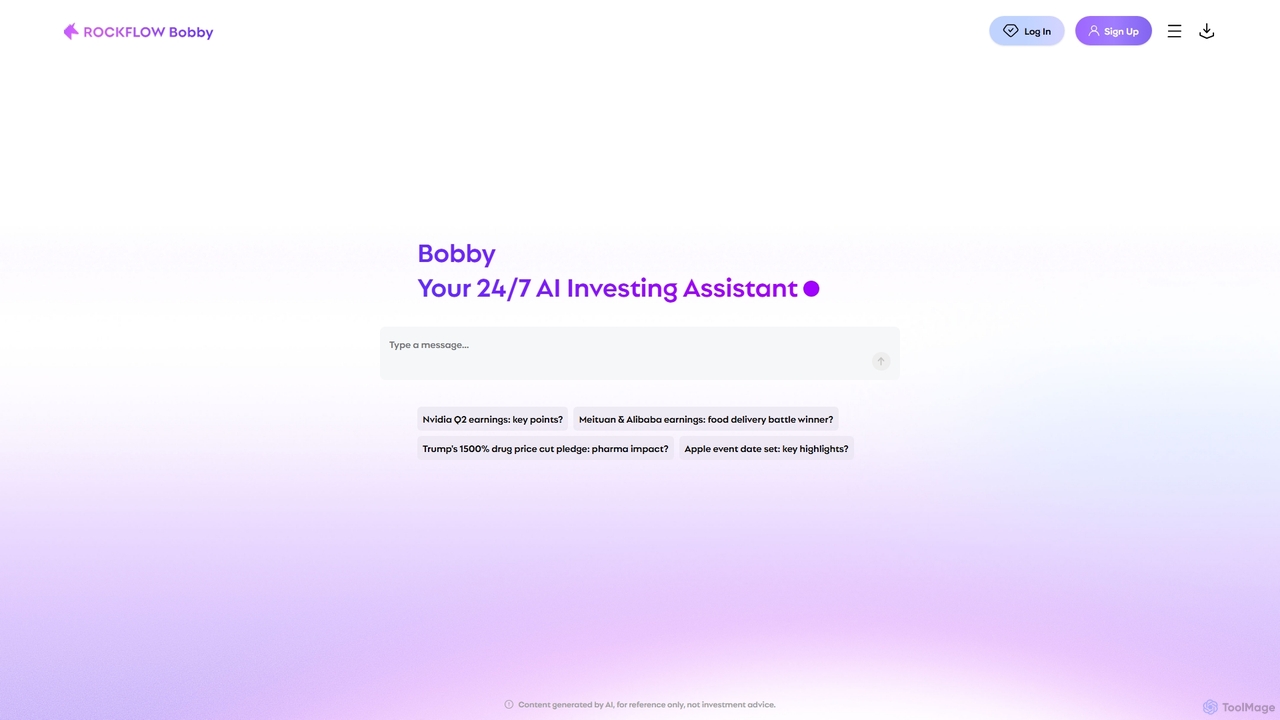
Bobby is a 24/7 AI investing assistant from RockFlow, designed to simplify financial analysis. It answers complex market …
Bobby is a 24/7 AI investing assistant from RockFlow, designed to simplify financial analysis. It answers complex market questions, summarizes earnings reports, analyzes news impact, and generates actionable trading ideas and strategies in natural language. Ideal for investors seeking data-driven insights without manual research.
Stockinsights.ai
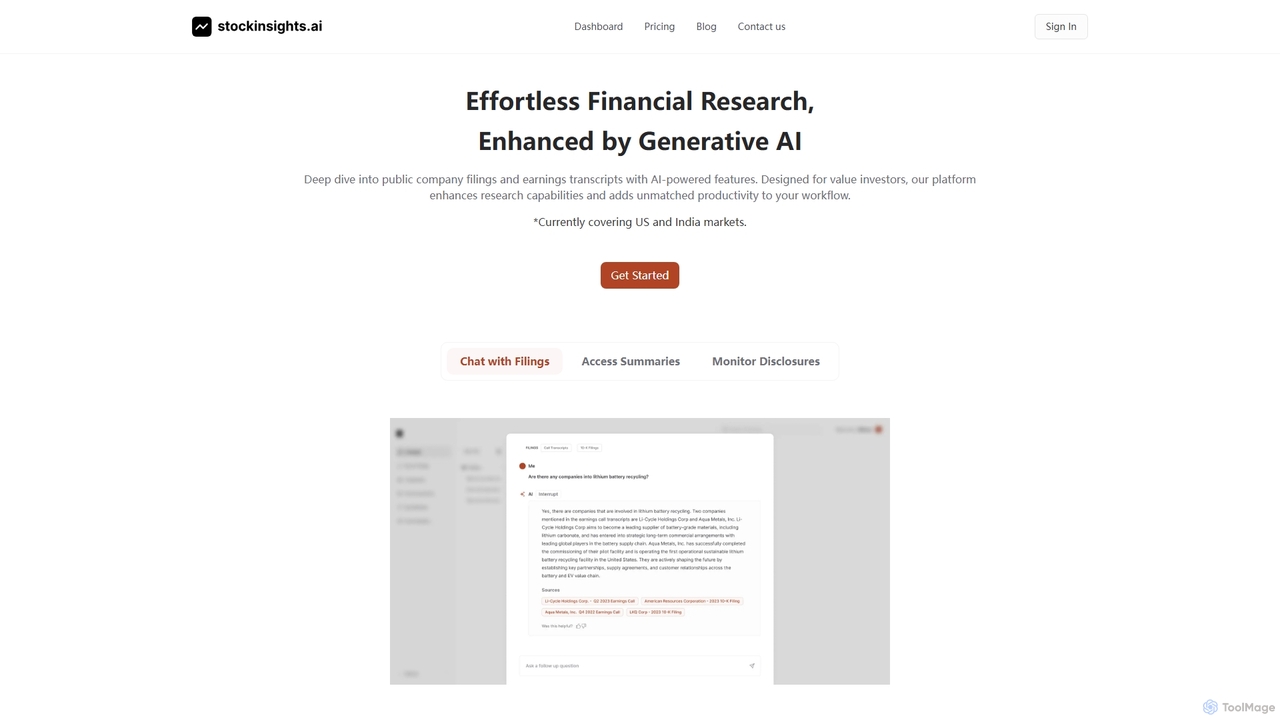
Stockinsights.ai is an AI-powered equity research assistant designed for investors. It uses generative AI to analyze and summarize …
Stockinsights.ai is an AI-powered equity research assistant designed for investors. It uses generative AI to analyze and summarize public company filings, earnings calls, and financial data from US and Indian markets, streamlining due diligence and portfolio tracking.
Fey
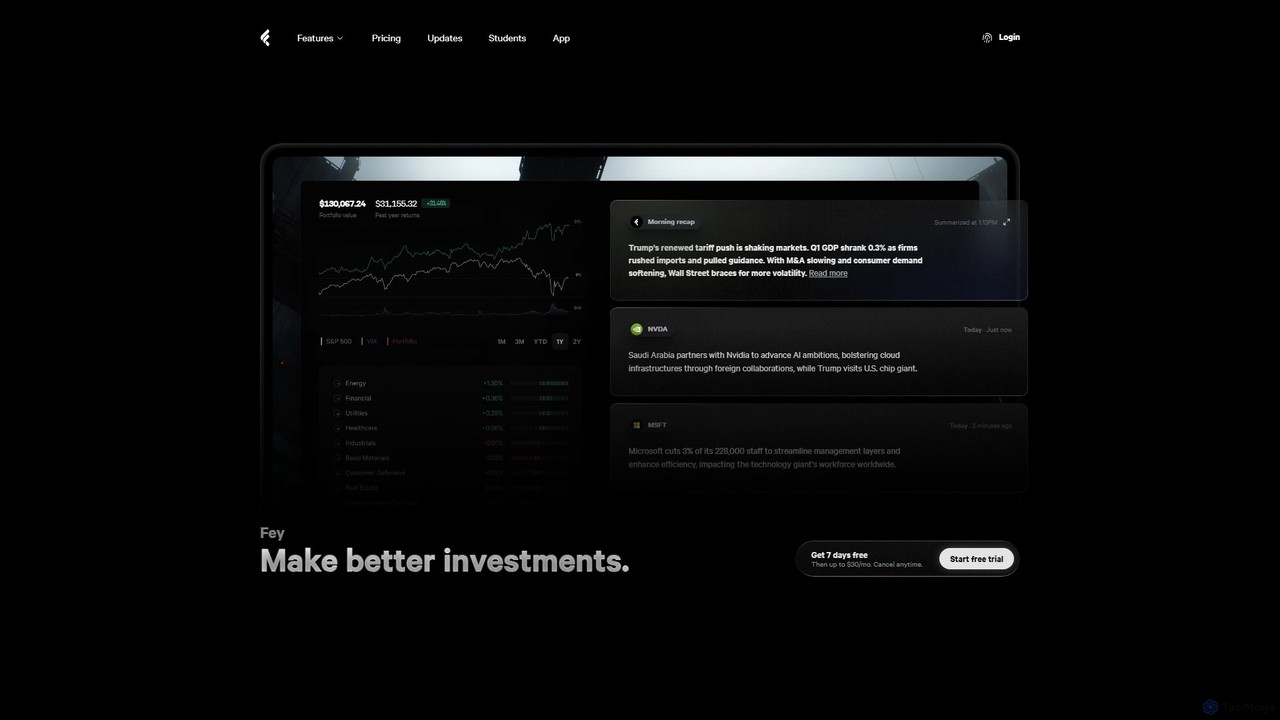
Fey is an AI-powered investment research platform that simplifies financial markets. It transforms complex data, news, and earnings …
Fey is an AI-powered investment research platform that simplifies financial markets. It transforms complex data, news, and earnings reports into clear, actionable insights using AI summaries, real-time alerts, and a natural language stock screener. Sync your portfolio, track performance, and make better investment decisions with its beautiful, ad-free interface.
About Financial Analysis
Financial Analysis tools are AI-powered platforms designed to process vast amounts of financial data, identify trends, and generate actionable insights. As a specialized segment of data analysis, these tools leverage machine learning algorithms to automate complex calculations, predict market movements, and assess investment risks. They empower businesses and individuals to make data-driven financial decisions with greater accuracy and efficiency.
Core Features
- Automated Data Ingestion: Automatically collects and integrates financial data from various sources like market feeds, company reports, and transaction records.
- Predictive Modeling: Utilizes AI to forecast future financial performance, market trends, and potential risks based on historical data patterns.
- Risk Assessment & Management: Identifies and quantifies financial risks, such as credit risk, market risk, and operational risk, providing strategies for mitigation.
- Portfolio Optimization: Analyzes investment portfolios to recommend adjustments that maximize returns while minimizing risk, aligned with user objectives.
- Performance Reporting: Generates comprehensive financial reports and visualizations, highlighting key metrics, variances, and performance drivers.
Applicable Scenarios
Financial Analysis AI tools are indispensable for investment firms managing large portfolios, corporate finance departments conducting budgeting and forecasting, and individual investors seeking an edge in market analysis. They are also used by risk management teams to monitor and mitigate potential financial exposures, and by auditors to detect anomalies and ensure compliance.
How to Choose
When selecting an AI financial analysis tool, consider its data integration capabilities with your existing systems, the breadth and depth of its analytical models (e.g., predictive, prescriptive), the clarity and customizability of its reporting features, and its compliance with industry regulations. Evaluate the user interface for ease of use and the level of technical expertise required.
Financial AnalysisUse Cases
Automated Market Trend Prediction
Investment analysts and fund managers utilize AI financial analysis tools to automatically process real-time market data, news, and social sentiment. The tools identify emerging trends, predict stock price movements, and flag potential market shifts, allowing for proactive portfolio adjustments and timely investment decisions. This significantly reduces manual research time and enhances decision-making speed.
Enhanced Credit Risk Assessment
Lending institutions and credit departments employ these AI tools to analyze vast datasets of borrower financial history, transaction patterns, and external economic indicators. The AI models provide more accurate and nuanced credit scores, identify high-risk applicants, and forecast default probabilities, leading to more informed lending decisions and reduced non-performing loans.
Optimizing Investment Portfolio Performance
Individual investors and wealth managers leverage AI to continuously monitor and rebalance investment portfolios. The tools analyze asset allocation, risk tolerance, and market conditions to suggest optimal adjustments, such as buying or selling specific assets, to maximize returns while staying within predefined risk parameters. This ensures portfolios are always aligned with financial goals.
Fraud Detection in Financial Transactions
Financial institutions use AI financial analysis to detect anomalous patterns in transaction data that may indicate fraudulent activity. By learning from historical fraud cases, the AI can flag suspicious transactions in real-time, reducing financial losses and enhancing security. This includes identifying unusual spending, location discrepancies, or rapid successive transactions.
Strategic Budgeting and Forecasting
Corporate finance teams apply AI tools to create more accurate and dynamic budgets and financial forecasts. By integrating historical performance, economic indicators, and operational data, the AI can predict future revenues, expenses, and cash flows with higher precision, enabling better resource allocation and strategic planning for business growth.
Personalized Financial Planning Advice
Financial advisors and fintech platforms use AI to offer personalized financial planning advice to clients. The tools analyze an individual's income, expenses, savings, debt, and financial goals to recommend tailored strategies for retirement planning, debt management, and wealth accumulation, making sophisticated financial guidance accessible to a broader audience.