SportingCP
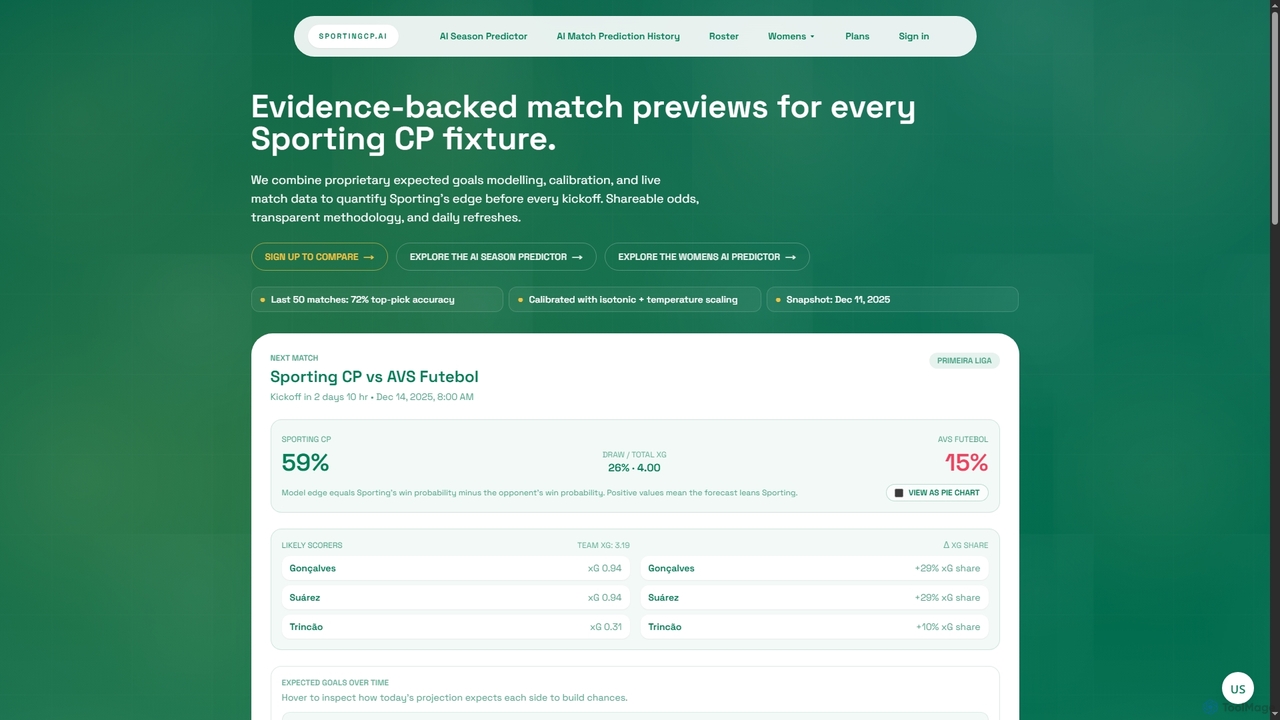
SportingCP is an AI-powered football analytics platform offering evidence-backed match predictions, detailed expected goals (xG) analysis, and comprehensive …
SportingCP is an AI-powered football analytics platform offering evidence-backed match predictions, detailed expected goals (xG) analysis, and comprehensive season projections for both Sporting CP men's and women's teams. It leverages proprietary models and Monte Carlo simulations to provide deep insights for fans, analysts, and bettors.
Netagrow
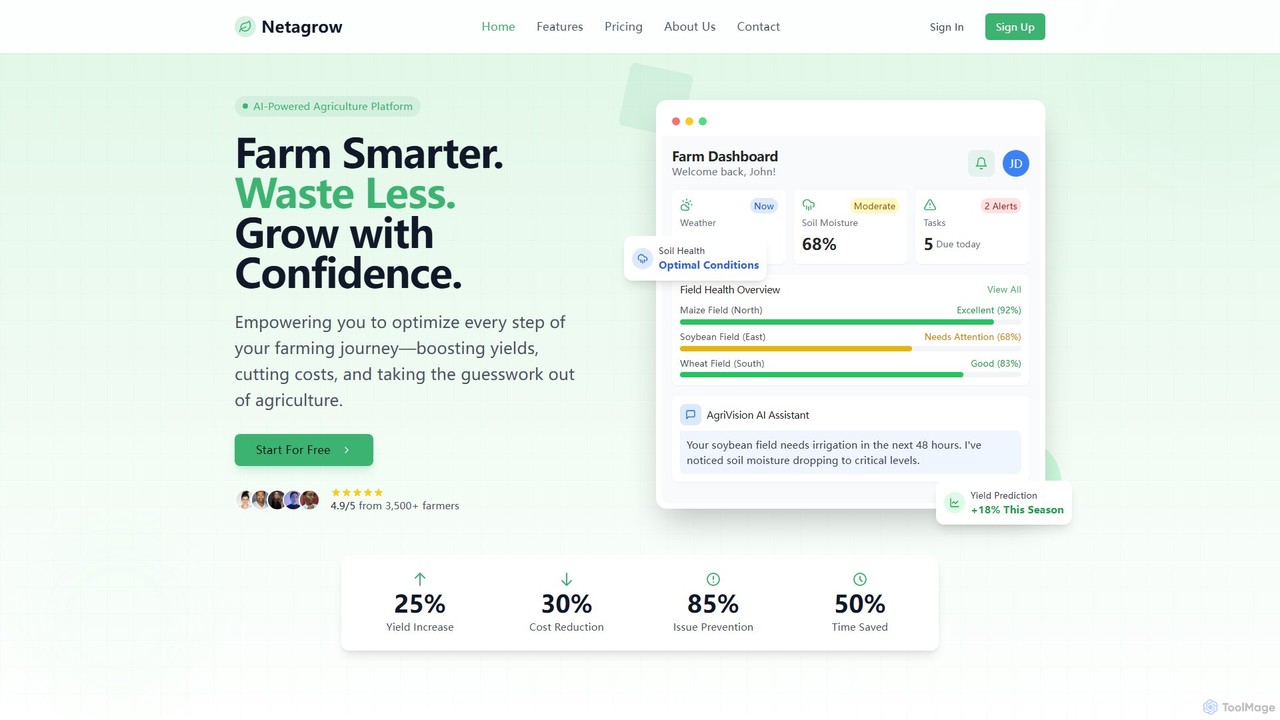
Netagrow is an AI-powered agriculture platform designed to simplify farm management. It empowers farmers to increase yields, reduce …
Netagrow is an AI-powered agriculture platform designed to simplify farm management. It empowers farmers to increase yields, reduce costs, and make data-driven decisions by providing tools for soil health monitoring, crop management, weather intelligence, and a 24/7 AI assistant.
About Prediction
Prediction tools are AI-powered solutions that leverage historical data and machine learning algorithms to forecast future outcomes, trends, or probabilities. These tools analyze complex patterns within datasets to generate actionable insights, moving beyond descriptive analysis to provide forward-looking intelligence. They are essential for strategic planning and proactive decision-making across various industries, forming a specialized subset of data analysis.
Core Features
- Predictive Modeling: Develops and deploys models to estimate future events or values.
- Anomaly Detection: Identifies unusual patterns or outliers that may indicate risks or opportunities.
- Trend Forecasting: Projects future market movements, demand shifts, or behavioral changes.
- Risk Assessment: Evaluates potential risks by predicting the likelihood of adverse events.
- Recommendation Engines: Suggests personalized products, content, or actions based on predicted user preferences.
Use Cases
Businesses utilize prediction tools for diverse applications, from optimizing supply chains to personalizing customer experiences. They enable proactive responses to market changes and help identify potential issues before they escalate, driving efficiency and competitive advantage.
How to Choose
When selecting a prediction tool, consider its predictive accuracy, the types of data it can integrate, the interpretability of its models, and its scalability to handle growing data volumes. Evaluate ease of use, customization options, and the level of technical expertise required for deployment and maintenance.
PredictionUse Cases
Forecasting Sales Demand
Retail businesses can use AI prediction tools to analyze past sales data, seasonality, promotions, and external factors like economic indicators to accurately forecast future product demand. This enables optimized inventory management, reduced stockouts, and minimized waste, directly impacting profitability.
Predicting Customer Churn
Telecommunication companies or SaaS providers deploy prediction models to identify customers at high risk of churning. By analyzing usage patterns, support interactions, and demographic data, these tools flag vulnerable accounts, allowing proactive retention strategies like personalized offers or improved service to be implemented.
Detecting Financial Fraud
Financial institutions leverage AI prediction to identify fraudulent transactions in real-time. Models learn from historical fraud patterns, flagging suspicious activities based on transaction value, location, frequency, and user behavior, significantly reducing financial losses and enhancing security.
Optimizing Predictive Maintenance
Manufacturing and energy sectors use prediction tools to forecast equipment failures. Sensors collect data on machine performance, temperature, vibration, and operational hours. AI models predict when maintenance is needed, preventing costly breakdowns, extending asset lifespan, and minimizing downtime.
Personalizing Content Recommendations
Media platforms and e-commerce sites employ prediction engines to suggest highly relevant content or products to individual users. By analyzing browsing history, purchase behavior, and interactions, these tools enhance user engagement, drive sales, and improve overall customer satisfaction.
Assessing Credit Risk for Loans
Banks and lending institutions use AI prediction to evaluate the creditworthiness of loan applicants. Models analyze financial history, income, debt-to-income ratios, and other relevant data points to predict the likelihood of default, enabling more informed lending decisions and risk management.