ToolMage
Sign in

Best 5 Predictive Modeling AI tools for Data Analysis

Popular Predictive Modeling AI tools in Data Analysis include deepsense.ai, AutoPredict, Mineflow, autobet, and mikopharm, helping you work more efficiently.

deepsense.ai
Paid

deepsense.ai

deepsense.ai is a premier AI consulting and custom software development company. They specialize in creating tailored AI solutions for businesses, leveraging expertise in LLMs, RAG, computer vision, MLOps, and predictive analytics. They partner with enterprises and startups to embed AI into products, optimize operations, and gain a competitive edge through advanced, production-ready AI systems.

Ai Consulting
Visits 58.5KFavorites 156Likes 163
autobet
Paid

autobet

autobet is an AI-powered platform that provides data-driven sports betting predictions and live in-game tips. It leverages advanced algorithms to analyze matches, helping users make more informed and strategic betting decisions across various sports.

Predictive Modeling
Visits 6.4KFavorites 131Likes 118
AutoPredict
Freemium

AutoPredict

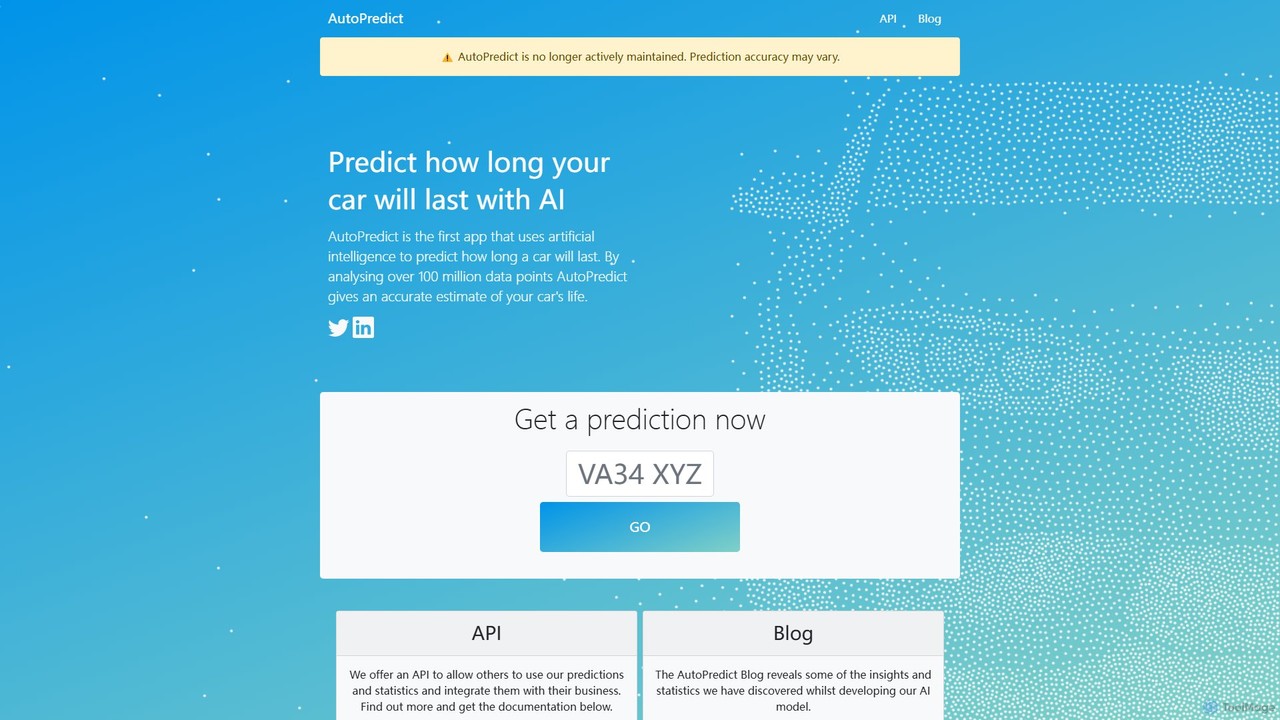
AutoPredict is an AI-powered tool that predicts a car's lifespan by analyzing over 100 million data points from MOT histories. It provides data-driven estimates for car buyers and owners. Please note, the service is no longer actively maintained, and prediction accuracy may vary. An API is available for business integration.

Vehicle Analytics
Visits 8.3KFavorites 116Likes 125
Mineflow
Freemium

Mineflow

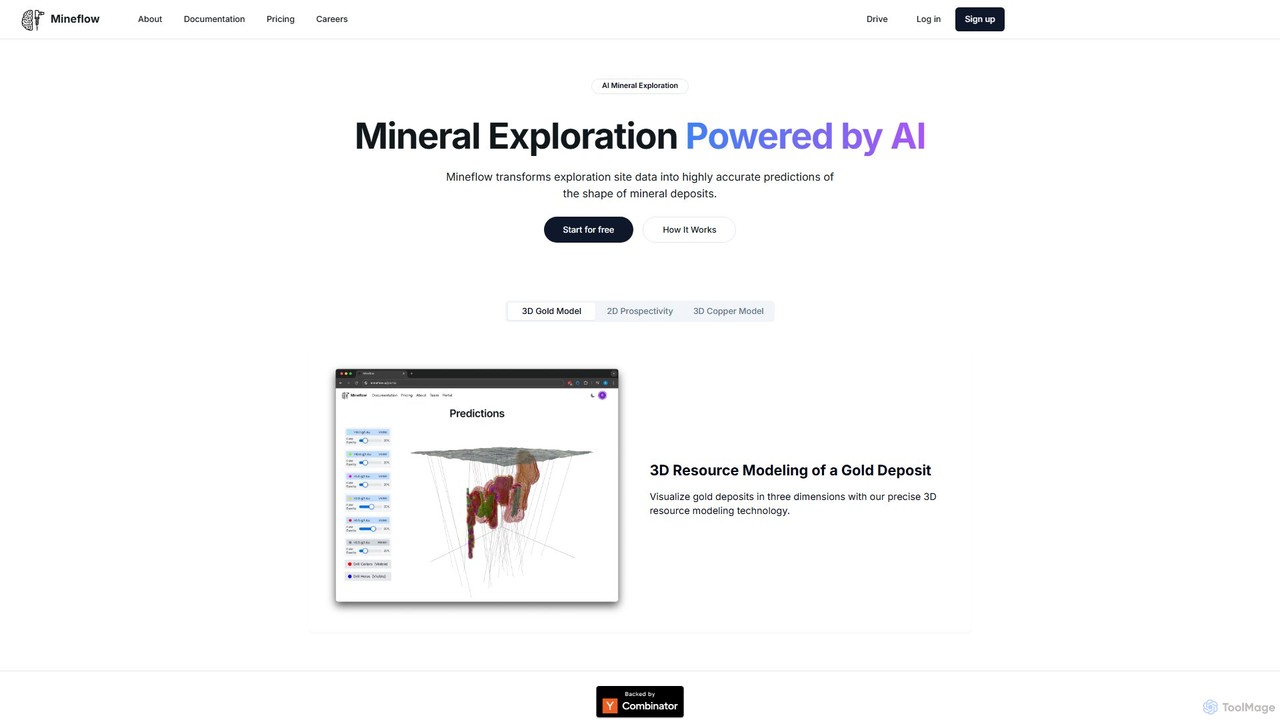
Mineflow is an AI-powered platform for mineral exploration. It transforms complex geological data from various formats into highly accurate 3D models and predictions of mineral deposit shapes and locations, streamlining workflows for geologists and mining companies.

Predictive Modeling
Visits 8.1KFavorites 135Likes 153
mikopharm
Freemium

mikopharm

mikopharm is an AI-powered platform designed to accelerate pharmaceutical research and drug discovery. It leverages machine learning to analyze vast datasets, predict drug efficacy and toxicity, and optimize clinical trial design, helping researchers make faster, data-driven decisions.

Predictive Modeling
Visits 6.4KFavorites 142Likes 141

About Predictive Modeling

Predictive Modeling tools are a specialized category of data analysis software that use machine learning and statistical algorithms to forecast future outcomes. They analyze historical and current data to identify patterns, trends, and relationships that can predict what is likely to happen next. This enables businesses and researchers to make proactive decisions, from anticipating customer behavior to forecasting market trends. Unlike descriptive analytics which summarizes past events, predictive modeling focuses specifically on generating actionable insights about the future.

Core Features

  • Algorithm Library: Provides access to a range of statistical models like regression, classification, and clustering to suit different prediction tasks.
  • Data Preprocessing: Includes tools for cleaning, transforming, and preparing raw data to ensure model accuracy and reliability.
  • Model Training & Validation: Offers automated workflows for training models on data and testing their performance against validation sets.
  • Future Forecasting: Generates specific predictions, probability scores, and confidence intervals for future events or trends.
  • Deployment & Integration: Allows trained models to be deployed into production environments and integrated with other business applications via APIs.

Use Cases

Predictive modeling is widely used across various industries. In finance, it's applied for credit scoring and fraud detection. Marketing teams use it for customer churn prediction and lead scoring. In retail, it powers demand forecasting and inventory optimization. Healthcare also leverages it for tasks like predicting disease outbreaks and patient risk stratification.

How to Choose

When selecting a predictive modeling tool, consider the required technical skill level; some platforms are no-code for business analysts, while others are code-centric for data scientists. Evaluate the library of available algorithms to ensure it meets your needs. Check its integration capabilities with your existing data sources (e.g., databases, CRMs). Finally, assess its scalability to handle growing data volumes and model complexity.

Predictive Modeling use cases

1

Predict Customer Churn for Subscription Services

A marketing manager at a SaaS company aims to reduce customer churn. By feeding user engagement data, support ticket history, and subscription details into a predictive modeling tool, they can build a model that identifies patterns preceding cancellations. The tool generates a list of at-risk customers, allowing the marketing team to launch targeted retention campaigns, such as personalized offers or proactive support, ultimately reducing churn by a measurable percentage.

2

Forecast Retail Demand for Inventory Management

A supply chain manager for a retail chain needs to optimize stock levels to avoid overstocking or stockouts. They use a predictive modeling tool to analyze historical sales data, seasonality, promotional calendars, and external factors like holidays. The model forecasts demand for each product at each store location, enabling precise inventory planning. This results in reduced storage costs, minimized lost sales, and an improved supply chain efficiency.

3

Assess Credit Risk for Financial Institutions

A risk analyst at a bank needs to evaluate the likelihood of default for new loan applicants. Using a predictive modeling platform, they build a model based on historical loan performance, applicant financial history, and credit scores. When a new application is submitted, the model generates a risk score in real-time. This enables faster, more consistent, and data-driven loan approval decisions, which helps in reducing the rate of non-performing loans and managing the bank's overall risk portfolio.

4

Enable Predictive Maintenance for Manufacturing

A plant manager wants to prevent unexpected equipment failures that cause costly downtime. Sensor data (e.g., temperature, vibration) from machinery is fed into a predictive model. The model learns the patterns of normal operation and can predict when a machine is likely to fail. This allows the maintenance team to schedule repairs proactively before a breakdown occurs, maximizing equipment uptime, extending its lifespan, and reducing overall maintenance costs.

5

Optimize Marketing Campaigns with Lead Scoring

A sales operations manager needs to help the sales team prioritize thousands of inbound leads. They use a predictive modeling tool to create a lead scoring model. This model analyzes lead characteristics (e.g., company size, industry) and engagement behavior (e.g., website visits, email opens) to assign a score indicating the likelihood of conversion. The sales team can then focus their efforts on high-scoring leads, resulting in higher conversion rates and improved sales efficiency.

6

Detect Fraud in Real-Time for Online Transactions

A fraud analyst at an e-commerce company needs to identify and block fraudulent transactions instantly. A predictive model is trained on millions of past transactions, learning the characteristics of both legitimate and fraudulent activities. The model analyzes new transactions in real-time, flagging suspicious ones based on factors like transaction amount, location, and user behavior. This real-time detection significantly reduces financial losses due to fraud while minimizing the incorrect blocking of legitimate customers.

Predictive Modeling FAQ

What is Predictive Modeling?

Predictive Modeling is a data analysis technique that uses statistical algorithms and machine learning to predict future outcomes based on historical data. Instead of just describing what has happened in the past, it identifies patterns and relationships to forecast what is likely to happen next. This makes it a forward-looking discipline within the broader field of data analysis, used for tasks like demand forecasting, risk assessment, and customer behavior prediction.

How is Predictive Modeling different from Descriptive Analytics?

The key difference lies in their purpose. Descriptive Analytics looks backward, summarizing historical data to answer the question, "What happened?" (e.g., a monthly sales report). Predictive Modeling looks forward, using that same historical data to answer, "What is likely to happen?" (e.g., a sales forecast for the next quarter). Descriptive analytics provides insights into the past, while predictive modeling provides forecasts about the future.

How to choose a suitable Predictive Modeling tool?

Choosing the right tool depends on your specific needs. Consider these factors:

  • User Skill Level: Are the users business analysts who need a no-code/low-code interface, or data scientists who require a code-first environment (like Python or R)?
  • Available Algorithms: Does the tool support the specific types of models you need to build (e.g., time series, classification, regression)?
  • Data Integration: How easily can it connect to your existing data sources, such as databases, data warehouses, or CRM systems?
  • Deployment and Scalability: How simple is it to deploy a trained model into a production application, and can the platform scale with your data volume?
What are some common types of predictive models?

There are many types of predictive models, each suited for different problems. Some common ones include:

  • Linear and Logistic Regression: Used for predicting continuous values (like price) and binary outcomes (like yes/no), respectively.
  • Decision Trees and Random Forests: Versatile models used for both classification and regression tasks, known for their interpretability.
  • Time Series Models (e.g., ARIMA): Specifically designed for forecasting data points in a sequence over time, such as stock prices or sales figures.
  • Neural Networks: Complex models inspired by the human brain, used for sophisticated tasks like image recognition and natural language processing, which can also be applied to prediction.

Who typically uses Predictive Modeling tools?

Predictive modeling tools are used by a range of professionals. Data Scientists and Analysts are the primary users who build, train, and validate the models. However, with the rise of no-code platforms, Business Users like marketing managers, financial analysts, and supply chain planners are increasingly using these tools to generate forecasts and make data-driven decisions without needing deep technical expertise. The outputs are often consumed by executives and decision-makers to guide strategic planning.