Data Analysis Best in category 1 results Public Records AI Tool

Popular AI tools in the Public Records field of Data Analysis include CleanTableAI, etc., helping you quickly improve efficiency.

CleanTableAI

CleanTableAI

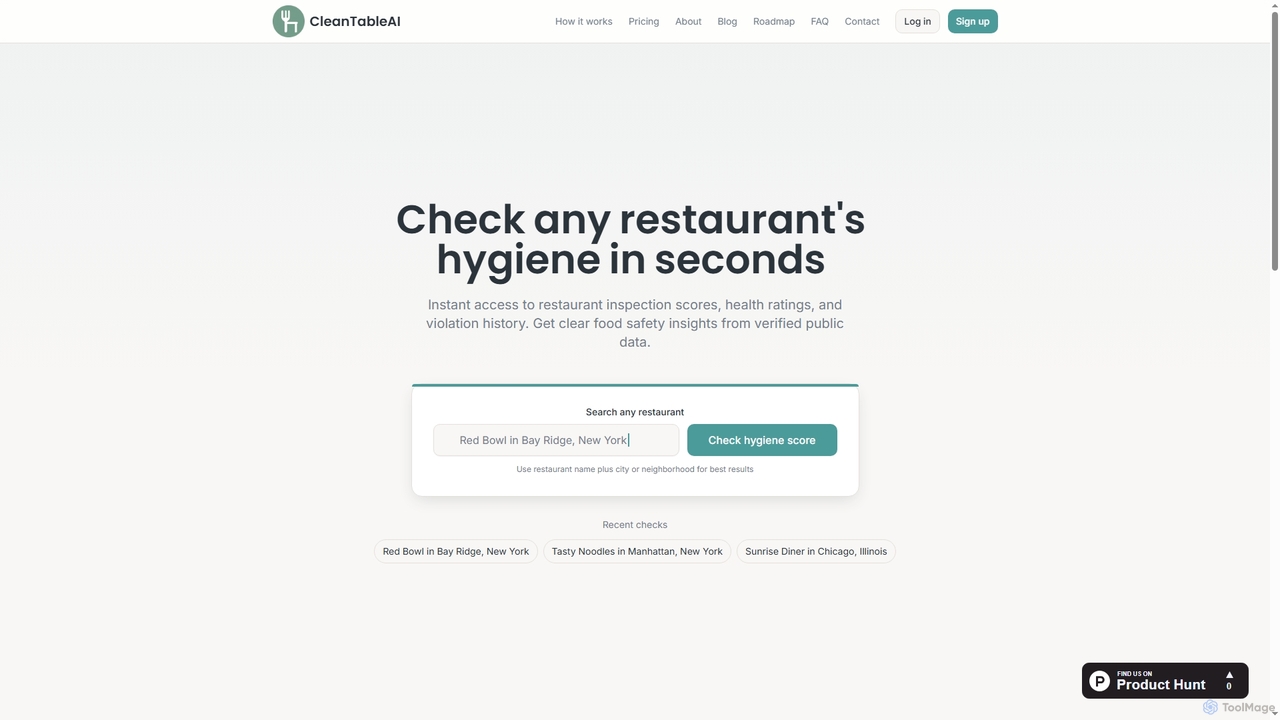
CleanTableAI is an AI-powered tool providing instant access to restaurant hygiene inspection scores, health ratings, and violation history. …

2.6K

About Public Records

Public Records AI tools are specialized platforms that leverage artificial intelligence to efficiently search, analyze, and extract information from publicly available datasets. These tools utilize advanced natural language processing and machine learning algorithms to process vast amounts of unstructured and structured data. They provide invaluable insights for legal, journalistic, and investigative purposes, streamlining the often complex and time-consuming process of accessing and interpreting public information.

Core Features

  • Automated Data Collection: Automatically gathers information from diverse public sources like government databases, court records, and news archives.
  • Information Extraction: Identifies and extracts specific entities, relationships, and events from text-based public records.
  • Cross-referencing & Link Analysis: Connects disparate pieces of information across multiple records to uncover hidden patterns or associations.
  • Anomaly Detection: Flags unusual or suspicious entries within public datasets that might indicate fraud or discrepancies.
  • Data Visualization: Presents complex public records data in intuitive graphical formats for easier understanding and analysis.

Use Cases

These tools are indispensable for professionals requiring rapid access and analysis of public information. They are widely used in legal due diligence, investigative journalism, academic research, and risk assessment, enabling users to quickly identify relevant facts, uncover connections, and build comprehensive profiles from publicly accessible data.

How to Choose

When selecting a Public Records AI tool, consider its data source coverage (e.g., legal, financial, property), the accuracy of its information extraction capabilities, and its ability to handle various data formats. Evaluate the user interface for ease of navigation, the robustness of its search and filtering options, and its integration potential with existing workflows. Pricing models and data privacy compliance are also crucial factors.

Public RecordsUse Cases

1

Legal Due Diligence for Mergers & Acquisitions

Legal teams conducting due diligence for M&A deals use Public Records AI tools to rapidly scan vast quantities of court records, regulatory filings, and corporate registries. By automating the identification of litigation history, liens, and compliance issues, these tools significantly reduce manual review time, highlight potential risks, and ensure a more thorough assessment of target companies, accelerating the deal-making process.

2

Investigative Journalism for Public Accountability

Investigative journalists leverage Public Records AI tools to uncover corruption, fraud, or misconduct by public officials or corporations. By analyzing campaign finance records, property deeds, business registrations, and court documents, these tools help journalists connect individuals to shell companies, identify undisclosed assets, and trace financial flows, enabling them to build compelling narratives that hold powerful entities accountable.

3

Genealogical Research and Family History Discovery

Genealogists and family historians use Public Records AI tools to trace ancestral lines and uncover family stories. By sifting through census records, birth/death/marriage certificates, immigration documents, and historical land deeds, these tools can identify connections between individuals, reconstruct timelines, and locate obscure records, significantly accelerating the research process and revealing rich details about family heritage.

4

Risk Assessment and Background Checks

Financial institutions and employers utilize Public Records AI tools for comprehensive risk assessment and background checks. These tools can quickly search for criminal records, bankruptcy filings, professional licenses, and civil judgments, providing a holistic view of an individual's or entity's history. This helps in making informed decisions for lending, hiring, or partnership agreements, mitigating potential financial or reputational risks.

5

Academic Research and Social Science Studies

Academics and researchers in social sciences employ Public Records AI tools to analyze demographic trends, public policy impacts, and historical societal changes. By processing large datasets from government archives, statistical bureaus, and historical documents, these tools enable researchers to identify correlations, track population movements, and study the long-term effects of legislation, supporting robust empirical studies.

6

Property Research and Real Estate Analysis

Real estate professionals, investors, and homebuyers use Public Records AI tools to conduct in-depth property research. These tools can access and analyze property deeds, tax records, zoning information, building permits, and environmental reports. This helps in assessing property values, identifying ownership history, uncovering potential encumbrances, and understanding local regulations, facilitating informed investment and purchasing decisions.

Public RecordsFrequently Asked Questions