Data Analysis Best in category 1 results Survey Tools AI Tool

Popular AI tools in the Survey Tools field of Data Analysis include Zigpoll, etc., helping you quickly improve efficiency.

Zigpoll

Zigpoll

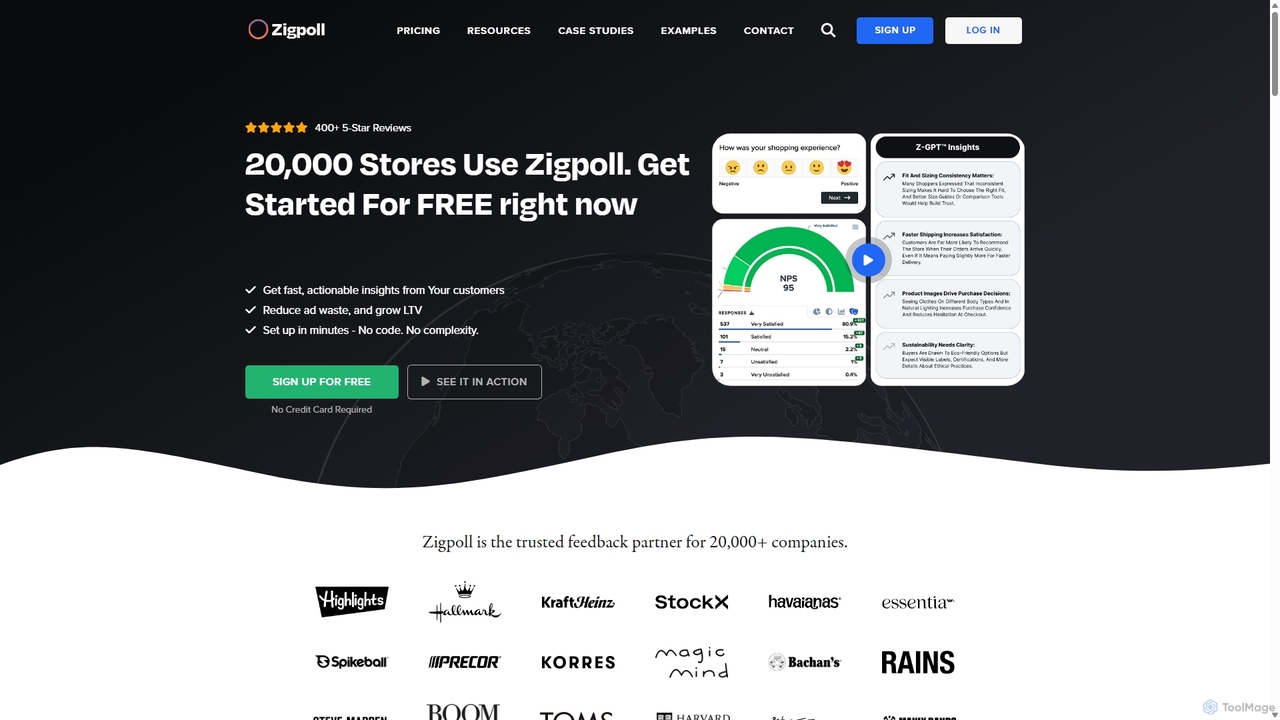
Zigpoll is an AI-powered survey and feedback platform designed to gather fast, actionable insights from customers. It enables …

140.3K

About Survey Tools

Survey Tools are AI-powered platforms designed to streamline and enhance the entire process of creating, distributing, and analyzing surveys. These advanced tools leverage machine learning and natural language processing (NLP) to automate question generation, optimize survey flow, and extract deeper, more nuanced insights from qualitative and quantitative responses. They empower businesses, researchers, and marketers to efficiently gather valuable feedback, understand market trends, and make data-driven decisions with greater accuracy. As a specialized component within the broader Data Analysis category, AI survey tools transform raw feedback into actionable intelligence.

Core Features

  • AI Question Generation: Automatically suggests or generates survey questions based on topic, audience, and desired outcomes.
  • Sentiment Analysis: Analyzes open-ended text responses to identify underlying emotions and opinions.
  • Smart Survey Design: Optimizes question order, skips logic, and response types for improved completion rates and data quality.
  • Automated Data Cleaning: Identifies and flags inconsistent, duplicate, or irrelevant responses for cleaner datasets.
  • Predictive Analytics: Forecasts trends or respondent behavior based on collected data.

Applicable Scenarios

AI Survey Tools are indispensable for various scenarios. Marketing teams use them to conduct market research, gauge brand perception, and test product concepts before launch. HR departments deploy them for employee satisfaction surveys, feedback on training programs, and exit interviews, gaining insights into workplace culture. Product managers utilize these tools to collect user feedback on new features, identify pain points, and prioritize development roadmaps, ensuring user-centric product evolution.

How to Choose

When selecting AI Survey Tools, consider the depth of AI capabilities, such as advanced NLP for open-ended questions and predictive analytics. Evaluate integration options with existing CRM, marketing automation, or data visualization platforms for seamless workflows. Assess the ease of use for survey creation and reporting, ensuring it aligns with your team's technical proficiency. Finally, compare pricing models based on features, response volume, and user licenses to find a solution that fits your budget and scale requirements.

Survey ToolsUse Cases

1

Automated Market Research & Trend Analysis

Marketing analysts can leverage AI Survey Tools to rapidly deploy large-scale market research surveys. By using AI-driven question generation, they can quickly create comprehensive questionnaires. The tools then automatically analyze thousands of responses, including open-ended feedback, using sentiment analysis and topic modeling to identify emerging market trends, consumer preferences, and competitive landscapes, significantly reducing manual data processing time and providing actionable insights for strategic planning.

2

Enhancing Employee Experience Feedback

HR managers can utilize AI Survey Tools to conduct regular employee pulse surveys or annual engagement assessments. The AI assists in crafting unbiased questions and ensures anonymity, encouraging honest feedback. Post-collection, the tools automatically categorize feedback, perform sentiment analysis on comments, and highlight key areas of concern or satisfaction across departments. This enables HR to proactively address issues, tailor employee development programs, and foster a more positive and productive work environment based on real-time, data-backed insights.

3

Optimizing Product Feature Prioritization

Product managers can deploy AI Survey Tools to gather detailed user feedback on new features or existing product functionalities. The AI helps design targeted questions to uncover user pain points and desired improvements. After collecting responses, the tools automatically group similar feedback, identify common themes, and even predict the impact of certain feature changes on user satisfaction. This data-driven approach allows product teams to prioritize development efforts effectively, ensuring resources are allocated to features that deliver the most value to users.

4

Customer Satisfaction & Loyalty Measurement

Customer success teams can use AI Survey Tools to continuously monitor customer satisfaction (CSAT) and Net Promoter Score (NPS). The AI can personalize follow-up questions based on initial scores, delving deeper into specific customer experiences. It then analyzes qualitative feedback from comments, identifying key drivers of satisfaction or dissatisfaction. This allows businesses to quickly identify at-risk customers, understand service gaps, and implement targeted improvements to enhance customer loyalty and reduce churn.

5

Academic Research & Data Collection Efficiency

Academic researchers can significantly accelerate their data collection and analysis phases using AI Survey Tools. These tools can assist in designing complex questionnaires for large-scale studies, ensuring methodological rigor and reducing bias. The AI's ability to process and categorize vast amounts of textual data from open-ended questions allows researchers to quickly identify patterns and themes that would be time-consuming to find manually. This streamlines the research process, enabling faster publication and deeper insights into complex social or scientific phenomena.

6

Event Feedback & Experience Improvement

Event organizers can utilize AI Survey Tools to gather immediate feedback from attendees post-event. The tools can quickly generate relevant questions about various aspects like content, speakers, venue, and overall experience. AI-driven analysis then processes the responses, including comments, to identify strengths and weaknesses, pinpointing areas for improvement for future events. This real-time feedback loop allows organizers to make data-informed decisions, enhancing attendee satisfaction and the overall quality of their events.

Survey ToolsFrequently Asked Questions