Data Analysis Best in category 1 results Surveys AI Tool

Popular AI tools in the Surveys field of Data Analysis include Formcue, etc., helping you quickly improve efficiency.

Formcue

Formcue

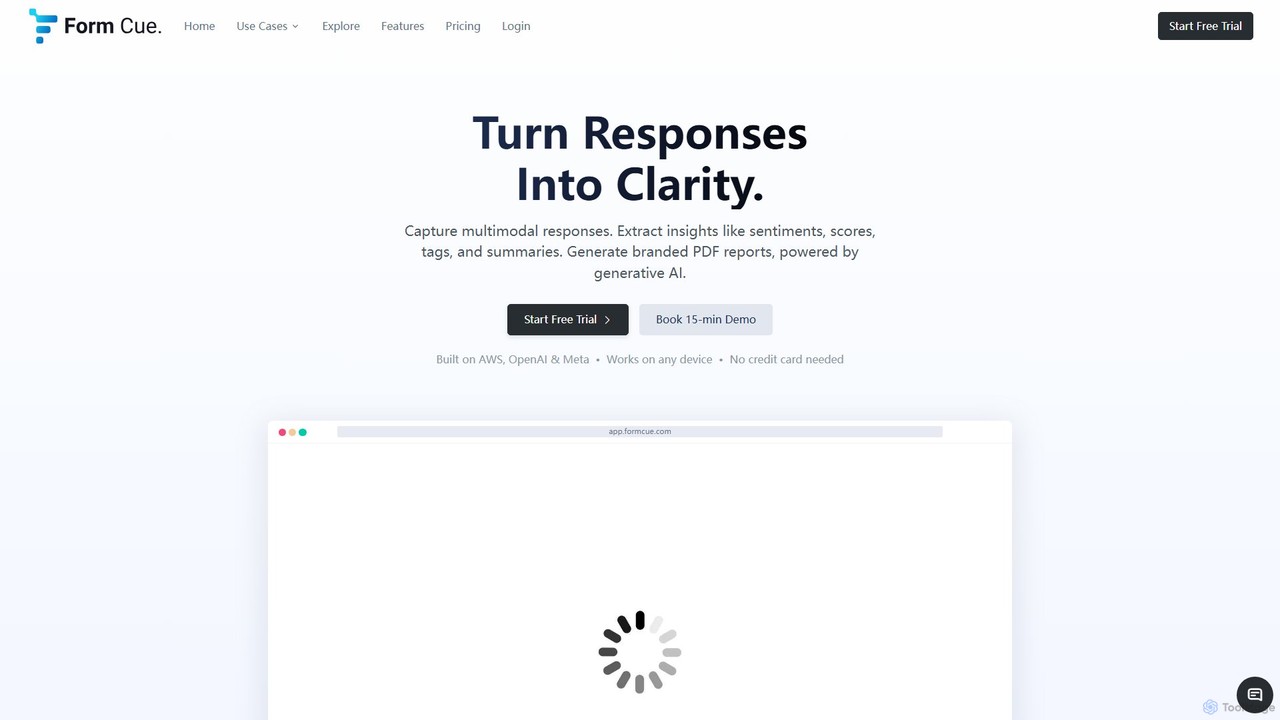
Formcue is an AI-powered platform that transforms form building and data analysis. It allows you to create dynamic …

2.5K

About Surveys

AI Survey Tools are platforms that leverage artificial intelligence to enhance the entire survey process, from design to analysis. These tools utilize advanced natural language processing (NLP) and machine learning to automate question generation, analyze open-ended responses, and extract deeper insights. They empower businesses and researchers to gather feedback more efficiently, understand sentiment, and make data-driven decisions with unprecedented speed and accuracy. This sub-category within Data Analysis focuses specifically on intelligent feedback collection and interpretation.

Core Features

  • AI-powered Question Generation: Automatically suggests and generates relevant, unbiased survey questions based on objectives.
  • Sentiment Analysis: Analyzes free-text responses to identify emotional tone, key themes, and underlying opinions.
  • Automated Data Visualization: Transforms raw survey data into intuitive charts, graphs, and dashboards for quick understanding.
  • Smart Audience Segmentation: Identifies distinct respondent groups and patterns within their feedback for targeted insights.
  • Bias Detection: Helps identify potential biases in question phrasing or response patterns to ensure data integrity.

Use Cases

AI survey tools are invaluable for market researchers seeking rapid consumer insights, customer experience teams aiming to understand satisfaction drivers, and HR departments measuring employee engagement. They streamline the process of collecting and interpreting feedback across various touchpoints, providing actionable intelligence for strategic planning and operational improvements.

How to Choose

When selecting an AI survey tool, prioritize its AI capabilities, such as the depth of NLP for qualitative analysis and question generation accuracy. Consider integration with existing CRM or marketing automation platforms, customization options for branding and question types, and scalability to handle varying survey volumes. Data security, privacy compliance (e.g., GDPR), and a transparent pricing model are also crucial factors for an informed decision.

SurveysUse Cases

1

Conduct AI-Powered Market Research

Product managers or marketing teams utilize AI survey tools to quickly gather feedback on new product concepts, market trends, or competitive landscapes. AI assists in crafting relevant questions, identifying target demographics, and analyzing open-ended responses to pinpoint unmet needs or feature preferences, significantly accelerating product iteration cycles and market entry strategies.

2

Automate Customer Feedback Collection

Customer service departments or CX teams deploy AI survey tools post-interaction or purchase to gather immediate feedback. The tools automatically analyze sentiment from free-text comments, categorize common issues, and highlight critical pain points, enabling proactive service improvements and personalized follow-ups to enhance customer satisfaction and loyalty.

3

Gauge Employee Sentiment and Engagement

HR professionals utilize AI survey platforms for anonymous employee engagement surveys, onboarding feedback, or exit interviews. AI helps in identifying underlying themes in feedback, detecting potential issues like burnout or low morale, and suggesting actionable insights for improving workplace culture, retention strategies, and overall employee well-being.

4

Streamline Academic Data Collection and Analysis

Researchers and academics leverage AI survey tools to design complex questionnaires, reach diverse participant groups, and perform advanced statistical analysis on large datasets. AI can help identify correlations, patterns, and anomalies in social or behavioral data, enhancing research validity, efficiency, and the depth of scholarly insights.

5

Collect and Analyze Event Attendee Feedback

Event organizers use AI survey tools to gather feedback immediately after conferences, webinars, or workshops. AI quickly processes responses regarding content quality, speaker effectiveness, logistical aspects, and overall satisfaction, providing actionable insights to refine future event planning, improve attendee experience, and demonstrate event ROI.

6

Understand Audience Preferences for Content Creation

Content creators and marketers employ AI survey tools to understand their audience's interests, preferred formats, and pain points. AI analyzes responses to inform content strategy, identify trending topics, and tailor content to resonate more deeply with the target demographic, leading to higher engagement rates and improved content performance across various platforms.

SurveysFrequently Asked Questions