Design & Art Best in category 1 results Mixed Reality AI Tool

Popular AI tools in the Mixed Reality field of Design & Art include Animant, etc., helping you quickly improve efficiency.

Animant

Animant

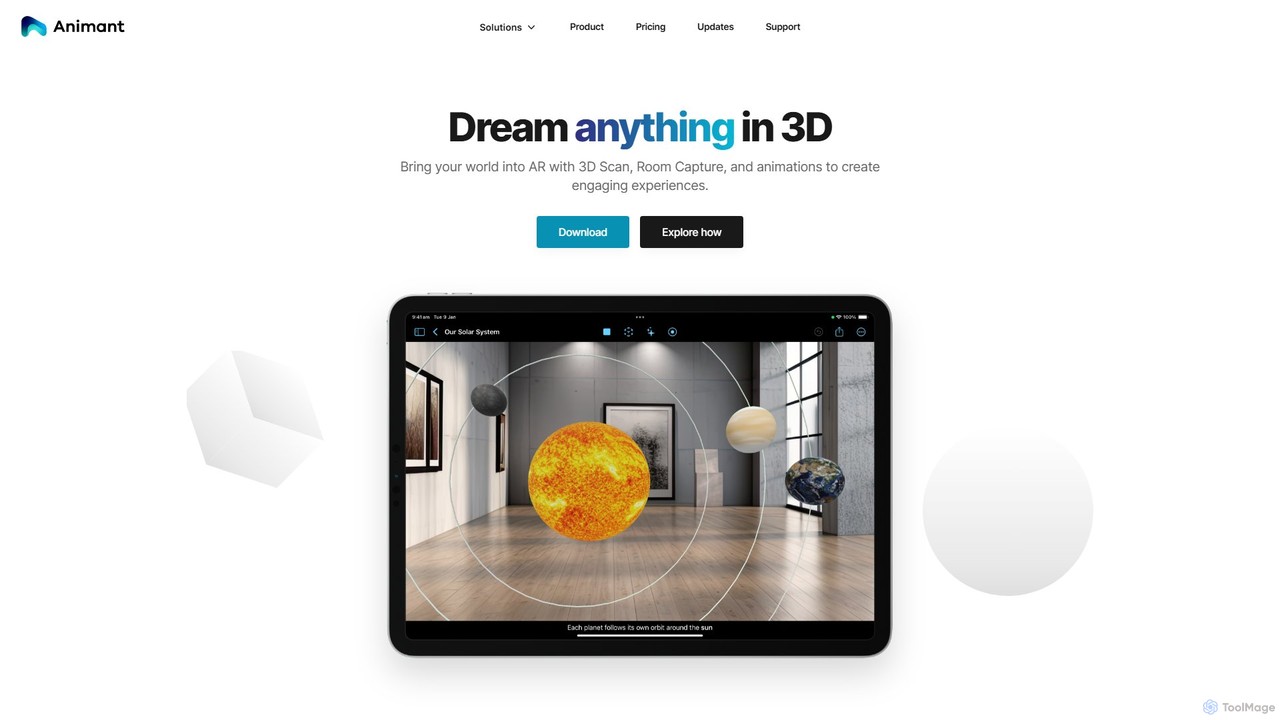
Animant is a powerful AR creation studio for Apple devices that lets you build interactive augmented reality scenes. …

3.1K

About Mixed Reality

Mixed Reality (MR) tools are a class of AI-powered technologies that seamlessly blend real and virtual worlds, allowing digital and physical objects to coexist and interact in real-time. These tools leverage advanced spatial computing, computer vision, and AI algorithms to create immersive experiences where users can interact with holographic content anchored to their physical environment. They offer unprecedented opportunities for interactive design, realistic visualization, and collaborative innovation, extending beyond traditional AR and VR by enabling true bidirectional interaction between digital and physical elements.

Core Features

  • Spatial Mapping & Understanding: Accurately maps physical environments to anchor virtual content and enable realistic interactions.
  • Holographic Rendering: Projects high-fidelity 3D digital objects that appear to exist in the real world.
  • Natural Interaction: Supports intuitive user input through gaze, gesture, and voice commands for seamless control.
  • Digital Twin Creation: Enables the creation of virtual replicas of physical objects or systems for monitoring and interaction.
  • Real-time Collaboration: Facilitates shared immersive experiences where multiple users can interact with the same virtual content in a physical space.

Applicable Scenarios

Mixed Reality tools are invaluable for professionals in design, architecture, engineering, and creative arts. They are used for visualizing complex 3D models in real-world contexts, creating interactive art installations that respond to physical spaces, and developing immersive training simulations. These tools empower designers to iterate faster, artists to create new forms of expression, and engineers to review prototypes with unprecedented realism.

How to Choose

When selecting Mixed Reality tools, consider the target hardware platform (e.g., HoloLens, Magic Leap), the robustness of its SDK and development ecosystem, and the ease of integrating with existing 3D design software. Evaluate the accuracy of spatial tracking, the fidelity of holographic rendering, and the available interaction methods. Also, assess the community support, licensing costs, and scalability for your specific project needs, whether for individual creative work or enterprise-level deployment.

Mixed RealityUse Cases

1

Architectural Design Review & Client Presentation

Architects and interior designers utilize Mixed Reality to overlay 3D models of proposed buildings or interior layouts onto actual construction sites or existing rooms. This allows clients to "walk through" and experience the design in its intended physical context, identifying potential issues or suggesting modifications with a tangible sense of scale and spatial relationships, significantly improving communication and reducing costly revisions.

2

Product Prototyping and Iteration

Industrial designers and engineers employ MR to visualize and interact with virtual prototypes of new products in their physical workspace. They can manipulate holographic models, test different configurations, and assess ergonomics without the need for physical mock-ups. This accelerates the design cycle, enables rapid iteration, and facilitates collaborative review among geographically dispersed teams, leading to faster market entry.

3

Interactive Art Installations & Exhibitions

Artists and curators leverage Mixed Reality to create dynamic, responsive art pieces that blend digital elements with physical environments. Viewers can interact with holographic sculptures, digital projections, or soundscapes that react to their presence, gestures, or the physical space itself. This transforms traditional art viewing into an immersive, personalized experience, pushing the boundaries of artistic expression and engagement.

4

Advanced Medical Training & Surgical Planning

Medical professionals use MR for highly realistic training simulations and pre-surgical planning. Surgeons can practice complex procedures on holographic anatomical models overlaid onto a physical mannequin or even a patient's scan, gaining spatial understanding and muscle memory without risk. This enhances surgical precision, reduces errors, and provides invaluable experience for medical students and seasoned practitioners alike.

5

Industrial Maintenance and Remote Expert Guidance

Field service technicians in manufacturing or energy sectors utilize Mixed Reality headsets to receive real-time holographic instructions or remote assistance from experts. Digital overlays can highlight specific components, display step-by-step repair guides, or show sensor data directly on the machinery. This minimizes downtime, improves first-time fix rates, and reduces the need for experts to travel to remote locations.

6

Immersive Educational Content Creation

Educators and content creators develop interactive learning experiences where students can explore complex subjects through holographic models. For instance, students can dissect a virtual frog on their desk, explore the solar system as a room-scale hologram, or interact with historical artifacts. This makes abstract concepts tangible, fosters deeper engagement, and provides a more dynamic and memorable learning environment.

Mixed RealityFrequently Asked Questions