Design & Art Best in category 2 results Generative Art AI Tool

Popular AI tools in the Generative Art field of Design & Art include Polarr、Flowchartmaker, etc., helping you quickly improve efficiency.

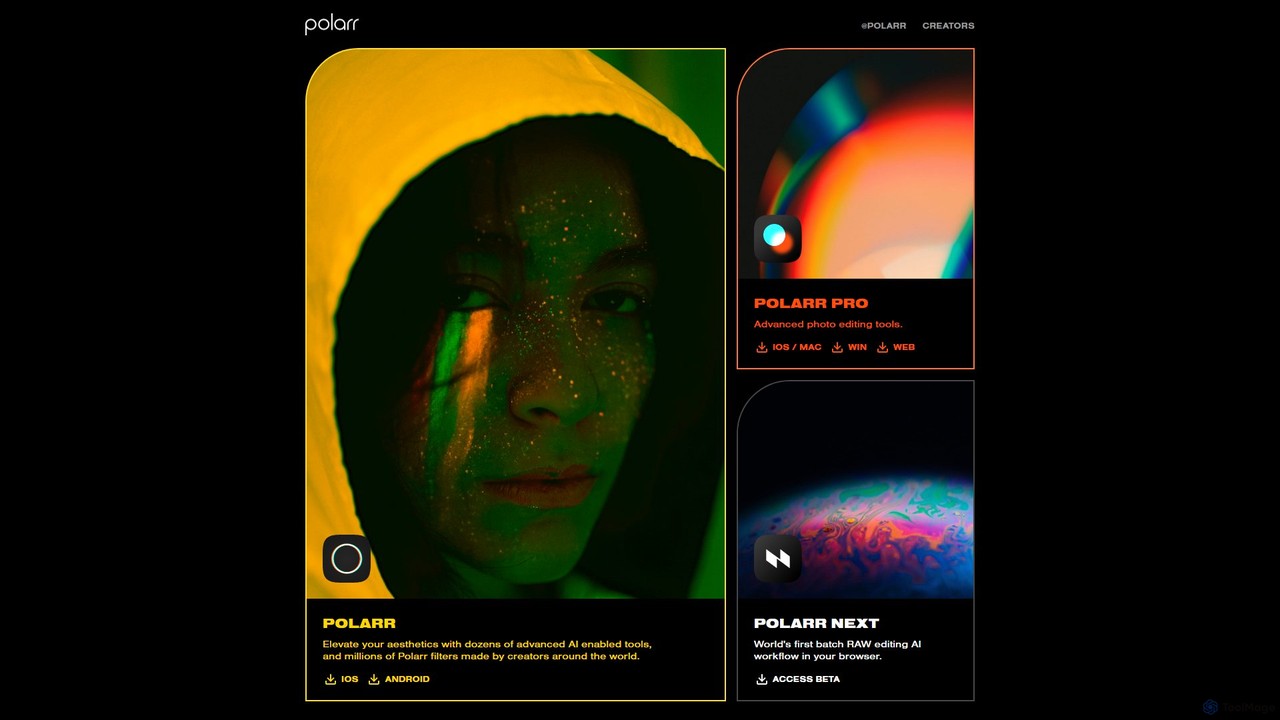
Polarr

Polarr

Polarr is a powerful AI-driven photo and video editing suite for creators of all levels. It offers advanced …

99.3K
Flowchartmaker

Flowchartmaker

An AI-powered tool that instantly creates professional flowcharts from simple text descriptions. It features interactive editing via a …

3.1K

About Generative Art

Generative Art tools are a category of AI-powered applications that create unique artistic outputs through algorithms and computational processes. These tools leverage advanced machine learning models, often including neural networks and generative adversarial networks (GAN), to interpret prompts and generate novel images, music, text, or 3D models. They empower artists, designers, and enthusiasts to explore new creative frontiers, automate repetitive tasks, and produce diverse artistic variations with unprecedented speed and scale, pushing the boundaries of traditional art forms within the broader field of Design & Art.

Core Features

  • Algorithmic Generation: Automatically produces unique artworks based on predefined rules, parameters, or AI models.
  • Style Transfer: Applies the artistic style of one image to the content of another, creating new visual compositions.
  • Prompt-Based Creation: Generates art from textual descriptions, allowing users to guide the AI's creative process with natural language.
  • Parameter Control: Offers adjustable settings for randomness, complexity, color palettes, and other artistic elements to fine-tune outputs.
  • Iterative Exploration: Facilitates rapid experimentation by generating multiple variations of an artwork, enabling artists to discover unexpected results.

Applicable Scenarios

Generative Art tools are utilized by digital artists for conceptual art, graphic designers for unique textures and patterns, and game developers for creating diverse in-game assets. They also serve content creators seeking distinctive visuals for social media or marketing campaigns, and researchers exploring the intersection of AI and creativity.

How to Choose

When selecting Generative Art tools, consider the desired output type (images, music, text), the level of control offered over generation parameters, and the underlying AI models used. Evaluate the ease of use, community support, integration capabilities with existing creative workflows, and the licensing terms for generated artworks. Pricing models and the availability of advanced features like 3D generation or animation capabilities are also crucial factors.

Generative ArtUse Cases

1

Designing Unique Game Environment Textures

Game artists and environment designers can use Generative Art tools to rapidly create a vast array of unique textures for landscapes, buildings, and objects. By inputting descriptive prompts or reference images, the AI generates diverse patterns, materials, and surface details, significantly reducing manual design time and ensuring visual variety across game worlds. This allows for quick iteration and exploration of different aesthetic directions.

2

Generating Abstract Album Art for Musicians

Independent musicians and record labels can leverage Generative Art to produce distinctive and visually striking album covers. Instead of commissioning traditional artists, they can input themes, moods, or lyrical snippets into an AI art generator. The tool then creates multiple abstract or conceptual artworks, providing a cost-effective and efficient way to find a unique visual identity that resonates with their music's genre and message.

3

Creating Dynamic Visuals for Live Performances

VJs and performance artists can integrate Generative Art software into their live setups to produce real-time, evolving visual backdrops. By feeding audio inputs or live parameters into the generative system, the visuals react dynamically, creating immersive and ever-changing artistic experiences. This enhances the audience's engagement and adds an unpredictable, organic element to performances.

4

Developing Concept Art for Film and Animation

Concept artists in film and animation studios can utilize Generative Art tools to quickly visualize initial ideas for characters, creatures, environments, and props. By providing textual descriptions or rough sketches, the AI generates numerous stylistic variations and interpretations, accelerating the ideation phase. This allows directors and art directors to explore a wider range of concepts before committing to detailed production designs.

5

Crafting Personalized Digital Art for NFTs

Digital artists and collectors entering the NFT space can use Generative Art to create unique, one-of-a-kind digital collectibles. By defining a set of traits, styles, and rarity parameters, the AI can generate thousands of distinct art pieces from a single base concept. This enables artists to build entire collections with programmatic variations, offering unique value to each tokenized artwork.

6

Exploring Architectural Design Variations

Architects and urban planners can employ Generative Art principles to explore numerous design variations for buildings, urban layouts, or interior spaces. By inputting constraints, functional requirements, and aesthetic preferences, the algorithms can generate diverse structural forms, facade patterns, or spatial arrangements. This aids in identifying innovative solutions and optimizing designs based on specific criteria, pushing creative boundaries in architecture.

Generative ArtFrequently Asked Questions