ToolMage
Sign in

Best 6 Agent Development AI tools for Developer Tools

Popular Agent Development AI tools in Developer Tools include Lyzr, Toolhouse, Relari, Smooth Operator, Peargent, and AgentRank, helping you work more efficiently.

Peargent

Peargent

Peargent is a modern, powerful Python framework designed for building intelligent, production-grade AI agents. It offers an intuitive API, flexible LLM support, multi-agent orchestration, and persistent memory, enabling developers to create scalable and robust AI solutions for real-world use.

Agent Development
Visits 3.5KFavorites 85Likes 75

AgentRank

AgentRank

AgentRank is an AI-powered platform designed for developers to build, discover, and share intelligent AI agents. It fosters a community environment for creating functional AI solutions, complete with integration capabilities via MCP servers.

Marketplace
Visits 3.5KFavorites 108Likes 131
Toolhouse
Freemium

Toolhouse

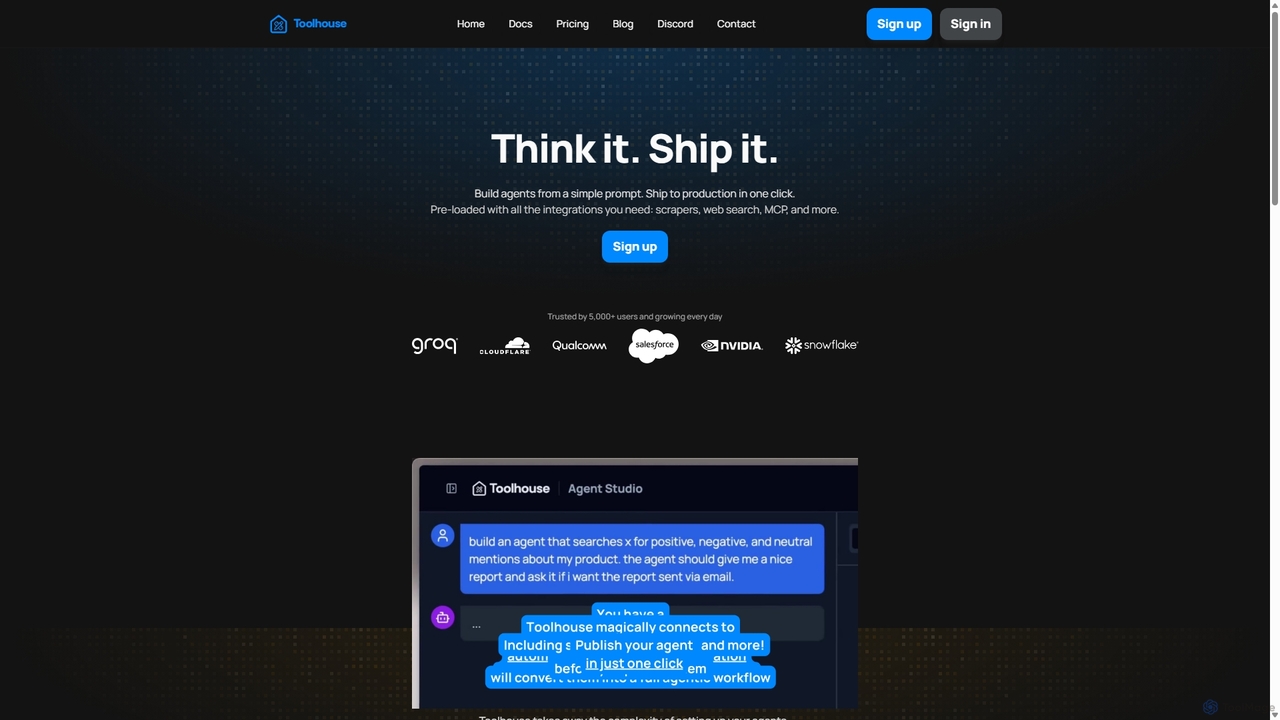
Toolhouse is a no-code/low-code platform that democratizes AI agent creation. It allows developers to build, deploy, and manage production-grade AI agents from simple prompts. With pre-built integrations for web scraping, search, RAG, and databases, Toolhouse abstracts away the complexity of infrastructure, enabling one-click deployment of agents as scalable APIs. It's designed to empower developers of all skill levels to ship AI-powered applications quickly.

Agent Development
Visits 8.4KFavorites 114Likes 119
Relari

Relari

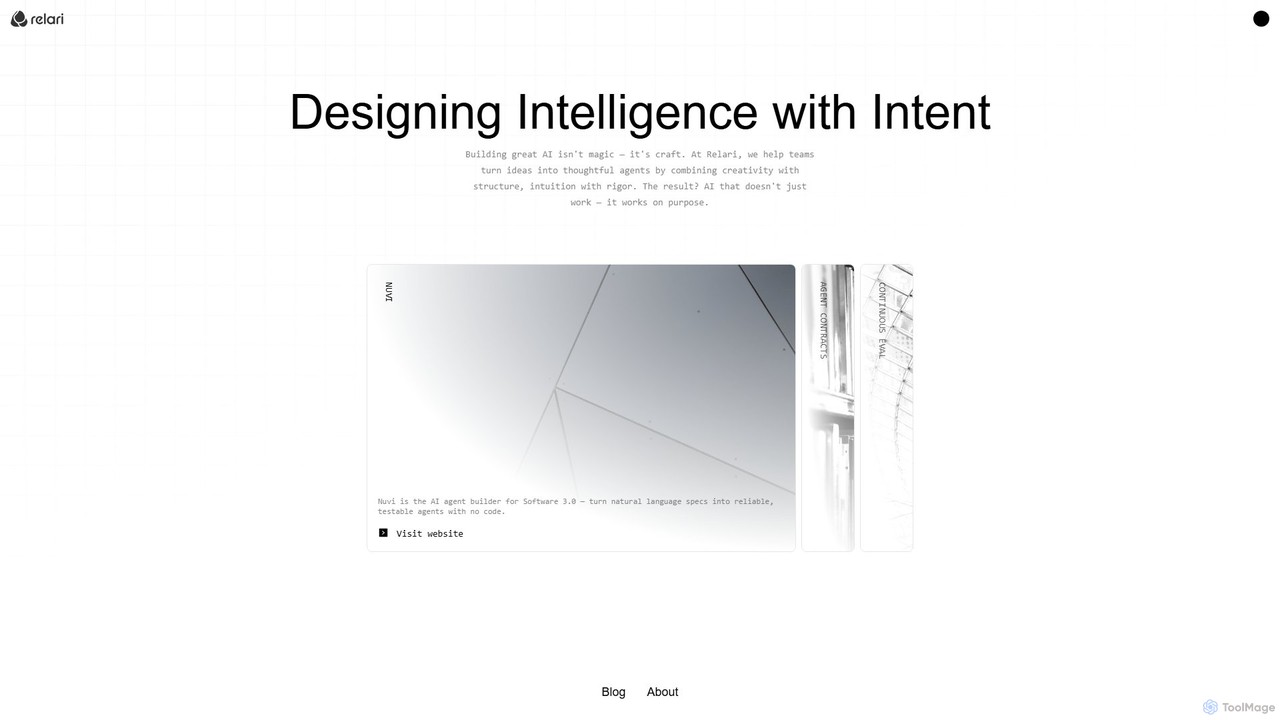
Relari is a platform for designing and building reliable, testable, and verifiable AI agents using plain English. It transforms natural language descriptions of behavior into robust, production-ready agents, moving beyond unpredictable prompt engineering to a more structured and trustworthy AI development process.

Agent Development
Visits 5.2KFavorites 111Likes 111
Lyzr
Paid

Lyzr

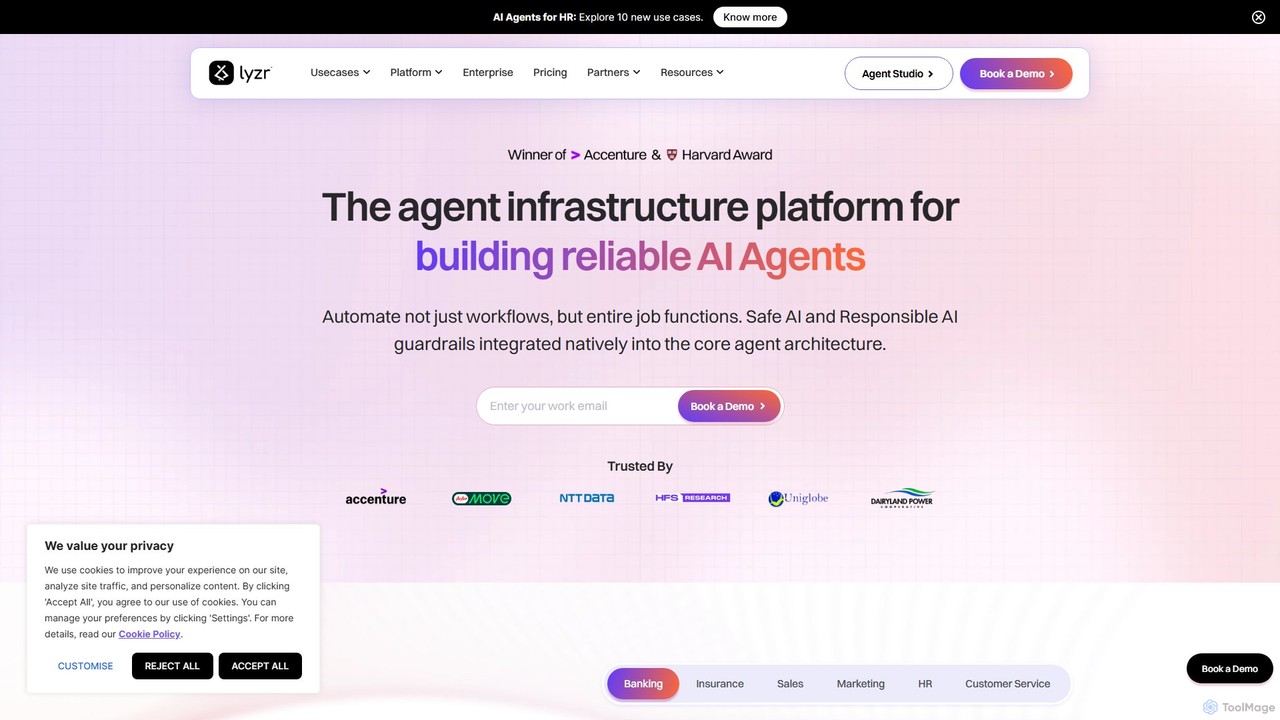
Lyzr is an enterprise-grade agent infrastructure platform designed for building, deploying, and managing a reliable AI workforce. It enables businesses to automate not just simple tasks but entire job functions through custom and pre-built AI agents, featuring robust security and responsible AI guardrails.

Enterprise Solutions
Visits 167.5KFavorites 90Likes 97

About Agent Development

Agent Development tools are specialized frameworks and platforms for building, testing, and deploying autonomous AI agents. These tools enable developers to create agents that can reason, plan, and execute complex, multi-step tasks by connecting Large Language Models (LLMs) to external data sources, APIs, and other software. Their primary value lies in transforming passive language models into active problem-solvers capable of interacting with digital environments to achieve specific goals. This allows for the automation of sophisticated workflows that go far beyond simple question-answering.

Core Features

  • Agent Orchestration: Defines and manages the sequence of steps, logic, and decision-making processes for the agent to follow.
  • Tool Integration (Tool Use): Provides connectors and interfaces for the agent to use external APIs, databases, and other software.
  • Memory Management: Equips agents with short-term and long-term memory to maintain context and learn from interactions.
  • Planning & Reasoning: Implements algorithms that allow agents to break down a large goal into smaller, executable sub-tasks.
  • Debugging & Observability: Offers visibility into the agent's thought process, actions, and API calls for troubleshooting.

Use Cases

These tools are widely used in creating advanced applications like automated customer support agents that can process returns, intelligent research assistants that gather and synthesize information from multiple sources, and DevOps agents that monitor systems and perform automated fixes. They are essential for any scenario requiring an AI to perform actions rather than just generate text.

How to Choose

When selecting an Agent Development tool, consider the supported programming languages (e.g., Python, TypeScript), the breadth of the pre-built tool integration library, the complexity of the learning curve, and the available options for deployment and scaling. Also, evaluate the quality of documentation and community support, as these are crucial for troubleshooting complex agentic workflows.

Featured tool rankings

Agent Development use cases

1

Build an Automated Customer Support Agent

A customer support manager needs to reduce response times and handle common queries automatically. Using an agent development framework, a developer builds an agent that connects to the company's knowledge base, order management system (via API), and a ticketing system. When a customer asks 'Where is my order?', the agent can authenticate the user, query the order API for the latest shipping status, and provide a real-time update. If the issue is complex, like a damaged item, the agent can gather initial information and create a ticket, assigning it to a human agent, saving significant time for the support team.

2

Create an AI Research Assistant

A market analyst needs to compile a report on emerging trends in renewable energy. Instead of manually searching dozens of websites and academic papers, they deploy an AI agent. The analyst provides a high-level goal: 'Find and summarize the top 5 trends in solar panel efficiency from the last 12 months, citing sources.' The agent plans its tasks: 1) Search academic databases like arXiv and Google Scholar. 2) Search reputable news sites. 3) Extract key findings and data points. 4) Synthesize the information into a coherent summary. 5) Format the output with citations. The agent executes these steps autonomously, delivering a structured report in a fraction of the time.

3

Automate DevOps and System Monitoring

A DevOps engineer is responsible for maintaining the uptime of a critical web service. They build an AI agent to monitor system health. The agent is given access to logging tools (like Datadog API) and infrastructure controls (like AWS CLI). When the agent detects a spike in server errors from the logs, it autonomously initiates a diagnostic plan: 1) Check server CPU and memory usage. 2) Analyze recent code deployments for potential issues. 3) If a specific service is unresponsive, attempt a restart. The agent logs all its actions and notifies the engineer via Slack with a summary of the issue and the corrective actions taken, allowing for faster incident response even outside of working hours.

4

Develop a Proactive Sales Outreach Agent

A sales team wants to automate lead qualification and initial outreach. A developer uses an agent development platform to create a sales agent. This agent is connected to a CRM (like Salesforce), a lead database, and an email service. The agent's workflow is: 1) Periodically scan the CRM for new leads tagged as 'high-priority'. 2) For each lead, use a web search tool to find their company website and recent news. 3) Use an LLM to draft a personalized outreach email based on the lead's industry and recent company news. 4) Send the email and schedule a follow-up task in the CRM for a human salesperson. This automates the time-consuming research and drafting process, allowing sales reps to focus on conversations with qualified leads.

5

Automate Complex Data Analysis and Reporting

A business analyst frequently receives requests to generate reports from multiple data sources (SQL database, Google Sheets, CSV files). They build a data analysis agent to handle these requests. The analyst can now ask in natural language, 'Compare Q2 sales figures for Product A and Product B from the sales database and our marketing spend sheet, then visualize the correlation.' The agent understands the request, plans to query the SQL database, fetch data from the specified Google Sheet via its API, perform the comparison, use a data visualization library to create a chart, and compile everything into a PDF report. This transforms a multi-hour manual task into a minutes-long automated process.

6

Streamline E-commerce Operations

An e-commerce store owner manages products across multiple platforms (Shopify, Amazon, eBay). They create an agent to synchronize inventory and pricing. The agent is connected to the APIs of all three platforms. When the owner updates the price of a product in a central spreadsheet, the agent detects the change, identifies the corresponding product listings on Shopify, Amazon, and eBay, and uses their respective APIs to update the price on all platforms simultaneously. It can also monitor inventory levels, automatically delisting a product when it goes out of stock on one platform to prevent overselling on others, thus streamlining multi-channel retail management.

Agent Development FAQ

What are AI Agent Development tools?

AI Agent Development tools are software frameworks, libraries, and platforms designed to build autonomous agents. Unlike simply using an LLM for chat, these tools provide the structure for an AI to plan, reason, and execute multi-step tasks. They achieve this by enabling the agent to use external 'tools' like APIs, databases, or web search, and by managing its memory and decision-making process. Essentially, they turn a language model into an actionable worker that can interact with software and systems to achieve a goal.

How do I choose the right Agent Development framework?

Choosing the right framework depends on your project's needs. Consider these factors:

  • Ecosystem and Integrations: Check if it has pre-built integrations for the APIs and data sources you need to connect to. A rich ecosystem saves significant development time.
  • Programming Language: Select a framework that supports your team's primary language, most commonly Python or TypeScript.
  • Complexity vs. Flexibility: Some frameworks are easier for beginners but might be less flexible (low-code platforms), while others offer deep customization but have a steeper learning curve (code-first libraries).
  • Community and Documentation: A strong community and clear documentation are vital for troubleshooting and learning advanced features.
  • Observability: Look for built-in tools for debugging and tracing the agent's steps, as understanding why an agent failed is crucial.
What's the difference between Agent Development platforms and using a standard LLM API?

The key difference is action versus generation. A standard LLM API (like OpenAI's API) is primarily for generating text, code, or images based on a prompt. It is stateless and cannot interact with external systems on its own. Agent Development platforms provide the 'scaffolding' around an LLM to give it capabilities like:

  • Planning: Breaking a goal like 'book a flight' into steps.
  • Tool Use: Calling a flight search API, a calendar API, etc.
  • Memory: Remembering previous steps and user preferences.
  • Orchestration: Managing the flow of information between the LLM and the tools.

In short, an LLM API is the 'brain', while an agent development framework is the 'body' that allows the brain to act in the world.

What are the key components of an AI agent?

While architectures vary, most AI agents built with these tools have several core components:

  • Core Model (LLM): The 'brain' of the agent, responsible for reasoning, understanding language, and making decisions.
  • Tools: A set of functions or API clients that the agent can call to interact with the outside world (e.g., a web search tool, a calculator, a database query tool).
  • Memory: A system for storing information from past interactions, which can range from short-term conversation history to long-term vectorized databases.
  • Planning Module: The logic that breaks down a user's request into a sequence of steps or tool calls.
  • Orchestrator/Agent Loop: The central controller that executes the plan, calls tools, processes their outputs, and feeds the results back to the LLM to decide the next step.
Is it difficult to build an AI agent?

The difficulty varies greatly. With modern agent development frameworks, building a simple agent that can use one or two tools (like a web search and a calculator) can be done with relatively little code. The complexity increases significantly when you need to build robust, production-ready agents. Challenges include:

  • Reliability: Ensuring the agent consistently chooses the right tool and handles errors gracefully.
  • Prompt Engineering: Crafting precise instructions for the LLM to follow the desired logic.
  • Cost Management: Controlling the number of LLM and tool API calls to manage expenses.
  • Security: Preventing the agent from performing unintended or malicious actions, especially when connected to sensitive systems.

Low-code platforms can lower the entry barrier, but complex, mission-critical agents still require significant development and testing expertise.