ToolMage
Sign in

Best 5 Ai Agent Development AI tools for Developer Tools

Popular Ai Agent Development AI tools in Developer Tools include Lamatic.ai, Basalt, Superagentic, Gradientj, and c/ua, helping you work more efficiently.

Superagentic
Freemium

Superagentic

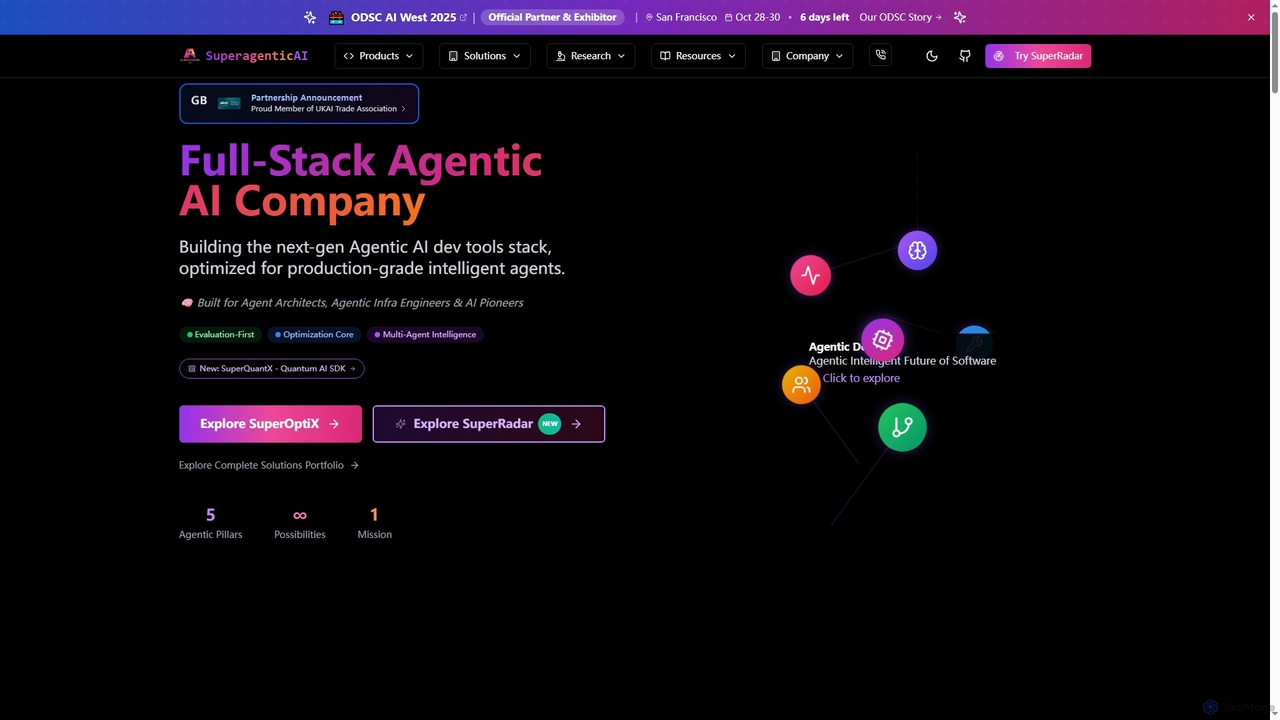
A full-stack development platform providing tools and frameworks for building, optimizing, and deploying production-grade agentic AI systems. It features SuperOptiX for agent engineering and SuperRadar for discovering AI tools.

Ai Agent Development
Visits 8.8KFavorites 135Likes 119
Gradientj
Freemium

Gradientj

Gradientj is a powerful platform for developers and businesses to build, test, and deploy autonomous AI agents. It provides a comprehensive suite of tools, including a reasoning engine, pre-built components, and seamless integrations, to transform complex workflows into intelligent, automated processes from prompt to production.

Intelligence
Visits 5KFavorites 115Likes 128
c/ua
Freemium

c/ua

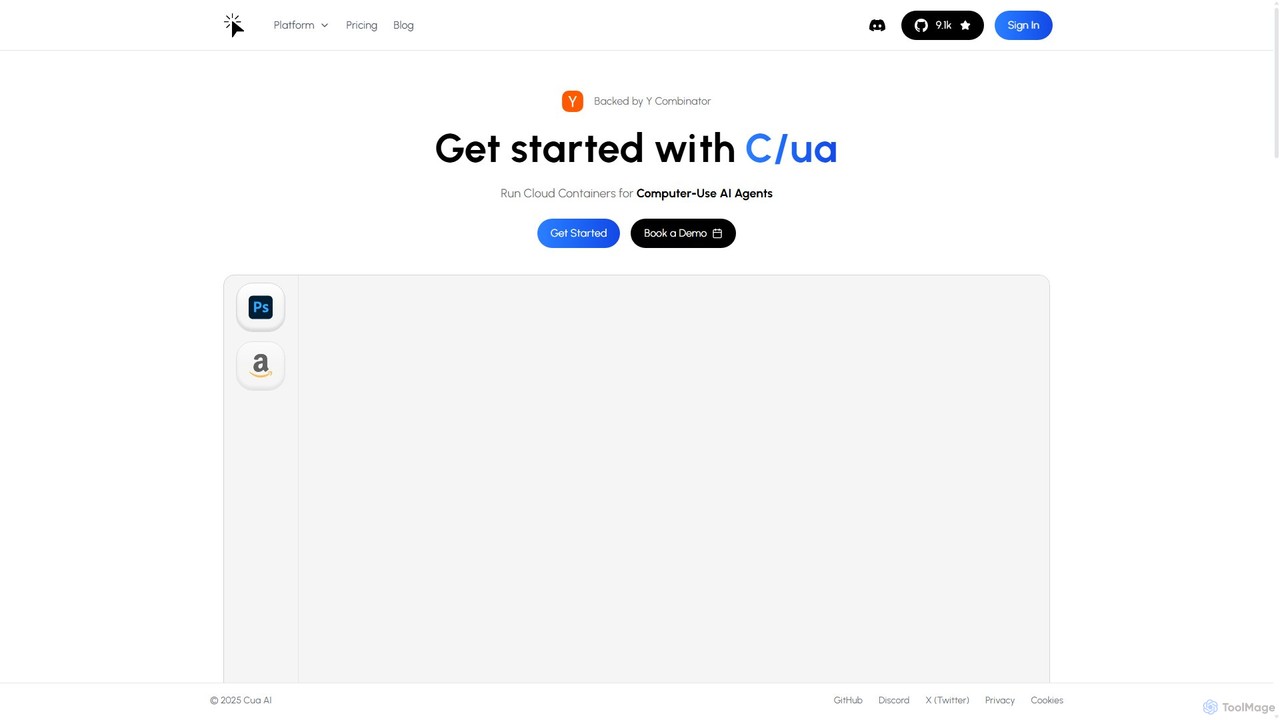
c/ua is a Y Combinator-backed platform providing secure, isolated cloud containers for running Computer-Use AI Agents. It simplifies infrastructure, allowing developers to deploy and manage agentic RPA workflows across macOS, Linux, and Windows with support for multiple LLM providers.

Robotic Process Automation
Visits 4.1KFavorites 125Likes 122
Basalt
Freemium

Basalt

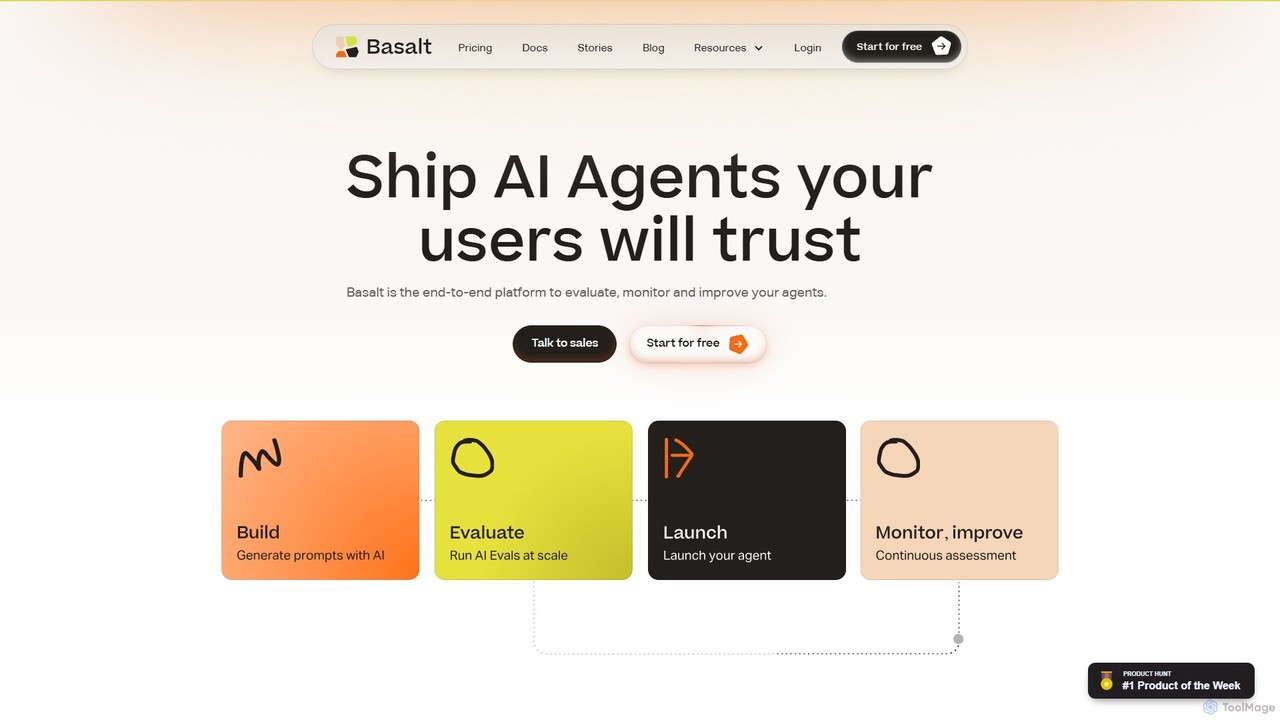
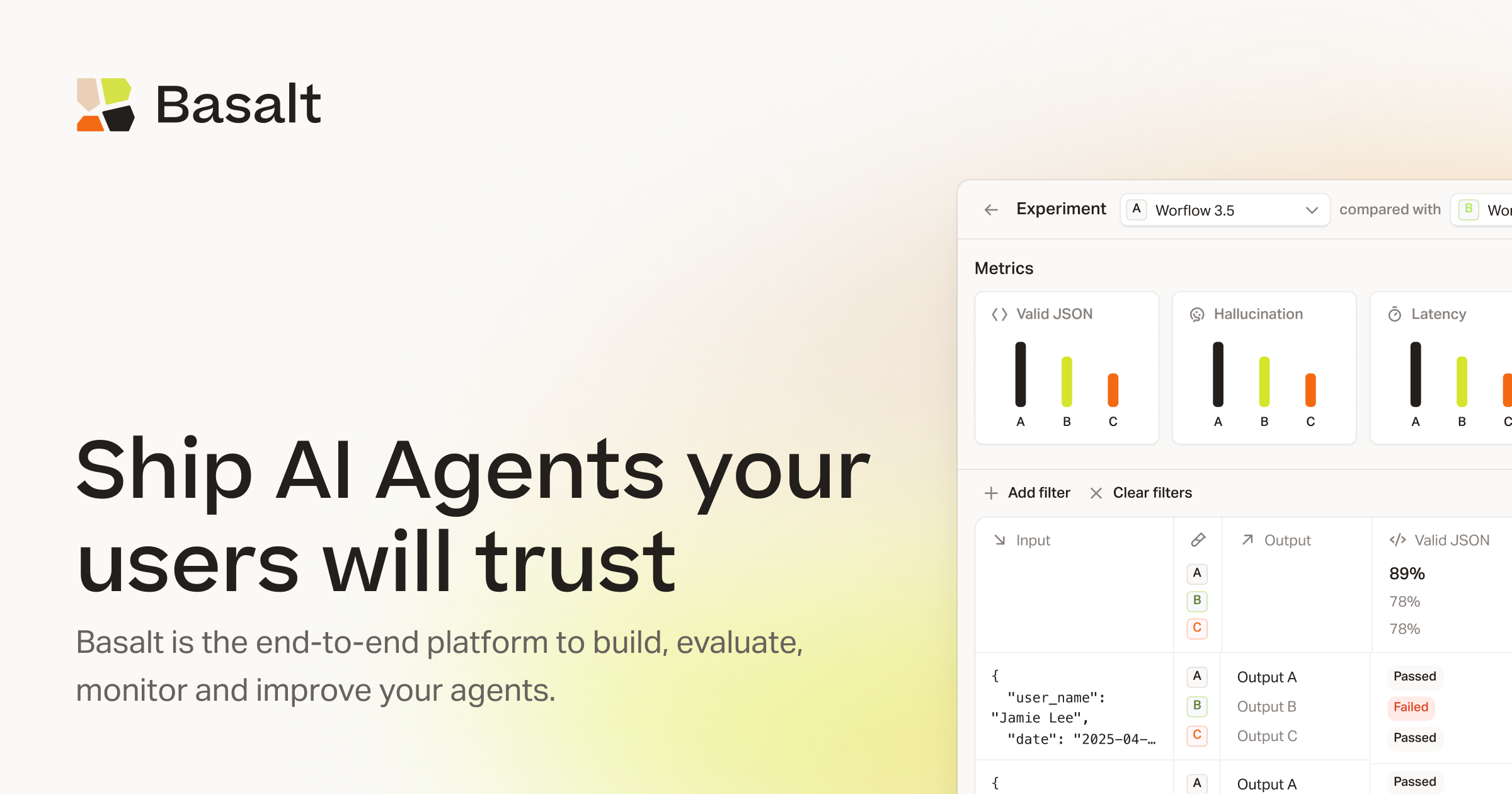
Basalt is an end-to-end platform for developers and product teams to build, evaluate, and monitor reliable AI agents. It provides a comprehensive suite of tools, including automated evaluations, A/B testing, prompt engineering with an AI co-pilot, and a developer-friendly SDK to ensure your AI features are trustworthy and production-ready.

Ai Agent Development
Visits 10.7KFavorites 95Likes 117
Lamatic.ai
Freemium

Lamatic.ai

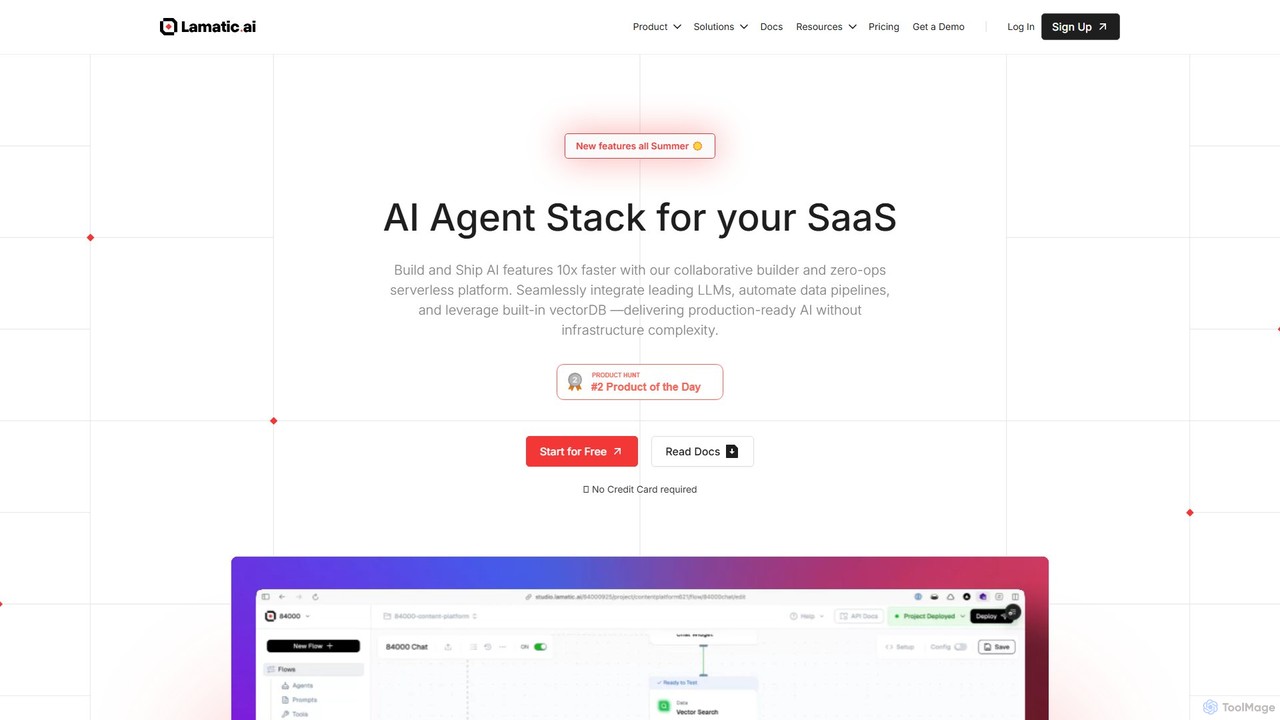
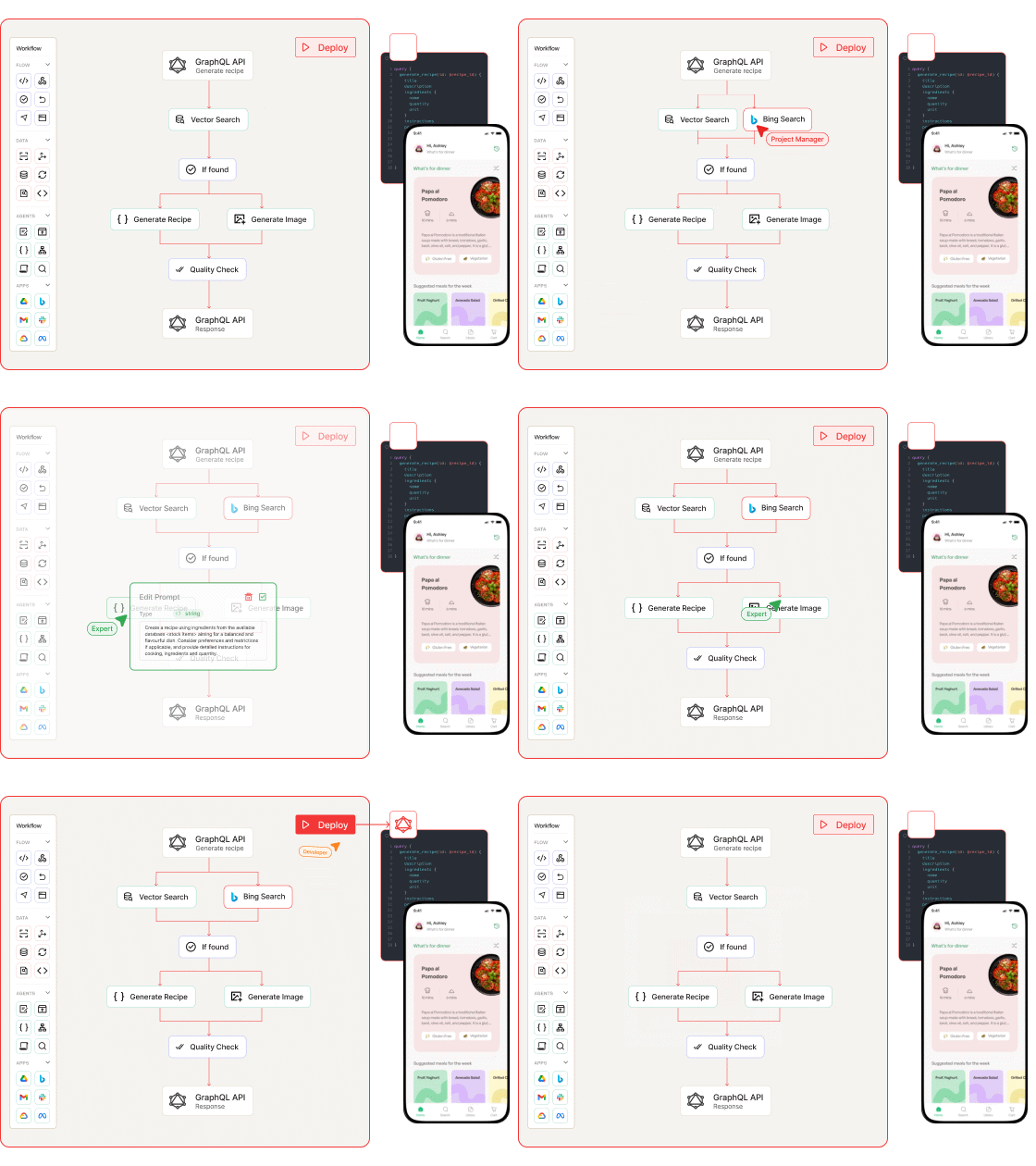
Lamatic.ai is a comprehensive platform designed for engineering teams to build, connect, and deploy AI agents on both cloud and edge environments. It features a visual flow builder, pre-built templates, and seamless one-click integrations to accelerate the development of agentic AI systems, from chatbots to image generators.

Ai Agent Development
Visits 34.9KFavorites 98Likes 105

About Ai Agent Development

AI Agent Development tools are specialized frameworks and platforms for building, deploying, and managing autonomous AI agents. These tools provide the core components—such as planning, memory, and tool use—that enable agents to perceive their environment, make decisions, and execute complex tasks to achieve specific goals. They are designed to move beyond simple automation by creating proactive, goal-oriented systems capable of reasoning and interacting with external software and APIs. This empowers developers to construct sophisticated applications, from automated research assistants to complex operational workflows.

Core Features

  • Agent Frameworks & SDKs: Provide structured libraries and components for defining agent logic, memory, and decision-making processes.
  • Tool & API Integration: Enable agents to connect with and utilize external tools, databases, and APIs to perform actions in the real world.
  • Planning & Task Decomposition: Offer mechanisms for agents to break down high-level goals into a sequence of smaller, executable steps.
  • Memory Management: Include systems for short-term and long-term memory, allowing agents to recall past interactions and learn from experience.
  • Debugging & Observability: Provide specialized interfaces to trace an agent's thought process, actions, and tool usage for easier troubleshooting.

Use Cases

These tools are primarily used by software developers, AI researchers, and automation engineers. They are applied in sectors like technology for creating coding assistants, in customer service for building proactive support agents that can process refunds, and in business operations for automating multi-step supply chain management tasks. For instance, a developer might use an agent framework to build a system that monitors server logs and automatically resolves common issues.

How to Choose

When selecting an AI Agent Development tool, consider the complexity of the agent's required tasks and the supported programming languages (e.g., Python, TypeScript). Evaluate the richness of its tool integration ecosystem and the flexibility of its planning and memory modules. Also, assess the quality of documentation, community support, and the observability features, which are critical for debugging complex agent behaviors.

Featured tool rankings

Ai Agent Development use cases

1

Automated Software Development and Testing

A software development team uses an AI agent development framework to build a 'coding agent'. This agent is given access to the codebase, a bug tracking system, and testing environments. When a new feature request or bug report is filed, the agent analyzes the requirement, writes the necessary code, creates unit tests, and runs them. If tests fail, it attempts to debug and fix the code autonomously. This process significantly reduces the time developers spend on routine coding and bug-fixing, allowing them to focus on complex architectural design and innovation. The agent can handle tasks like API endpoint creation, refactoring legacy code, or patching security vulnerabilities.

2

Proactive Customer Support and Resolution

A large e-commerce company deploys an AI agent to handle complex customer support inquiries. Unlike a standard chatbot, this agent is integrated with the company's CRM, inventory, and shipping systems. When a customer reports a missing package, the agent can autonomously check the shipping carrier's API for the latest status, review the order details in the CRM, and check inventory for a replacement. Based on its findings, it can offer the customer a choice between a refund or an immediate replacement shipment, and then execute the chosen action by triggering the appropriate internal processes. This provides instant, 24/7 resolution without human intervention for common but multi-step problems.

3

Autonomous Market Research and Reporting

A market analyst needs to compile a comprehensive report on emerging trends in the renewable energy sector. They task an AI agent with this goal. The agent begins by using search tools to find recent industry reports, news articles, and academic papers. It then accesses financial data APIs to gather stock performance of key companies. The agent synthesizes all this information, identifies key trends, summarizes findings, and generates a structured report complete with charts and source citations. The analyst can then review and refine the agent-generated draft, saving dozens of hours of manual data collection and synthesis. The agent can also be set to monitor sources and provide weekly updates.

4

Complex Business Workflow Automation

An operations manager for a retail chain needs to automate their inventory replenishment process. They build an AI agent that integrates with their sales POS system, warehouse inventory database, and supplier ordering portals. Every night, the agent analyzes the day's sales data, checks current stock levels, and predicts future demand based on historical trends. If a product's stock falls below a set threshold, the agent automatically generates a purchase order, logs into the supplier's portal via its API, and places the order. It then updates the internal inventory system with the expected delivery date. This automates a complex, multi-system workflow that previously required daily manual intervention.

5

Dynamic and Intelligent Game NPC Development

A game developer uses an AI agent framework to create non-player characters (NPCs) with more believable and dynamic behavior. Instead of relying on simple, pre-scripted action trees, each NPC is an agent with its own goals (e.g., 'find food', 'protect the village') and memory. The agent can perceive the game world, including the player's actions, and make its own decisions. For example, if a player repeatedly steals from a merchant NPC, the agent might remember this, change its dialogue to be hostile, and even hire guards. This creates a more immersive and emergent gameplay experience where the world reacts realistically to the player's choices, moving beyond predictable, repetitive NPC interactions.

6

Personalized AI-Powered Travel Itinerary Planning

A developer builds a personalized travel planning agent for consumers. A user provides their destination, dates, budget, and interests (e.g., 'history, hiking, local food'). The agent then uses a suite of tools: it queries flight and hotel APIs for pricing and availability, scans travel blogs and review sites for recommendations, and uses a mapping service to calculate travel times between locations. It synthesizes this data to create a complete, day-by-day itinerary that is optimized for the user's preferences and budget. The agent can handle follow-up requests like 'find a cheaper hotel near the city center' or 'add a museum visit on Tuesday', dynamically replanning the schedule as needed.

Ai Agent Development FAQ

What is AI Agent Development?

AI Agent Development involves using specialized tools, frameworks, and platforms to build autonomous AI systems known as agents. Unlike simple programs, these agents can perceive their environment, make independent decisions, and take actions to achieve specific goals. They typically consist of a core reasoning model (like an LLM), a memory component, planning capabilities, and the ability to use external tools (like APIs or software). Development focuses on orchestrating these components to create systems that can handle complex, multi-step tasks without constant human guidance.

How do I choose an AI Agent Development framework?

Choosing the right framework depends on your project's needs. Consider these factors:

  • Programming Language: Select a framework that supports your preferred language, such as Python (e.g., LangChain, AutoGen) or TypeScript/JavaScript (e.g., LangChain.js).
  • Ecosystem and Integrations: Check for pre-built integrations with the LLMs, vector databases, and external APIs you plan to use. A rich ecosystem saves development time.
  • Flexibility vs. Simplicity: Some frameworks offer high-level abstractions for quick development, while others provide lower-level control for more complex, custom agent behaviors.
  • Observability and Debugging: Look for tools that help you trace and visualize the agent's decision-making process, as debugging autonomous systems can be challenging.
  • Community and Documentation: A strong community and comprehensive documentation are crucial for troubleshooting and learning best practices.
What's the difference between an AI Agent and a traditional chatbot?

The key difference is autonomy and proactivity. A traditional chatbot typically follows a predefined script or knowledge base to answer user queries reactively. An AI Agent, on the other hand, is designed to be goal-oriented and proactive. It can independently plan and execute a series of actions, use external tools (like booking a flight or accessing a database), and adapt its strategy to achieve a complex objective. While a chatbot's role is primarily informational, an agent's role is to take action and accomplish tasks in the digital or physical world.

What are the key components of an AI Agent?

While architectures vary, most AI agents built with modern development tools share several core components:

  • Core Model: A large language model (LLM) or other foundation model that acts as the agent's 'brain' for reasoning and decision-making.
  • Planning Module: A component that breaks down a high-level goal into a sequence of smaller, manageable steps or tasks.
  • Memory: Systems for storing information, ranging from short-term scratchpad memory for current tasks to long-term vector databases for retrieving past experiences.
  • Tools: A set of functions or API connections that the agent can call to interact with the outside world, such as a web search tool, a calculator, or a code executor.
  • Orchestration Loop: The central logic that runs the agent, deciding which tool to use next based on the plan, memory, and previous actions.
Who are AI Agent Development tools for?

These tools are primarily for developers, engineers, and researchers with programming skills. The main user groups include:

  • Software Developers: Professionals building applications that require complex automation, autonomous decision-making, or integration with multiple systems.
  • AI/ML Engineers: Specialists creating and deploying advanced AI systems who need frameworks to structure agentic workflows and manage interactions with LLMs.
  • Automation Specialists: Engineers focused on automating complex business processes that go beyond the capabilities of traditional Robotic Process Automation (RPA).
  • Researchers and Hobbyists: Academics and enthusiasts exploring the frontiers of artificial intelligence, agent-based modeling, and autonomous systems.

While some platforms are becoming more accessible, a solid understanding of programming concepts and APIs is generally required.