

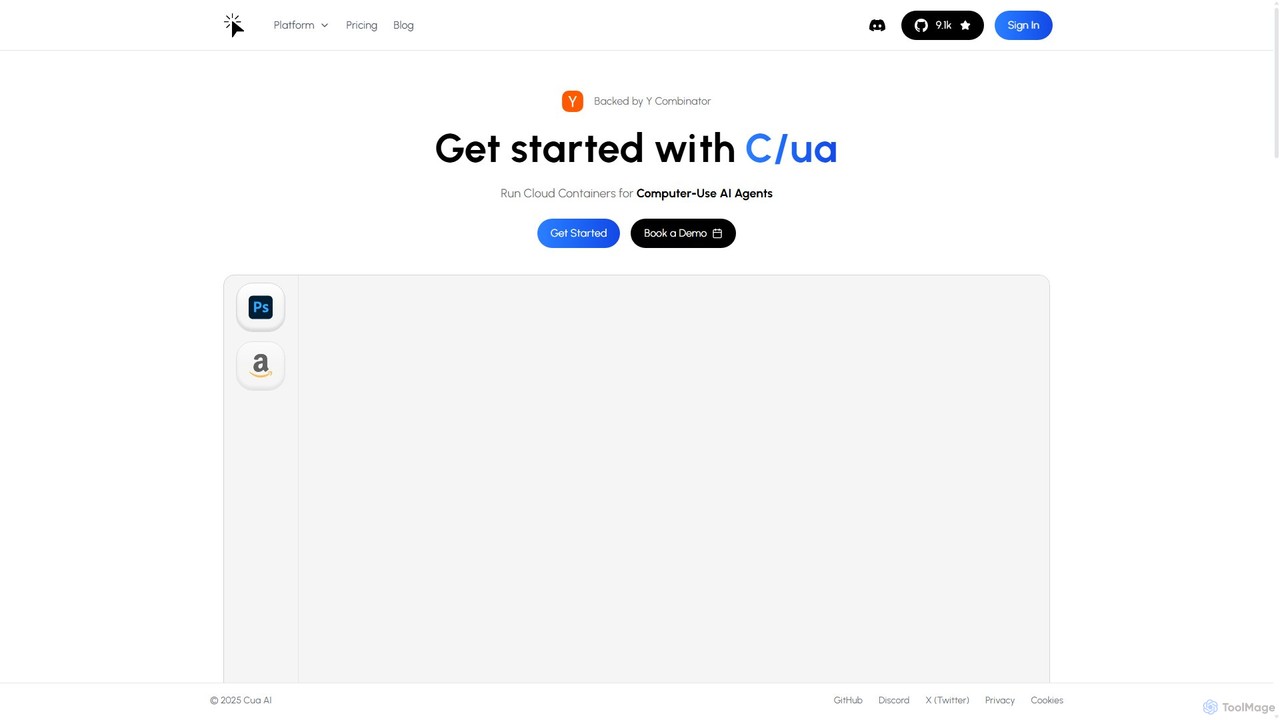
c/ua Overview
c/ua (Computer-Use AI Agents) is a comprehensive, developer-focused platform designed to streamline the creation, deployment, and management of AI agents that can interact with computer operating systems. Backed by Y Combinator, c/ua addresses the critical need for secure, isolated, and scalable environments for agentic workflows, effectively removing the infrastructure headaches for developers.
The platform's core offering is its cloud-based containers, which provide sandboxed environments on macOS, Linux, and Windows. This allows AI agents to perform complex tasks—from robotic process automation (RPA) to software testing—without compromising the host system's security. c/ua is built with an open-source core, fostering a community of developers and ensuring transparency and flexibility.
How to use c/ua
Getting started with c/ua involves a few straightforward steps, catering to both local development and cloud deployment:
- Choose Your Environment: Start with the free Open Source plan to run agents locally on your machine. For scalable, managed solutions, opt for the Pro plan to access cloud containers.
- Integrate the SDK: Use the `cua-agent` SDK, a powerful open-source framework, to build your agentic workflows in Python. The SDK simplifies the process of defining tasks and interacting with the environment.
- Configure Your LLM: c/ua is model-agnostic. You can easily configure your agent to use your preferred Large Language Model (LLM) from providers like OpenAI, Anthropic, ByteDance, OpenRouter, and more.
- Deploy and Run: Execute your agent locally for testing and development. When ready, deploy it to a c/ua cloud container with a simple command. The platform handles all the complexity of provisioning and securing the environment.
- Interact and Control: Use the Multi-modal Control Protocol (MCP) to control your computer through natural language conversations with clients like Cursor or Claude Desktop. For fine-grained programmatic control, use the `Computer` library, which offers PyAutoGUI-compatible primitives like `click`, `scroll`, and `type`.
- Generate Training Data: Leverage the Gradio UI to record your own computer interactions, creating high-quality, human-like trajectories that can be used to train or fine-tune computer-use AI models.
Core Features of c/ua
- Secure Cloud Containers: Deploy agents in isolated, secure virtual environments across macOS, Linux, and Windows, eliminating infrastructure management.
- Open-Source Agent Framework: A flexible and powerful framework (`cua-agent`) for building agentic RPA workflows.
- Multi-LLM Provider Support: Freedom to integrate with a wide range of LLMs, including those from OpenAI, Anthropic, and OpenRouter.
- Cross-Platform Automation: Design and execute complex workflows that operate seamlessly across different operating systems.
- Natural Language Control: The Multi-modal Control Protocol (MCP) enables users to command agents using conversational language through integrated desktop clients.
- Programmatic Computer Control: A PyAutoGUI-compatible API for precise, code-based control over mouse, keyboard, and screen actions.
- Human Trajectory Generation: A dedicated tool to create high-quality datasets for training computer-use models by recording human interactions.
- Advanced VM Management: Includes tools like Lume (CLI for Apple Silicon VMs) and Lumier (Docker-based macOS VMs) for developers who need more control over their virtual environments.
Use Cases for c/ua
c/ua is versatile and can be applied to a wide range of automation and AI development scenarios:
- Intelligent Robotic Process Automation (RPA): Automate complex business processes, data entry, and report generation using AI agents that can understand context and adapt to changes.
- Automated Software Testing: Deploy agents to perform comprehensive UI/UX testing, simulating human interaction to identify bugs and usability issues.
- Autonomous Web Scraping and Data Aggregation: Create sophisticated agents that can navigate complex websites, log into accounts, and extract structured data.
- AI Model Development and Training: Generate rich, high-quality datasets of human-computer interactions to train vision and control models.
- Personal AI Assistants: Build customized agents that can manage your digital tasks, organize files, and control applications based on natural language commands.
Advantages of c/ua
c/ua offers significant advantages for developers and teams building AI agents:
- Infrastructure Abstraction: Frees developers from the complexities of setting up, securing, and scaling virtual environments.
- Enhanced Security: The sandboxed container approach ensures that agent actions are confined, protecting the underlying system.
- Flexibility and Extensibility: The open-source core and support for multiple LLMs and platforms prevent vendor lock-in and encourage customization.
- Developer-First Experience: Designed with a comprehensive SDK, clear documentation, and powerful CLI tools to streamline the development lifecycle.
- Transparent and Scalable Pricing: A clear, usage-based pricing model that scales with your needs, from individual hobbyists to large enterprises.
Pricing and Plans
c/ua offers a crystal-clear pricing structure tailored to different user needs:
- Open Source (Free): Ideal for hackers, hobbyists, and FOSS projects. This plan includes the MIT Licensed Core, unlimited local agents, and access to community support via Discord and documentation.
- Pro Plan ($75 for 5,100 credits): Designed for teams that require hosted agents without infrastructure overhead. This plan provides access to all public cloud regions (macOS, Linux, Windows). Usage is metered in universal credits (5,100 credits equate to approximately 425 hours of typical runtime). It also includes email and Slack support.
- Enterprise Plan (Custom Pricing): For organizations with large-scale requirements. This includes everything in the Pro plan, plus 24/7 support, and compliance reports like HIPAA and SOC Type 1/2. Contact sales for a quote.
c/ua Alternatives
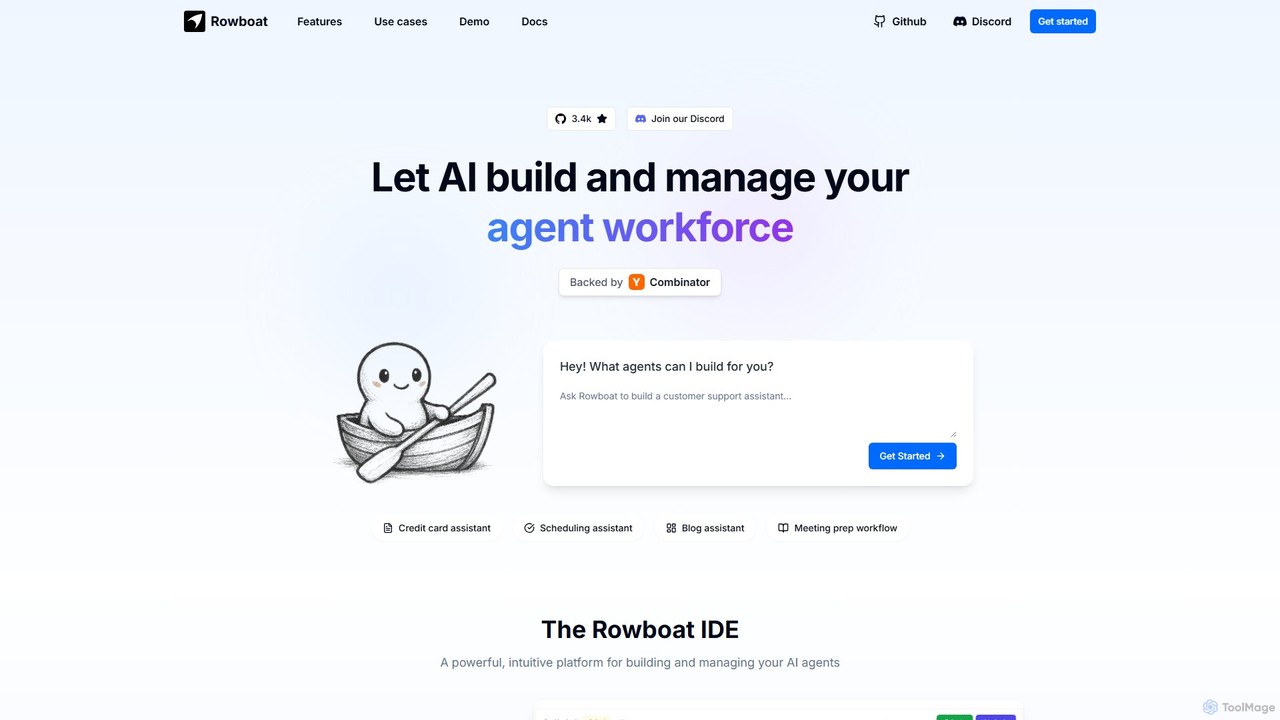
Rowboat
Rowboat is a powerful, AI-powered IDE for building, managing, and deploying complex multi-agent systems. Backed by Y Combinator, it allows users to describe workflows in plain English, and its AI copilot automatically generates the entire agent graph, including roles, prompts, and tool integrations. It's designed to simplify the creation of robust, real-world AI agents for productivity, e-commerce, support, and more, with features like open-source flexibility and support for over 100 LLMs.
Agent Builder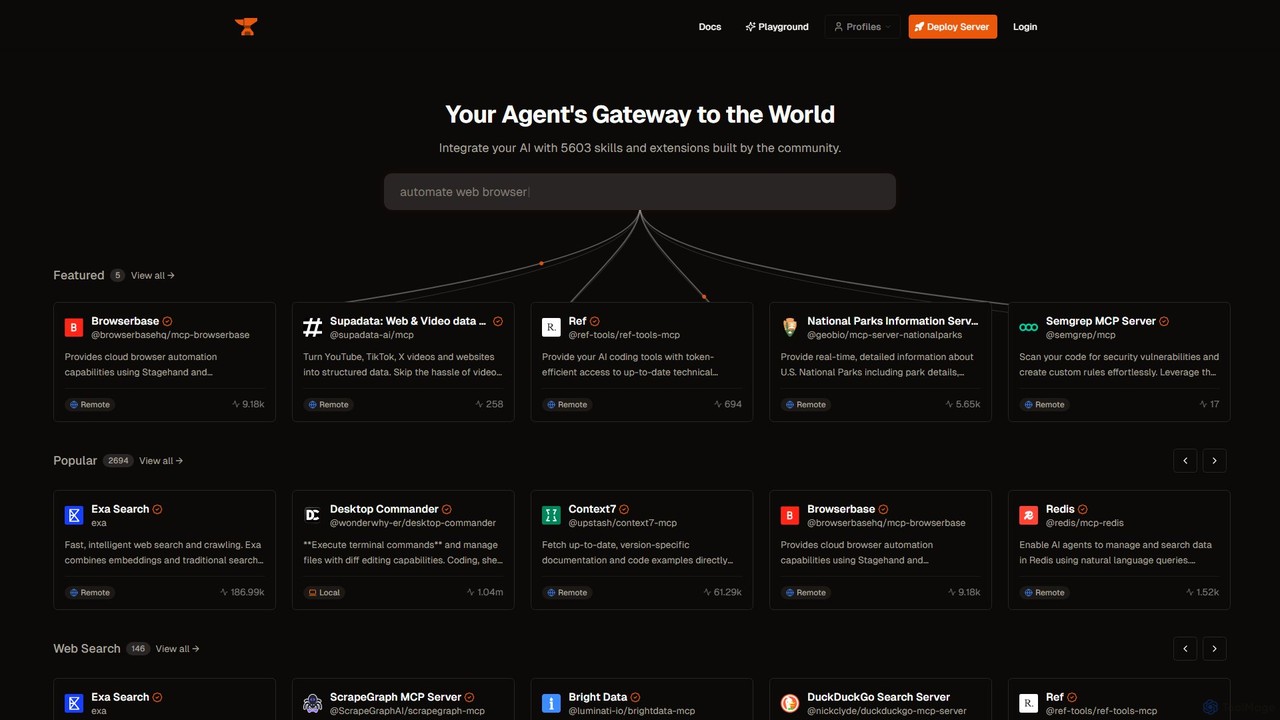
Smithery
Smithery is a registry and protocol for AI agents, providing a gateway to thousands of community-built skills and extensions. It enables developers to easily integrate external tools like web browsers, databases, and APIs into their AI applications, enhancing their capabilities and context awareness.
Database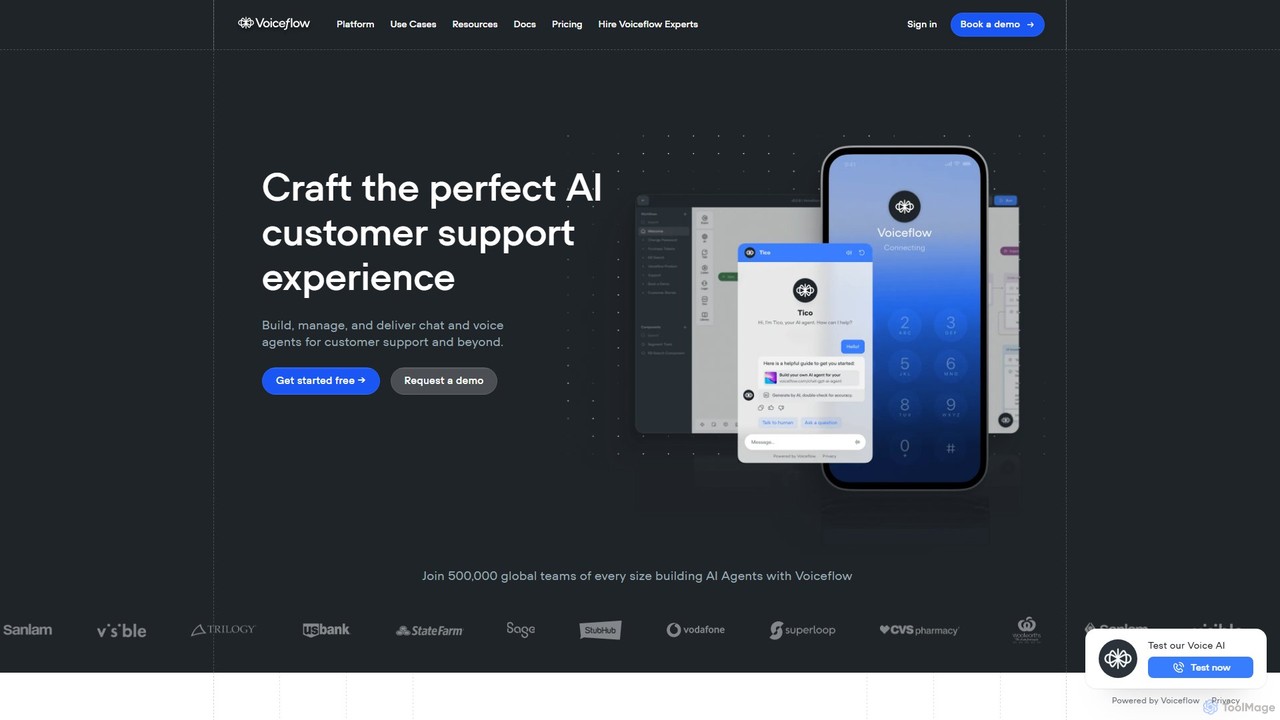
Voiceflow
Voiceflow is a collaborative platform for product teams to design, build, and deploy advanced AI agents. Create human-like voice and chat experiences for customer support and beyond, with full control, scalability, and integration capabilities, independent of any single LLM vendor.
Chatbot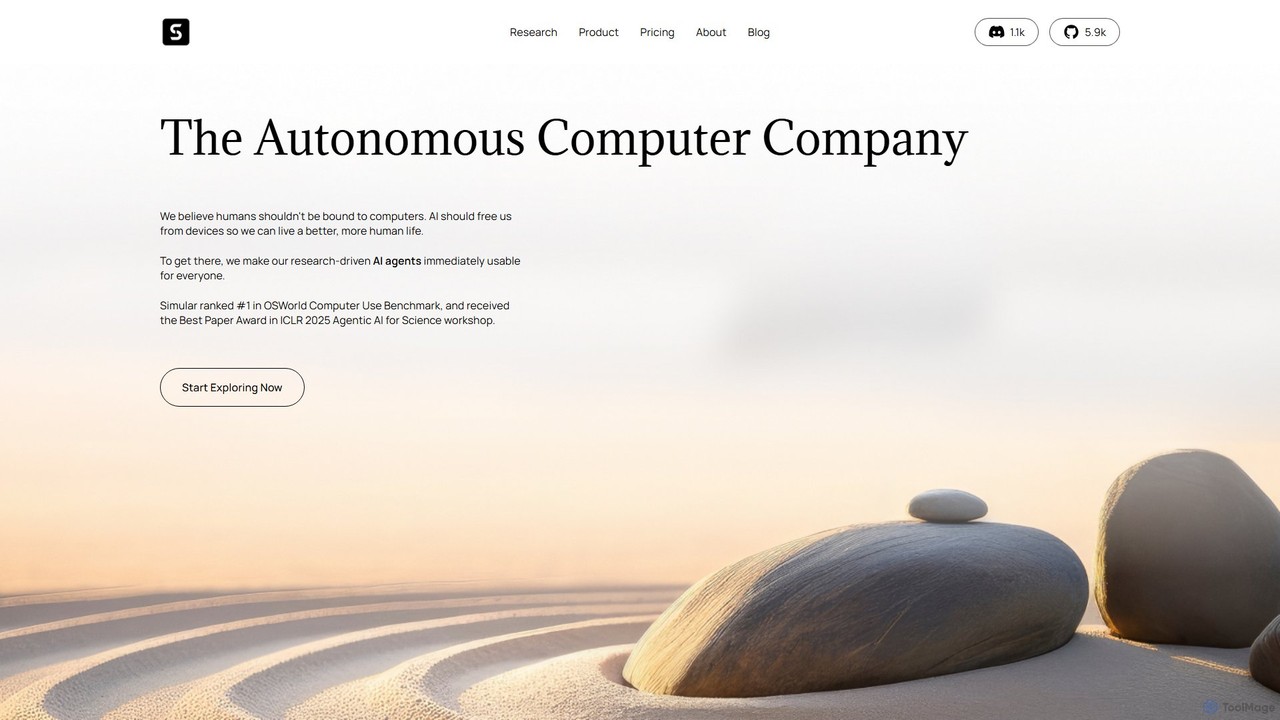
Simular
Simular is an AI-powered platform that creates autonomous agents to operate computers just like humans. It automates complex digital tasks across any application on your desktop, browser, or smartphone. By combining the flexibility of LLMs with the precision of symbolic code, Simular aims to free users from repetitive work, handling everything from data research and content creation to personal task management.
Personal Assistant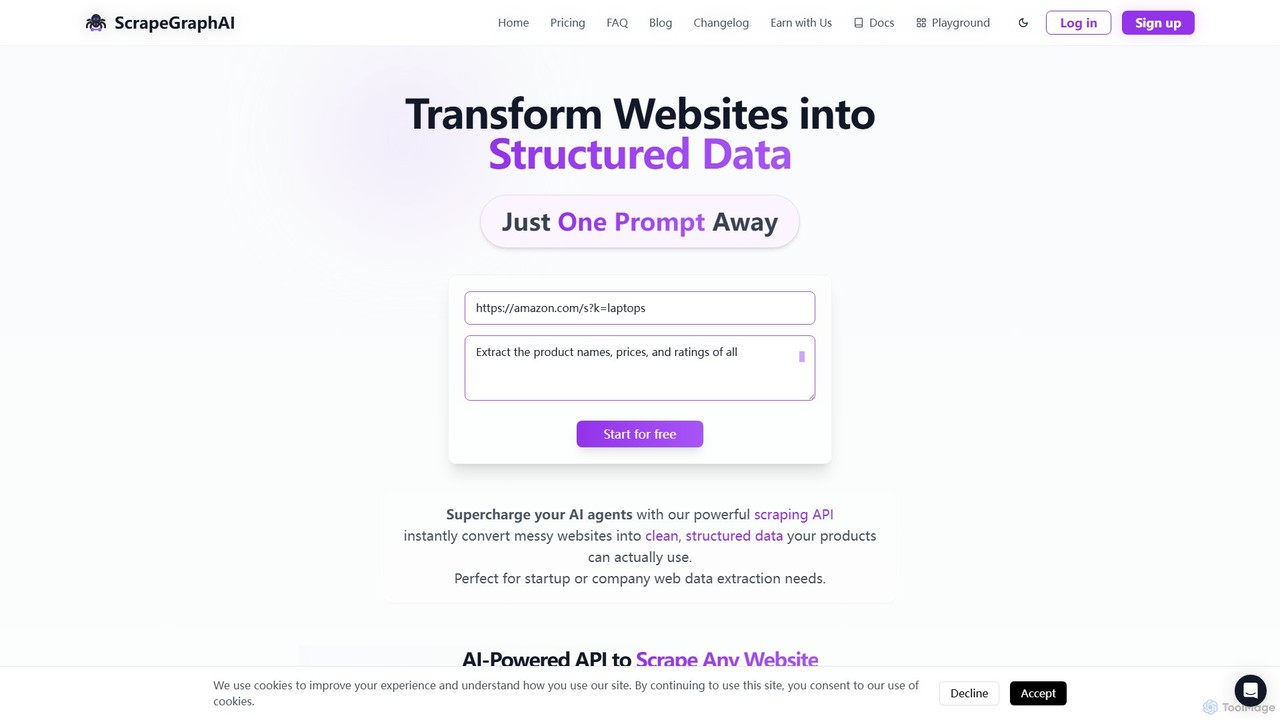
ScrapeGraphAI
ScrapeGraphAI is an AI-powered web scraping API that transforms unstructured websites into clean, structured JSON data using simple natural language prompts. Designed for developers, AI agents, and automated workflows, it simplifies data extraction without complex code.
Analyticsc/ua Categories
c/ua Embed Widget
Copy this embed code to place the badge on your blog, article, or product site and send readers directly to this ToolMage detail page.

Related AI tools
Rowboat
Rowboat is a powerful, AI-powered IDE for building, managing, and deploying complex multi-agent systems. Backed by Y Combinator, it allows users to describe workflows in plain English, and its AI copilot automatically generates the entire agent graph, including roles, prompts, and tool integrations. It's designed to simplify the creation of robust, real-world AI agents for productivity, e-commerce, support, and more, with features like open-source flexibility and support for over 100 LLMs.
Agent BuilderSmithery
Smithery is a registry and protocol for AI agents, providing a gateway to thousands of community-built skills and extensions. It enables developers to easily integrate external tools like web browsers, databases, and APIs into their AI applications, enhancing their capabilities and context awareness.
DatabaseVoiceflow
Voiceflow is a collaborative platform for product teams to design, build, and deploy advanced AI agents. Create human-like voice and chat experiences for customer support and beyond, with full control, scalability, and integration capabilities, independent of any single LLM vendor.
ChatbotSimular
Simular is an AI-powered platform that creates autonomous agents to operate computers just like humans. It automates complex digital tasks across any application on your desktop, browser, or smartphone. By combining the flexibility of LLMs with the precision of symbolic code, Simular aims to free users from repetitive work, handling everything from data research and content creation to personal task management.
Personal AssistantScrapeGraphAI
ScrapeGraphAI is an AI-powered web scraping API that transforms unstructured websites into clean, structured JSON data using simple natural language prompts. Designed for developers, AI agents, and automated workflows, it simplifies data extraction without complex code.
Analytics
Latitude
Latitude is an open-source development platform designed for building, evaluating, and deploying applications powered by Large Language Models (LLMs), with a special focus on creating autonomous AI agents. It provides a comprehensive suite of tools for developers to experiment, refine, and scale their AI solutions.
Mlops
Klavis
Klavis is a developer platform that provides open-source Model Context Protocol (MCP) integrations, enabling AI applications to securely and scalably connect with thousands of external tools and APIs like Salesforce, Gmail, and Slack. It simplifies authentication, enhances security, and accelerates the development of powerful AI agents.
Integration Platform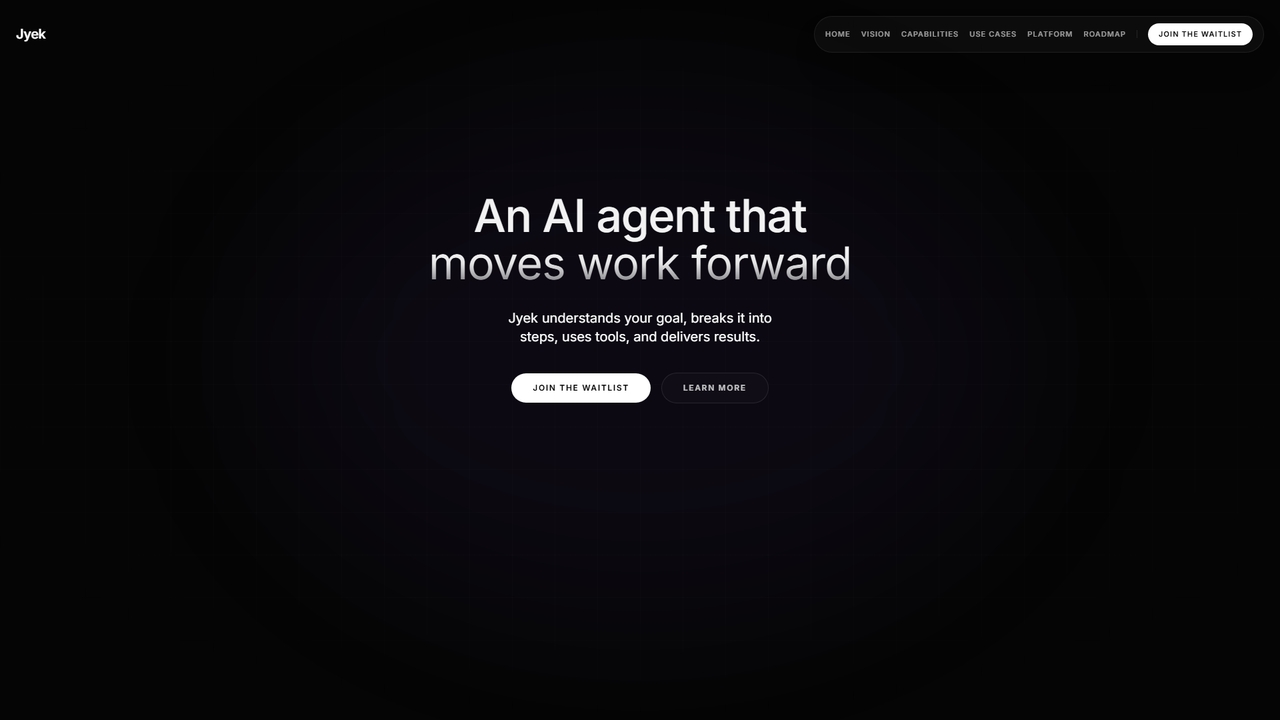
Jyek
Jyek is an AI agent platform that understands objectives, creates execution plans, uses tools, and delivers verifiable results for complex, multi-step tasks.
Automation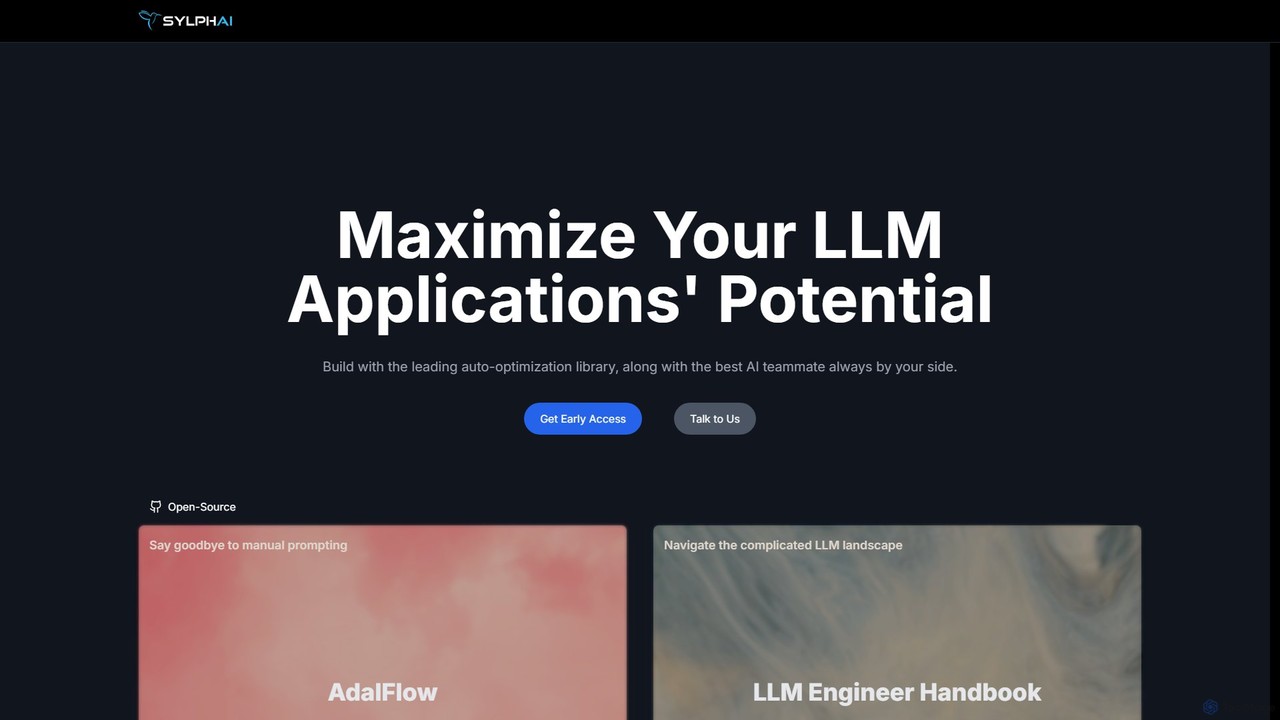
Sylph AI
Sylph AI is a development platform designed to maximize the potential of LLM applications. It features AdalFlow, a leading open-source library for building and auto-optimizing LLM task pipelines, and an AI Teammate that provides expert guidance throughout the entire development workflow, from ideation to production.
Libraries
smolagents
smolagents is a minimalist, open-source AI agent framework developed by Hugging Face. It empowers developers to build and deploy powerful, code-first AI agents with minimal Python code. By focusing on simplicity and efficiency, it enables Large Language Models (LLMs) to interact with tools and the real world seamlessly, supporting a wide range of models and secure execution environments.
Development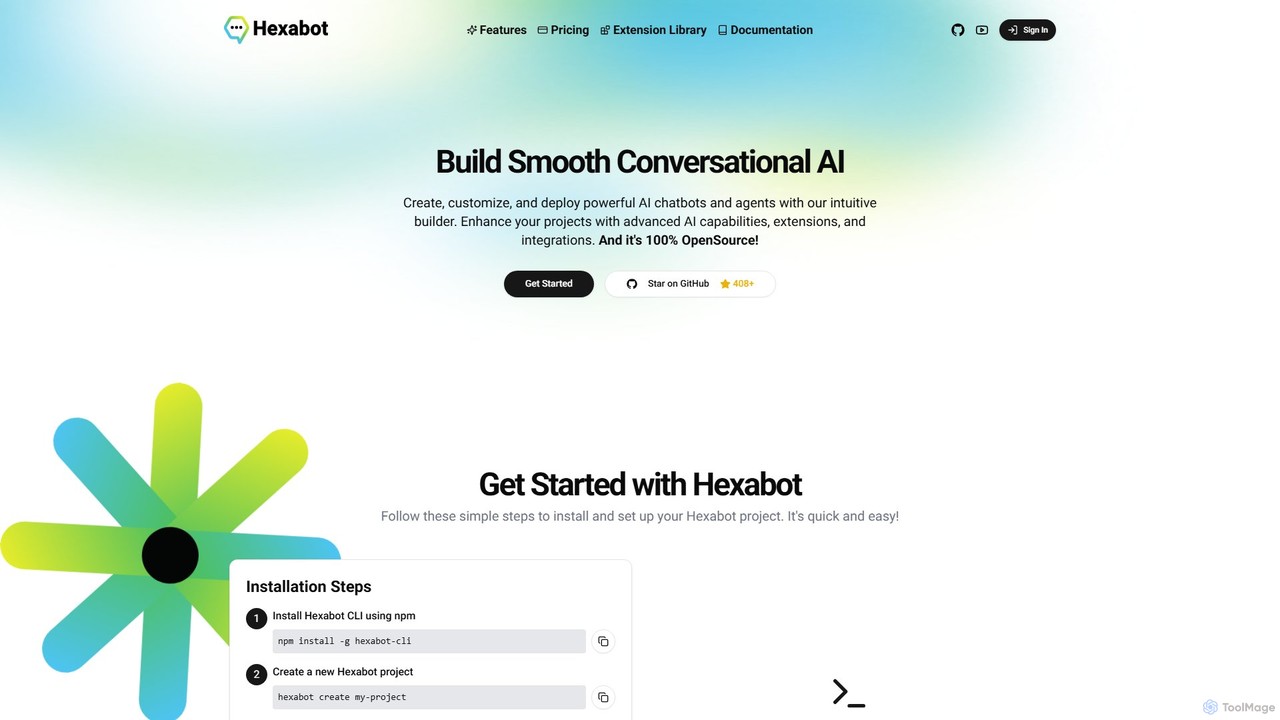
Hexabot
Hexabot is an open-source platform for building, customizing, and deploying powerful AI chatbots and agents. It offers a developer-friendly environment with a low-code visual editor, extensive extension library, and multi-channel integration, allowing for on-premise hosting to ensure full data privacy and control.
Chatbot
EasyFunctionCall
A developer-centric platform designed to simplify the integration of function calling and API connections for Large Language Models (LLMs). It abstracts the complexity of building AI agents and applications that can interact with external tools and data sources, enabling faster development and more robust performance. Supports major LLMs like GPT, Gemini, and Claude.
Model Integration
ConnectOnion
ConnectOnion is a minimalist Python framework designed to build production-ready AI agents with significantly less code. It simplifies agent creation by combining Markdown prompts and Python functions, reducing boilerplate by up to 85% compared to other frameworks.
Libraries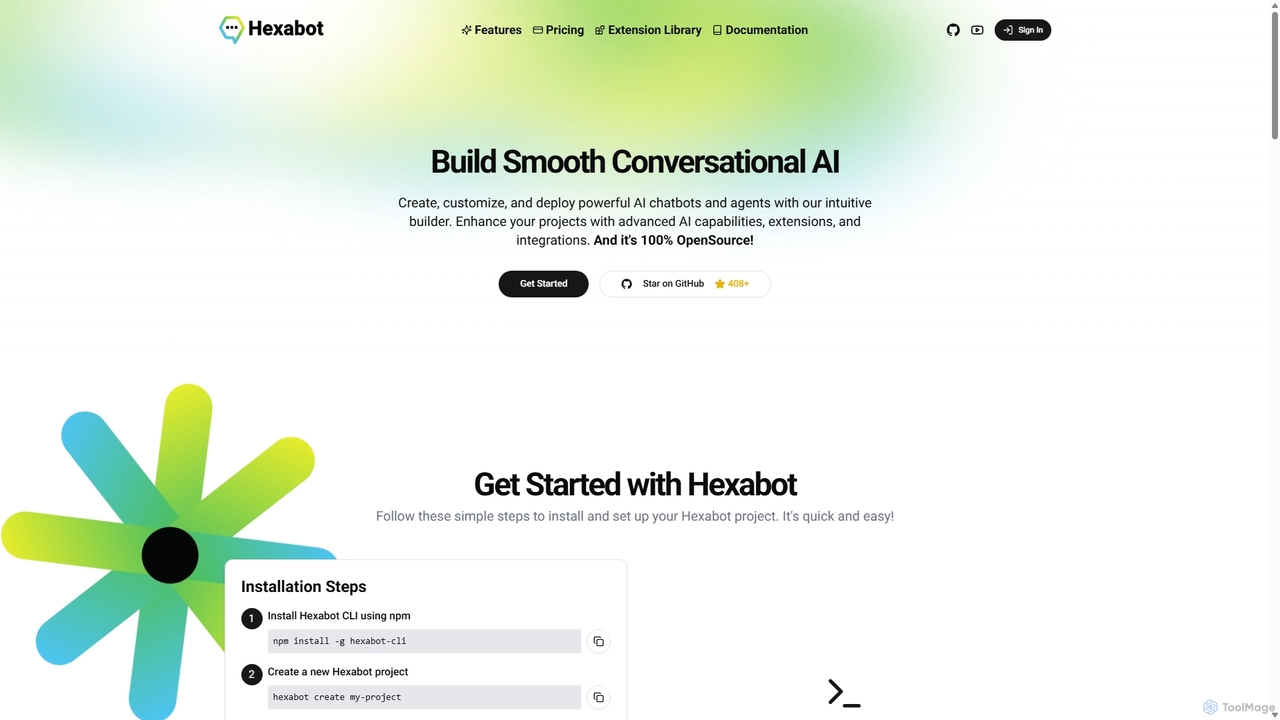
Hexabot
Hexabot is a 100% open-source platform for building, customizing, and deploying powerful AI chatbots and agents. It offers an intuitive low-code builder, on-premise hosting for data privacy, and a vast library of extensions. Ideal for developers and businesses seeking to enhance customer experience and automate workflows across multiple channels and languages.
Chatbot
Toolbuilder
Toolbuilder is a no-code platform that empowers users to create and deploy custom AI applications, chatbots, and automated workflows without writing a single line of code. Connect to top AI models, integrate your own data, and build specialized tools for your business needs in minutes.
Workflow Management
c/ua Comments (0)
Sign in to comment.
Sign inNo comments yet.