
Paid
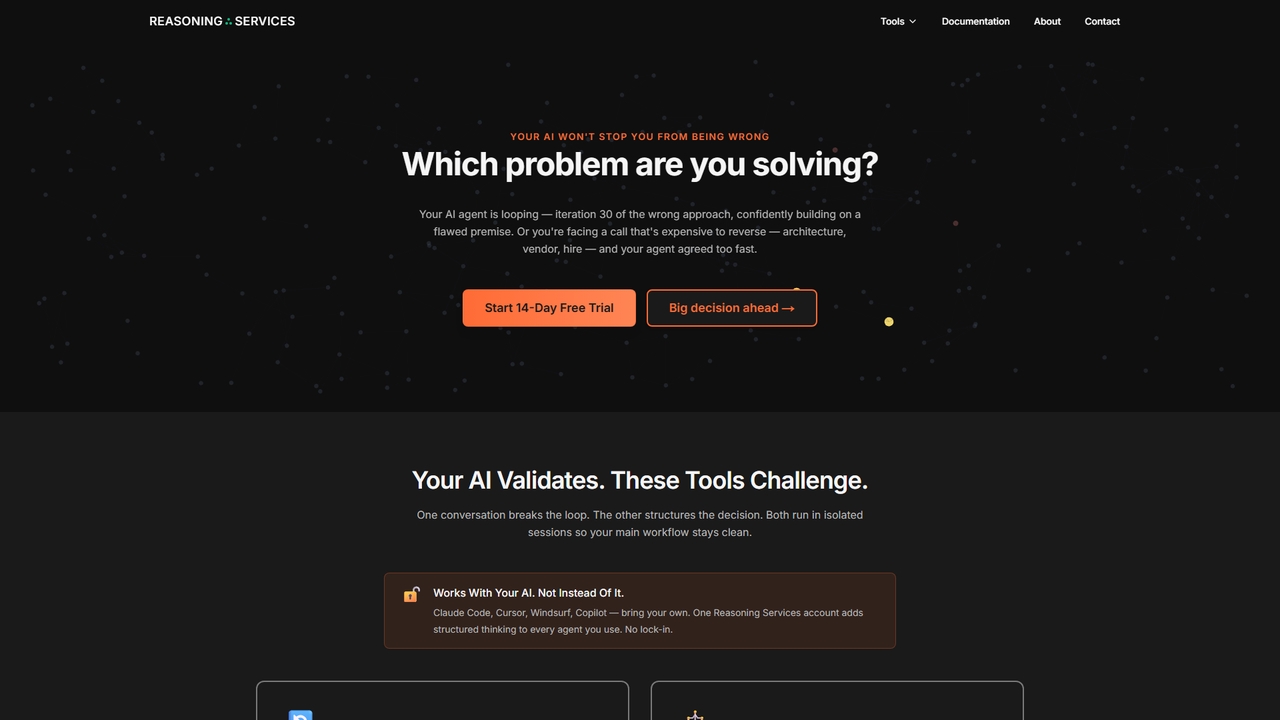
Popular Ai Integration AI tools in Developer Tools include Prompt Cowboy, Multiplayer, Makeskill, Public MCP Registry, Reasoning, and Techup.AI, helping you work more efficiently.
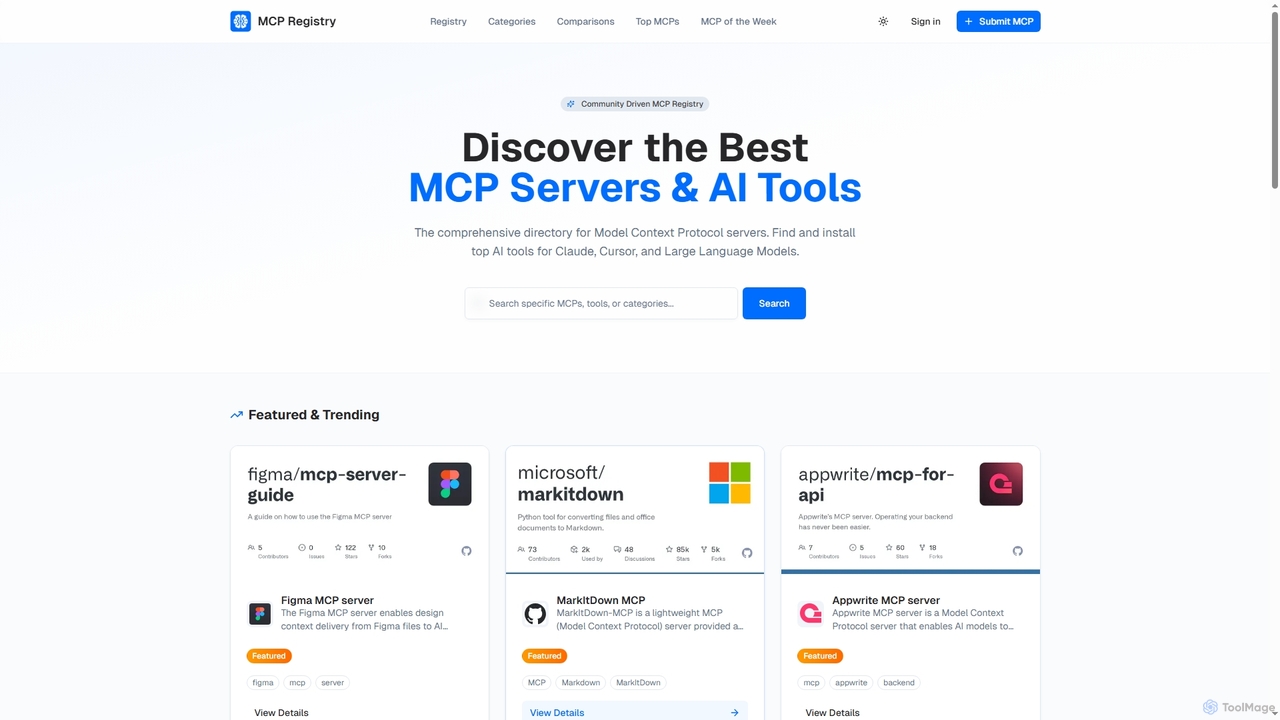
Public MCP Registry is a comprehensive, community-driven directory for Model Context Protocol (MCP) servers. It helps developers discover, find, and install top AI tools for Large Language Models, Claude, and Cursor, streamlining AI-assisted development and workflow automation.
Ai Integration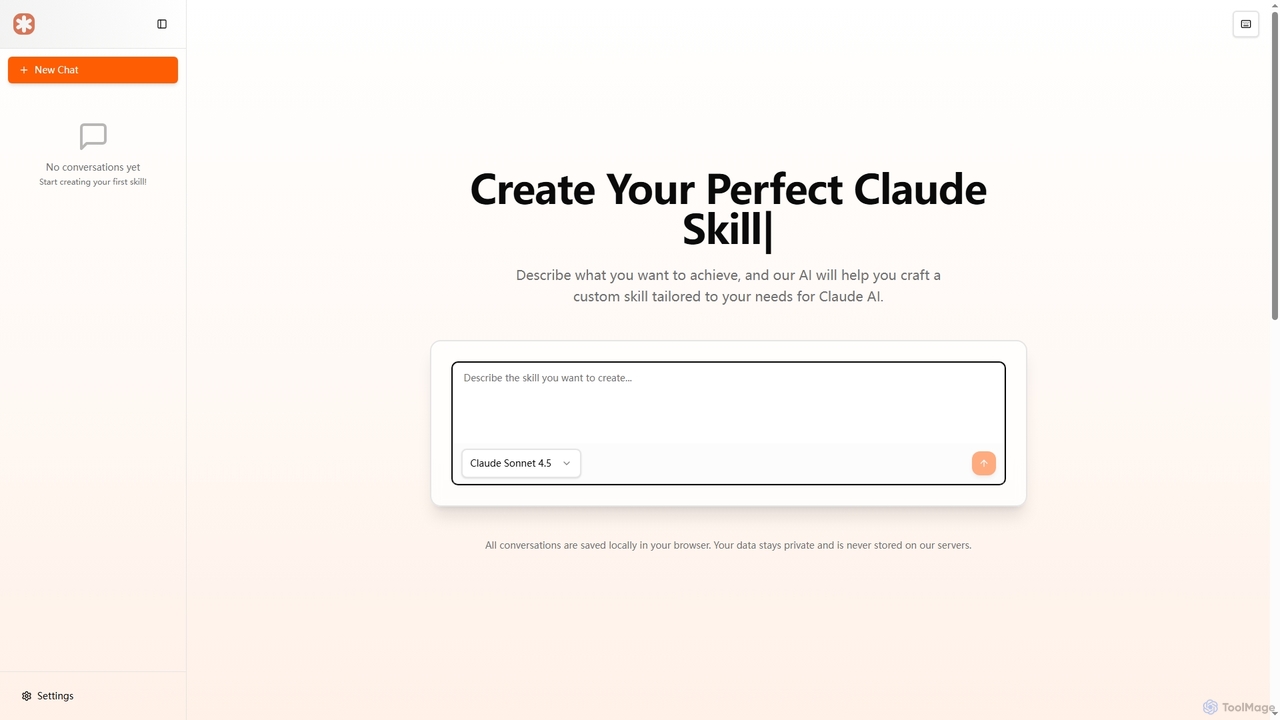
Makeskill is an AI-powered tool for creating custom, modular skills for Claude AI. Describe your goal, and the tool helps craft specialized instructions and workflows to extend Claude's capabilities, automate tasks, and build complex processes, with all data stored locally for privacy.
Prompt Engineering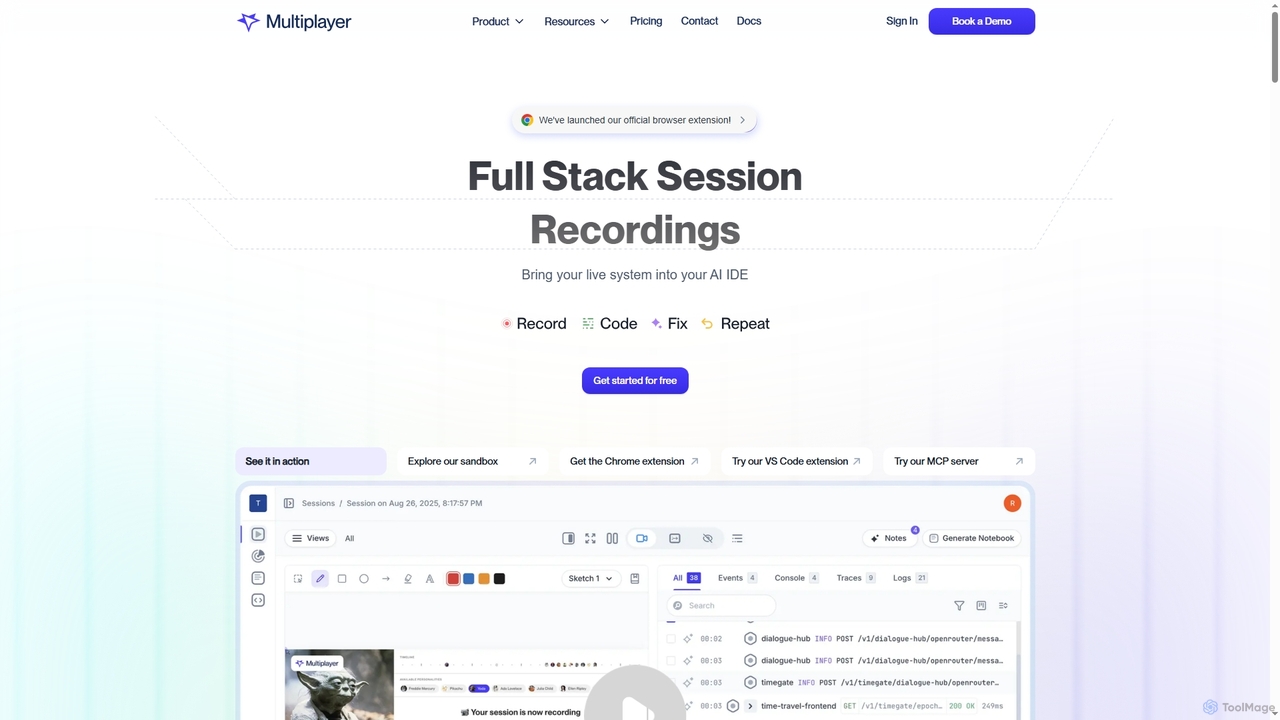
Multiplayer is a full-stack session recording platform that captures frontend and backend data, providing complete context for debugging, testing, and AI-powered feature development. It integrates seamlessly with AI IDEs and engineering workflows to accelerate problem resolution and build new features with confidence.
Ai Integration
Prompt Cowboy is an AI-powered prompt generator that transforms simple ideas into highly effective, structured prompts for models like ChatGPT, OpenAI o3, and VEO-3. It offers specialized templates for various tasks, including reasoning, deep research, and custom GPT creation, helping users achieve significantly better results from their AI interactions.
Ai Integration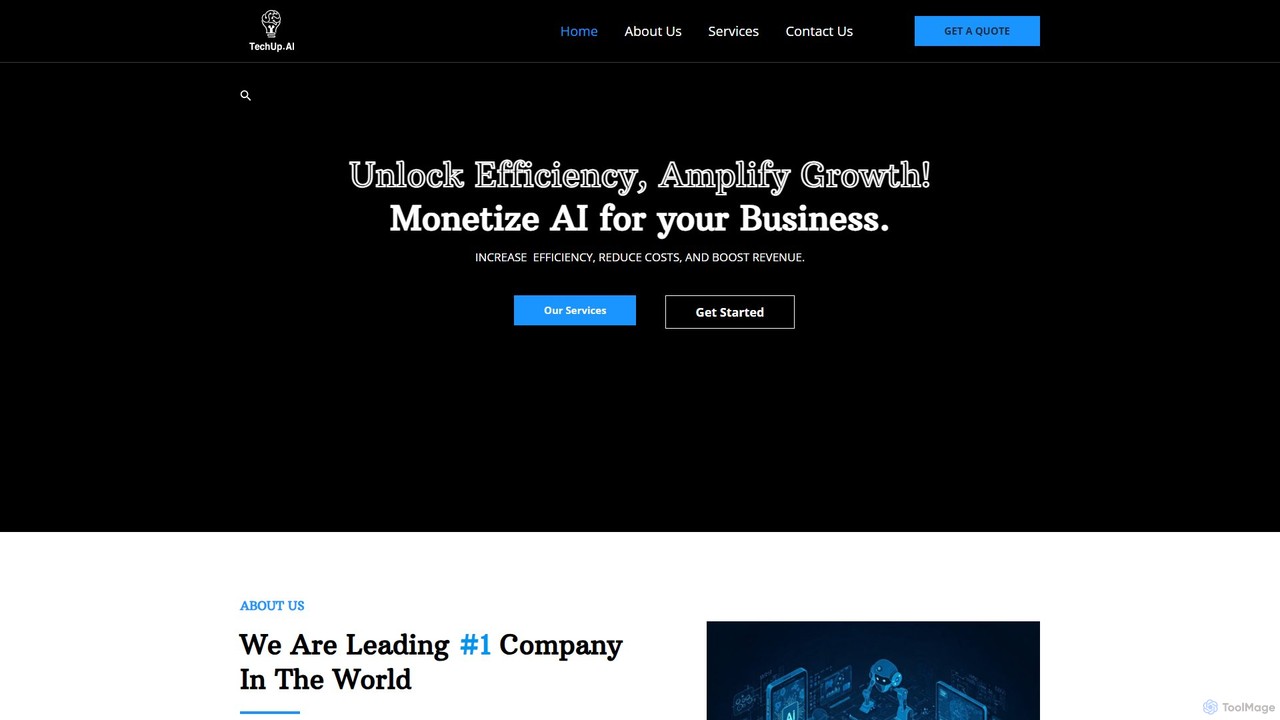
Techup.AI is a technology solutions provider specializing in custom software development for businesses. They offer a comprehensive suite of services, including AI and machine learning solutions, SaaS and mobile app development, e-commerce platforms, and cloud integration. By crafting tailored solutions, Techup.AI helps enterprises streamline operations, reduce costs, and drive growth in the digital age. Their expert team focuses on delivering innovative, scalable, and user-centric products to meet unique business challenges.
Custom Software DevelopmentAI Integration tools are a class of platforms, APIs, and SDKs designed to embed pre-built artificial intelligence capabilities into existing applications, software, and workflows. These tools provide programmatic access to sophisticated models for tasks like natural language processing, image recognition, or data analysis, without requiring deep expertise in machine learning. By using them, developers can rapidly add intelligent features such as automated chatbots, personalized recommendation engines, or content moderation systems. They effectively bridge the gap between complex AI models and practical application, handling the underlying infrastructure, scaling, and maintenance.
Primarily used by software developers, product managers, and IT teams across various industries. For instance, an e-commerce company can integrate a recommendation API to personalize shopping experiences. A SaaS provider can embed a natural language processing API to power an intelligent in-app support chatbot. A media company might use a computer vision API to automatically tag and moderate user-generated content.
When selecting an AI Integration tool, consider the specific models available and their performance on your target tasks. Evaluate the quality of the API documentation, the availability of SDKs for your tech stack, and the platform's scalability and latency. Also, analyze the pricing model—whether it's pay-as-you-go, subscription-based, or tiered—to ensure it aligns with your expected usage and budget. Finally, assess the security and data privacy policies of the provider.
A software developer working for a SaaS company is tasked with reducing the load on the human support team. Using an AI integration platform, the developer connects a natural language processing (NLP) API to their existing support chat widget. This enables the creation of a chatbot that can understand user queries in natural language, provide instant answers from a knowledge base, and create support tickets for complex issues. The integration process involves a few API calls, significantly faster than building an NLP model from scratch. This results in 24/7 customer support, reduced response times, and allows human agents to focus on high-priority cases.
A backend developer for a user-generated content platform needs to implement a system to filter out inappropriate content. Instead of building a complex moderation tool, they integrate a computer vision API. When a user uploads an image, the application sends it to the API endpoint. The AI model analyzes the image for unsafe content (e.g., violence, adult themes) and returns a set of labels and confidence scores. Based on these scores, the application can automatically delete the content or flag it for human review. This approach helps maintain community guidelines at scale and significantly reduces the manual workload for the trust and safety team.
An e-commerce developer wants to increase user engagement and sales. They use an AI integration service that offers a recommendations API. The developer instruments their website to send user activity data—such as product views, items added to cart, and past purchases—to the API. In return, the API provides a list of personalized product recommendations for that specific user. This list is then displayed on the homepage and product detail pages. This allows the company to leverage sophisticated machine learning for personalization without needing an in-house data science team, leading to higher conversion rates and average order value.
A mobile app developer for a productivity app wants to add a hands-free interaction feature. They integrate a Speech-to-Text SDK from an AI provider. The SDK allows the app to use the device's microphone to capture a user's voice command, such as "Create a new task for tomorrow at 10 AM." The audio data is securely sent to the provider's API, which transcribes it into text and returns the string to the app. The app's logic then parses this text to perform the requested action. This adds a significant accessibility and convenience feature with minimal development effort compared to building a proprietary speech recognition system.
An enterprise developer is building a solution to streamline the accounts payable process. They integrate a document analysis API specialized in OCR (Optical Character Recognition). When the finance team scans an invoice, the application uploads the image or PDF to the API. The AI model identifies and extracts key-value pairs like 'Invoice Number', 'Vendor Name', 'Total Amount', and 'Due Date'. The structured JSON data returned by the API is then used to automatically populate fields in the company's accounting software. This eliminates hours of manual data entry, reduces human error, and accelerates the entire invoice processing workflow.
A product manager at a SaaS company wants to better understand customer feedback from support tickets and in-app surveys. A data engineer integrates a sentiment analysis API into their data pipeline. As new text feedback is collected, it is sent to the API, which returns a sentiment score (e.g., positive, negative, neutral) and key topics. This structured data is then stored alongside the user's profile in the CRM. This allows the product team to create dashboards that track overall customer sentiment, identify trends in user complaints or praise, and prioritize feature development based on quantitative feedback, all without manually reading thousands of comments.
AI Integration tools are services, APIs, and SDKs that allow developers to add pre-built AI capabilities to their applications without needing machine learning expertise. Instead of building a model from scratch, you can make an API call to perform tasks like translating text, recognizing objects in an image, or analyzing customer sentiment. These tools handle all the complex infrastructure, model hosting, and scaling, allowing developers to focus on building their core product features quickly and cost-effectively.
Choosing the right platform depends on your specific needs. Consider these factors:
The key difference is between *using* AI and *building* AI. AI Integration APIs provide access to pre-trained, ready-to-use models. They are for application developers who want to consume AI as a service. AI Frameworks like TensorFlow or PyTorch are tools for data scientists and machine learning engineers to design, train, and deploy their own custom models from scratch. Using an API is faster and requires no ML knowledge, while using a framework offers maximum control and customization for unique problems.
No, one of the primary benefits of AI Integration tools is that they abstract away the complexity of machine learning. You do not need to understand neural network architecture or how to train a model. You do, however, need software development skills to work with APIs or SDKs. Your role is to send data to the AI service in the correct format and then handle the response within your application's logic. This makes advanced AI accessible to a much broader range of developers.
The primary benefits are speed, cost-efficiency, and access to cutting-edge technology. Key advantages include: