
unSkript
unSkript is a proactive agentic AI platform for IT support, designed to automate root cause analysis (RCA) and …
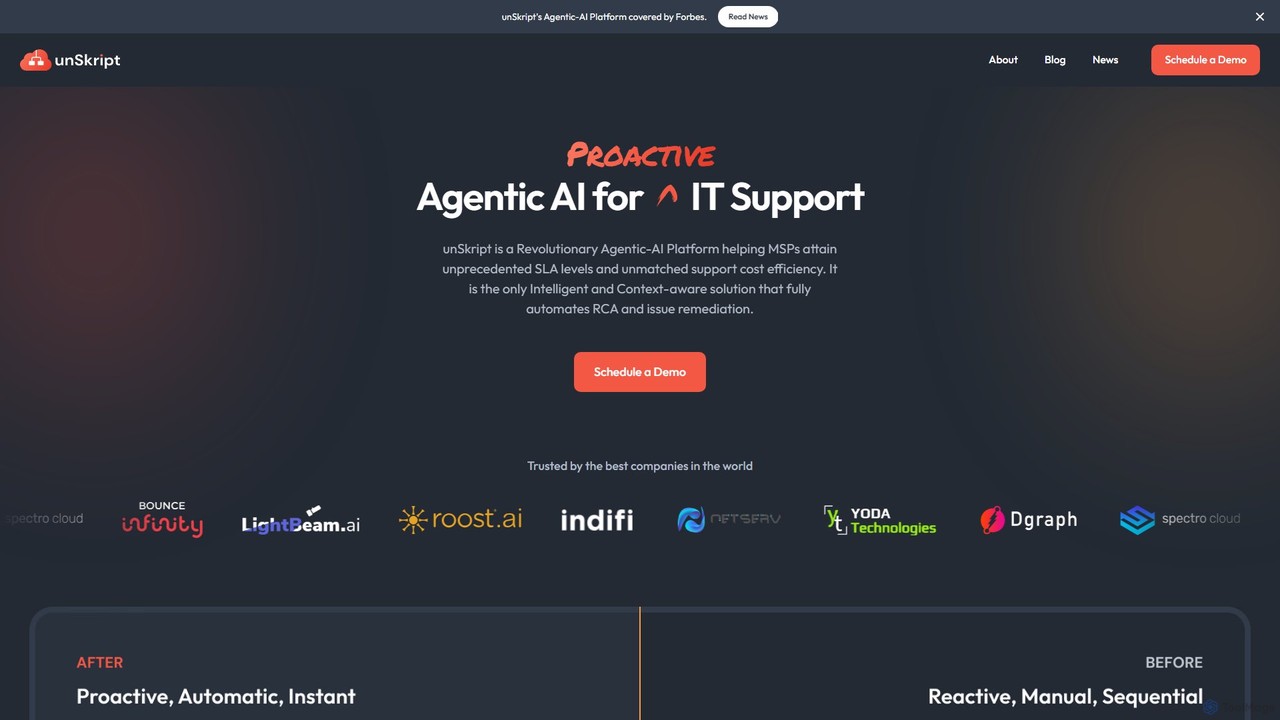
unSkript is a proactive agentic AI platform for IT support, designed to automate root cause analysis (RCA) and issue remediation. It helps MSPs and DevOps teams achieve higher SLA levels, reduce downtime, and improve operational cost efficiency by proactively identifying and resolving infrastructure issues.
About Infrastructure Management
AI-powered Infrastructure Management tools automate and optimize the oversight, maintenance, and scaling of IT resources. These solutions leverage machine learning to analyze vast operational data, predict potential issues, and intelligently allocate resources. They enhance system reliability, reduce operational costs, and free up IT teams for strategic initiatives. This category is crucial for modern DevOps and SRE practices within developer tools.
Core Features
- AIOps & Anomaly Detection: Proactively identifies unusual patterns in system behavior to prevent outages.
- Predictive Maintenance: Forecasts hardware or software failures before they occur, enabling timely intervention.
- Resource Optimization: Dynamically adjusts compute, storage, and network resources to meet demand and minimize waste.
- Automated Incident Response: Triggers predefined actions or alerts based on detected issues, reducing human intervention.
- Cloud Cost Management: Analyzes cloud spending patterns and recommends optimizations to reduce expenditure.
Applicable Scenarios
AI Infrastructure Management is vital for organizations managing complex, dynamic, or large-scale IT infrastructures. This includes large enterprises managing hybrid cloud environments, SaaS providers optimizing resource allocation for multi-tenant applications, and DevOps teams automating infrastructure provisioning and monitoring CI/CD pipelines.
How to Choose
When selecting AI Infrastructure Management tools, consider their integration capabilities with existing cloud providers and monitoring systems. Evaluate the depth of AI/ML sophistication for anomaly detection and prediction, not just basic rules. Assess scalability and performance to handle your current and future infrastructure needs, and compare the total cost of ownership against potential operational savings and reliability improvements.
Infrastructure ManagementUse Cases
Proactive Outage Prevention
IT operations teams use AI infrastructure management to detect subtle anomalies in network traffic or server logs, predicting potential service disruptions hours before they impact users. This allows for pre-emptive action, such as rerouting traffic or scaling resources, maintaining high availability and significantly reducing downtime for critical applications.
Optimizing Cloud Spending
Financial operations (FinOps) specialists deploy these tools to analyze cloud resource utilization across various departments. The AI identifies idle resources, recommends rightsizing instances, and automates shutdown schedules for non-production environments, significantly cutting monthly cloud bills by ensuring resources are efficiently matched to demand.
Automated Resource Scaling for E-commerce
E-commerce platforms leverage AI infrastructure management to automatically scale server capacity up during peak shopping seasons and down during off-peak hours. The AI predicts traffic surges based on historical data and real-time metrics, ensuring seamless user experience and preventing performance bottlenecks without over-provisioning resources.
Predictive Hardware Failure Detection
Data center managers utilize AI to monitor the health of physical servers, storage arrays, and networking equipment. The AI analyzes sensor data, performance metrics, and historical failure patterns to predict component failures, allowing for scheduled maintenance and replacement before critical hardware fails, thus preventing costly downtime.
Streamlining Incident Response for SREs
Site Reliability Engineers (SREs) integrate AI infrastructure tools with their alerting systems. When an incident occurs, the AI correlates alerts from different systems, identifies the root cause faster, and can even trigger automated remediation scripts. This drastically reduces Mean Time To Resolution (MTTR) and minimizes the impact of service disruptions on users.
Ensuring Compliance & Security Posture
Security and compliance officers use AI infrastructure management to continuously monitor configurations and access patterns across their infrastructure. The AI detects deviations from security policies, unusual access attempts, or misconfigurations, flagging potential vulnerabilities or breaches in real-time and helping maintain a strong security posture and regulatory compliance.