
Best 4 Iot AI tools for Developer Tools
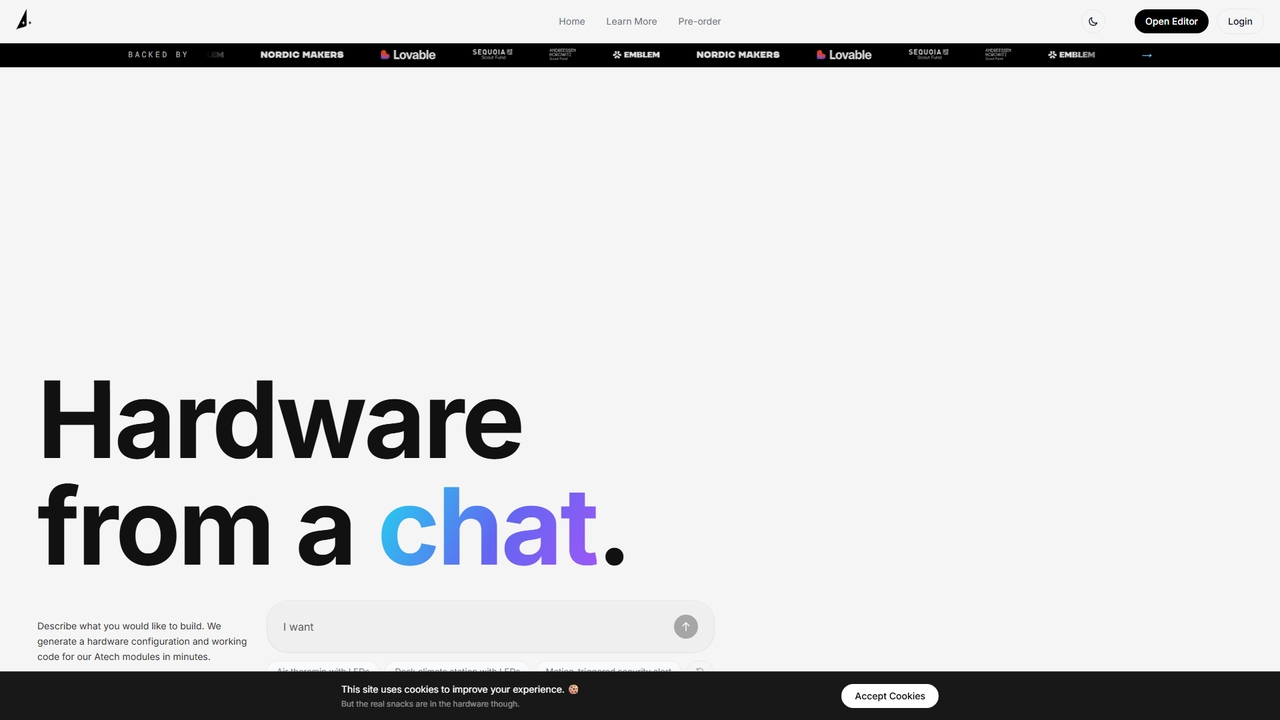
Popular Iot AI tools in Developer Tools include Homeway, Atech, DeviceHub, and Actcast, helping you work more efficiently.
Freemium
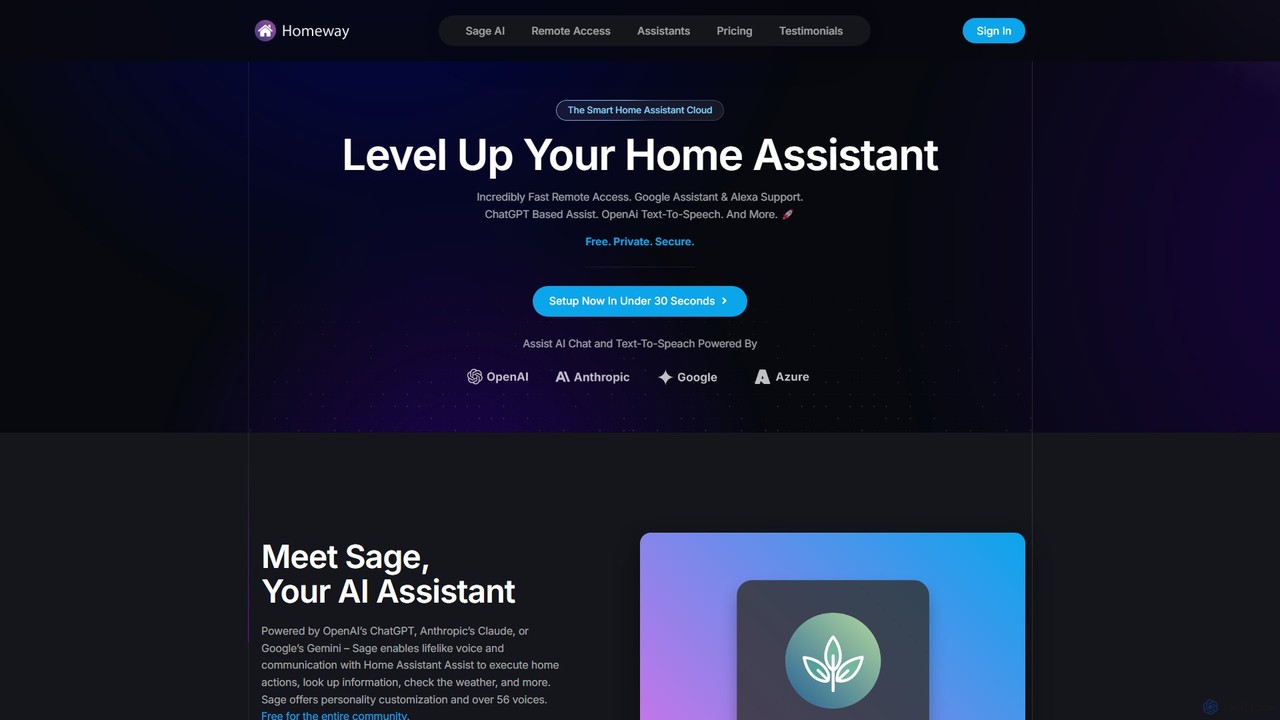
Homeway
Homeway enhances your Home Assistant experience with free, secure, and incredibly fast remote access. It features Sage, a powerful AI assistant powered by models like ChatGPT, Claude, and Gemini, enabling natural voice commands for home control, information retrieval, and more. With easy 30-second setup, Google Assistant/Alexa integration, and customizable text-to-speech voices, Homeway is the ultimate cloud upgrade for your smart home.
Voice AssistantVisits 41.9KFavorites 104Likes 94
Freemium
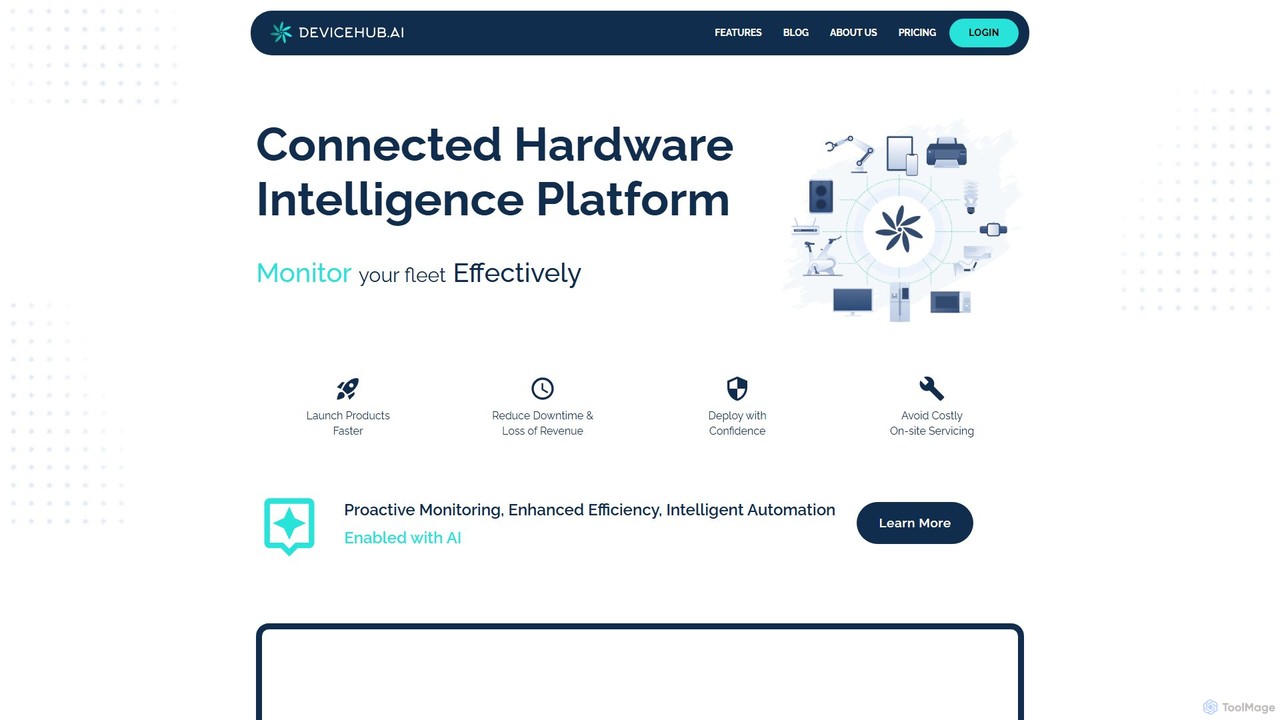
DeviceHub
DeviceHub is an AI-powered intelligence platform for connected hardware. It enables companies to monitor, analyze, and deploy software to large-scale IoT device fleets, reducing downtime, accelerating product launches, and providing actionable insights through advanced AI and automation.
Data AnalysisVisits 6.7KFavorites 144Likes 151
Freemium
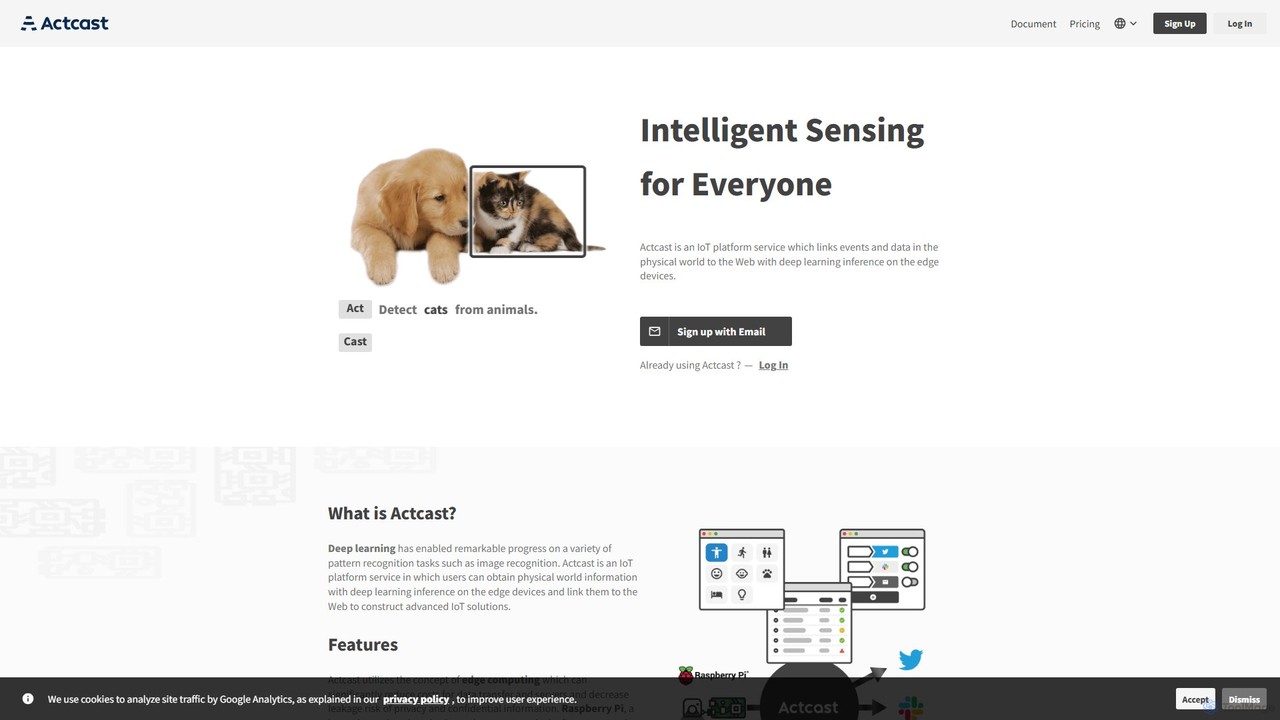
Actcast
Actcast is an IoT platform service that enables developers to deploy deep learning models on edge devices like Raspberry Pi. It connects physical world events to web services through on-device AI inference, focusing on edge computing to reduce costs, lower latency, and enhance data privacy.
Edge ComputingVisits 5.1KFavorites 103Likes 112
About Iot
IoT (Internet of Things) tools are a specialized category of developer tools designed to facilitate the creation, deployment, management, and scaling of interconnected physical devices. These tools enable developers to build solutions that collect, transmit, process, and analyze data from sensors and actuators, bridging the gap between the physical and digital worlds. They are crucial for developing smart environments, automating industrial processes, and enabling data-driven decision-making across various sectors.
Core Features
- Device Management: Registering, monitoring device health, updating firmware, and troubleshooting connected IoT devices at scale.
- Data Ingestion & Processing: Securely collecting vast amounts of data from diverse sensors and efficiently routing it for storage, analysis, and real-time insights.
- Connectivity Management: Establishing and maintaining reliable, low-latency communication between devices, edge gateways, and cloud platforms using various protocols.
- Security & Authentication: Implementing robust measures for device identity, data encryption, access control, and threat detection to protect the entire IoT ecosystem.
- Application Enablement: Providing SDKs, APIs, and development frameworks to build custom applications that interact with IoT devices and leverage collected data.
Applicable Scenarios
IoT tools are indispensable for developers working on solutions like smart manufacturing, where they enable predictive maintenance and operational efficiency through sensor data. In smart agriculture, these tools facilitate automated irrigation and crop monitoring based on real-time environmental conditions. They are also vital for connected health initiatives, allowing for remote patient monitoring and smart medical device integration.
How to Choose
When selecting IoT tools, consider their scalability to accommodate future device growth and data volume. Evaluate the robustness of their security features, including encryption and authentication protocols. Assess integration capabilities with existing cloud services, analytics platforms, and enterprise systems. Finally, examine the total cost of ownership, including device licensing, data transfer fees, and developer support resources.
Featured tool rankings
Most popular



Most favorited
Most liked
Iot use cases
1
Smart Home Automation Development
Developers utilize IoT tools to design and implement systems that allow users to remotely control household devices like lighting, thermostats, and security cameras. This involves integrating various device SDKs, managing device states, and building user interfaces for seamless interaction, enhancing convenience and energy efficiency for homeowners.
2
Industrial IoT (IIoT) Predictive Maintenance
Engineers deploy IoT sensors on critical industrial machinery to continuously collect operational data such as vibration, temperature, and pressure. IoT platforms then process this data to identify anomalies and predict potential equipment failures, enabling proactive maintenance schedules and significantly reducing downtime and operational costs in manufacturing plants.
3
Smart City Infrastructure Monitoring
Urban developers leverage IoT tools to create sensor networks for monitoring environmental factors like air quality, noise levels, and traffic density across a city. These tools facilitate data collection, real-time analysis, and automated alerts, helping city planners make informed decisions to improve public safety, manage resources efficiently, and enhance urban living.
4
Connected Vehicle Telematics
Automotive developers integrate IoT modules into vehicles to gather data on location, speed, fuel consumption, and engine diagnostics. IoT tools are used to securely transmit this data to cloud platforms for fleet management, insurance telematics, and emergency services, providing valuable insights for vehicle performance and driver behavior analysis.
5
Remote Patient Monitoring Systems
Healthcare developers build solutions using IoT tools to connect wearable medical devices and home health sensors. These systems securely collect vital signs and health metrics from patients, transmitting them to healthcare providers for continuous monitoring, early detection of health issues, and personalized care, especially for chronic conditions or elderly care.
6
Agricultural Crop Monitoring & Optimization
Agricultural tech developers deploy IoT sensors in fields to measure soil moisture, temperature, pH levels, and nutrient content. IoT platforms then analyze this data to provide real-time insights, enabling automated precision irrigation, targeted fertilization, and pest detection, leading to optimized crop yields and more sustainable farming practices.
Related categories
Iot FAQ
What are IoT developer tools?
IoT developer tools are specialized software and hardware components that assist in building, deploying, and managing Internet of Things solutions. They typically include SDKs, APIs, cloud platforms, device management dashboards, and analytics services, enabling developers to connect physical devices, collect data, and create intelligent applications that interact with the real world.
How do I choose the right IoT platform for my project?
Choosing the right IoT platform involves considering several factors: the scale of your project (number of devices, data volume), required security features (encryption, authentication), integration capabilities with existing systems, supported connectivity protocols (e.g., MQTT, CoAP), and the total cost of ownership. Evaluate vendor support, documentation, and the developer community as well.
What are the key components of an IoT solution that these tools help build?
IoT tools help developers build solutions comprising several key components: physical devices (sensors, actuators), connectivity infrastructure (gateways, networks), an IoT platform (for device management, data ingestion, and processing), data analytics and storage, and user applications (mobile apps, dashboards) that interact with the collected data and control devices.
What are the main security challenges in IoT development and how do tools address them?
Major IoT security challenges include device vulnerabilities, data privacy, insecure communication, and unauthorized access. IoT tools address these by offering features like secure boot, device identity management, end-to-end data encryption, robust authentication protocols, access control mechanisms, and continuous security monitoring to protect the entire ecosystem.
How do IoT developer tools differ from general software development tools?
IoT developer tools differ by focusing specifically on the unique challenges of interacting with physical hardware and real-world data. They provide specialized functionalities for device provisioning, firmware updates, managing diverse connectivity protocols, handling large volumes of sensor data, and ensuring security for resource-constrained devices, which are not typically found in general software development kits.