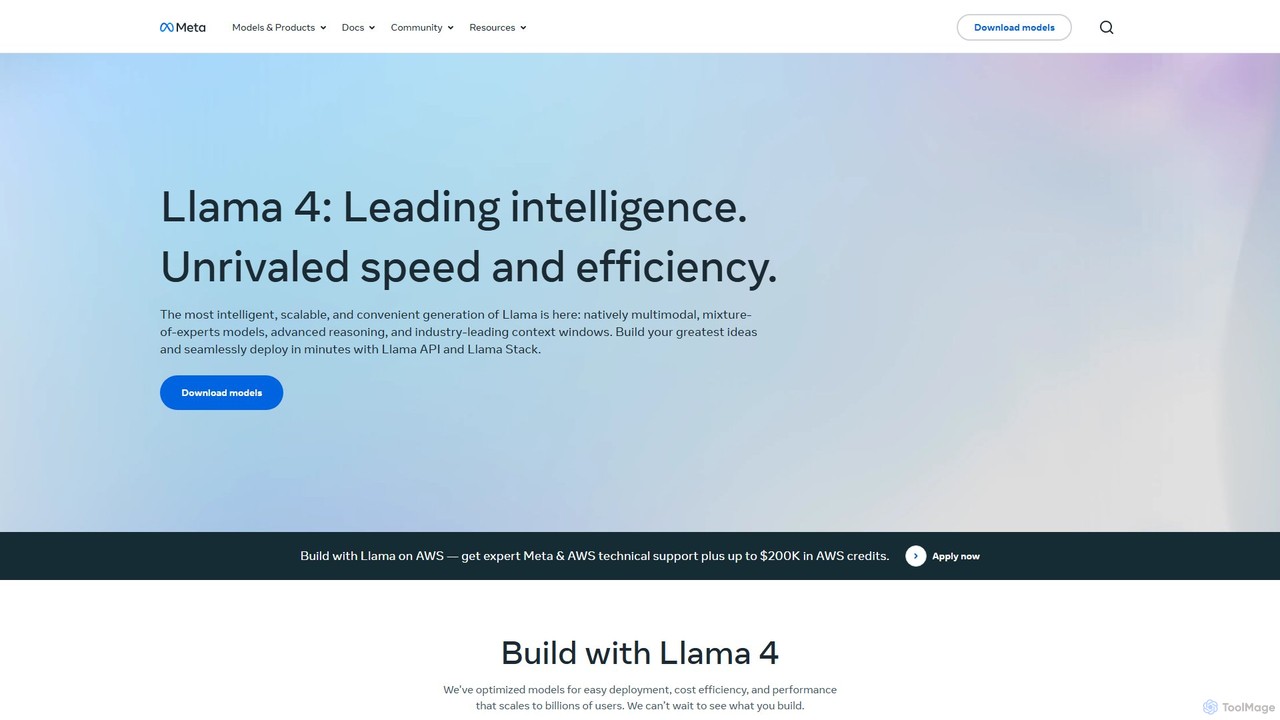
Large Language Models (LLMs) are advanced AI models trained on vast amounts of text data, capable of understanding, generating, and processing human language with remarkable fluency. Leveraging deep learning architectures like Transformers, these models enable developers to build highly intelligent applications. As a core component within developer tools, LLMs empower the creation of sophisticated solutions for content generation, intelligent automation, and complex data analysis.
Core Features
- Natural Language Understanding (NLU): Comprehending user intent, sentiment, and entities from diverse text inputs.
- Text Generation: Producing coherent, contextually relevant human-like text for articles, summaries, and creative content.
- Code Generation & Assistance: Generating code snippets, suggesting improvements, and explaining complex code logic.
- Information Extraction: Accurately identifying and extracting specific data points or facts from unstructured text.
- Summarization: Condensing lengthy documents or conversations into concise, key takeaways.
Applicable Scenarios
Developers integrate LLMs into various applications across industries. For instance, software engineers utilize LLM APIs to build intelligent chatbots for customer service, automating responses and improving user experience. Data scientists employ LLMs to analyze large textual datasets, extracting insights for market research or sentiment analysis. Content platforms leverage LLMs to automate the generation of marketing copy, product descriptions, or news articles, significantly boosting content production efficiency.
How to Choose
When selecting an LLM, developers should consider several key factors. Evaluate the model's performance and size, balancing capability with computational cost and latency requirements. Assess the availability and quality of APIs, SDKs, and documentation for seamless integration into existing development workflows. Consider the model's fine-tuning capabilities, which allow adaptation to specific domain knowledge or tasks. Finally, review the pricing model, data privacy policies, and security measures to ensure alignment with project needs and compliance standards.