magi_1
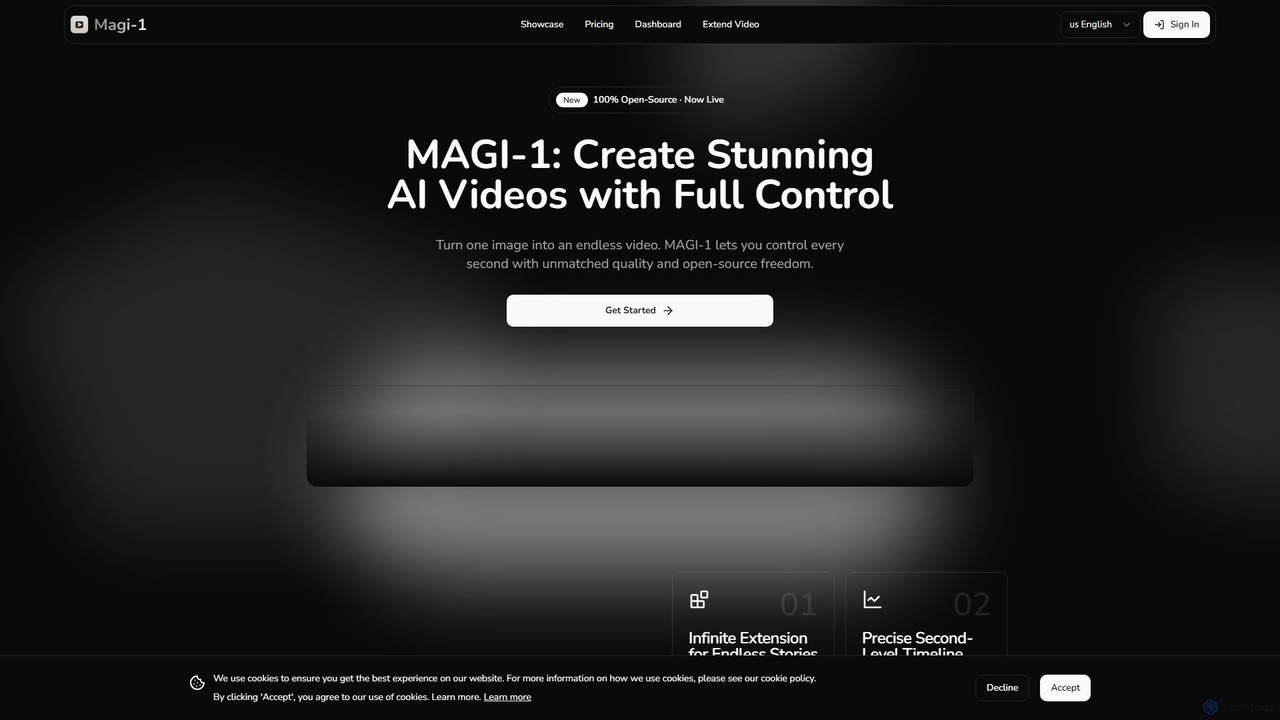
MAGI-1 is a revolutionary open-source autoregressive diffusion model for AI video generation. It empowers users to create stunningly …
MAGI-1 is a revolutionary open-source autoregressive diffusion model for AI video generation. It empowers users to create stunningly realistic, high-resolution videos (up to 1440p QHD) from simple text prompts. Offering advanced features like video extension, detailed parameter control, and real-time streaming support, MAGI-1 is designed for creators, developers, and marketers seeking to push the boundaries of visual content.
Janus Pro AI
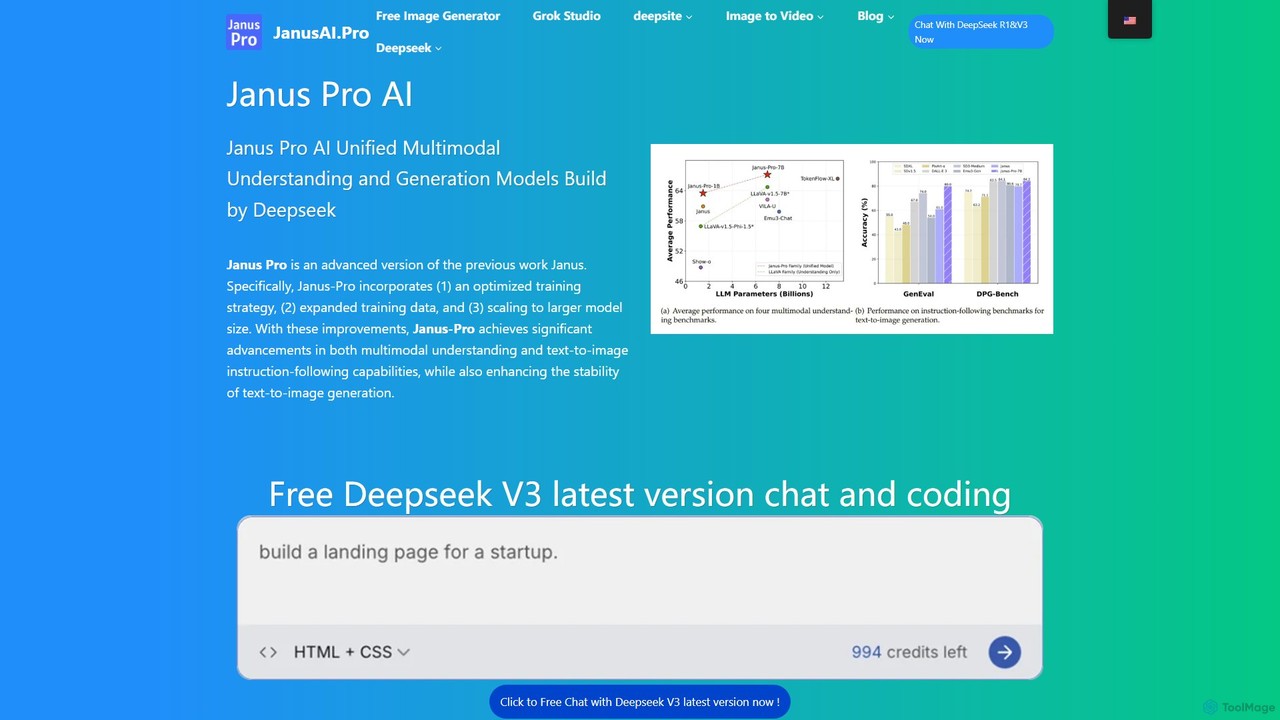
Janus Pro AI is a powerful open-source multimodal model developed by Deepseek. It unifies image understanding and text-to-image …
Janus Pro AI is a powerful open-source multimodal model developed by Deepseek. It unifies image understanding and text-to-image generation within a single framework. Outperforming models like DALL-E 3 in benchmarks, it offers 1B and 7B parameter versions under an MIT license, making it ideal for both research and unrestricted commercial use. It's designed for high performance, flexibility, and cost-effective scalability.
moondream2
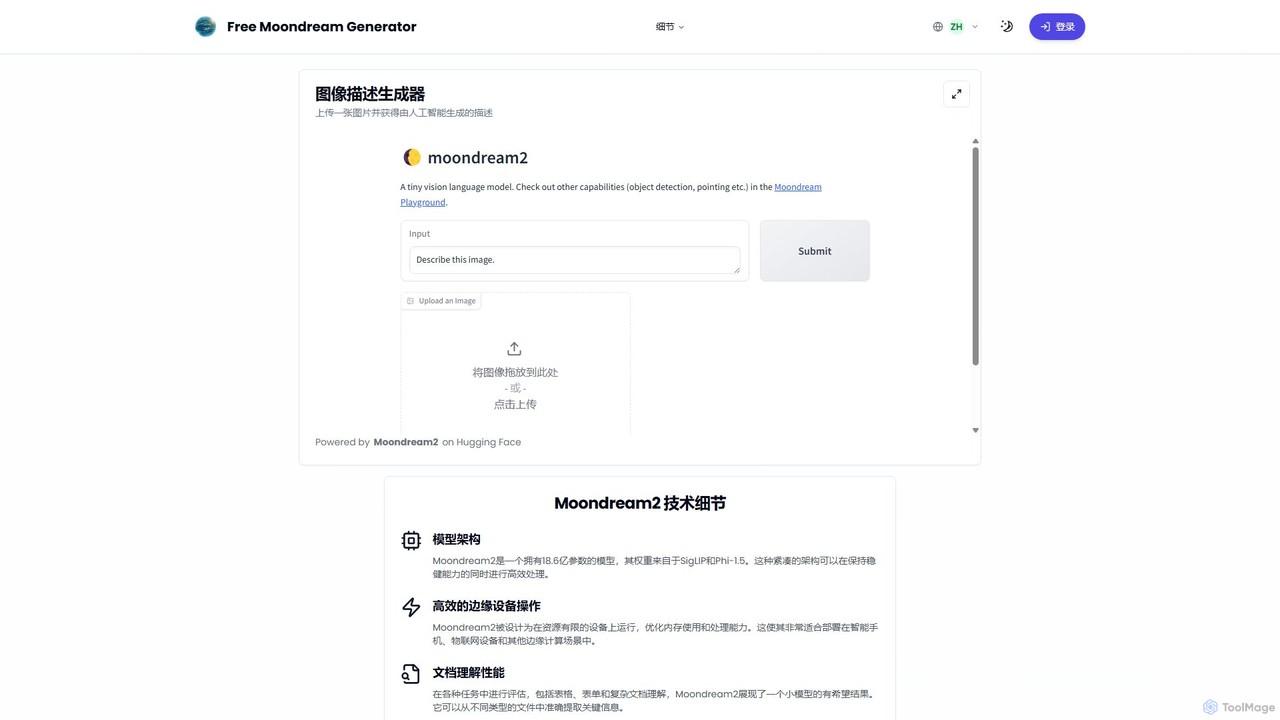
moondream2 is a lightweight, open-source visual language model (VLM) designed for high efficiency on edge devices. It excels …
moondream2 is a lightweight, open-source visual language model (VLM) designed for high efficiency on edge devices. It excels at generating image descriptions, understanding complex documents, and performing visual Q&A, making it ideal for mobile applications and IoT scenarios with limited resources.
About Models
AI Models are pre-trained artificial intelligence systems that developers can integrate into their applications, typically via APIs. These models are built to perform specific tasks like natural language processing, image generation, or code completion, without requiring development from scratch. They serve as powerful, ready-to-use building blocks, enabling the rapid creation of intelligent features and services. By leveraging these models, developers can significantly reduce development time and access state-of-the-art AI capabilities.
Core Features
- API Access: Provides a straightforward way to integrate complex AI functions into any application using standard web requests.
- Pre-trained Expertise: Offers specialized capabilities in various domains (e.g., language, vision, audio) out-of-the-box.
- Fine-Tuning Capability: Allows developers to adapt a general model to specific tasks or industries using their own data.
- Managed Scalability: Hosted by providers who manage the infrastructure, ensuring reliable performance as usage grows.
Use Cases
Primarily used by software developers, data scientists, and technology companies to build AI-powered applications. Examples include creating intelligent chatbots, content automation platforms, data analysis tools, and features for recognizing objects in images.
How to Choose
When selecting an AI Model, consider its specific task suitability (e.g., text vs. image), performance metrics like accuracy and latency, the pricing model (per-token or subscription), the quality of documentation, and the ease of fine-tuning for your specific needs.

ModelsUse Cases
Powering an Intelligent Customer Support Chatbot
A developer for an e-commerce company integrates a large language model (LLM) API to build a customer support chatbot. Instead of relying on rigid scripts, the model allows the chatbot to understand diverse user queries, access order information, and provide helpful, human-like responses 24/7. This reduces the workload on human agents and improves customer satisfaction by providing instant answers to common questions.
Building a SaaS Content Creation Platform
A startup founder uses a generative text model to create a SaaS tool for marketers. Users can input a topic and keywords, and the tool leverages the model's API to generate blog post drafts, social media captions, and ad copy. This enables content teams to overcome writer's block, scale content production, and maintain a consistent publishing schedule with less manual effort.
Implementing Product Recognition in a Retail App
A mobile app developer uses a pre-trained vision model to add a "visual search" feature. Users can take a photo of a product, and the app sends the image to the model's API, which identifies the item and finds similar products in the store's inventory. This enhances the shopping experience and provides a novel way for customers to discover products.
Automating Invoice Data Extraction
An enterprise developer is tasked with streamlining the accounts payable process. They use a specialized document AI model to automatically scan and parse incoming invoices in various formats (PDFs, images). The model accurately extracts key fields like vendor name, invoice number, date, and total amount, feeding the data directly into the accounting system and eliminating hours of manual data entry.
Creating a Custom Code Completion Assistant
A software development team fine-tunes an open-source code generation model on their private codebase and coding standards. They integrate this customized model into their IDE as a plugin. The resulting assistant provides highly relevant code suggestions and autocompletions that align with the team's existing architecture, accelerating development and reducing common errors.
Developing a Voice-Controlled Smart Home Hub
An IoT developer combines a speech-to-text model and a natural language understanding (NLU) model to create a voice interface for a smart home device. The speech-to-text model transcribes spoken commands, and the NLU model interprets the user's intent (e.g., "turn down the living room lights"). This provides a hands-free, intuitive way for users to interact with their connected devices.