
Developer Tools Best in category 1 results Plugin Marketplace AI Tool

Popular AI tools in the Plugin Marketplace field of Developer Tools include JetBrains Marketplace, etc., helping you quickly improve efficiency.

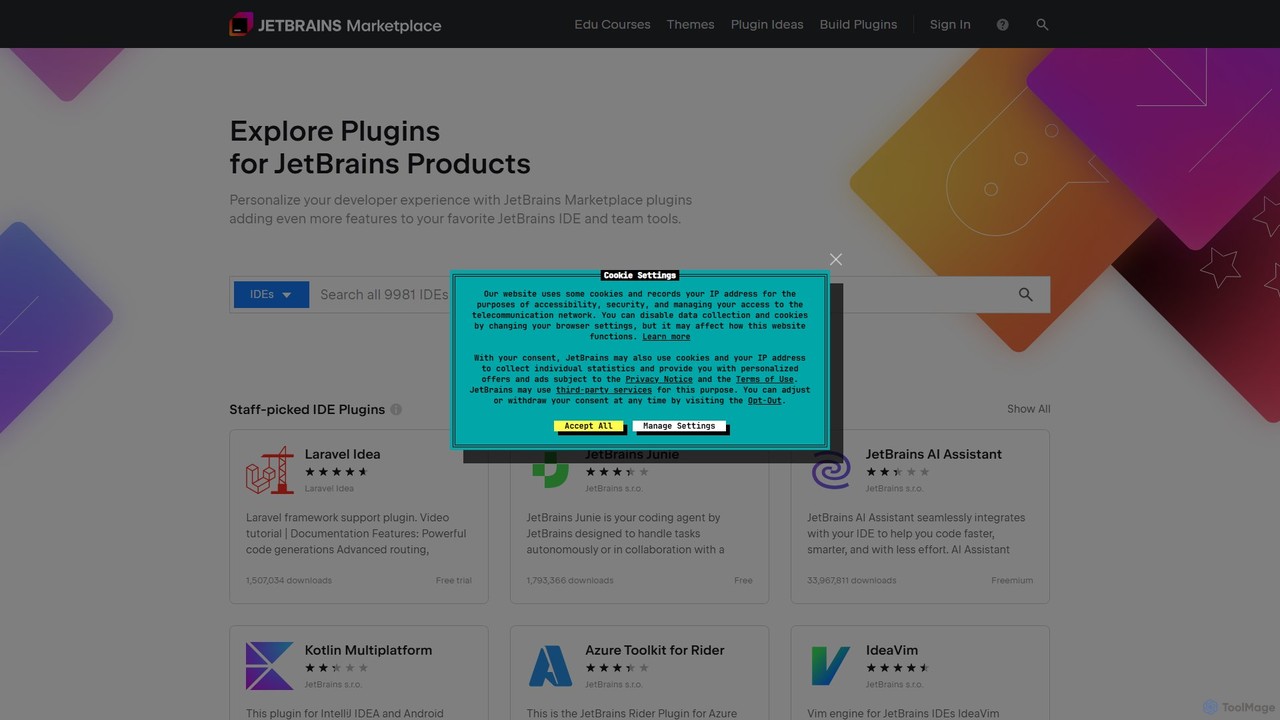
JetBrains Marketplace

JetBrains Marketplace

The official hub for plugins and extensions for all JetBrains IDEs. Discover thousands of tools, including AI-powered coding …

1.2M

About Plugin Marketplace

A Plugin Marketplace is a centralized platform for discovering, distributing, and managing extensions or add-ons for a primary software application. It functions as a digital hub, connecting developers who create plugins with users seeking to extend the software's capabilities. This model fosters a rich ecosystem, enabling rapid feature expansion without altering the core product. As a key category within Developer Tools, these marketplaces focus specifically on software extensibility and community-driven innovation.

Core Features

  • Centralized Discovery: A searchable and categorized catalog for easily finding plugins.
  • Lifecycle Management: Tools for simple installation, updates, and removal of add-ons.
  • Developer SDKs & APIs: Resources that enable third-party developers to build and submit compatible plugins.
  • Community Ratings & Reviews: User feedback systems to help assess plugin quality and reliability.
  • Monetization & Distribution: Secure infrastructure for developers to sell plugins and for users to purchase them.

Applicable Scenarios

These platforms are essential for SaaS companies, Content Management Systems (like WordPress), and Integrated Development Environments (like VS Code) aiming to build a vibrant developer ecosystem. End-users leverage them to customize software for specific workflows, while independent developers use them as a primary channel to distribute and monetize their creations.

Selection Criteria

When selecting or building a plugin marketplace, evaluate the quality of developer documentation and SDKs, the robustness of the plugin review and security vetting process, the flexibility of monetization models (e.g., commission rates, subscription options), and the overall user experience for both plugin creators and consumers.

Plugin MarketplaceUse Cases

1

Enhancing AI Assistant Capabilities

A user of an advanced AI chatbot wants to connect it to real-time data sources. They browse the model's built-in plugin marketplace to find and install plugins for web search, flight booking, and stock market analysis. This allows them to ask complex, up-to-the-minute questions directly within the chat interface, transforming the general-purpose AI into a specialized personal assistant without any coding.

2

Customizing a Software Development Environment

A software developer aims to streamline their coding workflow in their Integrated Development Environment (IDE). They access the IDE's marketplace (e.g., VS Code Marketplace) to find and install extensions for code linting, syntax highlighting for a new language, and Git integration. This personalizes their environment, automates repetitive tasks, and reduces errors, directly increasing their productivity.

3

Building a SaaS Product Ecosystem

A product manager at a SaaS company wants to accelerate feature development. Instead of building every requested integration in-house, the company launches a plugin marketplace. They provide APIs and an SDK for third-party developers to build and sell add-ons. This strategy enriches the core product with specialized functionalities like accounting software syncs, attracting a wider user base.

4

Monetizing Niche Design Tools

An independent UI/UX designer develops a unique tool to automate accessibility checks within a popular design application like Figma. To reach a large, relevant audience, they package the tool as a plugin and publish it on the application's official community marketplace. They set a price for the plugin, leveraging the platform's payment processing and distribution network to generate a new revenue stream from their expertise.

5

Standardizing Enterprise Software Extensions

An IT administrator in a large corporation needs to ensure that employees only use secure and approved add-ons for their project management software (e.g., Jira). They utilize the enterprise version of the Atlassian Marketplace to create a curated collection of vetted plugins. This allows teams to customize their workflows while maintaining compliance with company security policies and preventing the installation of unauthorized extensions.

6

Expanding E-commerce Store Functionality

An online store owner using a platform like Shopify or WooCommerce wants to add new features such as customer loyalty programs or advanced shipping options. They browse the platform's plugin marketplace (or app store) to find, compare, and install pre-built solutions. This enables them to enhance their store's capabilities quickly and affordably, without needing to hire a developer for custom coding.

Plugin MarketplaceFrequently Asked Questions