Developer Tools Best in category 1 results Reporting AI Tool

Popular AI tools in the Reporting field of Developer Tools include Pentra, etc., helping you quickly improve efficiency.

Pentra

Pentra

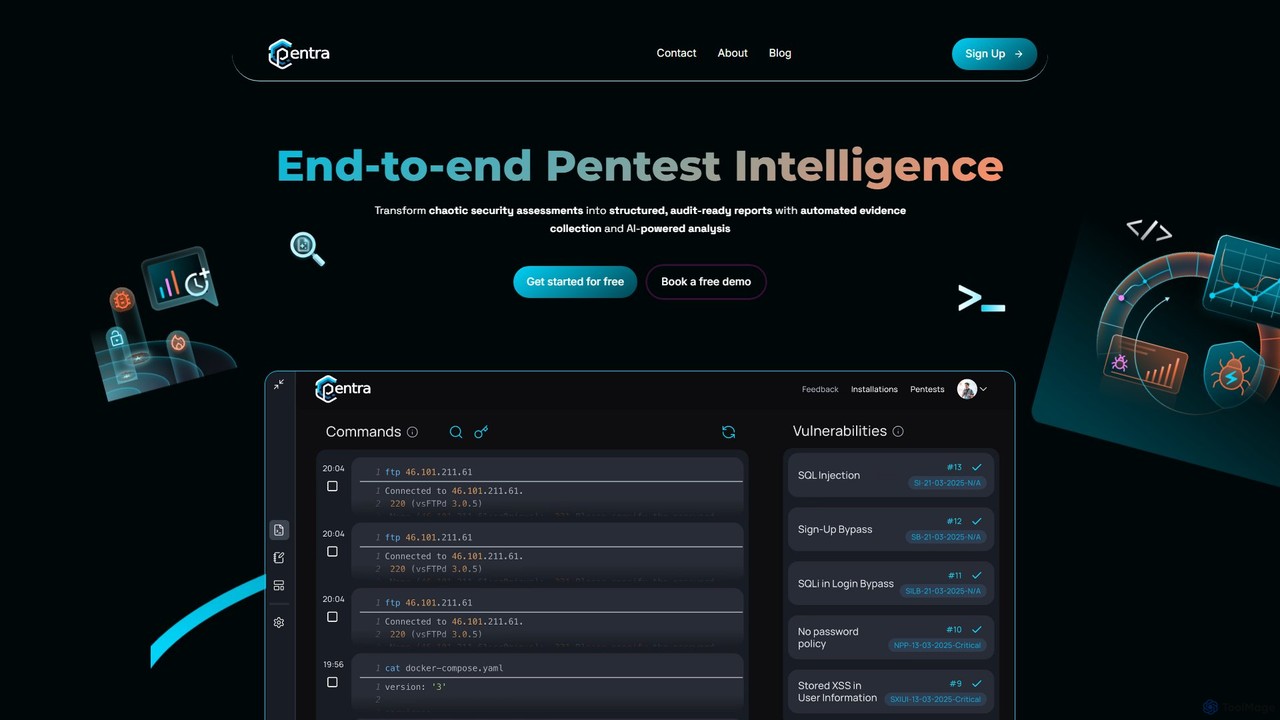
Pentra is an AI-powered platform designed for penetration testers to streamline their workflow. It automatically logs CLI commands, …

2.3K

About Reporting

Reporting tools are AI-powered solutions designed to automate the collection, analysis, and visualization of data, transforming raw information into actionable insights. These tools leverage machine learning to identify trends, anomalies, and patterns within complex datasets, often integrating seamlessly with various data sources relevant to development and operations. They enable developers, project managers, and IT professionals to monitor performance, track key metrics, and make data-driven decisions more efficiently, freeing up valuable time for core development tasks.

Core Features

  • Automated Data Collection: Automatically gathers data from diverse sources like APIs, databases, logs, and version control systems.
  • Intelligent Data Analysis: Uses AI to process, clean, and identify significant patterns, anomalies, and correlations in complex data.
  • Customizable Dashboards: Allows users to create personalized, interactive visualizations of key performance indicators and operational metrics.
  • Predictive Analytics: Forecasts future trends, potential issues, and resource needs based on historical data and machine learning models.
  • Automated Report Generation: Generates scheduled or on-demand reports in various formats, summarizing critical insights and performance metrics.

Applicable Scenarios

These tools are indispensable for roles within software development and IT operations. Developers use them for monitoring code quality and deployment metrics, while DevOps engineers track API performance and system health. Project managers leverage them to assess project progress and team productivity, ensuring data-driven decision-making across the entire development lifecycle.

How to Choose

When selecting an AI reporting tool, consider its data source integration capabilities with your existing development ecosystem (e.g., Git, Jira, cloud platforms). Evaluate the level of customization offered for dashboards and reports, ensuring it meets your specific analytical needs. Assess its scalability to handle growing data volumes and its performance in generating real-time insights. Finally, prioritize tools with robust security features and compliance certifications to protect sensitive operational data.

ReportingUse Cases

1

Automating Software Project Health Reports

Project Managers and Development Leads regularly need to assess the health of multiple software projects. AI reporting tools integrate with version control (Git), issue trackers (Jira), and CI/CD pipelines to automatically collect data on code commits, bug resolution times, build failures, and sprint velocity. This generates comprehensive, real-time project health dashboards and weekly reports, saving hours of manual data aggregation and analysis, enabling proactive risk management and informed decision-making.

2

Monitoring API Performance and Usage

API Developers and DevOps Engineers need to track the performance, reliability, and adoption of APIs. AI reporting solutions ingest API gateway logs and metrics, using machine learning to detect anomalies in response times, error rates, and traffic patterns. This provides automated alerts for performance degradation and generates detailed usage reports, helping optimize API infrastructure, identify popular endpoints, and ensure service health without constant manual oversight.

3

Generating Infrastructure Cost Optimization Reports

Cloud Architects and FinOps Teams need to analyze cloud spending across various services and projects to identify cost-saving opportunities. AI reporting tools integrate with cloud provider APIs (AWS, Azure, GCP) to collect billing data, resource utilization, and service configurations. AI algorithms identify underutilized resources, inefficient spending patterns, and suggest optimization strategies. This delivers actionable reports on cost allocation, potential savings, and budget adherence, improving financial governance and resource efficiency.

4

Real-time Application Error and Log Analysis

SREs (Site Reliability Engineers) and Support Teams need to quickly identify and diagnose issues in production applications. AI reporting tools process vast streams of application logs and error messages, using natural language processing and pattern recognition to cluster similar errors, pinpoint root causes, and prioritize critical issues. This provides real-time dashboards of error trends, automated incident reports, and insights into recurring problems, significantly reducing mean time to resolution (MTTR).

5

Developer Productivity and Workflow Insights

Engineering Managers and Team Leads need to understand team productivity, identify bottlenecks, and optimize development workflows. AI reporting tools integrate with development tools to analyze code review cycles, pull request merge times, task completion rates, and collaboration patterns. AI identifies areas for process improvement without micro-managing individuals. This generates aggregated reports on team velocity, code quality metrics, and workflow efficiency, fostering continuous improvement and better resource allocation.

6

Security Incident Reporting and Compliance Audits

Security Analysts and Compliance Officers need to monitor security events, detect threats, and generate reports for compliance audits. AI reporting tools aggregate security logs from various systems (firewalls, intrusion detection systems, identity providers). Machine learning models detect suspicious activities and potential breaches. This produces automated security incident reports, compliance audit trails, and dashboards showing security posture, streamlining threat response and regulatory adherence, ensuring robust security without extensive manual effort.

ReportingFrequently Asked Questions