Primary
Primary is the world's first personal Super Intelligence platform, designed to learn, adapt, and evolve with you while …
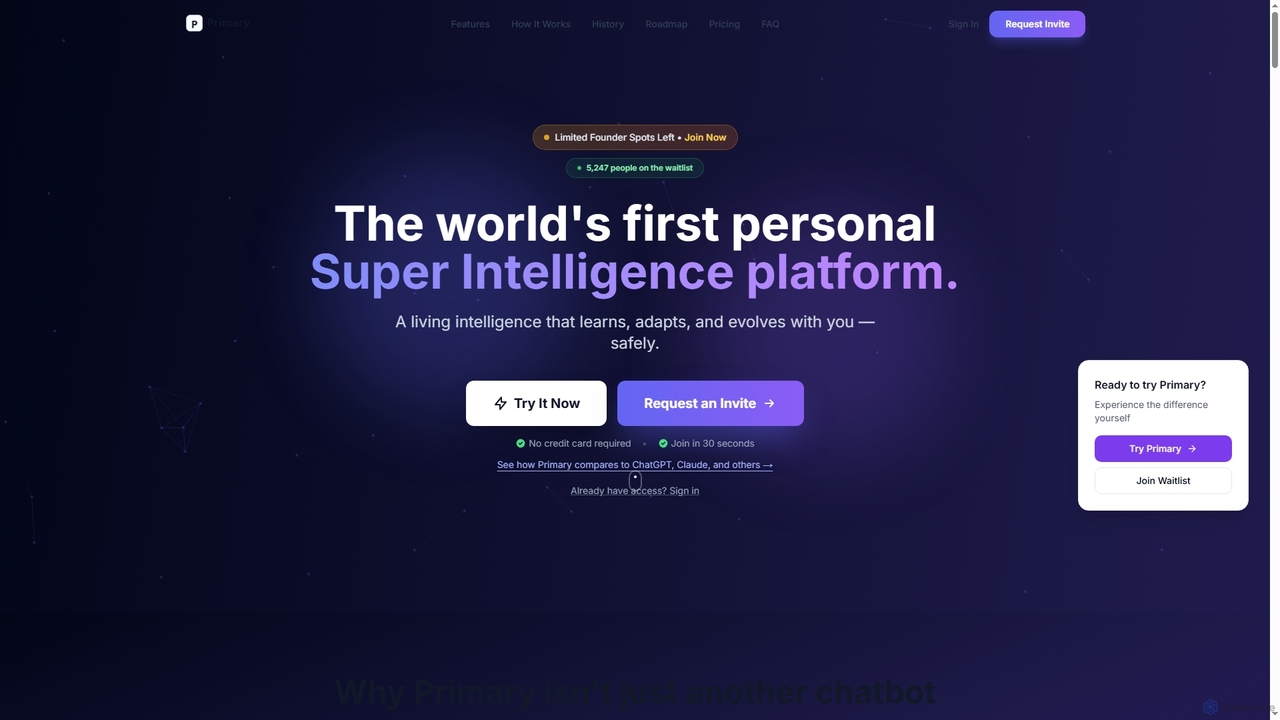
Primary is the world's first personal Super Intelligence platform, designed to learn, adapt, and evolve with you while prioritizing privacy. It automates repetitive tasks, manages complex workflows, and provides deep personalization to save users over 10 hours per week, acting as a symbiotic AI companion.
Lumlax
Lumlax is an AI-enhanced SSH application designed for effortless server management. It acts as a personal DevOps assistant, …
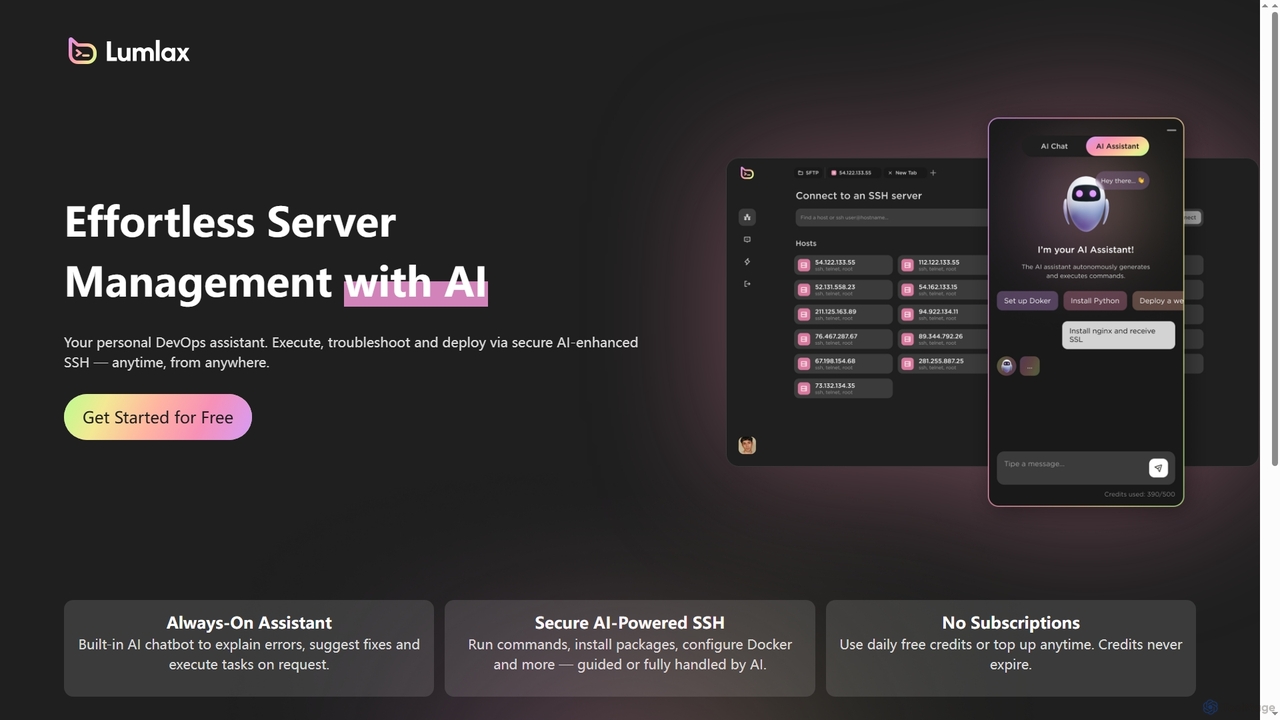
Lumlax is an AI-enhanced SSH application designed for effortless server management. It acts as a personal DevOps assistant, enabling developers to execute commands, troubleshoot issues, and deploy applications securely from anywhere. With its built-in AI chatbot, Lumlax explains errors, suggests fixes, and automates tasks, streamlining operations and boosting productivity.
About Server Management
Server Management tools leverage artificial intelligence to automate, optimize, and secure server infrastructure. These AI-powered solutions utilize machine learning algorithms to analyze vast amounts of operational data, predict potential issues, and proactively manage server resources. They enhance system stability, reduce manual intervention, and improve overall operational efficiency for complex IT environments, making them a crucial part of modern developer toolkits.
Core Features
- Predictive Analytics: Anticipates resource needs and potential failures by analyzing historical data and usage patterns.
- Automated Incident Response: Automatically detects and remediates common server issues, reducing downtime and alert fatigue.
- Resource Optimization: Intelligently allocates and scales server resources based on real-time demand and performance metrics.
- Anomaly Detection: Identifies unusual patterns in server behavior that may indicate security threats or performance bottlenecks.
- Intelligent Log Analysis: Processes and correlates log data from various sources to pinpoint root causes of problems faster.
Applicable Scenarios
DevOps teams and IT operations professionals in cloud-native environments frequently use AI Server Management tools to maintain high availability and performance. They are crucial for managing large-scale microservices architectures, ensuring optimal resource utilization in dynamic cloud infrastructures, and automating routine maintenance tasks across diverse server fleets.
How to Choose
When selecting an AI Server Management tool, consider its integration capabilities with your existing cloud providers and monitoring stack, the accuracy and explainability of its AI models, and its scalability to handle your infrastructure's growth. Evaluate its security features, cost-effectiveness, and the level of automation it provides for incident management and resource allocation.
Server ManagementUse Cases
Predictive Resource Scaling for E-commerce Platforms
An e-commerce platform's DevOps team uses AI Server Management to automatically scale server resources up or down based on predicted traffic spikes during sales events or seasonal peaks. The AI analyzes past traffic data, marketing campaigns, and external factors to forecast demand, ensuring optimal performance and preventing costly over-provisioning or under-provisioning of servers.
Automated Anomaly Detection in Financial Services Infrastructure
IT operations in a financial institution deploy AI Server Management to continuously monitor server behavior for anomalies. The AI learns normal operational patterns and immediately flags unusual activities, such as sudden CPU spikes outside peak hours or unexpected network egress, which could indicate a security breach or a critical system malfunction, triggering automated alerts and remediation.
Intelligent Log Analysis for Troubleshooting Microservices
A software development team managing a complex microservices architecture utilizes AI-driven log analysis to quickly diagnose and resolve application issues. The AI ingests logs from hundreds of services, correlates events across different components, and identifies the root cause of errors or performance degradation, significantly reducing mean time to resolution (MTTR).
Proactive Security Threat Identification in Cloud Environments
Cloud security engineers leverage AI Server Management to identify potential security threats before they escalate. The AI monitors server access patterns, configuration changes, and network flows, detecting deviations from baseline security policies or known attack signatures, enabling proactive isolation of compromised servers and preventing data breaches.
Cost Optimization for Multi-Cloud Deployments
An enterprise with workloads spread across multiple cloud providers employs AI Server Management to optimize infrastructure costs. The AI analyzes resource utilization, pricing models, and workload patterns across different clouds, recommending or automatically implementing adjustments like rightsizing instances, scheduling non-critical workloads, or identifying idle resources to minimize expenditure.
Automated Patch Management and Configuration Drift Detection
IT administrators in a large organization use AI Server Management to automate patch deployment and detect configuration drift across their server fleet. The AI identifies servers requiring updates, schedules patches during low-impact windows, and continuously monitors configurations against a desired state, automatically flagging or reverting unauthorized changes to maintain compliance and security.