
Developer Tools Best in category 1 results Speech Processing AI Tool

Popular AI tools in the Speech Processing field of Developer Tools include Speech Studio, etc., helping you quickly improve efficiency.

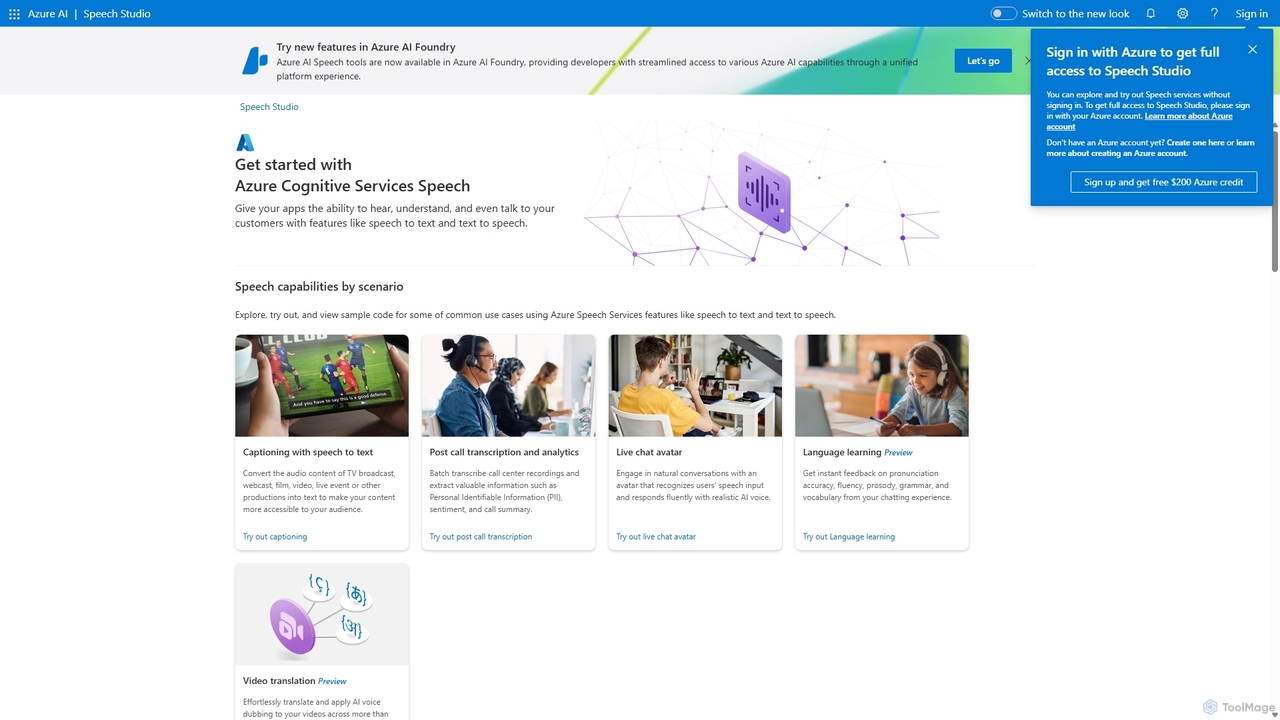
Speech Studio

Speech Studio

Speech Studio is a comprehensive suite of AI-powered tools from Microsoft Azure that enables developers to build applications …

154.2K

About Speech Processing

Speech Processing tools are a category of AI-powered solutions designed to analyze, synthesize, and manipulate human speech. As a vital component within developer tools, they leverage advanced machine learning models to convert spoken language into text (ASR) or generate natural-sounding speech from text (TTS). These capabilities enable developers to build highly interactive and accessible applications, enhancing user experience across various digital platforms.

Core Features

  • Automatic Speech Recognition (ASR): Converts spoken audio into written text, supporting multiple languages and accents.
  • Text-to-Speech (TTS) Synthesis: Generates natural-sounding human speech from written text, with customizable voices and emotional nuances.
  • Speaker Diarization: Identifies and separates different speakers in an audio recording, attributing speech segments to specific individuals.
  • Voice Biometrics: Authenticates users based on their unique voice characteristics, enhancing security for applications.
  • Emotion Detection: Analyzes vocal cues to identify and interpret emotional states in spoken language.

Applicable Scenarios

Developers integrate speech processing tools into customer service platforms for voice bots and call transcription, create accessible applications for visually impaired users via screen readers, or build interactive voice assistants for smart devices. They are also crucial for transcribing meetings, generating audio content, and enabling voice commands in gaming or IoT.

How to Choose

When selecting speech processing tools, consider the accuracy and latency of ASR/TTS for your target language and accent, the range of available voices and customization options, and the ease of integration via APIs or SDKs. Evaluate pricing models based on usage volume and ensure robust security features for sensitive voice data.

Speech ProcessingUse Cases

1

Building Voice Assistants for Smart Devices

Developers use speech processing APIs to enable voice commands and natural language understanding in smart home devices or IoT applications. Users can control devices, ask questions, and receive spoken responses, creating a hands-free, intuitive interaction experience. This enhances accessibility and convenience for daily tasks.

2

Automating Call Center Transcriptions and Analysis

Customer service teams deploy ASR tools to automatically transcribe incoming and outgoing calls in real-time. This allows for instant keyword spotting, sentiment analysis, and agent performance monitoring, improving service quality, reducing manual documentation, and providing valuable insights for training and compliance.

3

Creating Accessible Content with Text-to-Speech

Content creators and publishers utilize TTS engines to convert articles, e-books, and web content into audio formats. This makes information accessible to visually impaired individuals, enhances learning for auditory learners, and allows users to consume content on the go, broadening audience reach and engagement.

4

Developing Multilingual Meeting Transcription Services

Businesses integrate speech processing tools to offer real-time transcription and translation services for international meetings. Participants can speak in their native language, and the tool transcribes and translates the speech, facilitating seamless communication and accurate record-keeping across diverse teams.

5

Implementing Voice Biometric Authentication

Financial institutions or secure applications use voice biometrics to verify user identity. Instead of passwords, users speak a phrase, and the system authenticates them based on unique voice patterns. This adds an extra layer of security, reduces fraud, and offers a more convenient authentication method.

6

Generating Dynamic Audio for Gaming and Entertainment

Game developers and media producers employ TTS tools to generate dynamic dialogue for non-player characters (NPCs) or personalized audio narratives. This allows for on-the-fly content creation, reduces voice acting costs, and provides a more immersive and interactive experience for players or listeners.

Speech ProcessingFrequently Asked Questions