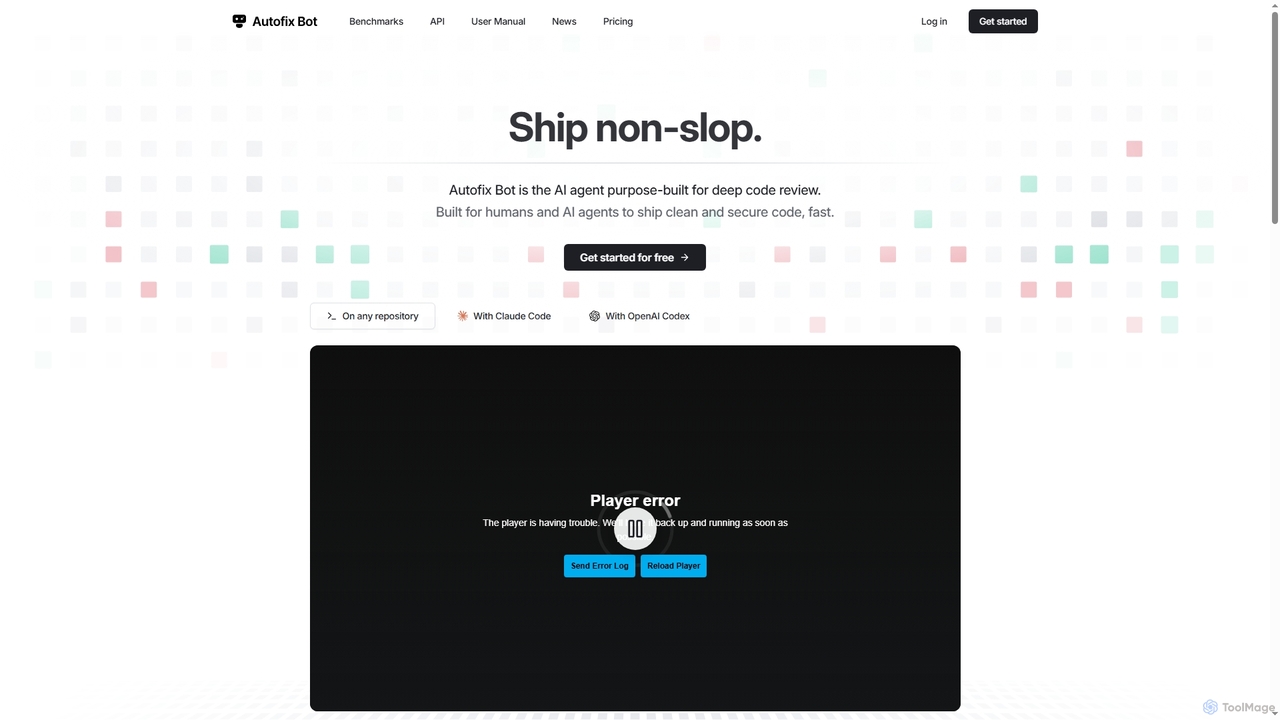
Autofix
Autofix is an AI agent purpose-built for deep code review, identifying security vulnerabilities, hardcoded secrets, and code quality …
Autofix is an AI agent purpose-built for deep code review, identifying security vulnerabilities, hardcoded secrets, and code quality issues. It generates verified patches to help development teams ship clean and secure code faster.
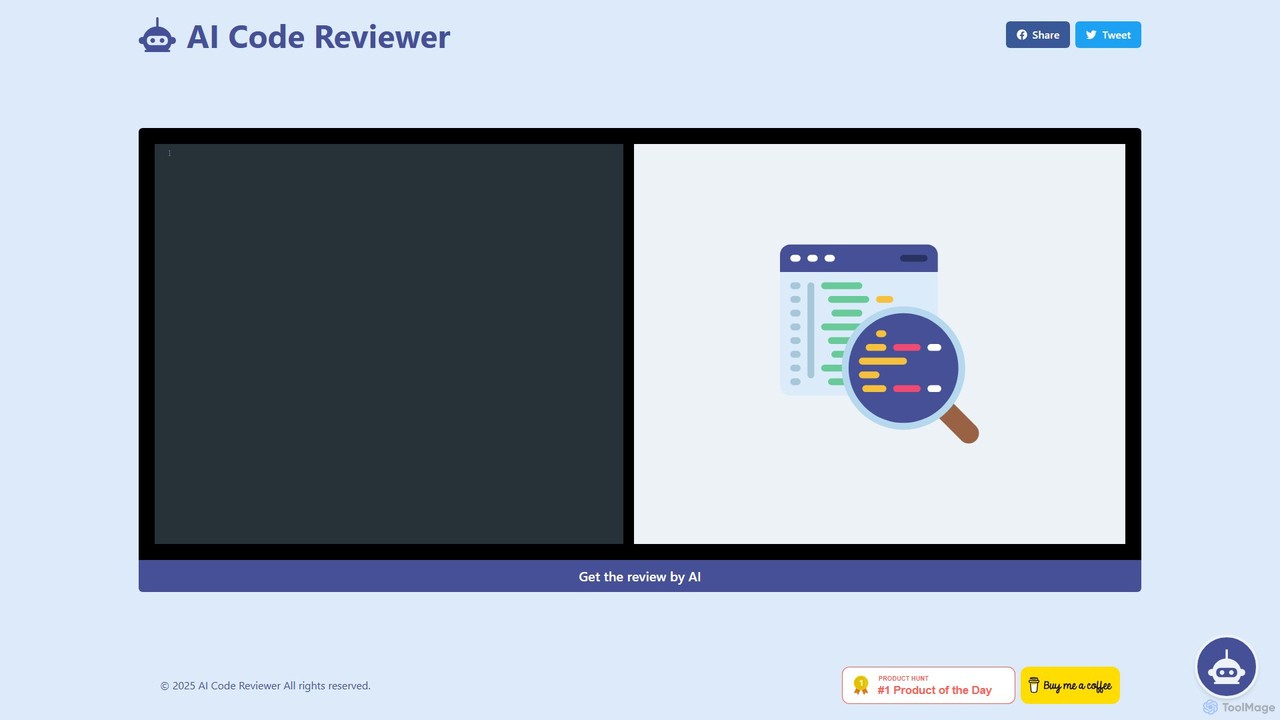
AI Code Reviewer
AI Code Reviewer is an automated tool that uses artificial intelligence to analyze your code. It integrates with …
AI Code Reviewer is an automated tool that uses artificial intelligence to analyze your code. It integrates with your development workflow, like GitHub, to automatically review pull requests. The tool identifies bugs, security vulnerabilities, and style issues, providing instant, actionable feedback to help developers improve code quality and accelerate the development cycle.
About Static Analysis
Static Analysis tools are a class of developer tools that analyze source code, bytecode, or binary code for errors without executing it. AI enhances this process by leveraging machine learning models to identify complex vulnerabilities, subtle bugs, and code quality issues that traditional rule-based scanners often miss. This proactive approach allows developers to find and fix potential problems early in the development lifecycle, significantly improving software security and maintainability. AI-powered analysis also excels at reducing false positives, ensuring that developers focus on genuine issues.
Core Features
- AI-Powered Vulnerability Detection: Identifies complex security flaws, such as injection attacks and data leaks, by understanding code context and data flow.
- Intelligent Code Quality Analysis: Detects 'code smells', anti-patterns, and maintainability issues based on best practices learned from vast codebases.
- Automated Remediation Suggestions: Provides context-aware recommendations and sometimes even generates code snippets to fix identified issues.
- False Positive Reduction: Uses machine learning to differentiate between real threats and benign code patterns, increasing the accuracy of reports.
- Predictive Bug Analysis: Analyzes code history and complexity to forecast areas most likely to contain future defects.
Use Cases
These tools are integral to modern DevSecOps practices and are widely used within CI/CD pipelines for automated security gating. Developers use them directly in their IDEs for real-time feedback, while security teams employ them for comprehensive application security audits and compliance checks (e.g., for OWASP Top 10, CWE).
How to Choose
When selecting a Static Analysis tool, consider its language and framework support to ensure it covers your tech stack. Evaluate its integration capabilities with your existing CI/CD pipeline, repositories, and IDEs. Assess the accuracy and the false positive rate, as high noise levels can reduce developer adoption. Finally, examine the quality of the remediation guidance provided to ensure it is actionable for your team.
Static AnalysisUse Cases
Automating Security Audits in CI/CD Pipelines
A DevOps engineer integrates an AI static analysis tool into their GitHub Actions workflow. For every pull request, the tool automatically scans the new code for potential security vulnerabilities like SQL injection, cross-site scripting (XSS), and insecure deserialization. By understanding the data flow, the AI can detect complex vulnerabilities that might be missed by simple pattern matching. This 'shift-left' approach ensures that security issues are identified and fixed before code is merged into the main branch, preventing vulnerabilities from ever reaching production environments and strengthening the overall security posture.
Improving Code Maintainability of Legacy Systems
A software architect is tasked with modernizing a large, legacy codebase. They use an AI static analysis tool to perform a deep scan of the entire system. The tool identifies complex anti-patterns, areas with high cyclomatic complexity, and 'code smells' that indicate poor design choices. Unlike traditional tools, the AI provides a prioritized list of refactoring recommendations based on the predicted impact on maintainability and bug proneness. This allows the development team to focus their efforts on the most critical areas, systematically reducing technical debt and making the legacy system easier to understand, modify, and extend for future development.
Enforcing Coding Standards Across a Development Team
A tech lead wants to ensure consistent code quality and adherence to best practices across their team. They configure the AI static analysis tool with the team's specific coding standards and integrate it into each developer's IDE. As developers write code, the tool provides real-time, non-intrusive feedback, flagging deviations from standards, potential performance issues, and overly complex logic. This acts as an automated, impartial code reviewer, helping junior developers learn best practices organically and freeing up senior developers' time from mundane review tasks to focus on more complex architectural decisions.
Early Bug Detection During Local Development
A junior developer is working on a new feature. They have the AI static analysis tool installed as a plugin in their VS Code IDE. As they type, the tool analyzes the code in the background. It immediately highlights a potential null pointer exception by tracing the path of a variable that was not properly initialized. It also flags a resource leak where a file stream is opened but not closed in all execution paths. This instant feedback loop allows the developer to fix these common but critical bugs on the spot, long before the code is even committed, improving code quality from the very beginning and reducing the number of bugs found later in QA or production.
Ensuring Compliance for Regulated Industries
A security officer at a fintech company needs to ensure their applications comply with the PCI DSS standard. They configure their AI static analysis tool to scan for specific vulnerability classes mandated by the regulation, such as improper handling of sensitive data and cryptographic failures. The tool runs automatically on their entire codebase, generating a detailed compliance report. This report not only lists all potential violations but also provides evidence of secure coding practices. This automated process simplifies audit preparation, provides continuous compliance monitoring, and helps the company avoid hefty fines and reputational damage associated with non-compliance.
Proactively Optimizing Code Performance
A performance engineer is tasked with improving the latency of a critical microservice. Instead of relying solely on runtime profiling, they use an AI static analysis tool to inspect the code. The tool's AI model, trained on performance best practices, identifies inefficient algorithms, unnecessary object allocations, and suboptimal data structure usage that could lead to performance bottlenecks under load. It provides specific, actionable suggestions, such as replacing a linear search with a hash map lookup. By addressing these issues before deployment, the team proactively improves performance and reduces the need for costly, time-consuming performance tuning in a production environment.