NeuralWriter
NeuralWriter is a free, versatile AI-powered suite of tools for content creation and processing. It offers a powerful …
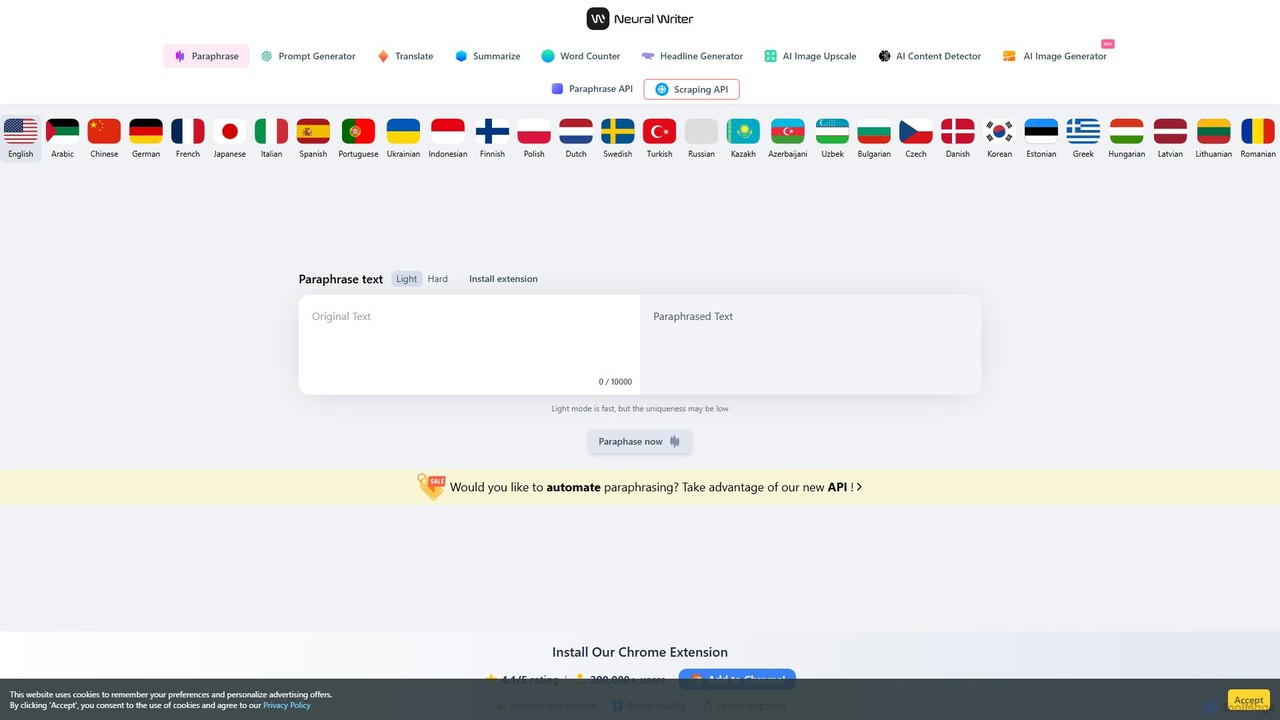
NeuralWriter is a free, versatile AI-powered suite of tools for content creation and processing. It offers a powerful paraphraser, text summarizer, multilingual translator, and a ChatGPT prompt generator. With no registration required and support for over 30 languages, it helps users create unique, human-like content, avoid plagiarism, and streamline their writing workflow.
About Translation
AI Translation tools are specialized developer tools that leverage artificial intelligence to automate and streamline the process of converting text or speech from one language to another. These tools utilize advanced neural machine translation (NMT) models, deep learning, and natural language processing (NLP) to deliver highly accurate and contextually relevant translations. For developers, they provide robust APIs and SDKs to integrate multilingual capabilities directly into applications, platforms, and data pipelines, enabling global reach and enhanced user experiences. They are crucial for localizing software, managing international content, and processing vast amounts of multilingual data efficiently.
Core Features
- Neural Machine Translation (NMT) APIs: Provide programmatic access to advanced AI translation engines for real-time or batch processing.
- Customizable Glossaries & Terminology: Allow developers to upload specific domain-specific terms and brand-specific vocabulary to ensure consistent translations.
- Language Detection: Automatically identify the source language of input text, simplifying multilingual content handling.
- Batch Translation: Efficiently process large volumes of text or files, ideal for localizing entire applications or datasets.
- Integration SDKs: Offer software development kits for easy integration into various programming languages and platforms.
Use Cases
Developers integrate these tools to build multilingual applications, localize software interfaces, translate user-generated content, and process international customer support queries. They are also used for data localization in machine learning models and for creating global communication platforms.
How to Choose
When selecting an AI translation tool, consider the accuracy and fluency of its NMT models for your target languages, the availability and ease of use of its APIs/SDKs, the flexibility for custom terminology and model training, and the scalability to handle your expected translation volume. Evaluate pricing models, security features, and integration with existing development workflows.

TranslationUse Cases
Localizing Software Applications
A software development team uses AI translation APIs to automatically translate all UI strings, error messages, and documentation within their application into multiple target languages, ensuring a seamless global user experience and reducing manual localization efforts by up to 70%.
Automating Multilingual Content Management
A content platform developer integrates AI translation to automatically translate user-generated content, such as comments, reviews, or forum posts, into the user's preferred language, fostering cross-cultural interaction and increasing content accessibility for a global audience.
Building Real-time Chat Translation
A communication app developer embeds AI translation SDKs to enable real-time, bidirectional translation of chat messages between users speaking different languages, breaking down communication barriers and fostering seamless global conversations within the application.
Processing Multilingual Customer Support Tickets
An enterprise developer connects AI translation services to their customer support system, automatically translating incoming support tickets from various languages into the agent's native language and vice-versa for replies, speeding up resolution times and improving customer satisfaction globally.
Translating Large Datasets for AI Training
A data scientist uses AI translation tools to translate vast amounts of text data from one language to another, creating parallel corpora for training new machine learning models or expanding existing ones to new linguistic domains, significantly accelerating global AI model development.
Integrating Translation into CI/CD Pipelines
A DevOps engineer incorporates AI translation into their continuous integration/continuous deployment (CI/CD) pipeline to automatically translate new feature descriptions, release notes, and marketing copy as part of the deployment process for global releases, ensuring all localized content is up-to-date.