Developer Best in category 2 results Web Development AI Tool

Popular AI tools in the Web Development field of Developer include Huemint、Connectwell, etc., helping you quickly improve efficiency.

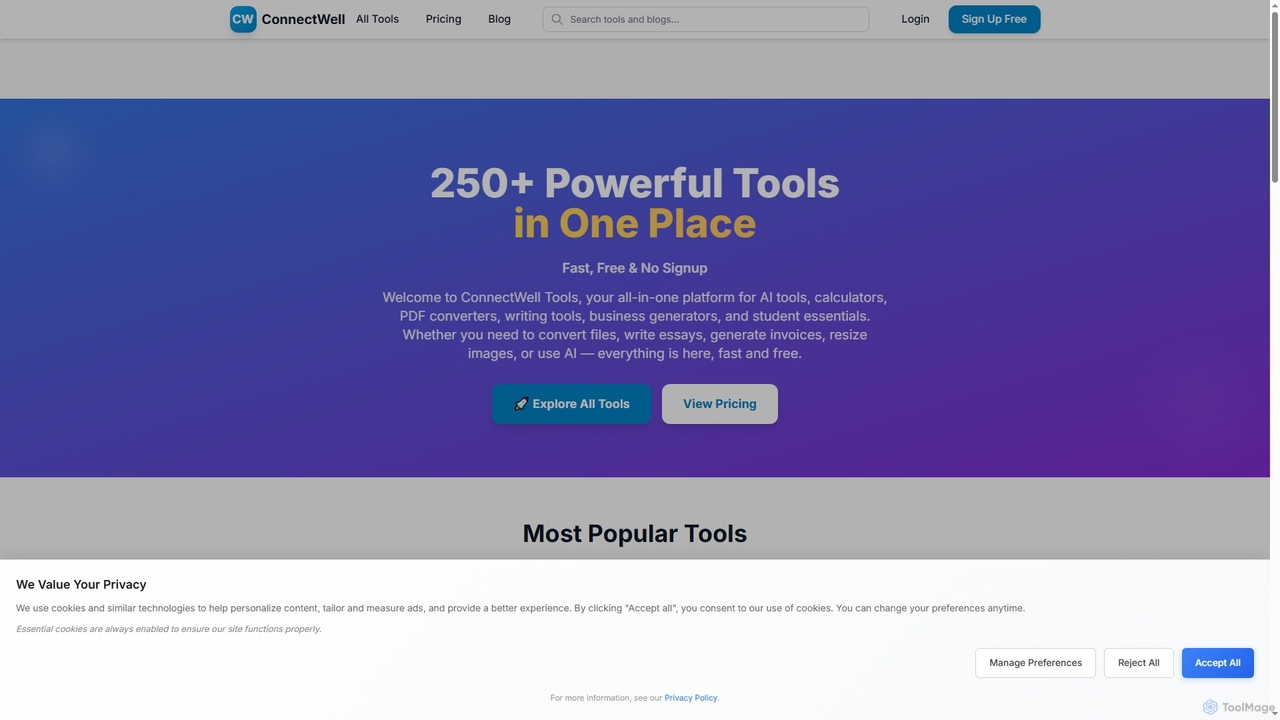
Connectwell

Connectwell

An all-in-one suite of over 250 powerful online tools for SEO, content creation, media conversion, and development. Designed …

2.0K
Free
Huemint

Huemint

Huemint is an AI-powered color palette generator that uses machine learning to create unique and harmonious color schemes …

153.7K

About Web Development

Web Development AI tools are a class of intelligent applications designed to streamline and enhance the creation, deployment, and maintenance of websites and web applications. Leveraging machine learning and natural language processing, these tools automate repetitive tasks, generate code, optimize performance, and assist with design decisions. They empower developers to build more efficient, robust, and user-friendly web experiences faster.

Core Features

  • AI-Powered Code Generation: Automatically generates boilerplate code, functions, or entire components based on natural language descriptions or design inputs.
  • Intelligent UI/UX Design Assistance: Provides suggestions for layout, color schemes, and component placement, or generates design mockups from text prompts.
  • Automated Testing and Debugging: Identifies potential bugs, security vulnerabilities, and performance bottlenecks, and suggests fixes.
  • Content Management & Optimization: Assists with generating SEO-friendly content, optimizing images, and structuring data for web platforms.
  • Deployment & Infrastructure Automation: Helps configure serverless functions, manage cloud resources, and automate CI/CD pipelines.

Applicable Scenarios

Web Development AI tools are invaluable for front-end and back-end developers, UI/UX designers, and full-stack engineers. They accelerate prototyping, simplify complex coding tasks, and ensure higher code quality. From building responsive e-commerce sites to developing scalable web applications, these tools significantly reduce development cycles and operational overhead.

How to Choose

When selecting Web Development AI tools, consider their integration capabilities with existing tech stacks, the accuracy and relevance of their AI-generated outputs, and the level of customization offered. Evaluate the learning curve, community support, and pricing models to ensure they align with project requirements and team expertise.

Web DevelopmentUse Cases

1

Automated Front-End Component Generation

A front-end developer needs to quickly build a responsive user interface. Using an AI web development tool, they can input design specifications or even hand-drawn sketches. The AI then generates clean, semantic HTML, CSS, and JavaScript components, significantly accelerating the initial UI build phase and ensuring consistency across the application.

2

Intelligent Back-End API Creation

A back-end engineer is tasked with developing a new API for a web application. An AI-powered tool can take a database schema or a natural language description of desired endpoints. It then generates the necessary API routes, data models, and basic CRUD operations, reducing manual coding and potential errors, allowing the engineer to focus on complex business logic.

3

Real-time Code Optimization and Refactoring

A development team is working on a large-scale web application and needs to maintain high code quality and performance. An AI assistant continuously analyzes the codebase, identifying inefficient algorithms, redundant code, or potential security vulnerabilities. It suggests refactoring improvements and automatically applies common optimizations, leading to faster load times and more secure applications.

4

Automated Cross-Browser Compatibility Testing

A QA engineer needs to ensure a web application functions flawlessly across various browsers and devices. AI testing tools can simulate user interactions and automatically run tests on different environments. They detect layout issues, broken functionalities, and performance regressions, providing detailed reports that drastically reduce manual testing effort and improve release confidence.

5

Personalized Content Generation for Web Pages

A content manager for an e-commerce site wants to create dynamic, personalized product descriptions and marketing copy. AI web development tools integrated with content platforms can generate variations of text based on user segments or product attributes. This enhances SEO, improves user engagement, and scales content creation without extensive manual writing.

6

Serverless Function Deployment and Management

A DevOps engineer is deploying a new microservice using serverless architecture. AI-driven tools can assist by analyzing the code, suggesting optimal serverless configurations, and automating the deployment process to cloud providers. They can also monitor performance and cost, ensuring efficient resource utilization and simplified management of complex distributed systems.

Web DevelopmentFrequently Asked Questions