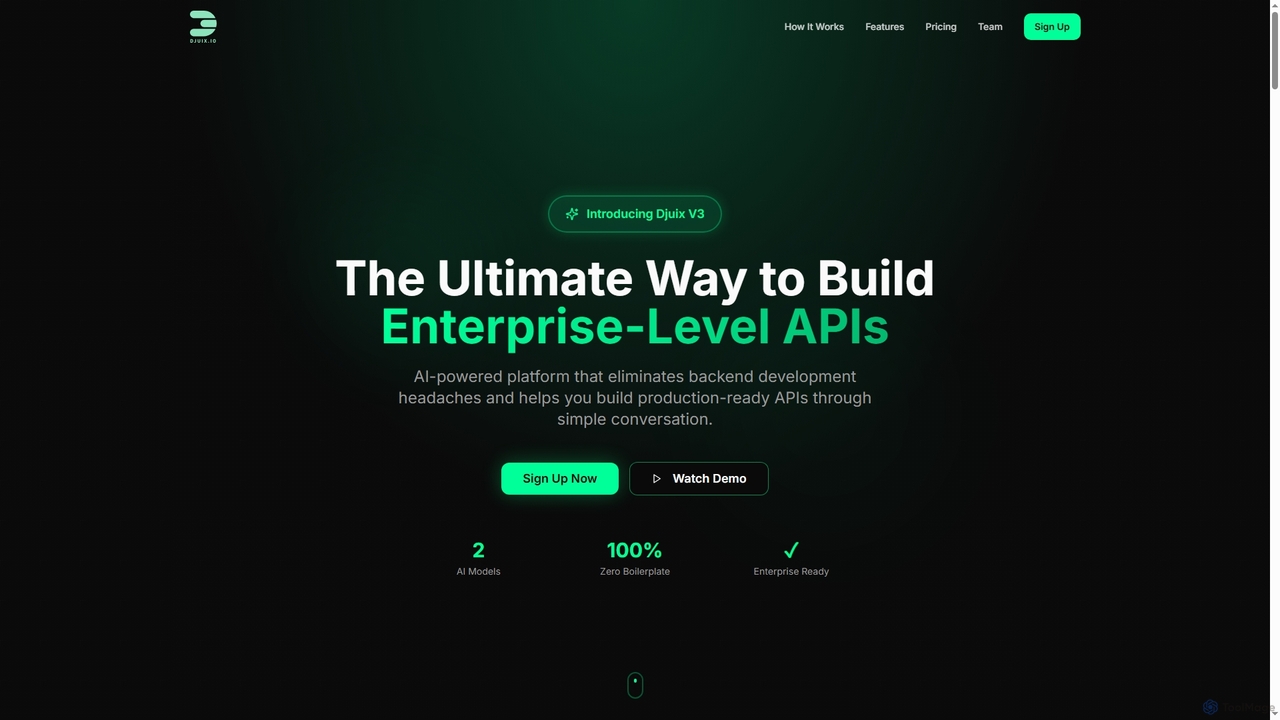
Djuix
Djuix is an AI-powered platform that enables users to build enterprise-level Django REST APIs through simple, natural language …
Djuix is an AI-powered platform that enables users to build enterprise-level Django REST APIs through simple, natural language conversations. It automates backend development, eliminating boilerplate code and allowing for rapid prototyping and deployment with full code ownership.

StackSpaces
StackSpaces is an integrated development platform designed to help developers build, deploy, and scale full-stack AI applications with …
StackSpaces is an integrated development platform designed to help developers build, deploy, and scale full-stack AI applications with ease. It provides a unified environment with backend, frontend, and infrastructure components, streamlining the entire development lifecycle from idea to production.
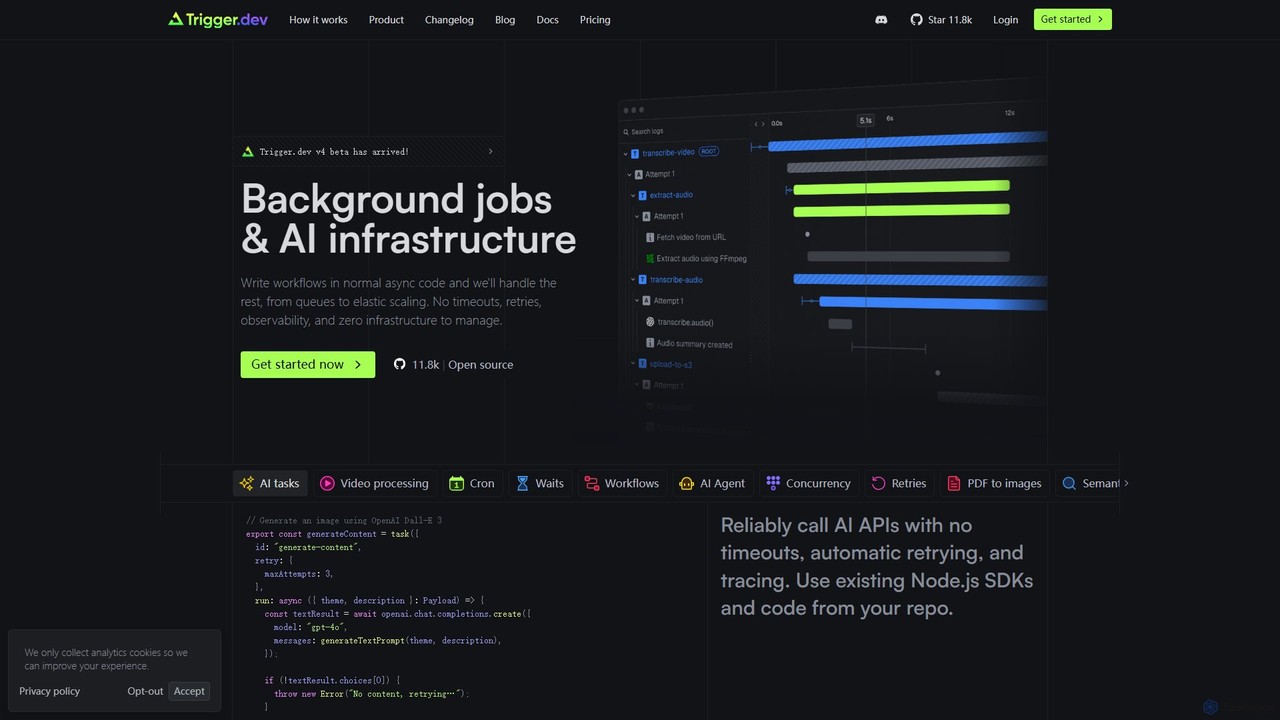
Trigger.dev
Trigger.dev is an open-source platform for developers to build, run, and manage long-running background jobs and AI workflows. …
Trigger.dev is an open-source platform for developers to build, run, and manage long-running background jobs and AI workflows. It provides a robust infrastructure that handles timeouts, retries, and scaling, allowing you to write resilient tasks directly in your TypeScript or Python codebase. Ideal for orchestrating complex AI agents, data processing pipelines, and real-time applications without managing servers.
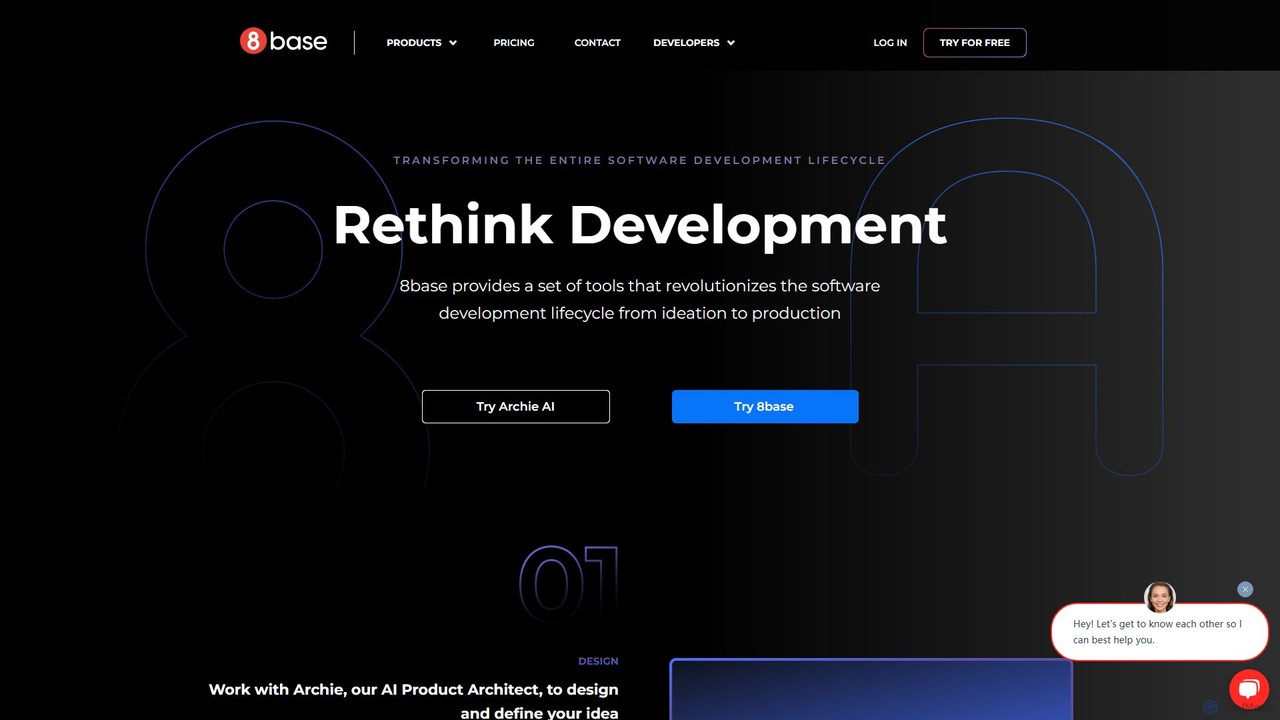
8base
8base is an AI-powered low-code development platform that transforms the entire software development lifecycle. It features Archie, an …
8base is an AI-powered low-code development platform that transforms the entire software development lifecycle. It features Archie, an AI Product Architect, to design applications from simple prompts, and a robust Backend-as-a-Service (BaaS) to generate scalable backends with a GraphQL API. Ideal for developers, agencies, and enterprises, 8base accelerates development, reduces costs, and simplifies infrastructure management, enabling teams to build and deploy applications faster than ever.

Neurelo
Neurelo was an innovative AI-powered Backend-as-a-Service (BaaS) platform designed to drastically simplify and accelerate backend development. It automatically …
Neurelo was an innovative AI-powered Backend-as-a-Service (BaaS) platform designed to drastically simplify and accelerate backend development. It automatically generated production-ready REST and GraphQL APIs from a database schema, empowering developers to build scalable applications in a fraction of the time by handling database management, migrations, and API creation.
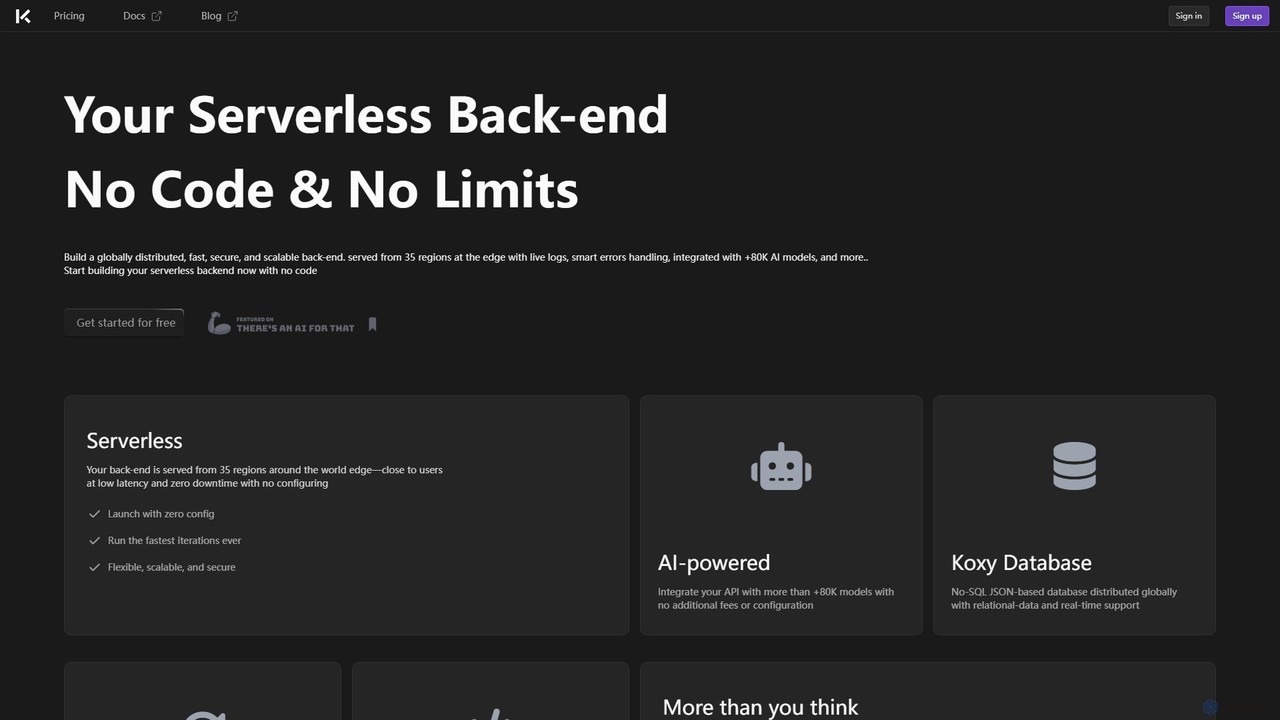
Koxy AI
Koxy AI is a no-code platform for building AI-powered, serverless back-ends. It enables developers and creators to build …
Koxy AI is a no-code platform for building AI-powered, serverless back-ends. It enables developers and creators to build globally distributed, fast, and scalable applications by integrating with over 80,000 AI models, a real-time No-SQL database, and custom cloud functions without writing complex back-end code.
Playroom
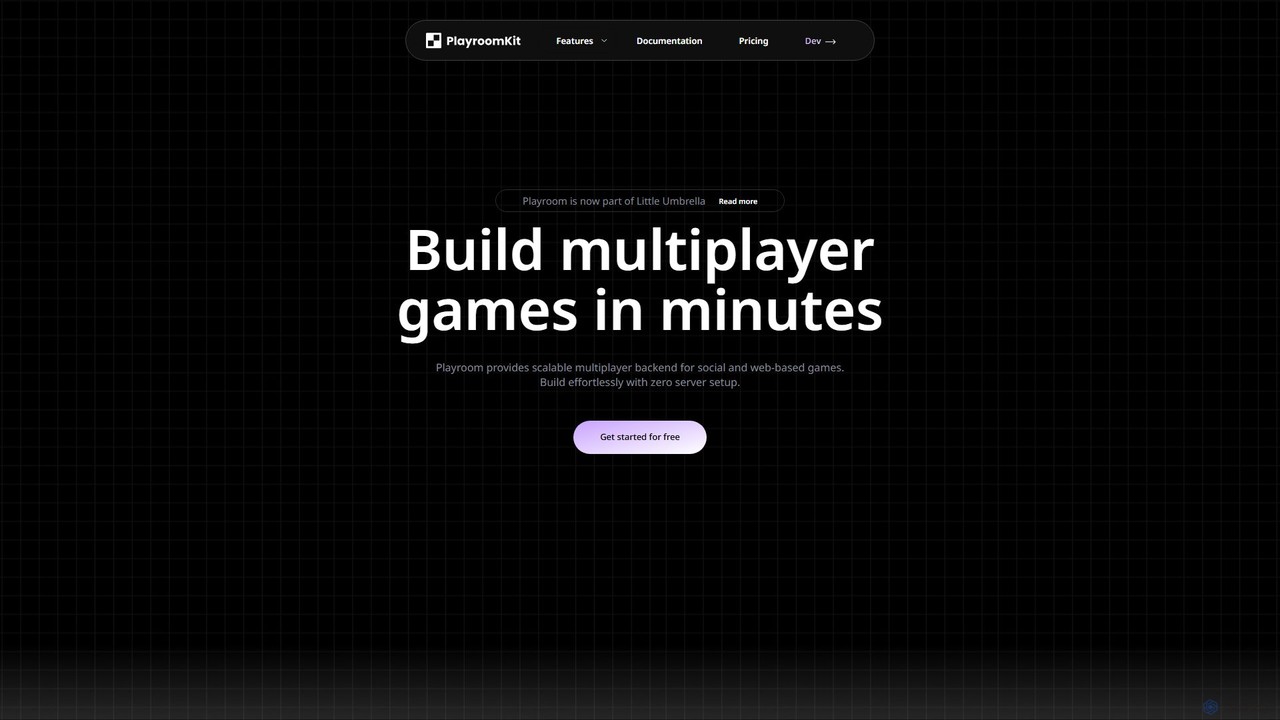
Playroom is a serverless backend platform designed for developers to build and scale multiplayer web and social games …
Playroom is a serverless backend platform designed for developers to build and scale multiplayer web and social games in minutes. It eliminates the need for complex server setup and management by providing a low-latency, auto-scaling infrastructure, a simple SDK, and pre-built modules for features like lobbies, chat, and AI-powered content generation.
Backmesh
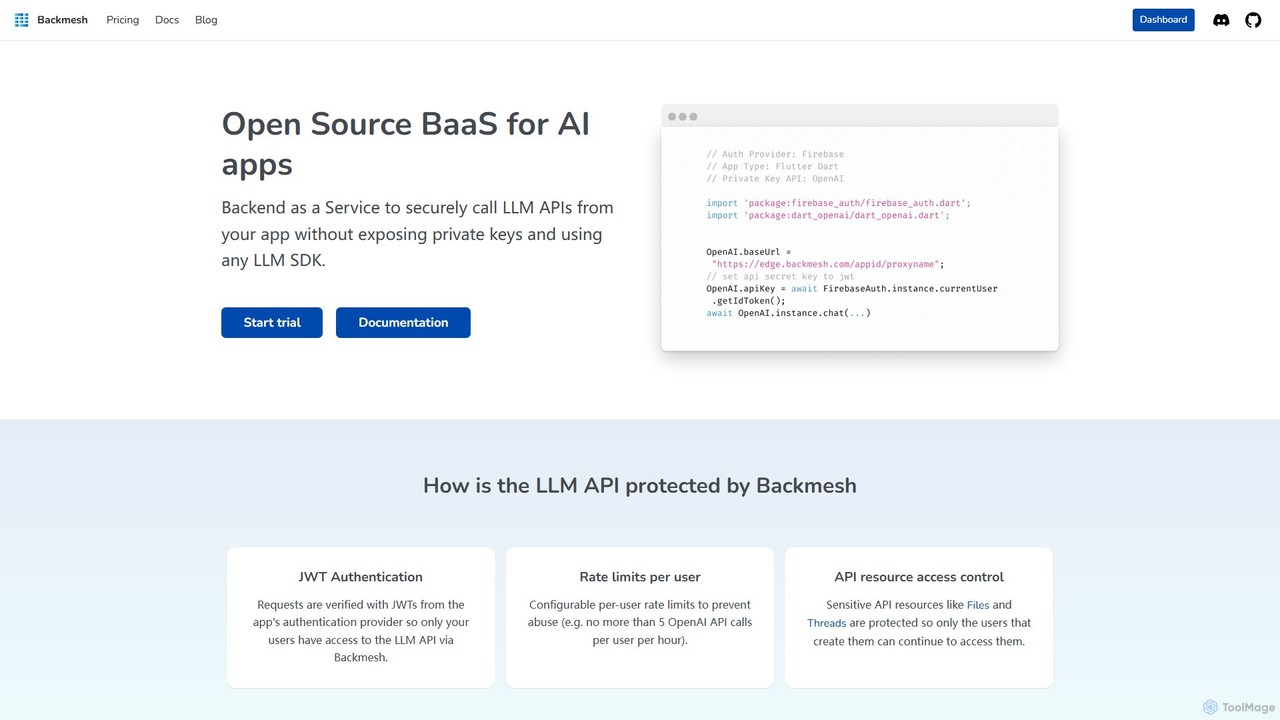
Backmesh is an open-source Backend as a Service (BaaS) designed for AI applications. It acts as a secure …
Backmesh is an open-source Backend as a Service (BaaS) designed for AI applications. It acts as a secure LLM API Gatekeeper, allowing developers to call LLM APIs like OpenAI and Gemini directly from web or mobile apps without exposing private keys. It offers features like JWT authentication, per-user rate limiting, and built-in analytics to manage and monitor API usage effectively.
Supabase
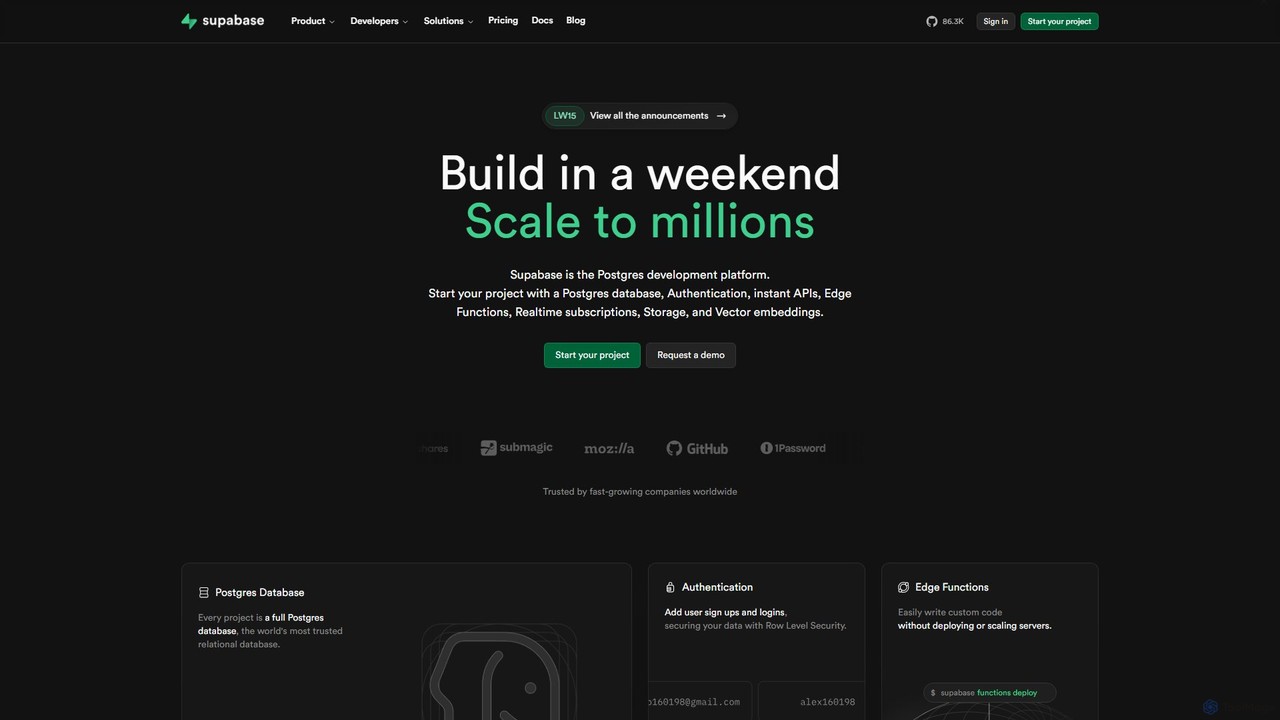
Supabase is an open-source Firebase alternative, providing a complete backend solution built on Postgres. It offers a suite …
Supabase is an open-source Firebase alternative, providing a complete backend solution built on Postgres. It offers a suite of tools including a database, authentication, instant APIs, edge functions, real-time subscriptions, storage, and vector embeddings to accelerate application development from prototype to production.
Convex
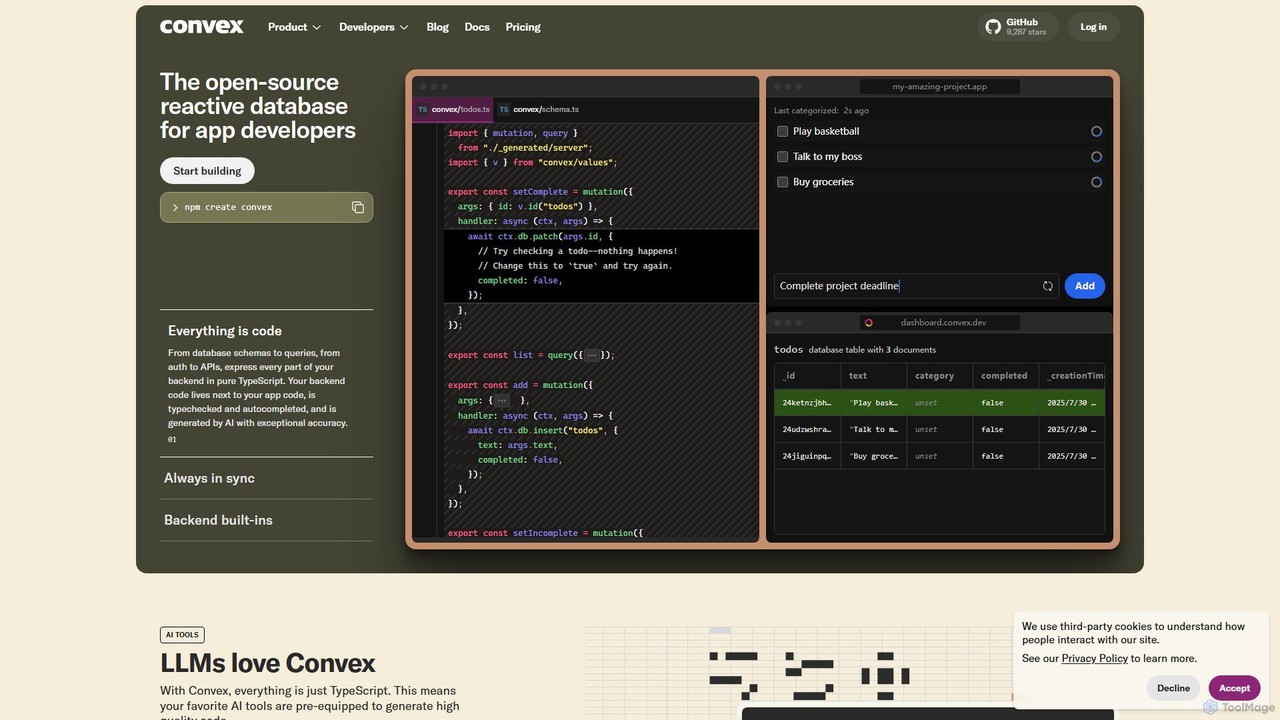
Convex is a backend-as-a-service platform for web developers, offering a reactive TypeScript database that simplifies building full-stack, real-time …
Convex is a backend-as-a-service platform for web developers, offering a reactive TypeScript database that simplifies building full-stack, real-time applications. It provides serverless functions, file storage, and vector search with end-to-end type safety, making it a powerful, developer-friendly alternative to Firebase.
Line0
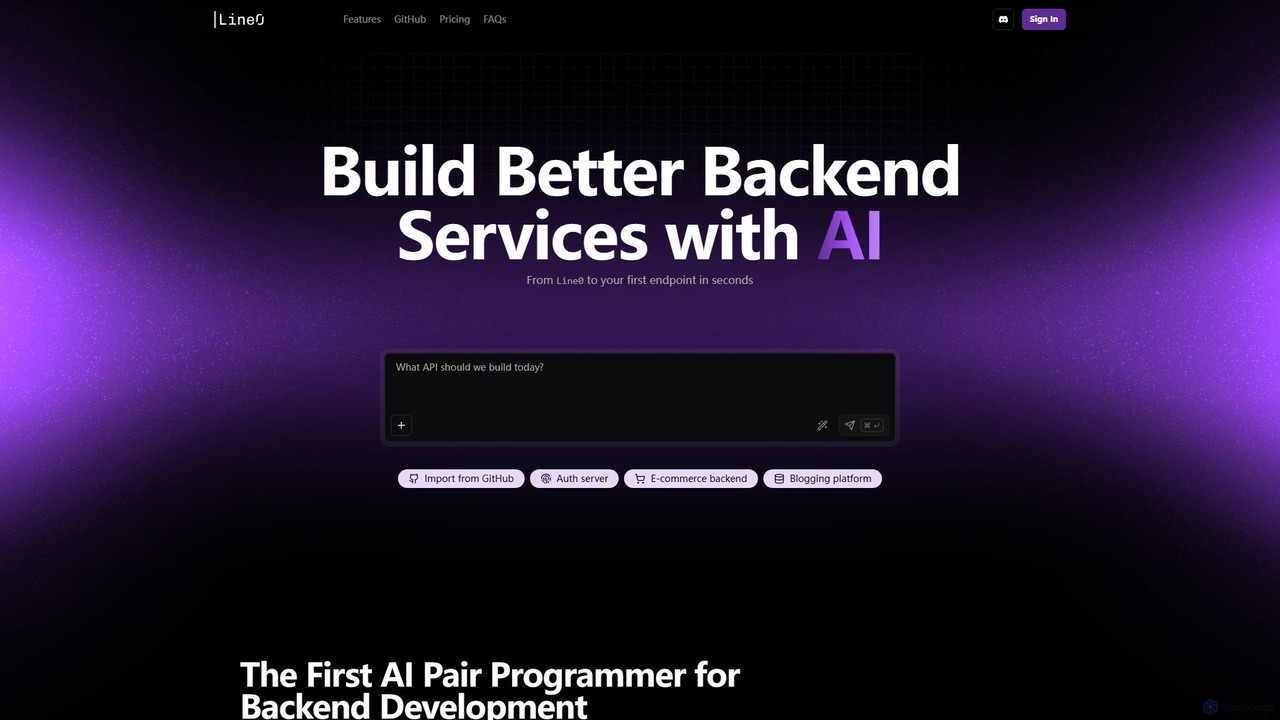
Line0 is an AI pair programmer designed for backend development. It allows developers to generate production-ready backend services …
Line0 is an AI pair programmer designed for backend development. It allows developers to generate production-ready backend services and APIs in minutes using natural language prompts. It features seamless two-way GitHub integration, an in-browser code editor, and a streamlined workflow to accelerate development from idea to deployment.
BuildShip
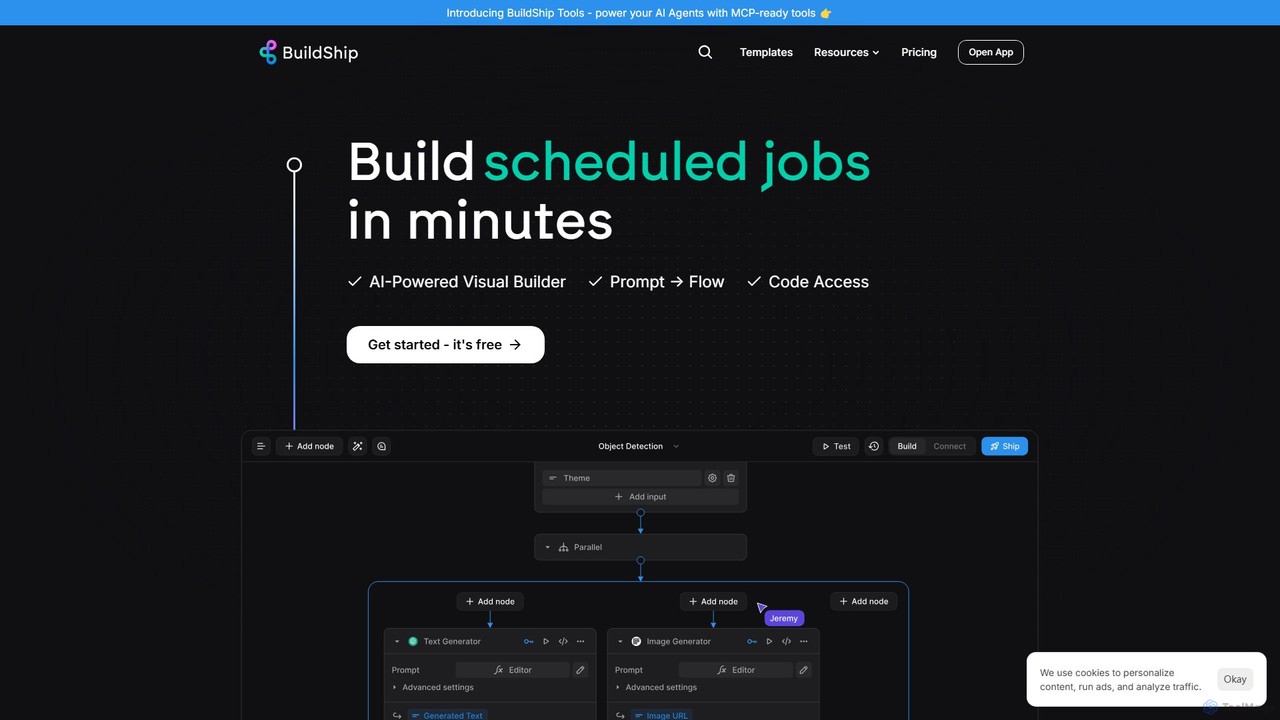
BuildShip is a low-code, AI-powered platform for visually building backend workflows, APIs, and scheduled jobs. Connect any AI …
BuildShip is a low-code, AI-powered platform for visually building backend workflows, APIs, and scheduled jobs. Connect any AI model, database, or tool using a drag-and-drop interface or natural language prompts. Go from idea to a scalable, production-ready backend in minutes, with the flexibility to use JavaScript/TypeScript for advanced customization. Ideal for developers and creators alike.

Craftable PRO
Craftable PRO is a powerful Laravel CRUD generator and admin panel toolkit designed for developers. It dramatically accelerates …
Craftable PRO is a powerful Laravel CRUD generator and admin panel toolkit designed for developers. It dramatically accelerates the development of admin panels, CRMs, and CMSs by automating the creation of CRUD interfaces, user management, roles, permissions, and more, all with a beautiful, modern UI.
Amplication
Amplication is an AI-powered backend development platform that standardizes and automates the creation of backend services. It empowers …
Amplication is an AI-powered backend development platform that standardizes and automates the creation of backend services. It empowers platform engineering teams to define 'Golden Paths' with live templates, enabling developers to rapidly build, maintain, and scale secure, compliant, and consistent microservices and applications.
Rivet
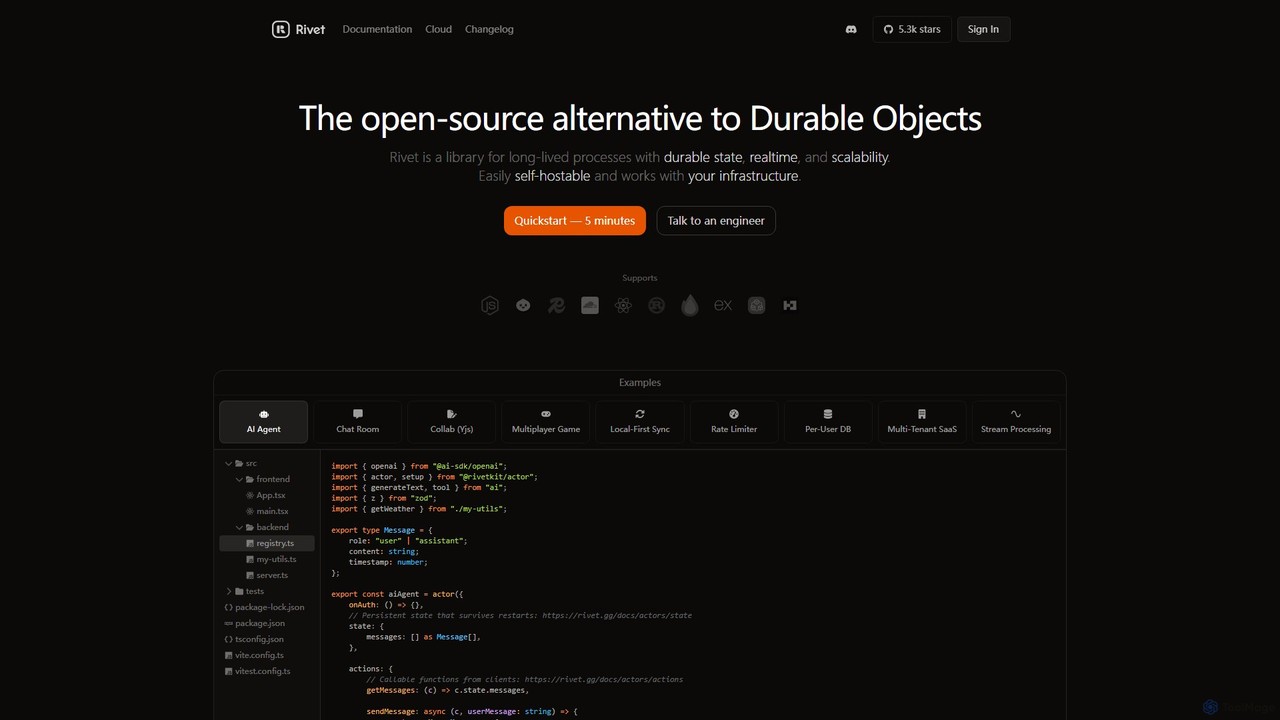
Rivet is an open-source library for developers building scalable, real-time applications with durable state. It provides long-lived, stateful …
Rivet is an open-source library for developers building scalable, real-time applications with durable state. It provides long-lived, stateful compute "actors" that simplify complex tasks like creating AI agents, collaborative apps, and multiplayer games. With features like built-in real-time communication, fault tolerance, and edge deployment, Rivet offers a powerful, self-hostable alternative to services like Cloudflare Durable Objects.
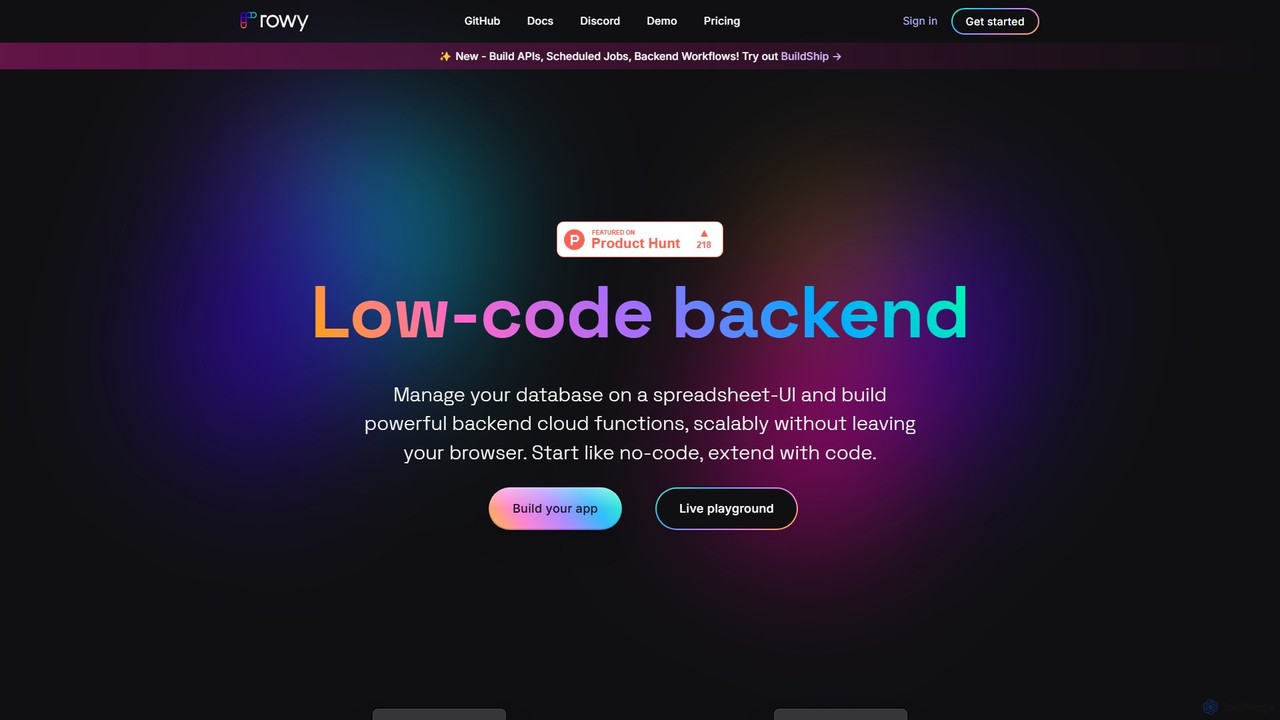
Rowy
Rowy is an open-source, low-code platform that provides an Airtable-like UI for Firebase and Google Cloud. It empowers …
Rowy is an open-source, low-code platform that provides an Airtable-like UI for Firebase and Google Cloud. It empowers users to manage databases, build cloud functions, and automate workflows with the simplicity of a spreadsheet, combined with the power of custom code.
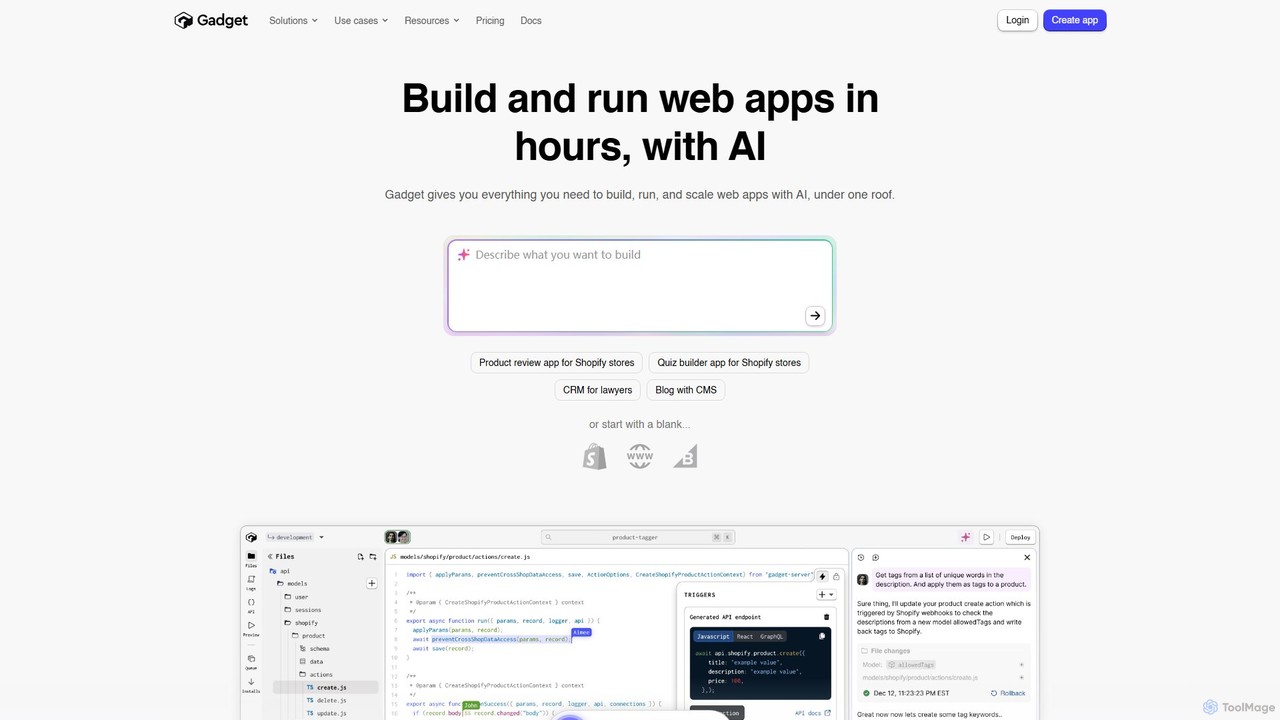
Gadget
Gadget is an all-in-one, serverless development platform designed to accelerate full-stack web application development, especially for the Shopify …
Gadget is an all-in-one, serverless development platform designed to accelerate full-stack web application development, especially for the Shopify ecosystem. It automates backend infrastructure, including databases, APIs, and authentication, allowing developers to build and launch scalable apps, like Shopify apps, significantly faster. An integrated AI assistant further streamlines the coding process.
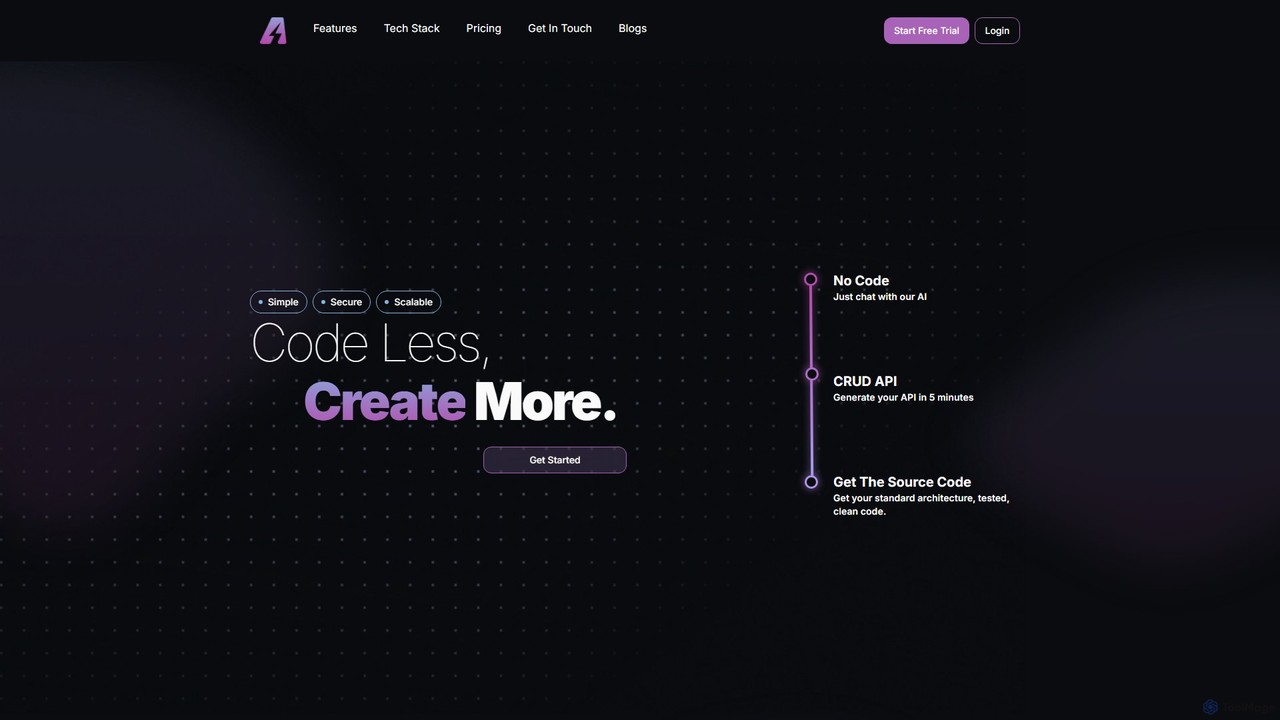
AppAsap
AppAsap is an AI-powered platform that transforms your app ideas into reality through simple chat conversations. It automates …
AppAsap is an AI-powered platform that transforms your app ideas into reality through simple chat conversations. It automates the creation of backend APIs, databases, and front-end interfaces, providing you with clean, scalable source code. Ideal for developers and entrepreneurs looking to accelerate their development process and launch applications faster with minimal coding.
About Backend
Backend tools, specifically those enhanced with AI, are the foundational server-side components that power modern intelligent applications. These tools leverage artificial intelligence to automate, optimize, and scale the complex logic, data management, and API services required for AI-driven functionalities. They enable developers to efficiently deploy machine learning models, manage vast datasets for AI training, and build robust, scalable infrastructure that supports real-time AI inference and intelligent automation.
Core Features
- AI Model Deployment: Streamlined deployment and serving of machine learning models as scalable API endpoints.
- Automated Data Pipelines: AI-driven automation for data ingestion, processing, and transformation to feed ML models.
- Intelligent API Management: Tools for generating, securing, and optimizing APIs that interact with AI services and data.
- Scalable Infrastructure: Dynamic scaling and resource allocation to handle varying AI workload demands efficiently.
- AI-Assisted Development: Features like code generation and error detection specifically for backend logic supporting AI.
Applicable Scenarios
AI-powered backend tools are crucial for organizations building intelligent applications, from startups deploying their first ML model to enterprises managing complex AI ecosystems. They are used by MLOps engineers for model lifecycle management, by data scientists for productionizing models, and by backend developers creating robust AI-driven services. These tools streamline the operational aspects of AI, ensuring reliability and performance.
How to Choose
When selecting an AI backend solution, consider its compatibility with your existing AI/ML frameworks and data sources. Evaluate its scalability features to handle anticipated growth in AI workloads and user traffic. Assess the ease of deployment, management, and monitoring, looking for robust MLOps capabilities. Finally, compare security features, cost-effectiveness, and the level of technical support provided to ensure it aligns with your team's expertise and budget.
BackendUse Cases
Deploying Real-time AI Inference APIs
A data science team needs to expose a newly trained machine learning model as a low-latency API for real-time predictions within a web application. AI backend tools allow them to containerize the model, define API endpoints, and deploy it to a scalable cloud infrastructure with automated load balancing and monitoring, ensuring high availability and quick responses for user requests.
Automating Data Preprocessing for ML Training
An MLOps engineer is responsible for continuously retraining an AI model with fresh data. They utilize AI backend tools to build automated data pipelines that ingest raw data from various sources, perform necessary cleaning, feature engineering, and transformation, and then store it in a format optimized for model training, significantly reducing manual data preparation efforts.
Building Scalable Backend for AI Chatbots
A development team is creating an enterprise-grade AI chatbot that handles millions of user interactions daily. AI backend platforms provide the necessary infrastructure to manage conversation states, integrate with natural language understanding (NLU) services, orchestrate responses, and connect to internal knowledge bases, ensuring the chatbot remains responsive and intelligent under heavy load.
Optimizing Resource Allocation for AI Workloads
A DevOps specialist manages the infrastructure for several AI applications with fluctuating computational demands. AI-powered backend management tools monitor resource utilization (CPU, GPU, memory) and automatically scale up or down server instances, or adjust container allocations, to meet the current workload requirements, thereby optimizing costs and maintaining application performance.
Generating Backend Code for AI-Driven Features
A software engineer needs to quickly add a new AI-driven recommendation feature to an e-commerce platform. Using an AI code generation tool integrated into the backend development workflow, they can generate boilerplate code for API endpoints, database interactions, and integration with the recommendation engine, accelerating development and reducing repetitive coding tasks.
Managing AI Model Versioning and Rollbacks
An MLOps team frequently updates and experiments with different versions of their AI models in production. AI backend platforms offer robust version control for models, allowing the team to deploy new iterations, conduct A/B testing with different model versions, and quickly roll back to a previous stable version if performance issues arise, ensuring continuous delivery and reliability.