
Trigger.dev Overview
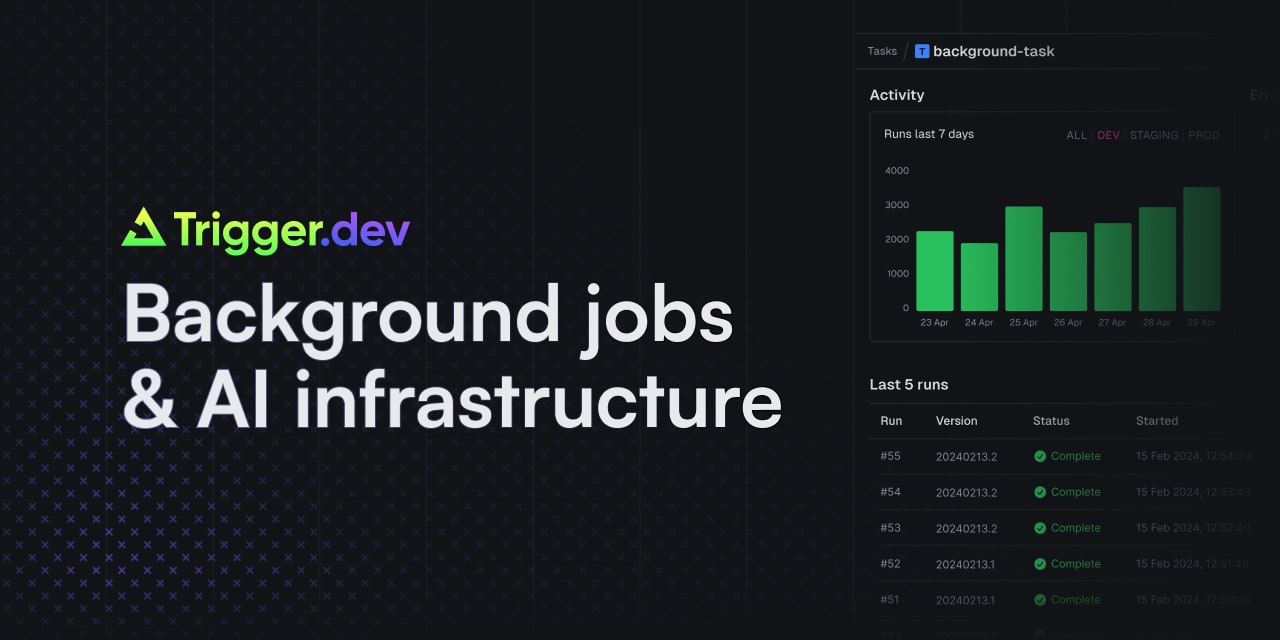
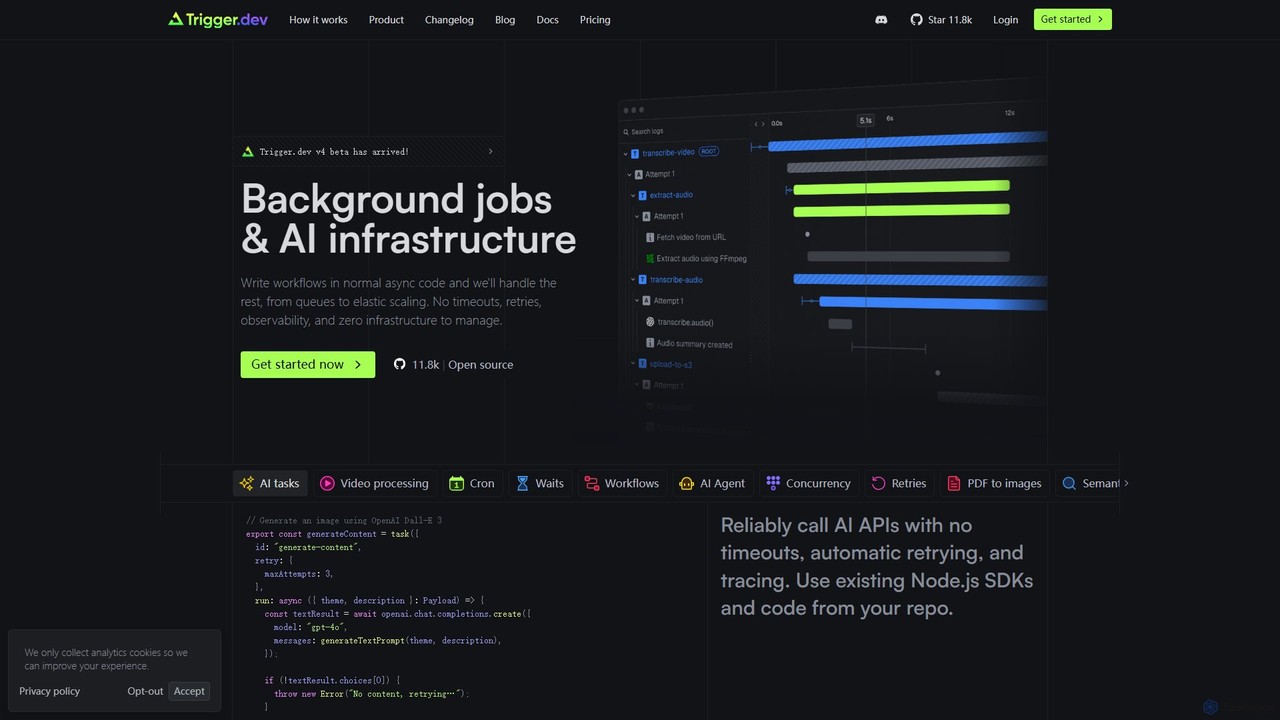
Trigger.dev is an open-source background jobs and AI infrastructure platform designed for modern developers. It empowers you to create long-running, resilient workflows and AI-powered tasks using standard asynchronous code in your existing repository. The platform abstracts away the complexities of managing queues, servers, and elastic scaling, allowing developers to focus on building application logic rather than managing infrastructure. With no timeouts, automatic retries, and comprehensive observability, Trigger.dev ensures your critical tasks run reliably.
It is specifically engineered to handle the demands of AI applications, providing a seamless way to call AI APIs (like OpenAI, Anthropic, etc.), chain prompts, and build sophisticated AI agents. Its unique Realtime API allows you to stream task progress and LLM responses directly to your frontend, creating interactive and transparent user experiences.
How to use Trigger.dev
Using Trigger.dev is straightforward and integrates directly into your development workflow:
- Install the SDK: Add the Trigger.dev SDK to your Node.js (TypeScript) or Python project. It's compatible with popular frameworks like Next.js, Remix, SvelteKit, and Bun.
- Define a Task: Write a task as a simple async function within your codebase. You can configure properties like ID, retry policies (max attempts, backoff factor), and more. For example, you can create a task to generate content using GPT-4o and an image with DALL-E 3.
- Trigger the Task: Invoke your tasks from anywhere in your application—in response to a webhook, a user action, a cron schedule, or a direct API call. You can pass a payload with the necessary data for the task.
- Monitor and Debug: Use the Trigger.dev dashboard to get full observability into your runs. You can view detailed logs, traces, statuses, and metadata. Set up alerts via email, Slack, or webhooks to be notified of failures.
- Integrate with Frontend: Utilize the Realtime API and React hooks (e.g., `subscribeToRun`) to display the live status of your background jobs in your application's UI, providing a seamless experience for your users.
Core Features of Trigger.dev
- No Timeouts: Run tasks for as long as you need, from seconds to days, without hitting execution limits common in serverless environments.
- AI Orchestration: Build complex AI workflows, including prompt chaining, task routing to specialized models, parallel execution, and orchestrating multiple AI agents.
- Durable Execution & Retries: Configure automatic, customizable retries for failed tasks to ensure reliability. Versioning ensures that code changes don't affect in-progress tasks.
- Realtime API & Streams: Stream task status, metadata, and LLM responses directly to your frontend, enabling real-time UI updates and interactive agent experiences.
- Rich Observability: A comprehensive dashboard with advanced filtering, logging, tracing, and bulk actions to easily monitor, debug, and manage your jobs.
- Developer-First Experience: Write tasks in plain TypeScript or Python, integrate with your existing stack (Prisma, Puppeteer, FFmpeg), and use a powerful CLI for local development and deployment.
- Open Source & Self-Hostable: Licensed under Apache 2.0, Trigger.dev can be fully self-hosted on Docker or Kubernetes for complete control over your data and infrastructure.
- Custom Build Extensions: Freely customize your build process, bundle, and container image by installing system packages (apt-get) or using tools like esbuild and FFmpeg.
Use Cases for Trigger.dev
Trigger.dev is versatile and can be used for a wide range of applications:
- AI-Powered Content Creation: Automate the generation of blog posts, social media content, and images by chaining calls to various AI models.
- Complex AI Agents: Build autonomous agents for deep research, data analysis, or customer support, complete with human-in-the-loop workflows for verification.
- Data Processing Pipelines: Process large files, such as video transcoding with FFmpeg, document conversion (PDF to images), or scraping web data with Puppeteer.
- Automated Email Campaigns: Send personalized, multi-step email sequences using integrations with services like Resend.
- ETL and Data Syncing: Create reliable jobs to extract, transform, and load data between different databases and services.
- Real-time Notifications: Show users the live progress of long-running operations like a CSV import, a report generation, or a video being processed.
Advantages of Trigger.dev
Trigger.dev offers significant advantages over traditional solutions like homegrown queue systems or limited serverless functions. Its primary strengths are its outstanding developer experience, resilience, and focus on modern AI applications. By allowing developers to write jobs as code within their project, it simplifies maintenance and version control. The elimination of timeouts and the robust retry mechanism provide a level of reliability that is difficult to achieve otherwise. Furthermore, its open-source nature offers flexibility and avoids vendor lock-in, while the managed cloud service provides a hassle-free, scalable solution.
Pricing and Plans
Trigger.dev operates on a freemium, usage-based pricing model. There is a generous free tier that allows developers to get started and build applications without any initial cost. Paid plans scale with your needs, and you only pay for what you use, primarily based on the number of runs and their execution duration. This model is cost-effective as it ensures you are not paying for idle servers. For enterprises that require full control, a self-hosting option is available. Detailed pricing information is available on their official website.
Traffic
Latest traffic
Status
Monthly traffic trend
- 2025-9: 185.0K
- 2026-1: 211.9K
- 2026-2: 261.0K
- 2026-3: 312.4K
- 2026-4: 334.8K
- 2026-5: 248.6K
Geography
Top 5 countries / regions
- 🇺🇸United States52.2%
- 🇮🇳India19.7%
- 🇩🇪Germany10.4%
- 🇨🇦Canada10.3%
- 🇧🇷Brazil7.3%
Traffic sources
| Source type | Percentage |
|---|---|
Direct | 93.0% |
Referral | 5.7% |
Email | 1.3% |
Top keywords
| Keyword | Cost per click |
|---|---|
| bullmq | $2.84 |
| drizz dev interface screenshots | $0.00 |
| trigger | $0.97 |
| trigger dev | $5.24 |
| trigger.dev | $0.00 |
Trigger.dev Videos on YouTube
TubeGuruji

Robert Szewczyk

JavaScript Mastery

Greg Isenberg
Trigger.dev Alternatives
Rivet
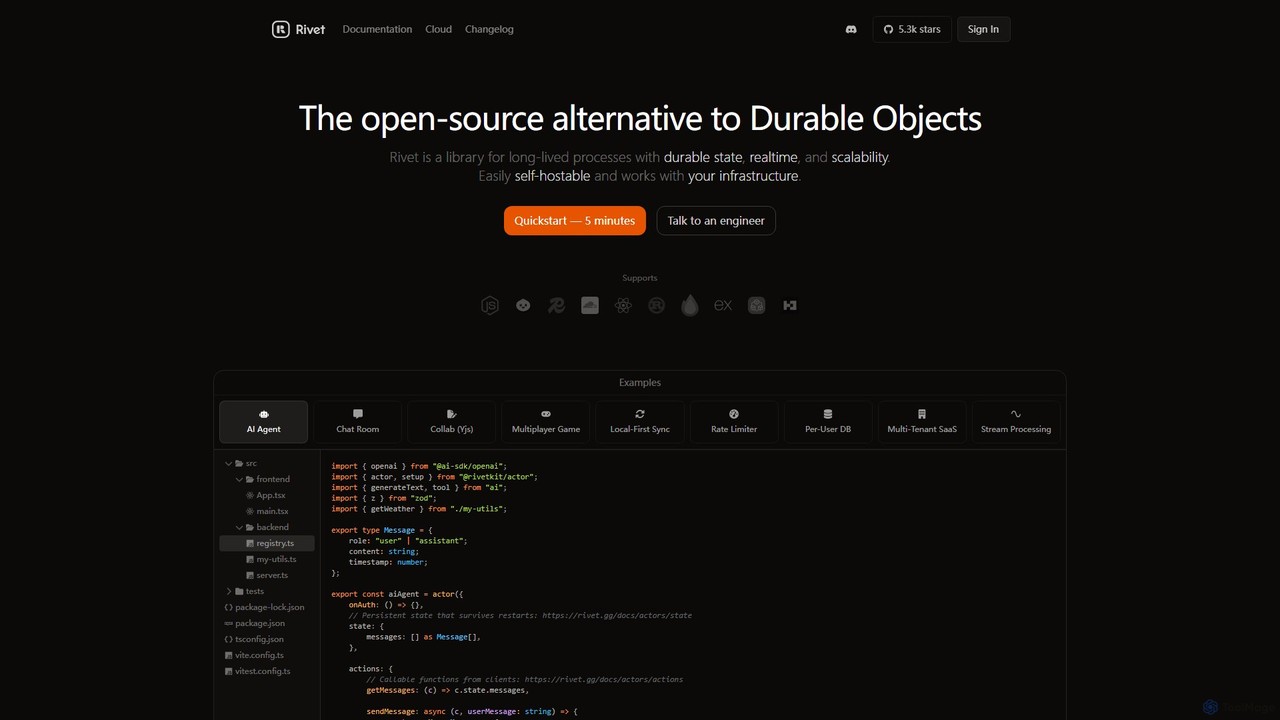
Rivet is an open-source library for developers building scalable, real-time applications with durable state. It provides long-lived, stateful compute "actors" that simplify complex tasks like creating AI agents, collaborative apps, and multiplayer games. With features like built-in real-time communication, fault tolerance, and edge deployment, Rivet offers a powerful, self-hostable alternative to services like Cloudflare Durable Objects.
Backend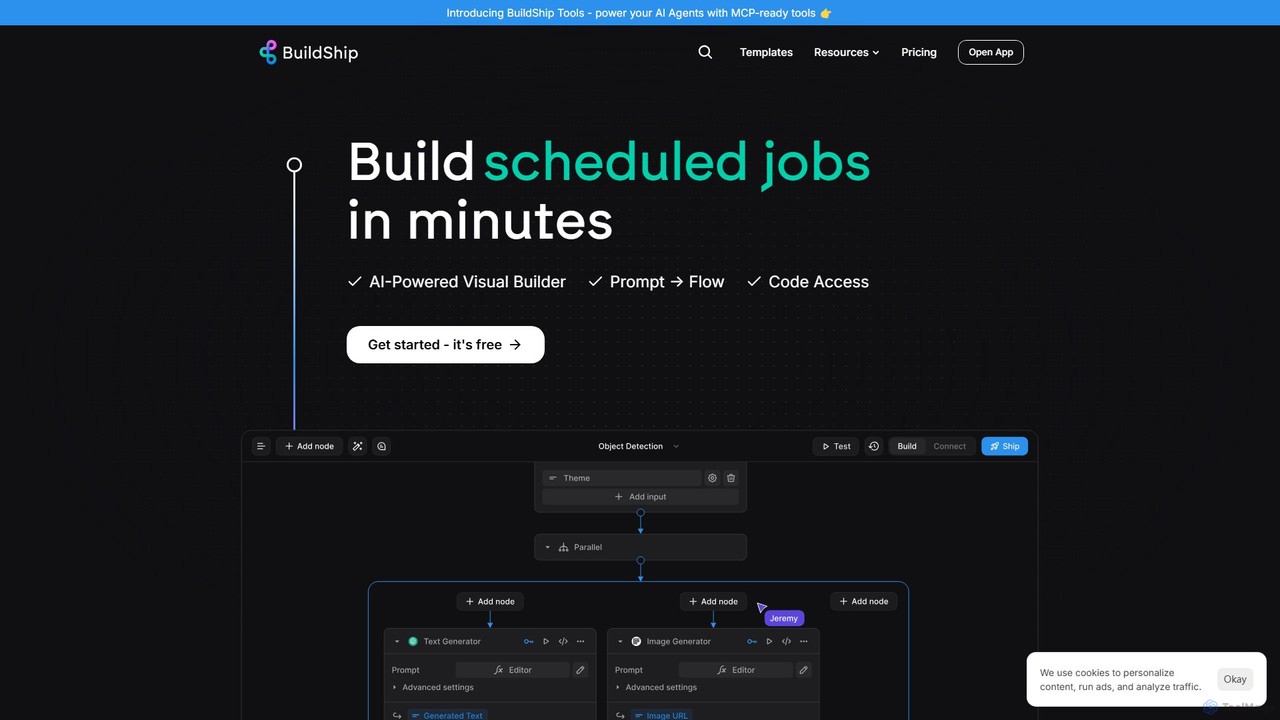
BuildShip
BuildShip is a low-code, AI-powered platform for visually building backend workflows, APIs, and scheduled jobs. Connect any AI model, database, or tool using a drag-and-drop interface or natural language prompts. Go from idea to a scalable, production-ready backend in minutes, with the flexibility to use JavaScript/TypeScript for advanced customization. Ideal for developers and creators alike.
Api
Supabase
Supabase is an open-source Firebase alternative, providing a complete backend solution built on Postgres. It offers a suite of tools including a database, authentication, instant APIs, edge functions, real-time subscriptions, storage, and vector embeddings to accelerate application development from prototype to production.
Backend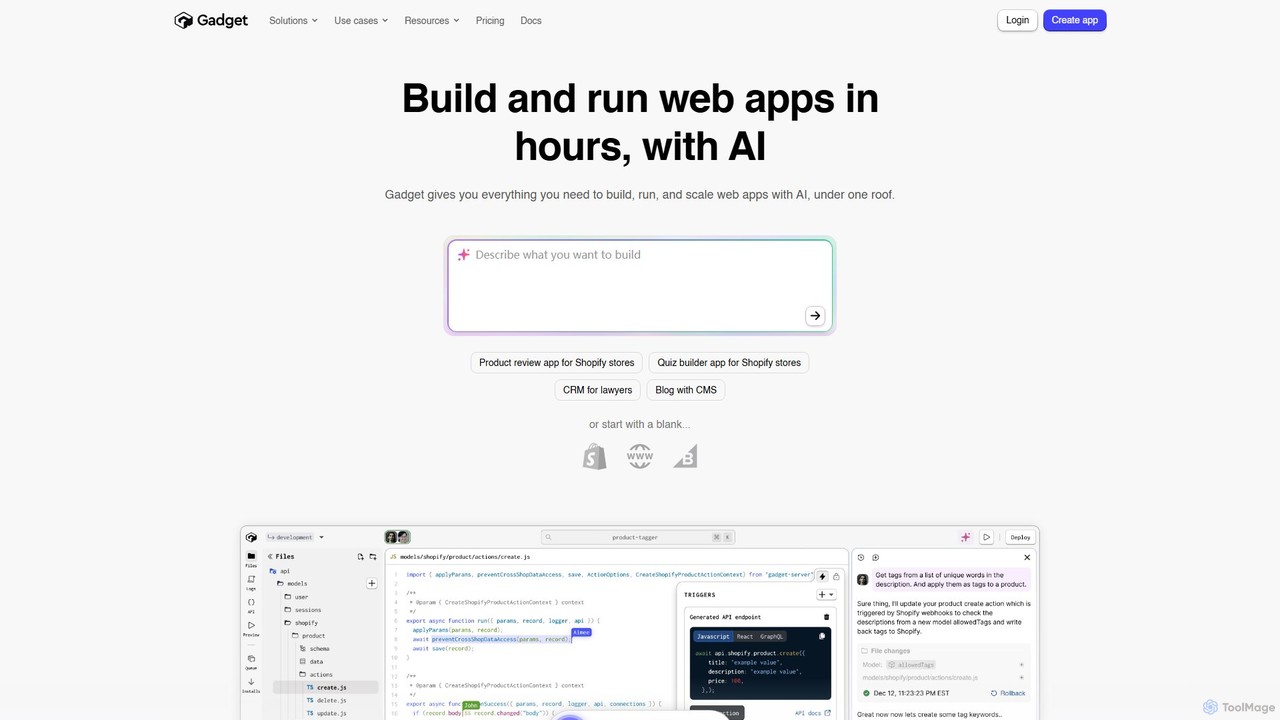
Gadget
Gadget is an all-in-one, serverless development platform designed to accelerate full-stack web application development, especially for the Shopify ecosystem. It automates backend infrastructure, including databases, APIs, and authentication, allowing developers to build and launch scalable apps, like Shopify apps, significantly faster. An integrated AI assistant further streamlines the coding process.
Backend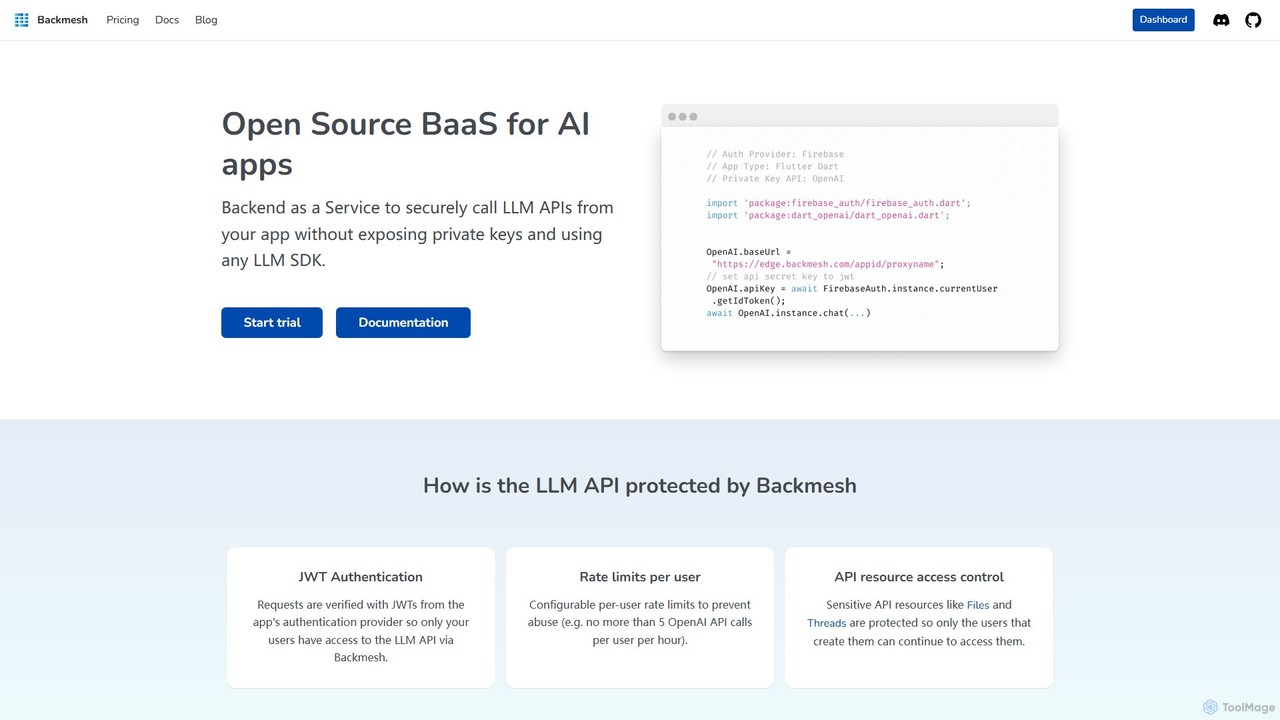
Backmesh
Backmesh is an open-source Backend as a Service (BaaS) designed for AI applications. It acts as a secure LLM API Gatekeeper, allowing developers to call LLM APIs like OpenAI and Gemini directly from web or mobile apps without exposing private keys. It offers features like JWT authentication, per-user rate limiting, and built-in analytics to manage and monitor API usage effectively.
ApiTrigger.dev Categories
Trigger.dev Embed Widget
Copy this embed code to place the badge on your blog, article, or product site and send readers directly to this ToolMage detail page.

Related AI tools
Rivet
Rivet is an open-source library for developers building scalable, real-time applications with durable state. It provides long-lived, stateful compute "actors" that simplify complex tasks like creating AI agents, collaborative apps, and multiplayer games. With features like built-in real-time communication, fault tolerance, and edge deployment, Rivet offers a powerful, self-hostable alternative to services like Cloudflare Durable Objects.
Backend
Open Interpreter
An open-source tool that lets Large Language Models (LLMs) run code (Python, Shell, etc.) locally on your computer. It provides a natural language interface to your machine, enabling complex tasks like data analysis, file management, and automation with full access to your system's capabilities.
Data Analysis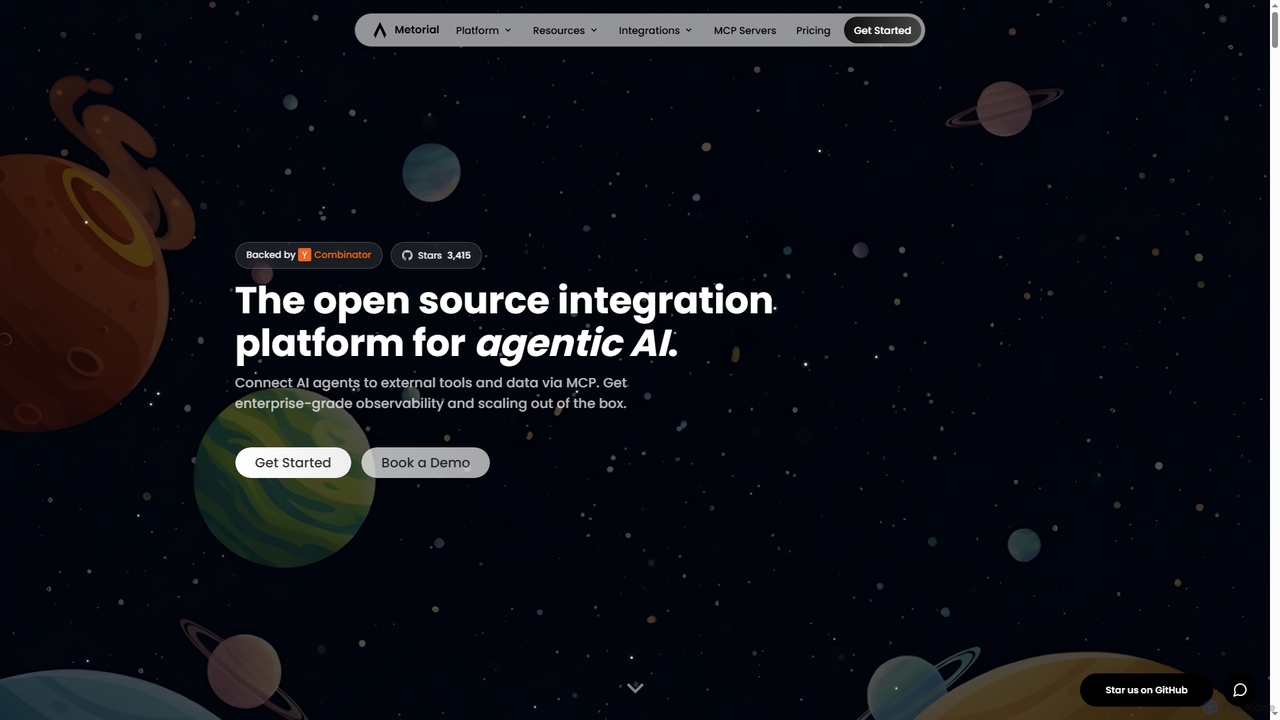
Metorial
Metorial is an integration platform for AI agents, enabling developers to quickly build, deploy, and monitor powerful agentic AI applications. It provides seamless connections to hundreds of tools, data sources, and APIs via its serverless Model Context Protocol (MCP) platform, offering robust SDKs, observability, and enterprise-grade security for scalable AI solutions.
Agentic Ai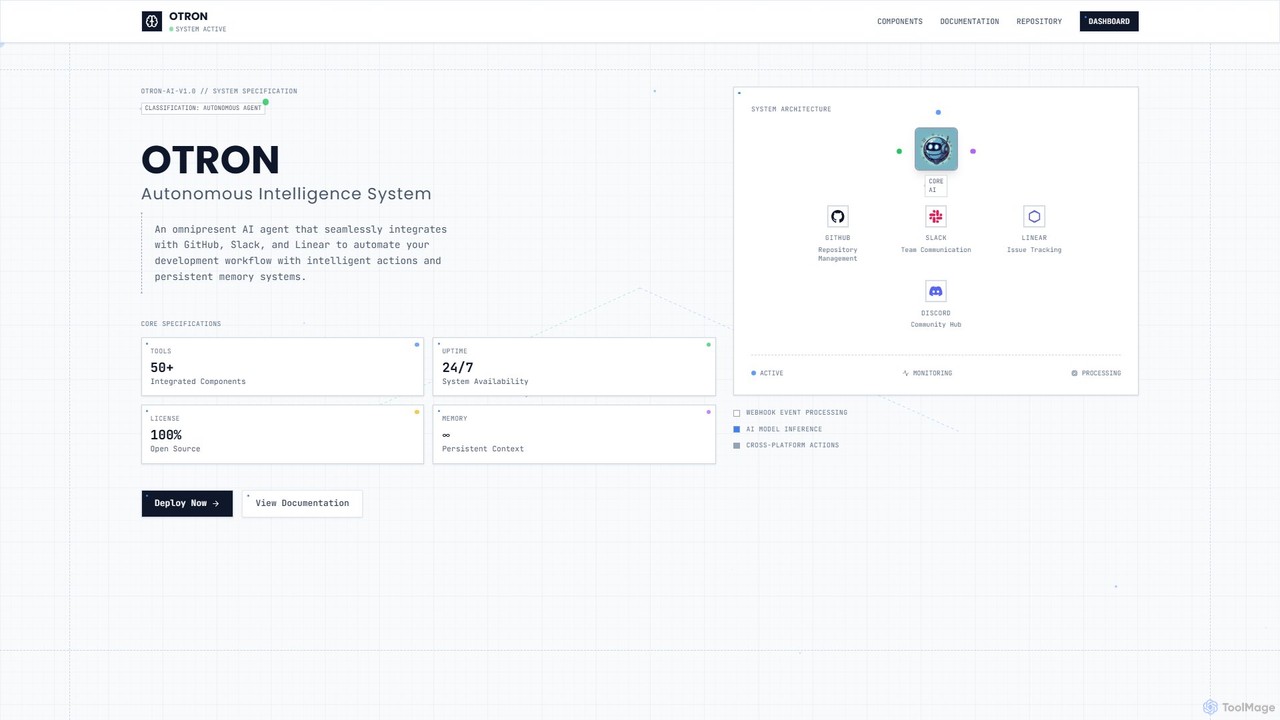
Otron
Otron is an open-source, autonomous AI development agent designed to streamline your software development lifecycle. It seamlessly integrates with GitHub, Slack, and Linear to automate workflows, manage code, handle project tasks, and facilitate team communication, all powered by advanced AI models like Claude and GPT-4.
Code Assistant
Jyek
Jyek is an AI agent platform that understands objectives, creates execution plans, uses tools, and delivers verifiable results for complex, multi-step tasks.
Automation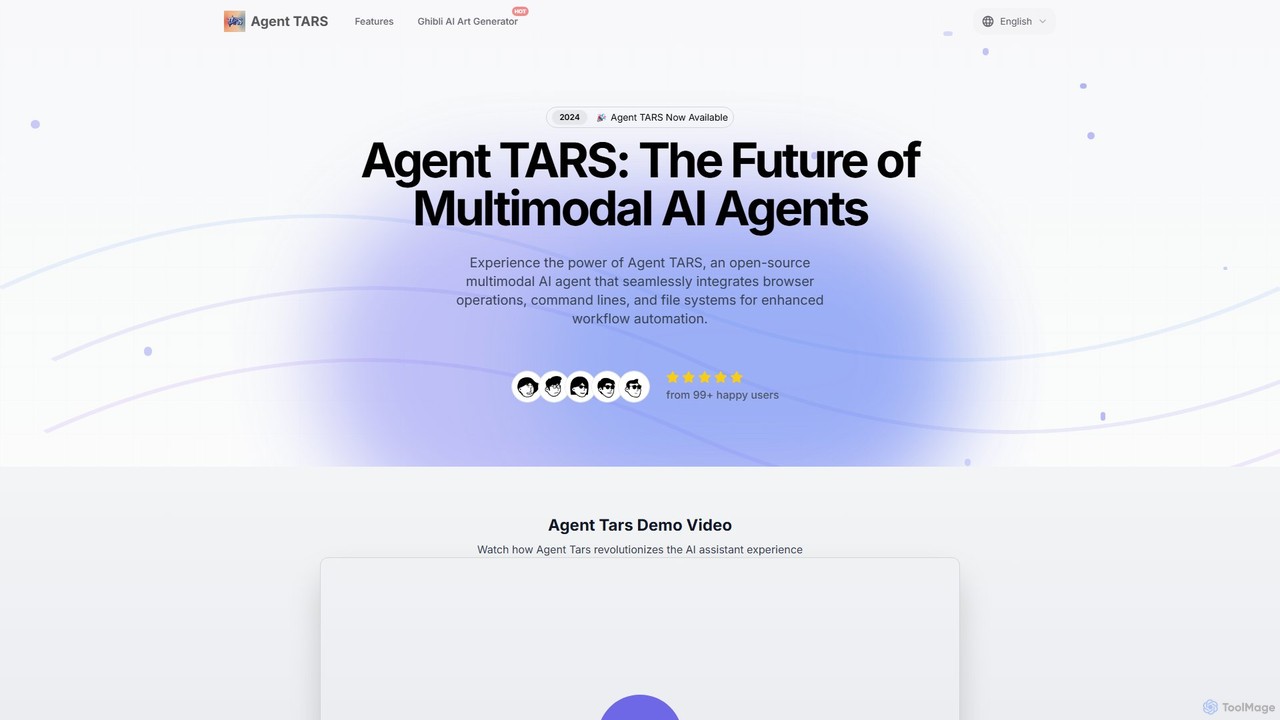
Agent TARS
Agent TARS is a powerful, open-source multimodal AI agent designed for developers and teams. It automates complex workflows by seamlessly integrating browser operations, command-line interfaces, and file systems. Leveraging visual interpretation and sophisticated reasoning, it efficiently handles diverse tasks, from advanced browser automation to intricate tool integrations, boosting productivity and streamlining development processes.
Autonomous AgentBuildShip
BuildShip is a low-code, AI-powered platform for visually building backend workflows, APIs, and scheduled jobs. Connect any AI model, database, or tool using a drag-and-drop interface or natural language prompts. Go from idea to a scalable, production-ready backend in minutes, with the flexibility to use JavaScript/TypeScript for advanced customization. Ideal for developers and creators alike.
Api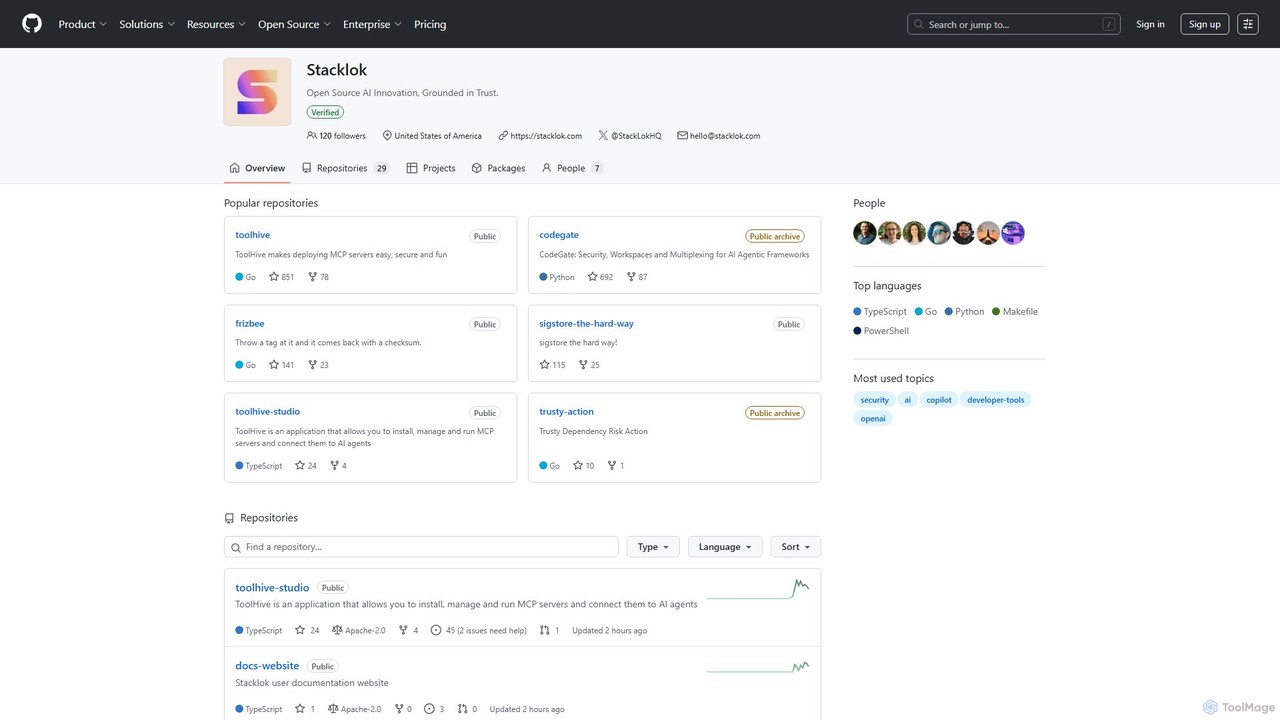
codegate
Codegate is an open-source security gateway and multiplexing framework for AI agentic systems. Developed by Stacklok, it provides secure workspaces and policy-based access control, enabling developers to build and manage complex multi-agent applications safely and efficiently.
Agentic Frameworks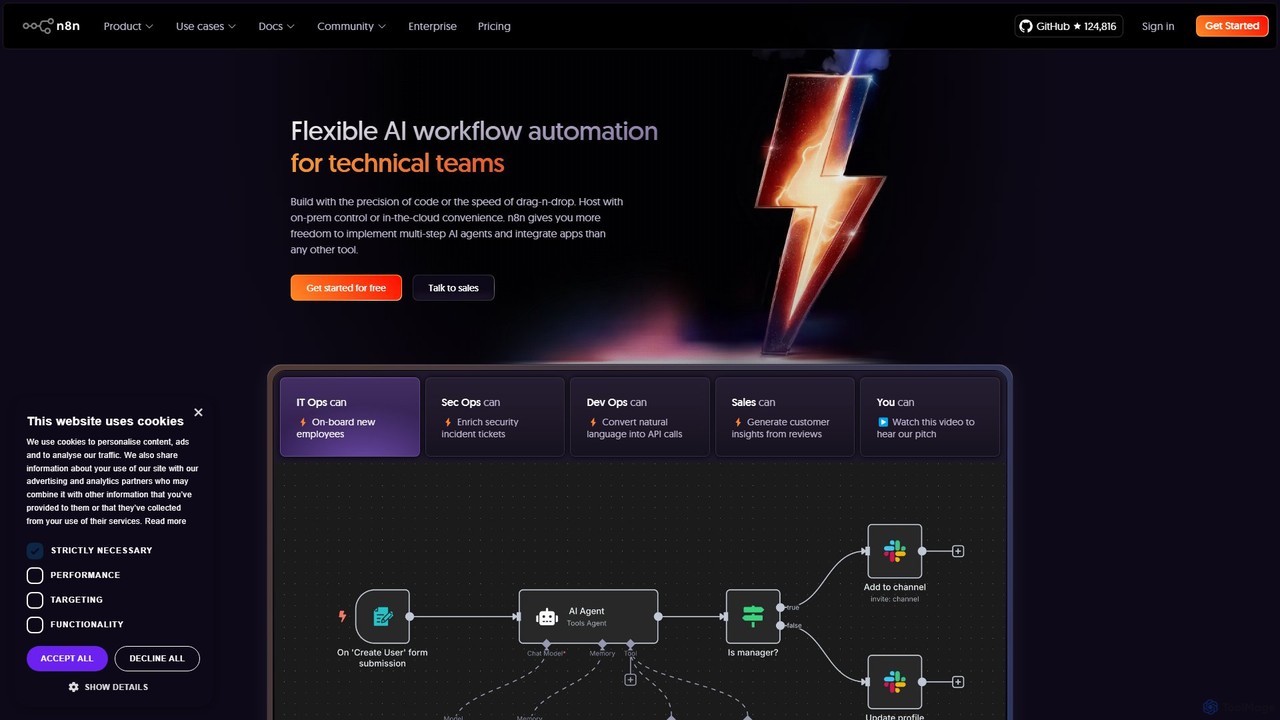
n8n
n8n is a source-available, node-based workflow automation platform designed for both technical and non-technical users. It enables you to connect hundreds of applications and services, including powerful AI models, to automate complex tasks and processes. With options for both cloud hosting and self-hosting, n8n offers unparalleled flexibility, control, and scalability for building everything from simple data syncs to sophisticated AI agents.
Crm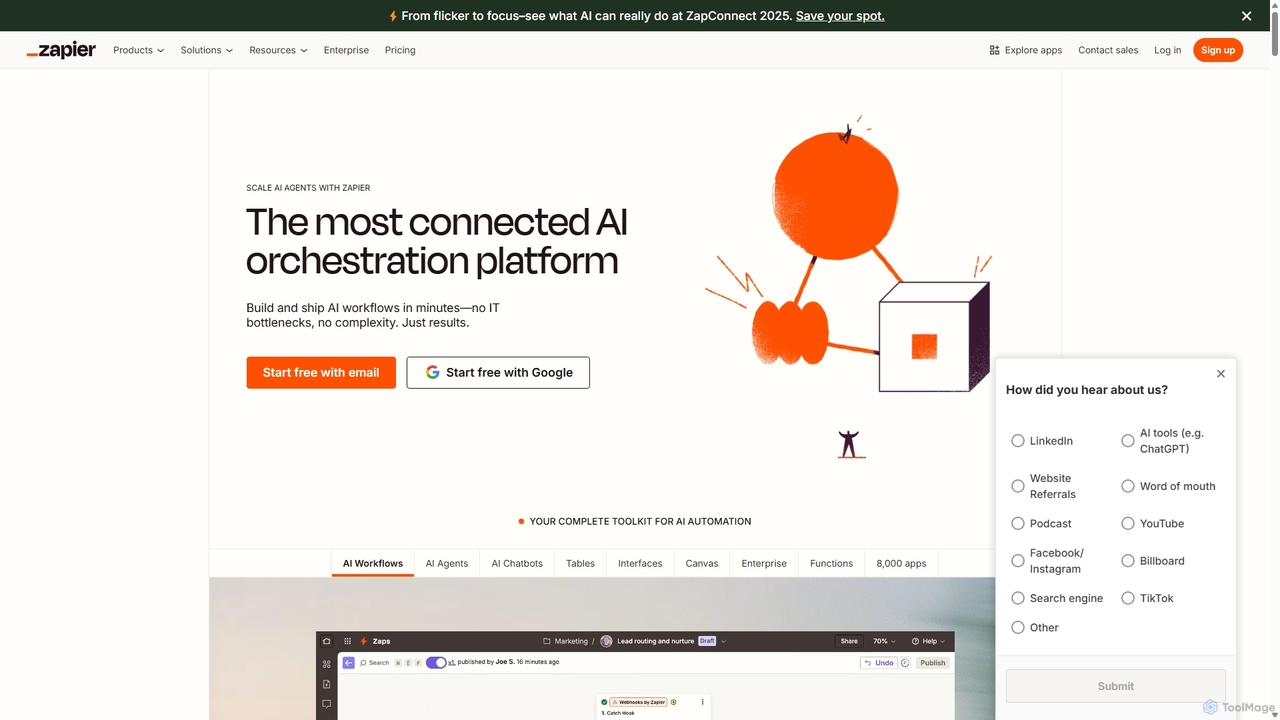
Zapier
Zapier is a leading no-code automation platform that empowers you to connect over 8,000 web apps. It now features a powerful AI toolkit, allowing you to build custom AI workflows, agents, and chatbots to automate tasks, streamline processes, and scale your business operations without writing a single line of code. From simple two-step integrations to complex, multi-step AI-powered workflows, Zapier makes automation accessible to everyone.
Ai Agent Builder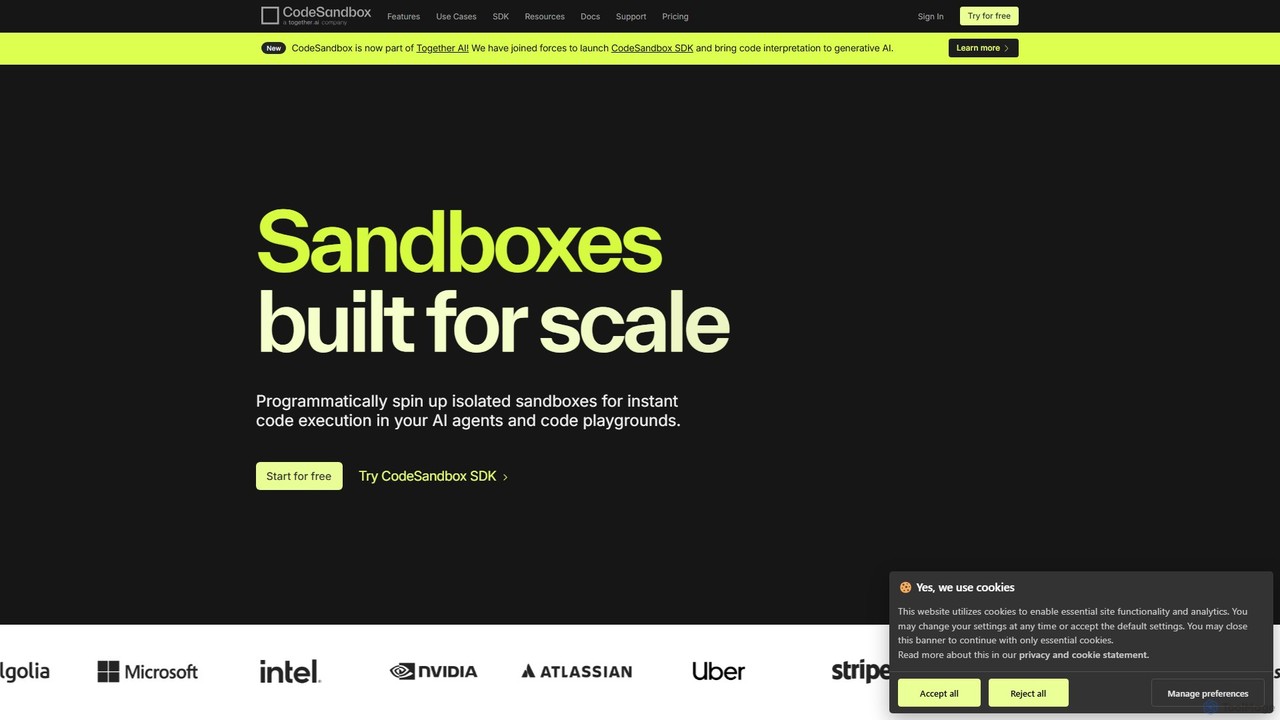
CodeSandbox
CodeSandbox is an instant cloud development environment that enables developers to build, share, and collaborate on web applications. It provides scalable, secure sandboxes for any project, from quick prototypes to full-stack applications, and now features a powerful SDK for integrating code execution into AI agents.
Code Generation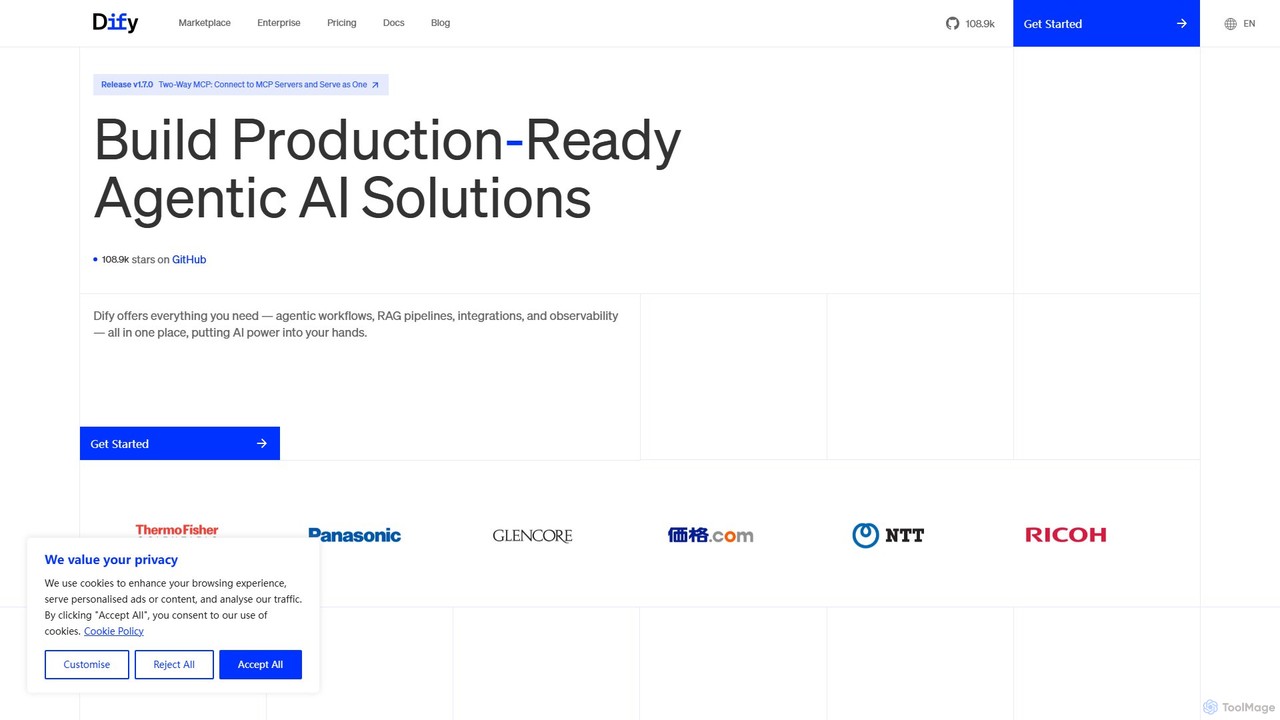
Dify
Dify is an open-source, low-code AI development platform for building and operating production-ready generative AI applications. It enables the creation of AI agents and workflows powered by RAG pipelines, extensive model support, and full observability, simplifying the entire development lifecycle from idea to deployment.
Ai Agent
CrewAI
CrewAI is a powerful multi-agent platform for building and orchestrating collaborative AI agent workflows. It enables developers to create "crews" of specialized AI agents that work together to automate complex tasks. With its open-source framework, no-code UI Studio, and "Flows" feature for structured automation, it streamlines development from planning to deployment and monitoring, integrating with any LLM and cloud provider.
Enterprise Solutions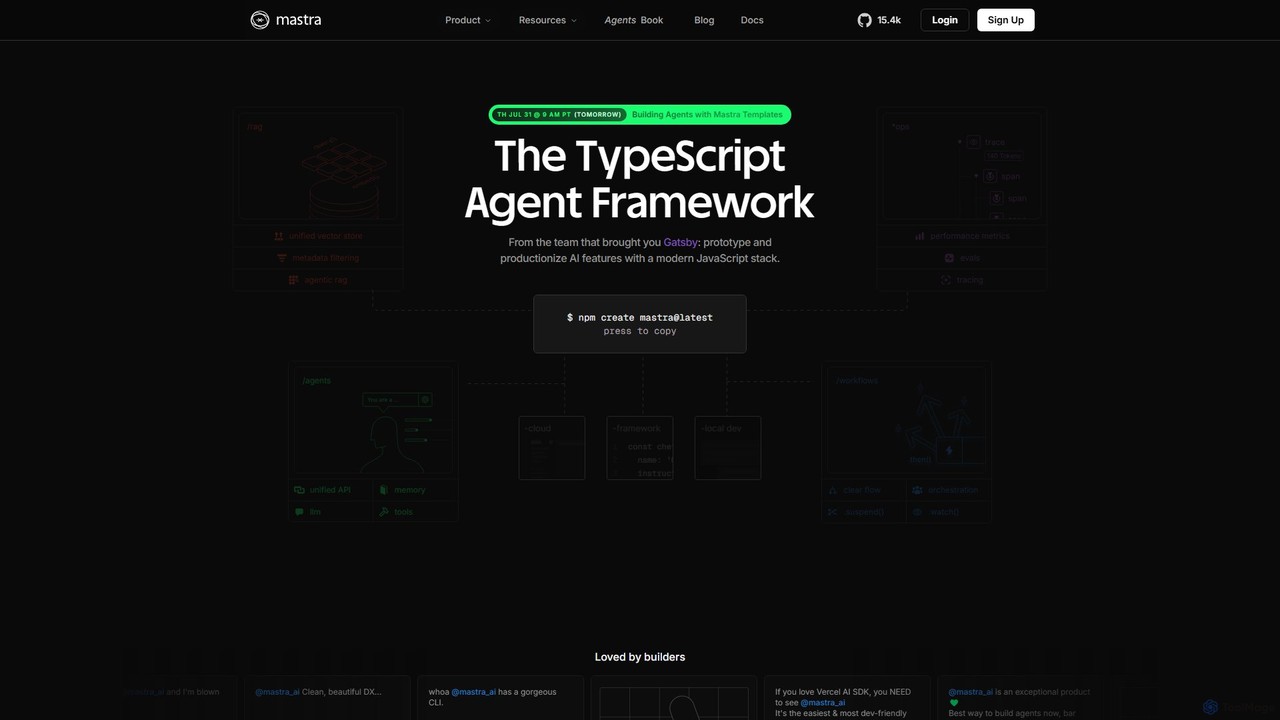
Mastra
Mastra is an open-source TypeScript framework designed for developers to build, deploy, and manage sophisticated AI agents and complex workflows. It provides a developer-friendly SDK with features like persistent memory, tool calling, Retrieval-Augmented Generation (RAG), and deterministic workflow graphs. Built by the team behind Gatsby, Mastra simplifies creating production-ready AI applications within the JavaScript ecosystem.
Agent Builder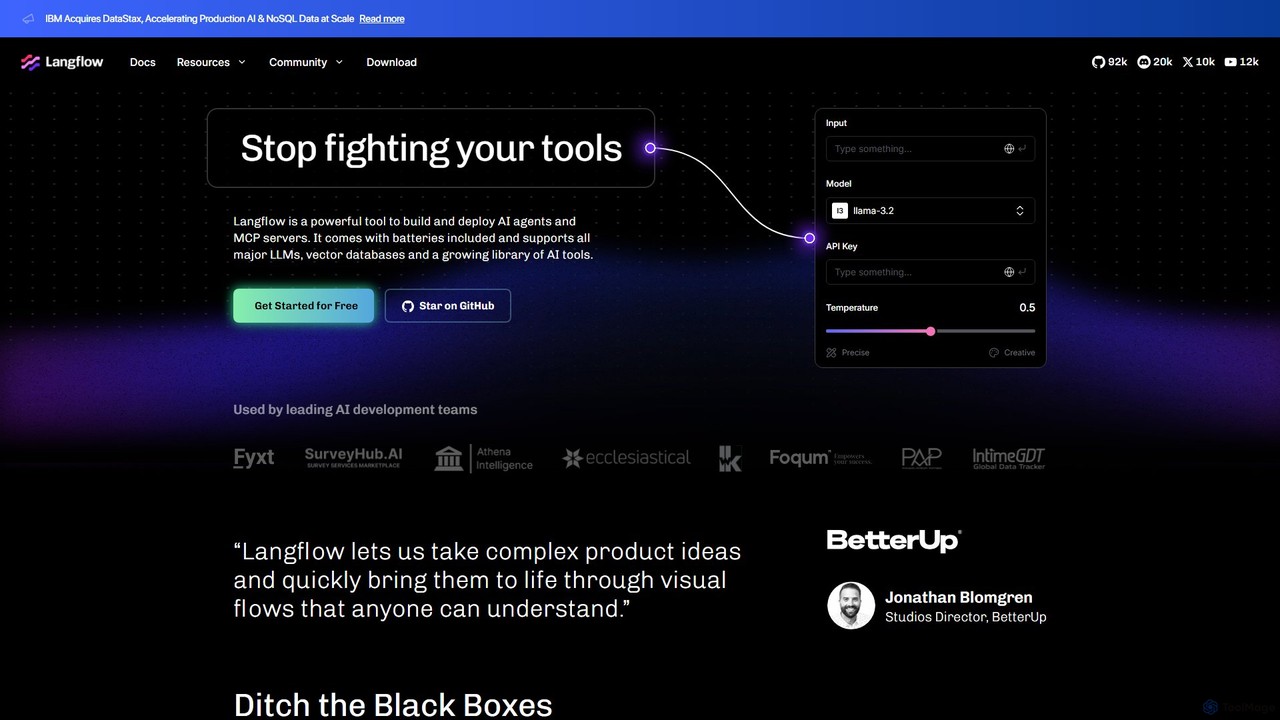
Langflow
Langflow is an open-source, visual UI for building and deploying AI applications. It features a drag-and-drop interface to chain LLMs, agents, and tools, enabling rapid prototyping and deployment of complex workflows like RAG and multi-agent systems. It supports extensive integrations and offers both self-hosted and cloud options.
Low Code No Code
Trigger.dev Comments (0)
Sign in to comment.
Sign inNo comments yet.