ToolMage
Sign in

Best 8 Database AI tools for Development

Popular Database AI tools in Development include Supabase, Convex, Back4app, Stacker, Noloco, FireCMS, PropelData, and Dropbase, helping you work more efficiently.

PropelData
Freemium

PropelData

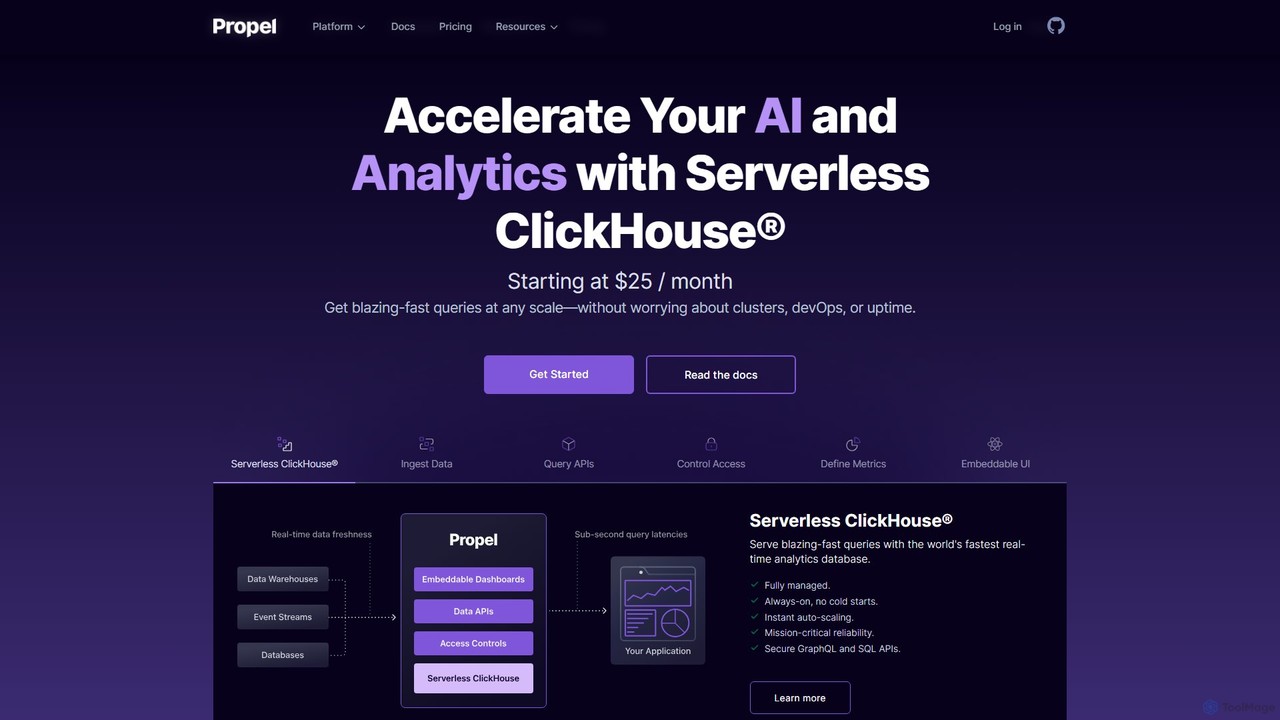
PropelData is a serverless data platform for developers, built on ClickHouse, designed to accelerate the creation of AI and analytics applications. It provides a complete toolkit, including data ingestion, real-time transformations, and secure APIs, enabling developers to build fast, scalable, and native-looking customer-facing analytics dashboards and features directly into their products without managing complex data infrastructure.

Business Intelligence
Visits 7.2KFavorites 82Likes 101

Dropbase
Freemium

Dropbase

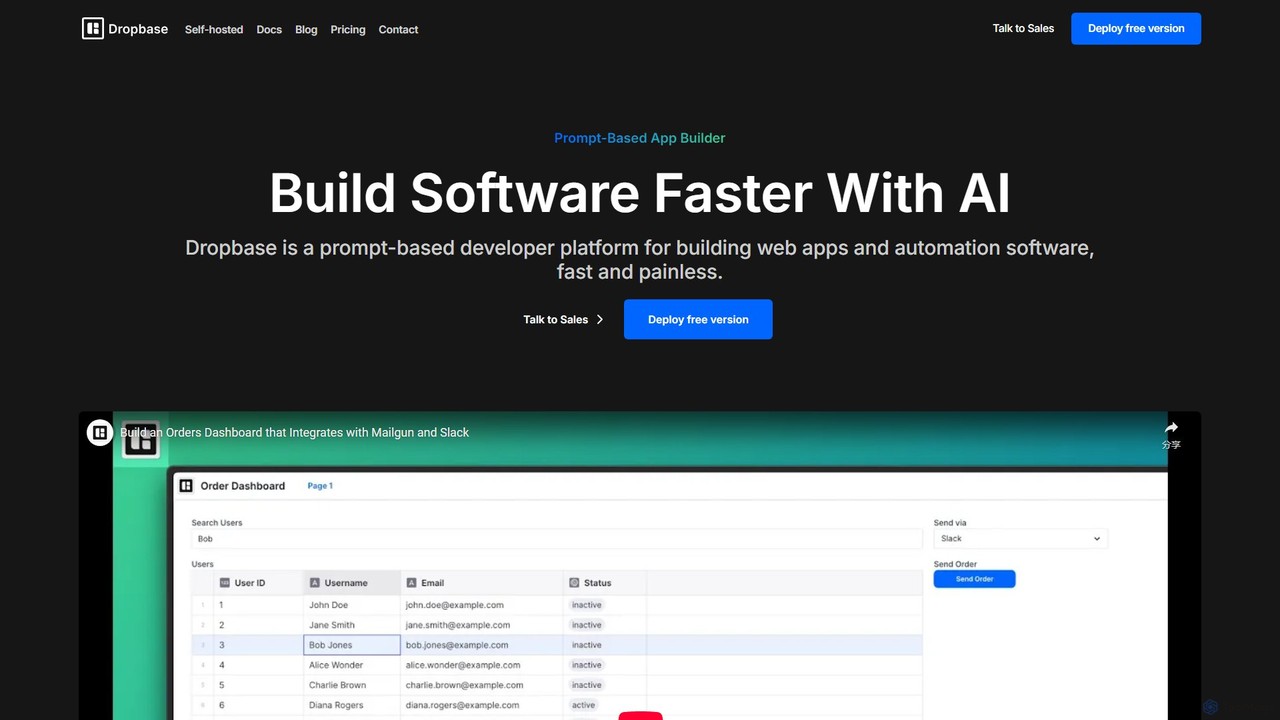
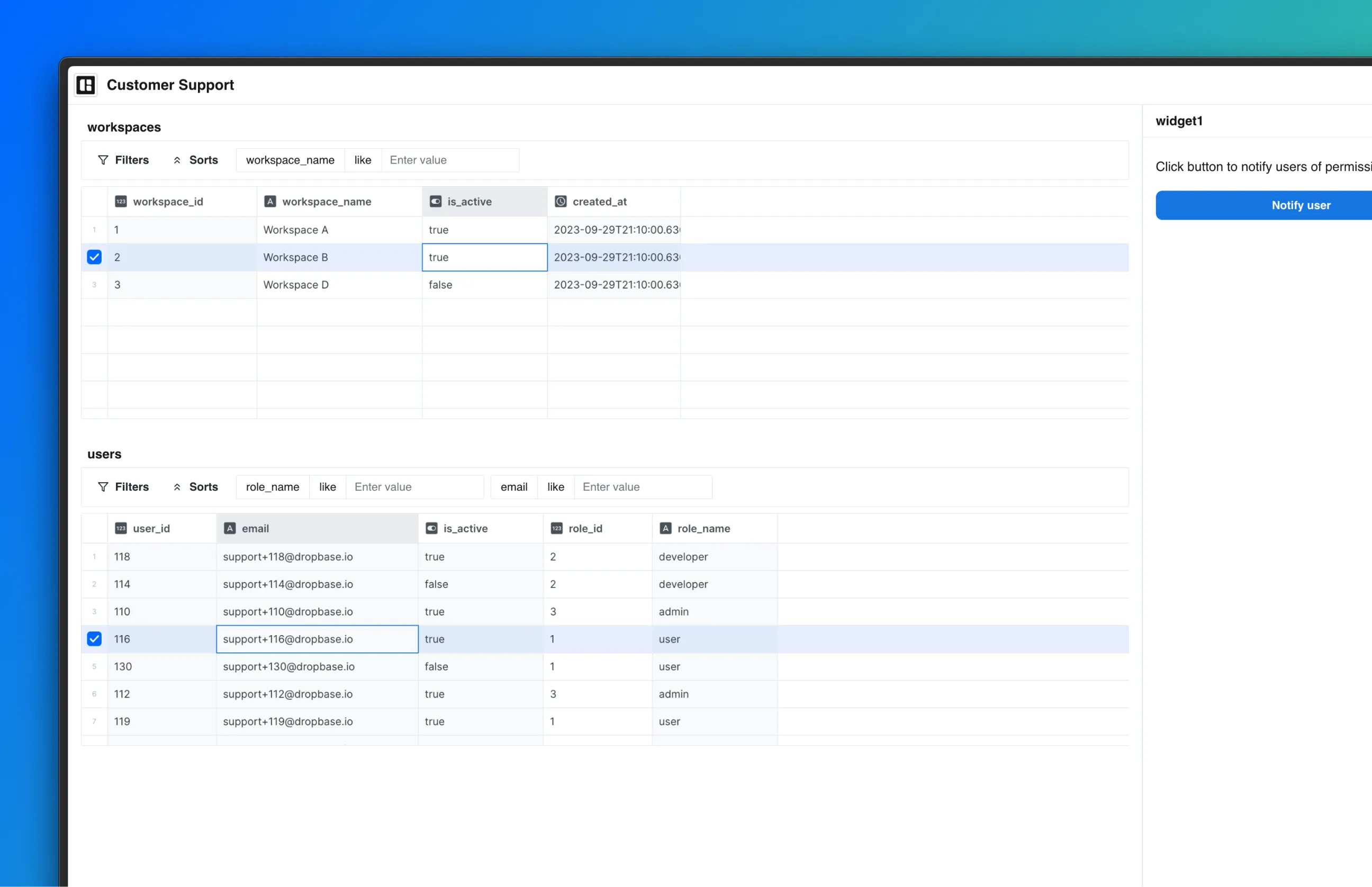
Dropbase is an AI-powered, prompt-based application builder designed for Python developers. It enables the rapid creation of internal tools, admin panels, and database editors directly within your existing codebase. By leveraging AI for code generation and providing essential UI components, Dropbase accelerates development, offers full Python flexibility, and ensures security with self-hosting options.

Database
Visits 3.5KFavorites 126Likes 130
FireCMS
Freemium

FireCMS

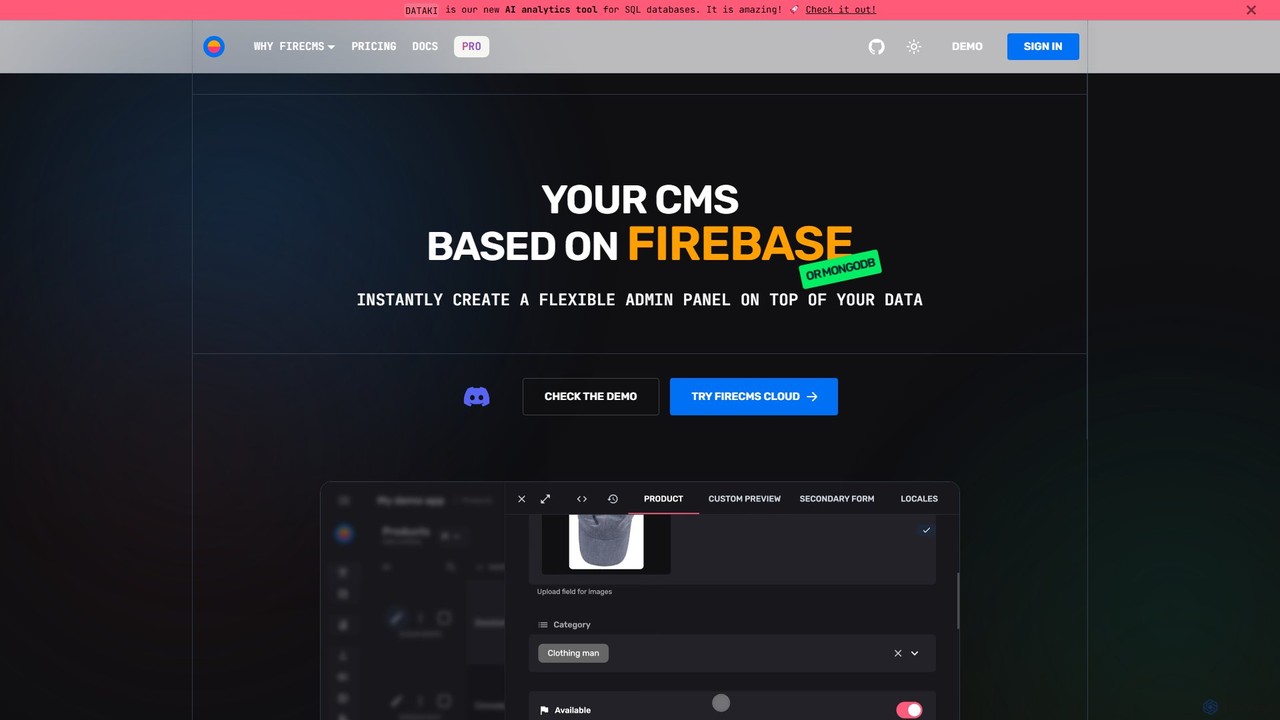
FireCMS is an open-source, headless CMS and admin panel builder for Firebase and MongoDB. It enables developers and startups to instantly create flexible, powerful back-office applications with an intuitive, Airtable-like interface. Featuring AI-powered data queries, automatic schema detection, extensive customization with React, and a rich content editor, FireCMS streamlines development and content management, offering both cloud and self-hosted solutions.

Content Management System
Visits 31.8KFavorites 105Likes 99
Noloco
Freemium

Noloco

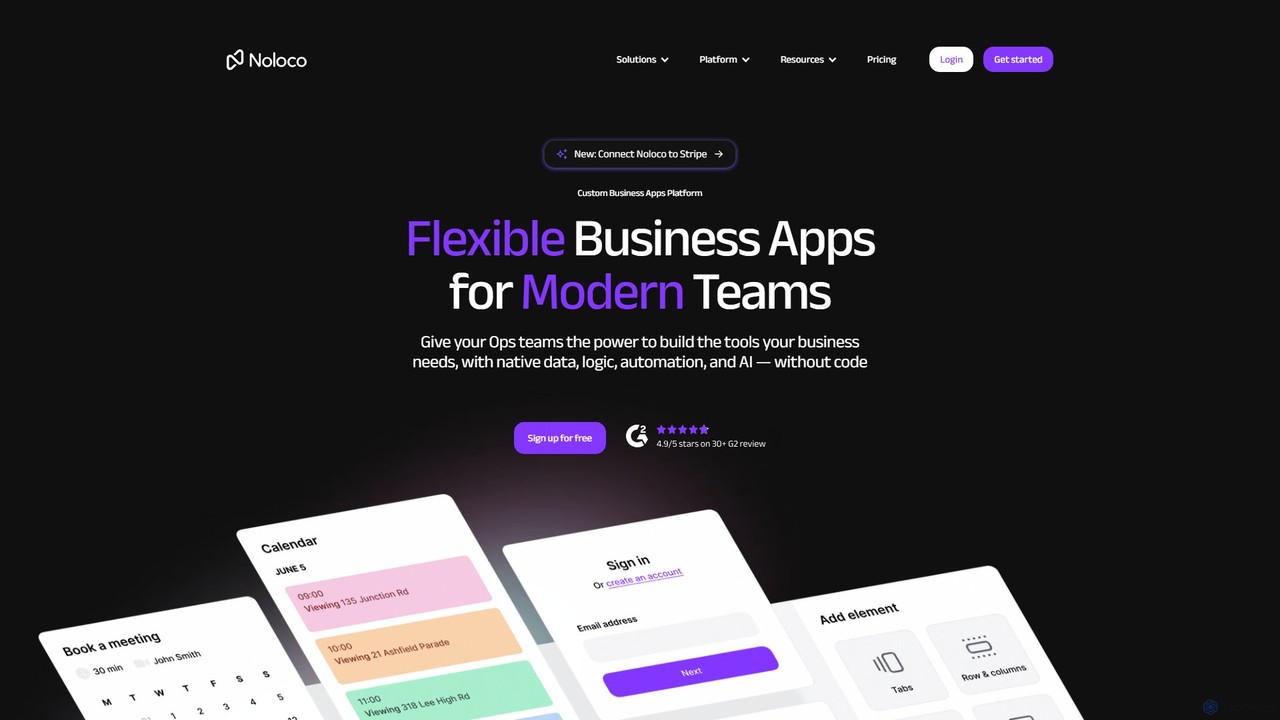
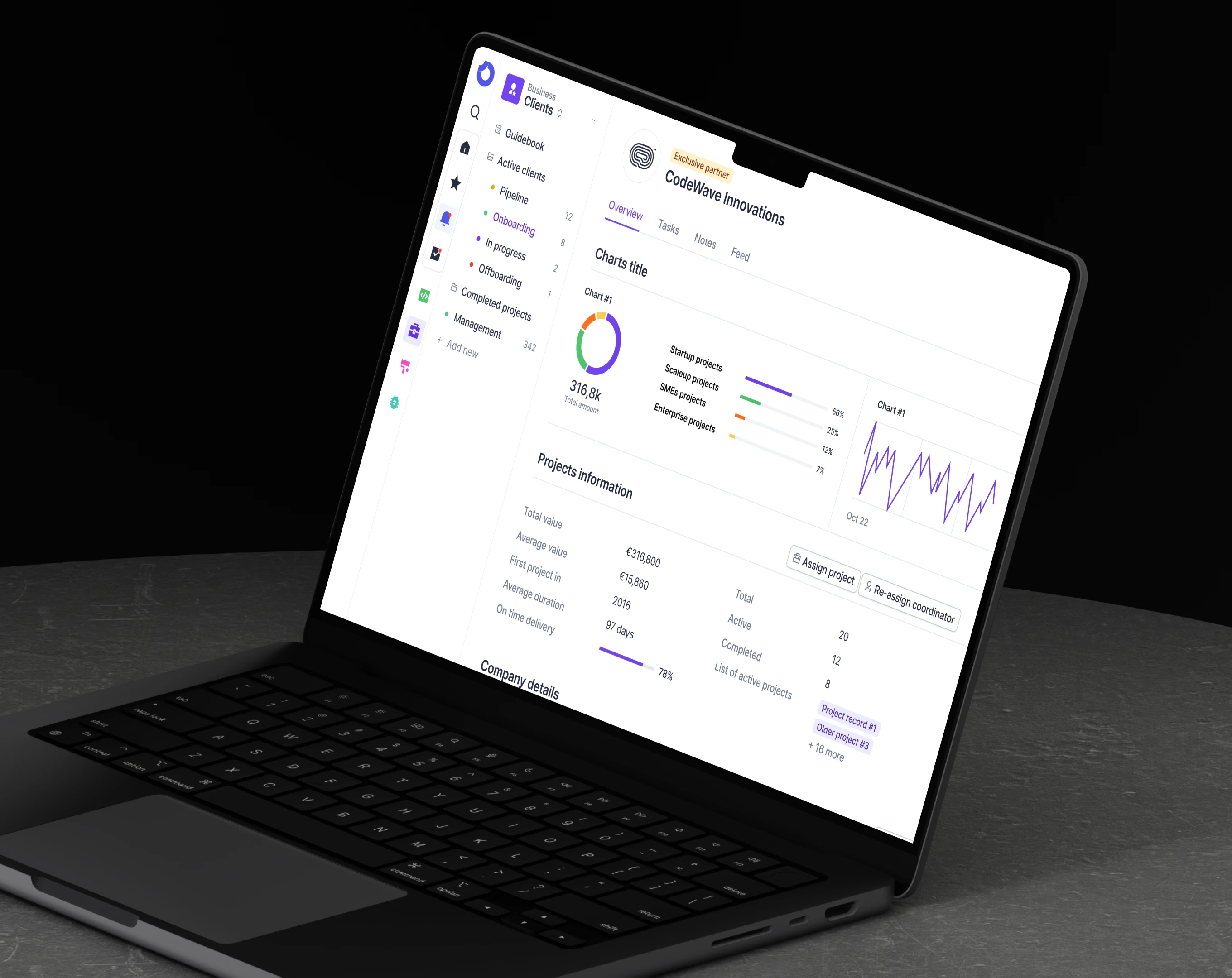
Noloco is a powerful no-code platform that enables teams to build custom business applications without writing any code. Create flexible CRMs, project management tools, client portals, and internal tools by connecting your existing data sources like Airtable, Google Sheets, and databases. Automate workflows, manage permissions, and leverage AI to streamline your operations.

App Builder
Visits 65.5KFavorites 114Likes 135
Supabase
Freemium

Supabase

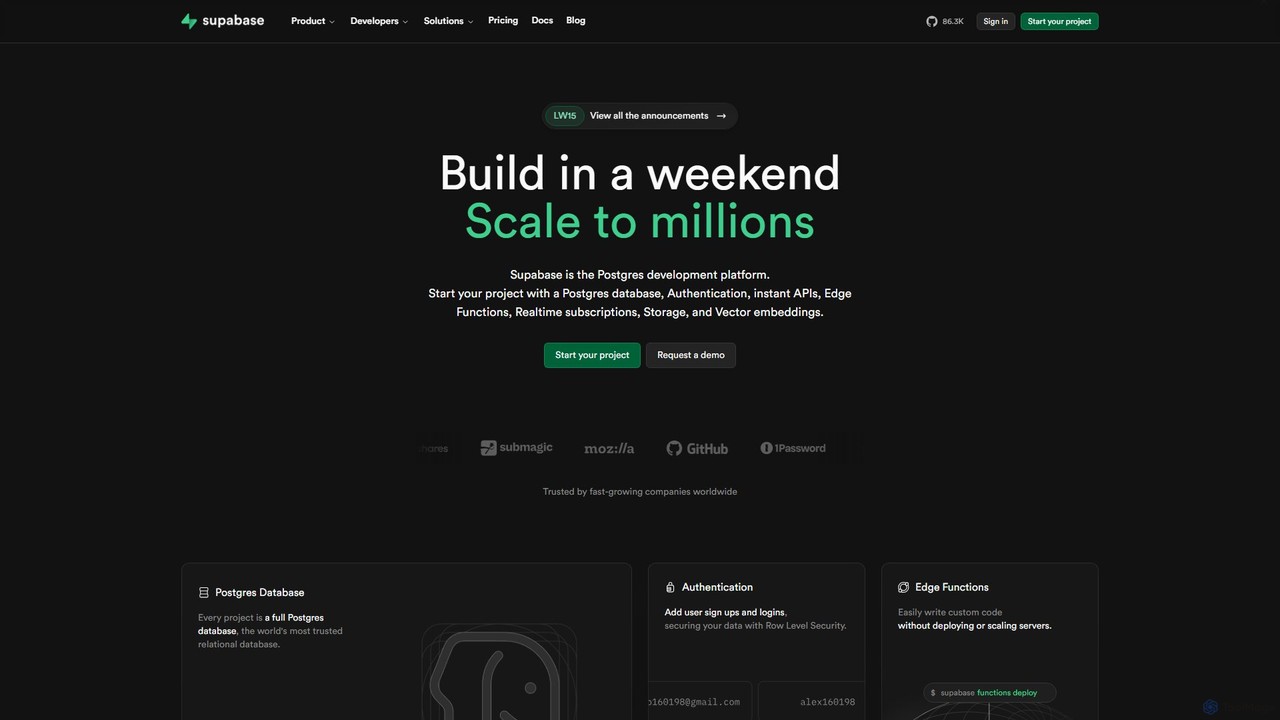
Supabase is an open-source Firebase alternative, providing a complete backend solution built on Postgres. It offers a suite of tools including a database, authentication, instant APIs, edge functions, real-time subscriptions, storage, and vector embeddings to accelerate application development from prototype to production.

Backend
Visits 29.3MFavorites 125Likes 136
Convex
Freemium

Convex

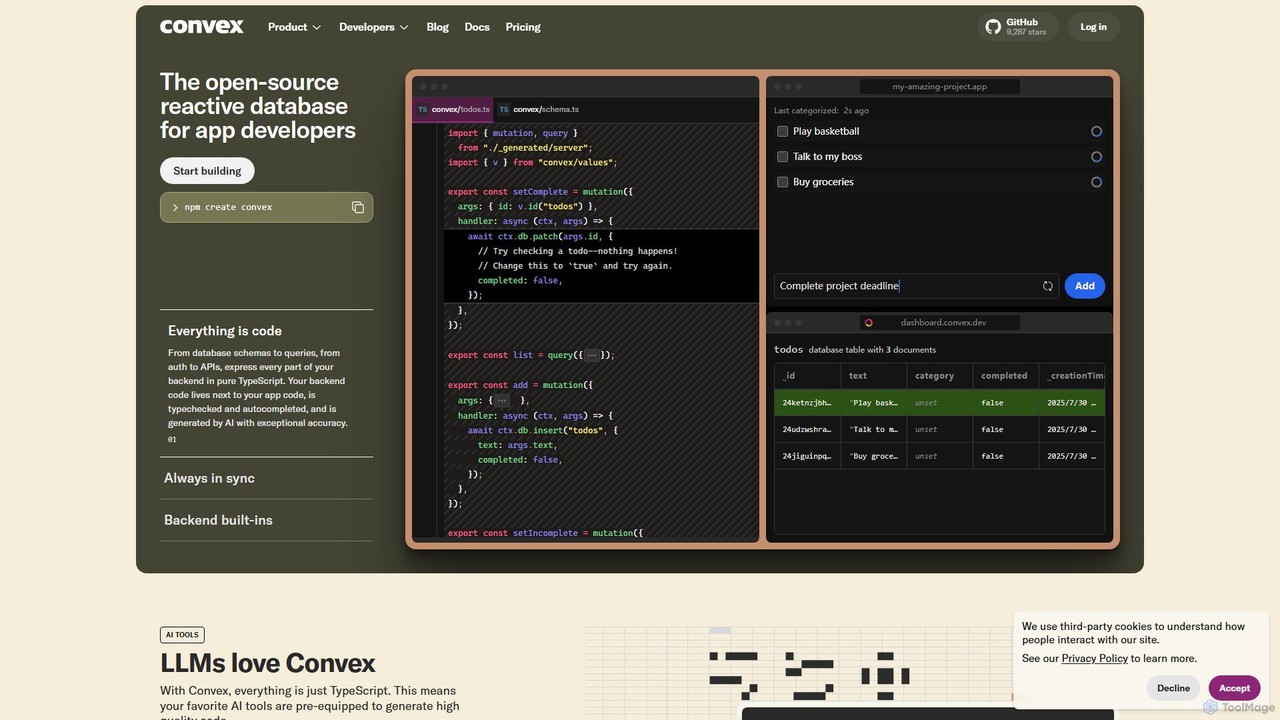
Convex is a backend-as-a-service platform for web developers, offering a reactive TypeScript database that simplifies building full-stack, real-time applications. It provides serverless functions, file storage, and vector search with end-to-end type safety, making it a powerful, developer-friendly alternative to Firebase.

Backend
Visits 695.9KFavorites 142Likes 130
Stacker
Freemium

Stacker

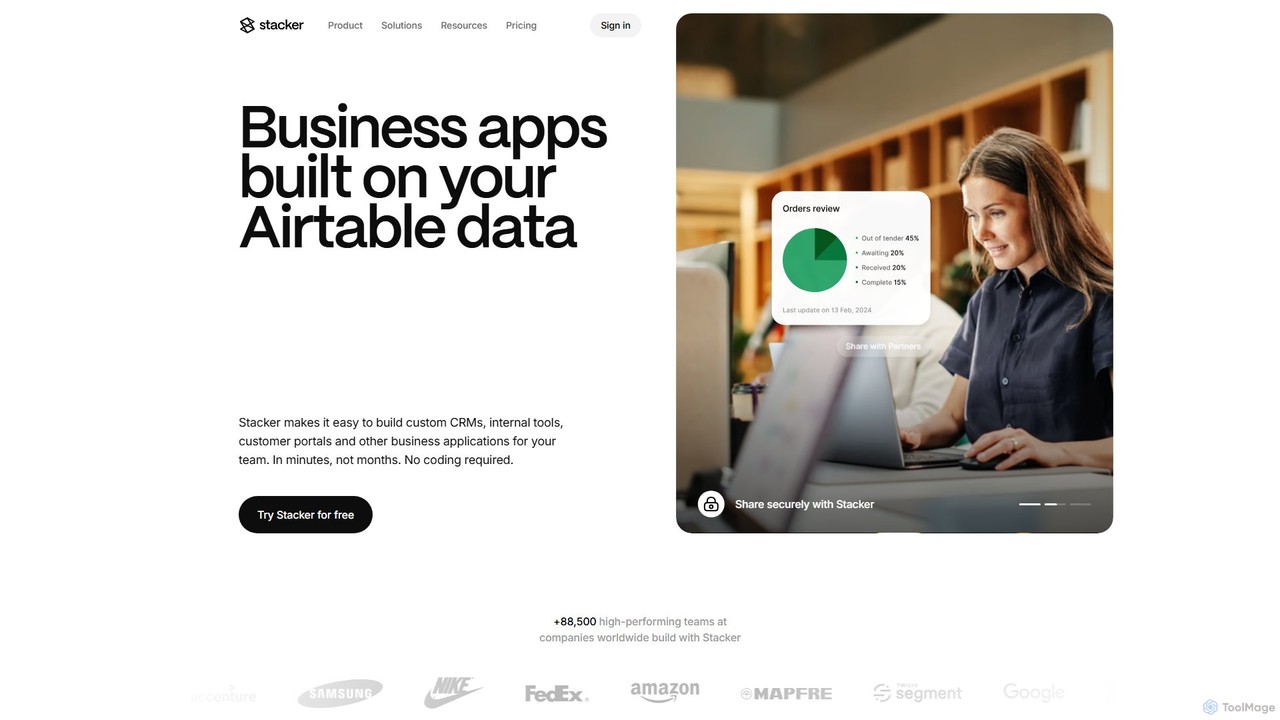
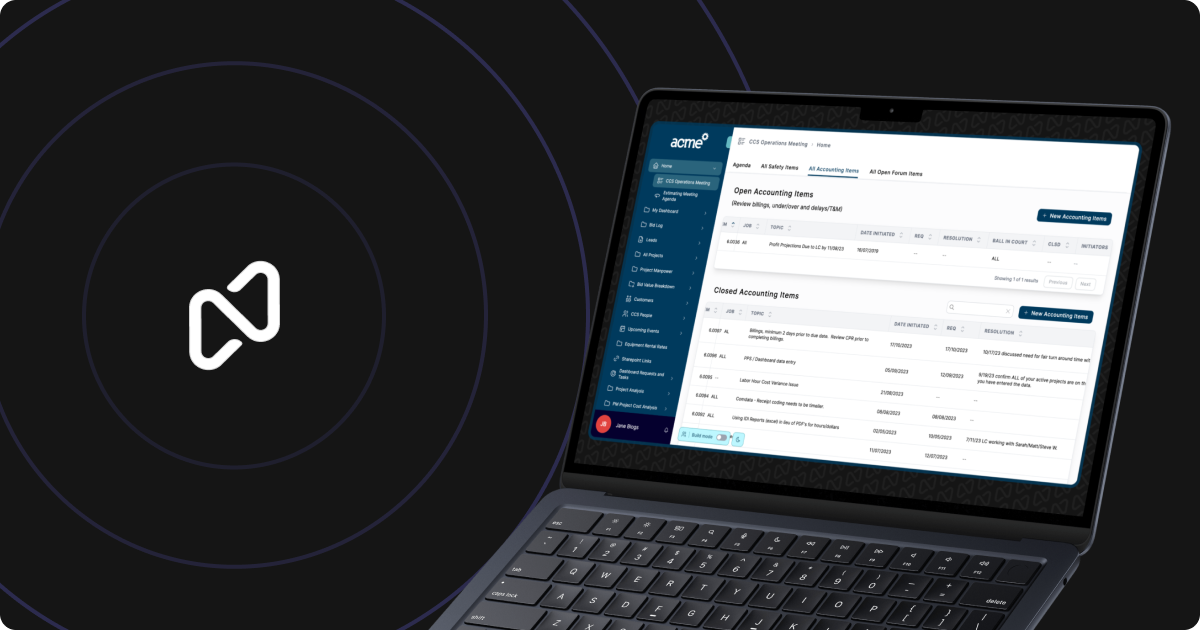
Stacker is a no-code platform that allows you to build custom business applications, such as CRMs, internal tools, and customer portals, directly from your data in Airtable or Google Sheets. Empower your team with software that perfectly fits your unique workflows, without writing a single line of code.

Crm
Visits 96.7KFavorites 115Likes 116
Back4app
Freemium

Back4app

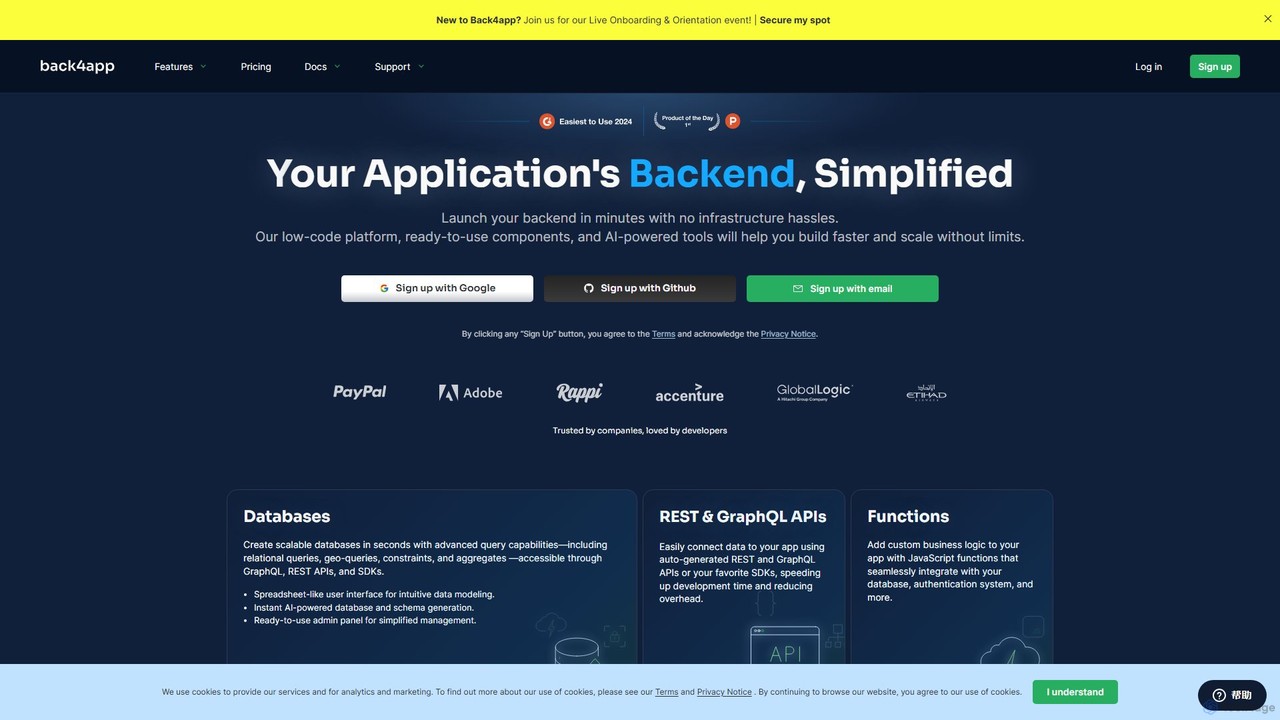
Back4app is an AI-powered, low-code Backend-as-a-Service (BaaS) platform that simplifies application development. It enables developers to launch scalable backends in minutes, handling infrastructure complexities like databases, APIs, authentication, and storage. With its AI Agent, ready-to-use components, and extensive SDK support, Back4app accelerates the development process, allowing teams to build faster and scale without limits for both web and mobile applications.

Backend As A Service (Baas)
Visits 315KFavorites 109Likes 111

About Database

AI Database tools are a class of software that leverages artificial intelligence to enhance database management, querying, and optimization. These tools often utilize Natural Language Processing (NLP) to translate human language into executable database queries, or machine learning to predict performance bottlenecks. This enables developers and data analysts to interact with complex data more intuitively and proactively maintain system health. They significantly lower the technical barrier for data access and streamline complex database administration tasks within the development lifecycle.

Core Features

  • Natural Language Querying (NLQ): Translates plain English questions into complex SQL or NoSQL queries, making data accessible to non-technical users.
  • Automated Performance Tuning: Uses machine learning to analyze workloads and automatically recommend or apply index optimizations and configuration changes.
  • Intelligent Anomaly Detection: Continuously monitors database metrics to identify unusual patterns, potential security threats, or performance degradation.
  • AI-Powered Schema Management: Assists in generating, migrating, or optimizing database schemas based on application requirements and data patterns.

Use Cases

These tools are valuable for developers building data-intensive applications, data analysts seeking self-service analytics, and DevOps engineers managing large-scale database infrastructures. Common scenarios include embedding natural language search into applications, automating routine database maintenance, and enabling business teams to generate their own reports without technical assistance.

How to Choose

When selecting an AI Database tool, consider its compatibility with your existing database systems (e.g., PostgreSQL, MongoDB, Snowflake). Evaluate the accuracy and performance of its natural language processing capabilities. Assess its integration with your development workflow and BI platforms. Finally, consider the tool's security features and the level of automation it provides for performance tuning and maintenance.

Featured tool rankings

Database use cases

1

Enable Self-Service Business Analytics

A marketing manager needs to understand customer demographics for a recent campaign. Instead of waiting for a data analyst, they use an AI database tool to ask in plain language, 'Show me the age distribution of customers who purchased product X in the last month, grouped by city.' The tool generates the correct SQL query, runs it against the database, and returns a visualized result. This empowers the manager to make data-driven decisions in minutes rather than days.

2

Automate Database Performance Tuning

A DevOps team manages a high-traffic e-commerce platform. An AI database tool continuously monitors query performance and server load. It identifies a slow-running query that impacts checkout times and automatically recommends a new index. Upon approval, the tool applies the change during a low-traffic window, proactively preventing performance degradation and potential revenue loss without requiring manual intervention from a database administrator.

3

Accelerate API and Backend Development

A backend developer is building a new feature that requires complex data aggregation. Instead of spending hours manually writing and optimizing complex SQL joins, they describe the required data structure in a comment or a simple text prompt. An AI database tool integrated into their IDE generates the optimized, secure SQL query instantly. This reduces development time, minimizes the risk of human error, and allows the developer to focus on business logic rather than database syntax.

4

Automate Data Anomaly and Threat Detection

A financial institution needs to protect sensitive customer data. An AI database tool monitors all database access patterns in real-time. It establishes a baseline of normal activity and detects an unusual spike in data exports from a specific user account outside of business hours. The system flags this as a potential security threat, automatically alerts the security team, and provides a detailed report of the anomalous activity, helping to prevent a data breach before it escalates.

5

Simplify Database Schema Modernization

A company is migrating from a legacy monolithic database to a microservices architecture. An AI tool analyzes the existing schema and years of query logs. It intelligently suggests how to split the schema into logical domains for each microservice, identifying relationships and dependencies that are not immediately obvious. The tool can then generate the new, optimized schemas and create initial data transformation scripts, significantly simplifying a complex and error-prone migration process for the development team.

6

Querying Real-time IoT Data Intuitively

An operations manager at a manufacturing plant needs to analyze sensor data from machinery. Instead of learning a specialized time-series query language, they use an AI database tool to ask, 'What was the average temperature of machine 5 yesterday between 2 PM and 4 PM, and how does it compare to the weekly average?' The tool queries the massive time-series database and provides a direct, comparative answer, making complex IoT data accessible for operational decision-making without specialized skills.

Database FAQ

What are AI Database tools?

AI Database tools are software applications that act as an intelligent layer on top of existing databases. They use artificial intelligence, particularly machine learning and natural language processing, to simplify and automate complex database tasks. Key functions include translating plain language into SQL queries, automatically optimizing database performance, and detecting anomalies in data access patterns. They don't replace the database itself but enhance how users and developers interact with it.

How do I choose the right AI Database tool?

To choose the right tool, consider these key factors:

  • Compatibility: Ensure the tool supports your specific database technology (e.g., PostgreSQL, MongoDB, Snowflake) and cloud environment.
  • Core Features: Identify your primary need. Is it for natural language querying for business users, or automated performance tuning for DevOps?
  • Integration: Check if it integrates smoothly with your existing IDEs (like VS Code), BI tools (like Tableau), and development workflows.
  • Accuracy and Performance: Evaluate the precision of its AI models, especially for query generation, and ensure it doesn't negatively impact your database's performance.
What's the difference between an AI Database tool and a traditional DBMS?

A traditional Database Management System (DBMS) like MySQL or PostgreSQL is the core engine responsible for storing, retrieving, and managing data. An AI Database tool is an intelligent layer that works with a DBMS. It does not store data itself. Instead, it enhances the DBMS by adding capabilities like natural language querying, automated optimization, and anomaly detection. In short, a DBMS is the library, while an AI Database tool is the smart librarian that helps you find and manage the books more efficiently.

Who are AI Database tools for?

AI Database tools serve a wide range of users. Developers use them to accelerate backend development by auto-generating SQL queries. Data Analysts and Business Users leverage them for self-service analytics, allowing them to get insights from data without writing code. Database Administrators (DBAs) and DevOps Engineers use them for proactive performance monitoring, automated tuning, and security threat detection, reducing manual workload and preventing issues before they impact users.

What is the main advantage of using AI for database queries?

The main advantage is the democratization of data access. AI, specifically Natural Language Processing (NLP), allows users who are not SQL experts to ask complex questions of their data in plain, conversational language. This breaks down the barrier between business teams and their data, significantly reducing the dependency on technical teams for reports and analysis. The result is faster, more widespread data-driven decision-making across an organization.