Dubble
Dubble is an AI-powered Chrome extension that automatically creates step-by-step guides, tutorials, and documentation. It records your on-screen …
Dubble is an AI-powered Chrome extension that automatically creates step-by-step guides, tutorials, and documentation. It records your on-screen actions, instantly generating written instructions, annotated screenshots, and videos. This tool is designed to eliminate the tedious process of manual documentation, saving teams significant time on employee onboarding, customer support, and process training.
Hermae
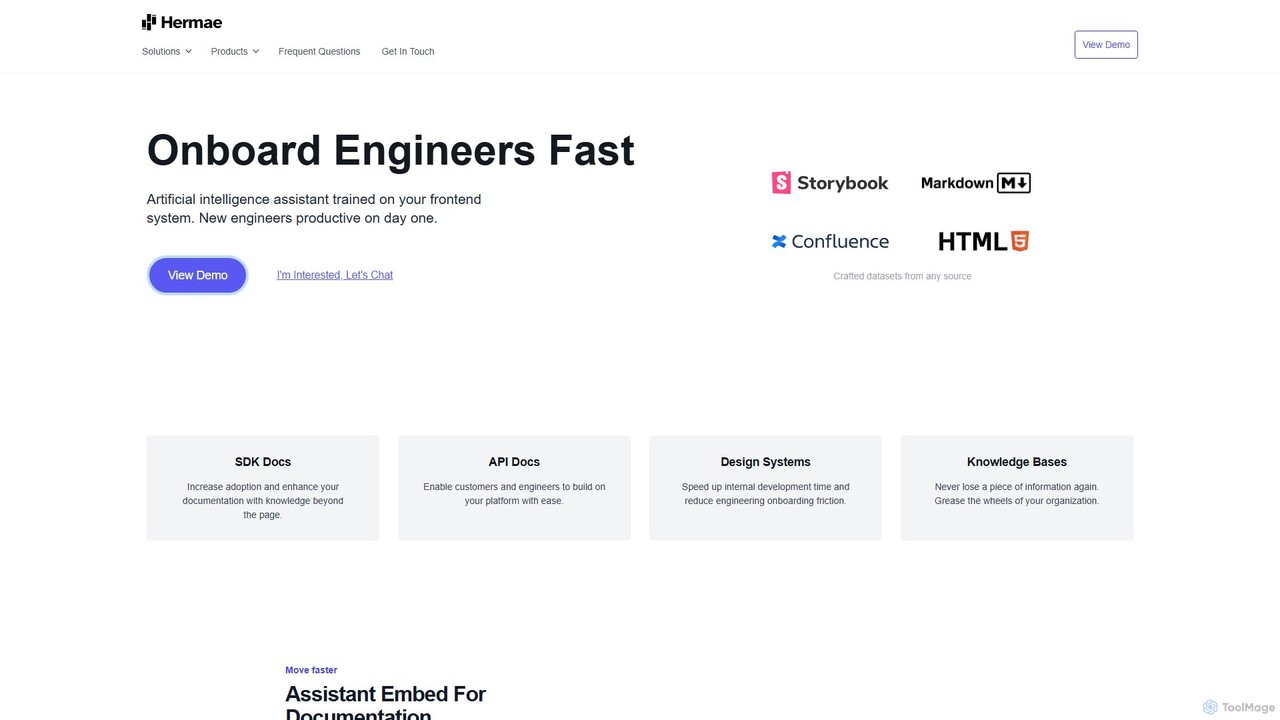
Hermae is an AI assistant for enterprise design systems. It's trained on your company's unique frontend system, SDKs, …
Hermae is an AI assistant for enterprise design systems. It's trained on your company's unique frontend system, SDKs, and knowledge bases to accelerate developer onboarding, improve productivity, and increase design system adoption. It provides instant answers, feedback, and code generation directly within your documentation.
Google · GitHub
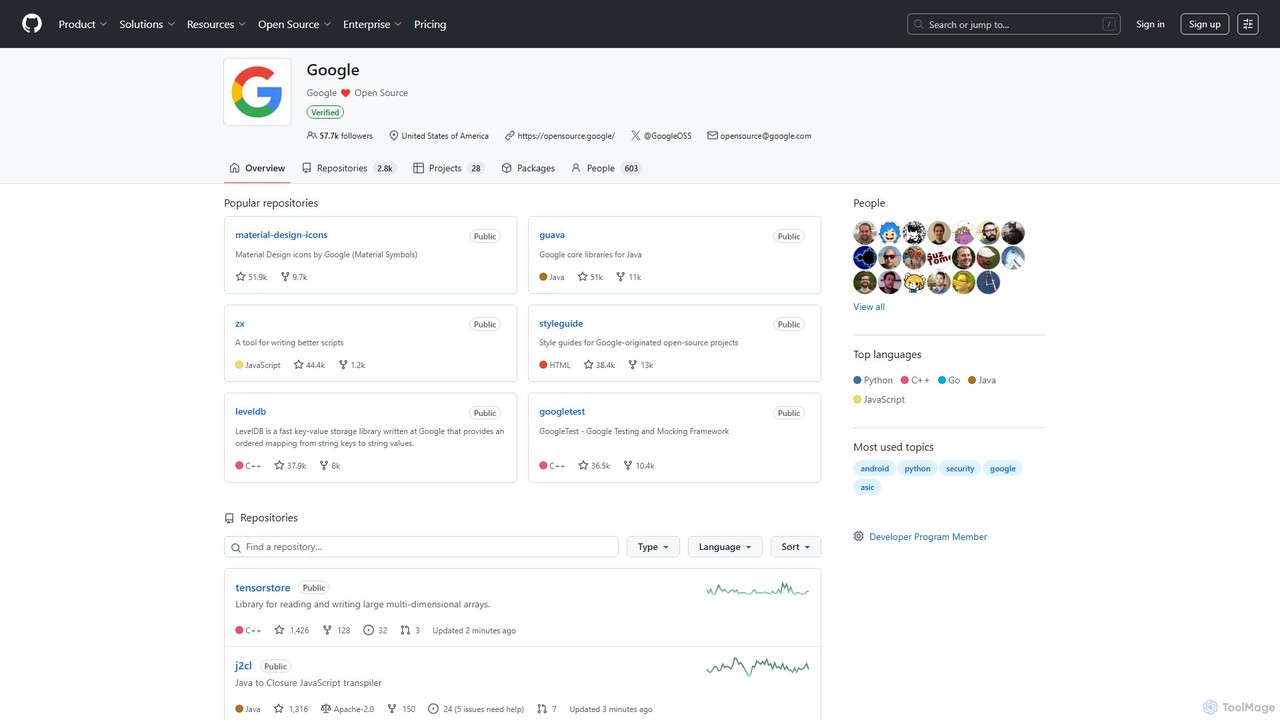
The official open-source hub for Google on GitHub. It hosts a vast collection of over 2,700 public repositories, …
The official open-source hub for Google on GitHub. It hosts a vast collection of over 2,700 public repositories, including libraries, developer tools, frameworks, and style guides. A critical resource for developers working with Java, C++, Python, Android, web technologies, and more, offering production-tested code and fostering community collaboration.
alteropen
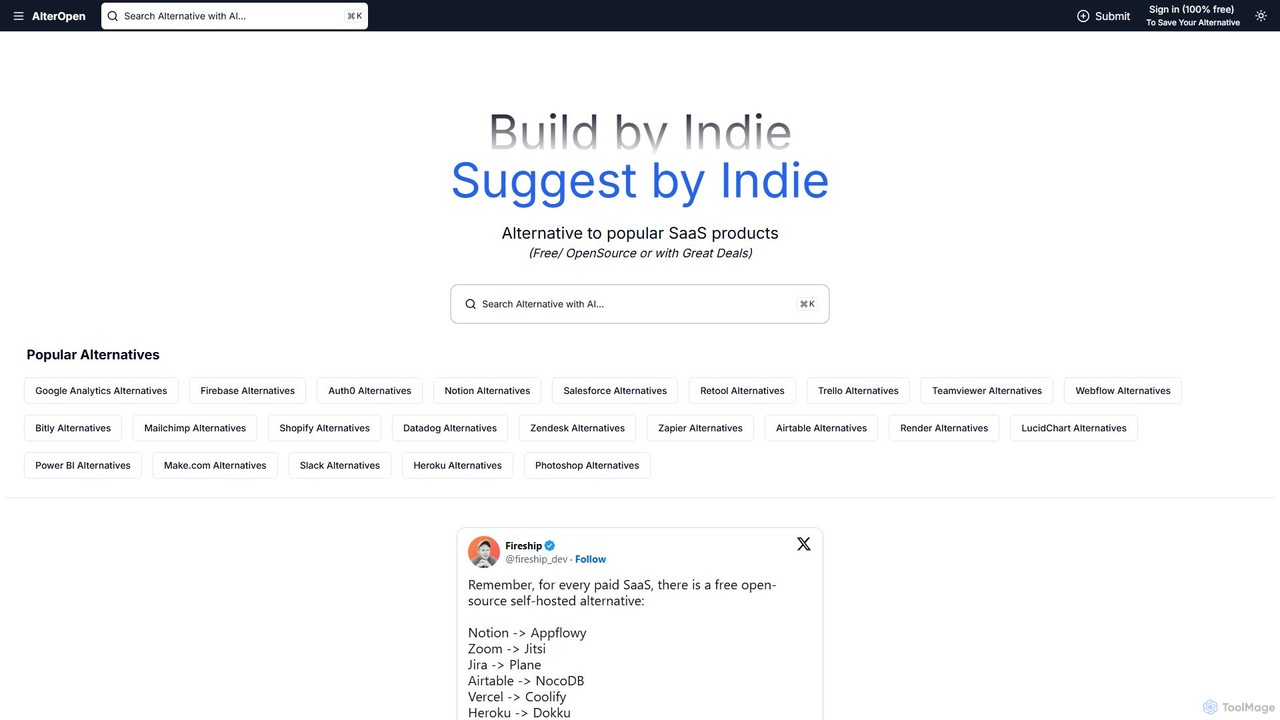
AlterOpen is a curated directory for finding free, open-source, and cost-effective alternatives to popular SaaS products. Built by …
AlterOpen is a curated directory for finding free, open-source, and cost-effective alternatives to popular SaaS products. Built by and for the indie developer community, it helps users discover innovative tools, reduce software costs, and find solutions with greater data control.
Fibery
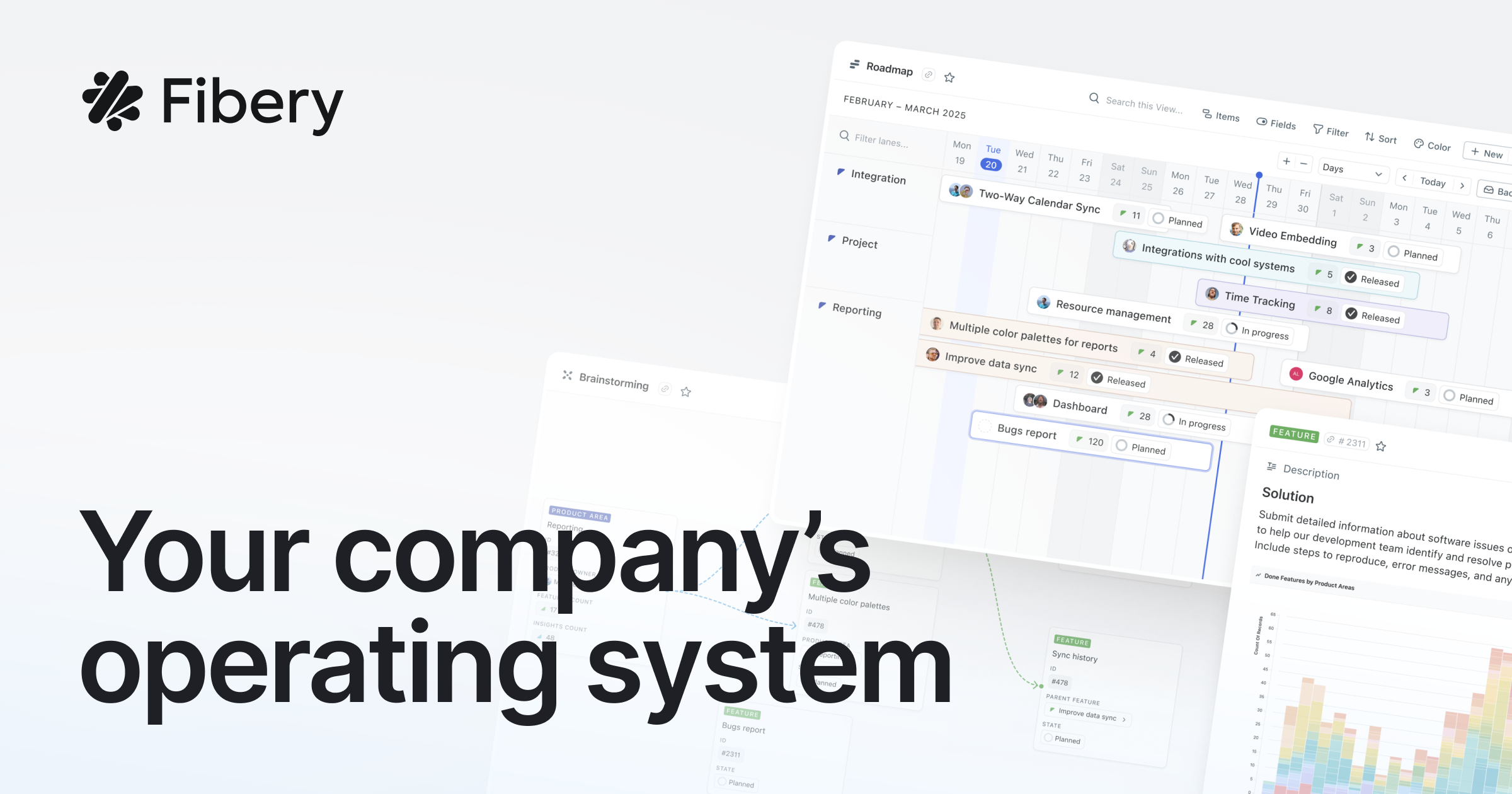
Fibery is a highly flexible, all-in-one work management platform designed to replace scattered tools. It integrates project management, …
Fibery is a highly flexible, all-in-one work management platform designed to replace scattered tools. It integrates project management, knowledge bases, and process automation into a single, customizable workspace, enhanced with AI to help teams build, connect, and streamline their entire operational workflow.
About Developer Tools
AI Developer Tools are a class of software that leverages artificial intelligence to assist programmers throughout the software development lifecycle. These tools utilize large language models (LLMs) and machine learning to provide intelligent code completion, generate code from natural language, and identify potential bugs before compilation. Their primary value lies in accelerating development speed, improving code quality, and automating repetitive coding tasks. Unlike traditional IDE extensions, AI developer tools understand code context and developer intent, offering proactive and highly relevant assistance.
Core Features
- Intelligent Code Completion: Predicts and suggests entire lines or blocks of code based on the current context, not just single words.
- Code Generation: Creates functions, classes, or entire scripts from natural language descriptions (text-to-code).
- Automated Bug Detection & Fixing: Proactively identifies errors, security vulnerabilities, and performance issues, often suggesting one-click fixes.
- AI-Powered Code Review: Analyzes pull requests for quality, style consistency, and potential issues, acting as a virtual peer reviewer.
- Natural Language to Query: Translates plain English commands into complex database queries (e.g., SQL) or shell commands.
Use Cases
AI Developer Tools are widely used by software engineers, data scientists, DevOps engineers, and students. They are particularly effective for rapid prototyping, refactoring legacy codebases, generating unit tests, and learning new programming languages. For instance, a developer can use them to quickly build an API endpoint, or a data analyst can generate a complex SQL query without writing it manually.
How to Choose
When selecting an AI Developer Tool, consider the following: First, evaluate its support for your specific programming languages and frameworks. Second, check its integration capabilities with your preferred IDE (e.g., VS Code, JetBrains). Third, assess the accuracy and contextual awareness of its suggestions. Finally, review its data privacy policy to understand how your code is handled, especially for commercial projects.

Developer ToolsUse Cases
Accelerate Backend API Development
A backend developer is tasked with creating a new set of RESTful API endpoints for a user management module. Instead of writing all the boilerplate code manually, they use an AI Developer Tool. By providing a simple prompt like "Create a FastAPI endpoint to register a new user with email and password, including data validation and hashing the password," the tool generates the complete Python code. This includes the data model, validation logic, database interaction, and API routing, reducing the initial development time by over 60% and ensuring best practices are followed from the start.
Automate Unit Test Generation
A software engineer has just completed a complex business logic function and needs to ensure it's robust by writing comprehensive unit tests. Using an AI coding assistant, they highlight the function and ask it to "generate unit tests for this function using pytest, covering edge cases like null inputs and empty strings." The AI tool analyzes the function's logic, identifies potential edge cases, and generates a complete test file. This automates a tedious process, increases test coverage, and allows the engineer to focus on developing new features rather than writing repetitive test code.
Refactor and Document Legacy Code
A developer is assigned to modernize a module written years ago with poor documentation and complex logic. They paste a large, confusing function into an AI Developer Tool and ask it to "explain this code, identify potential improvements, and add docstrings." The AI provides a step-by-step explanation of the code's purpose, suggests refactoring opportunities (like breaking it into smaller, more manageable functions), and generates clear, concise documentation. This process dramatically reduces the time needed to understand and safely modify legacy code, minimizing the risk of introducing new bugs.
Generate SQL Queries from Natural Language
A data analyst needs to pull a specific dataset for a report but is not an expert in SQL. They need to find all customers in 'New York' who purchased 'Product X' in the last 90 days. Instead of struggling with complex JOIN and WHERE clauses, they type into an AI tool: "Show me first name, last name, and email for all users from New York who bought Product X in the last 90 days." The tool instantly generates the correct, optimized SQL query, which the analyst can then run against the database. This empowers non-technical users to access data independently and saves time for the data engineering team.
Debugging and Explaining Error Messages
A junior developer encounters a cryptic error message, such as a 'segmentation fault' or a complex traceback from a framework. After spending time searching online with no clear solution, they copy the entire error message and the relevant code snippet into their AI Developer Tool. They ask, "What causes this error and how can I fix it?" The AI analyzes the stack trace, explains the likely cause of the error in simple terms (e.g., a null pointer dereference), highlights the exact line of code causing the issue, and provides one or more suggested fixes. This transforms a frustrating debugging session into a valuable learning opportunity.
Learning a New Language or Framework
An experienced Python developer needs to start a new project using Go, a language they are unfamiliar with. They use an AI Developer Tool as an interactive learning partner. When they need to perform a task they know in Python, like making an HTTP request, they ask the tool: "How do I make a GET request and parse the JSON response in Go?" The tool provides a correct, idiomatic Go code snippet with explanations. They can also ask it to convert Python code to Go, helping them bridge their existing knowledge to the new syntax and conventions, significantly steepening their learning curve.