Development Best in category 2 results Libraries & Frameworks AI Tool

Popular AI tools in the Libraries & Frameworks field of Development include Vueform、Rivet, etc., helping you quickly improve efficiency.

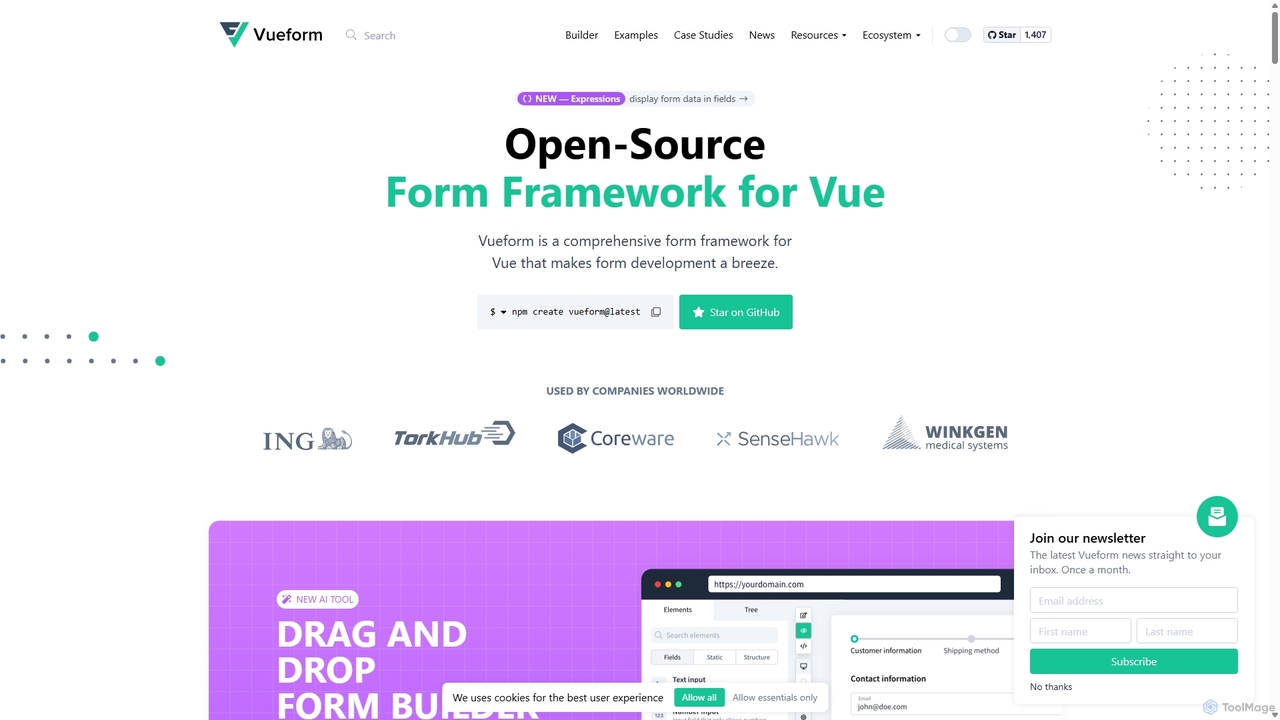
Vueform

Vueform

Vueform is an open-source form framework for Vue.js, designed to streamline form development. It features a drag-and-drop builder, …

14.5K
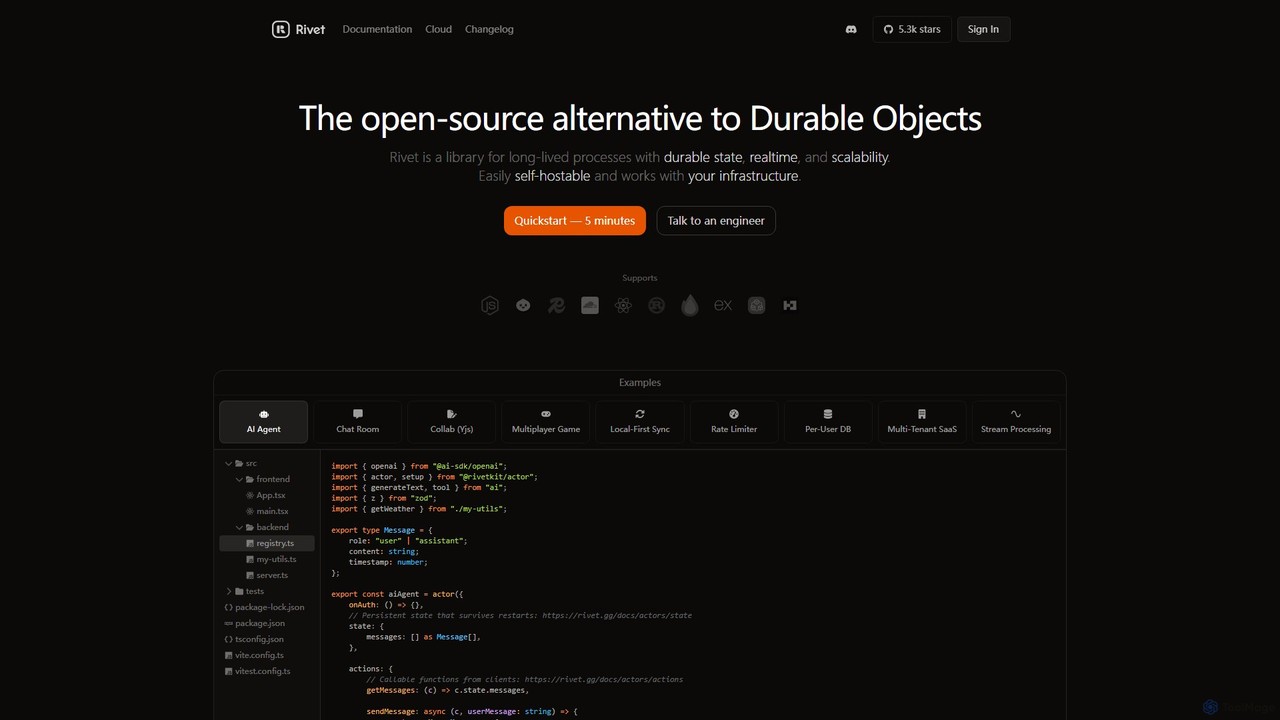
Rivet

Rivet

Rivet is an open-source library for developers building scalable, real-time applications with durable state. It provides long-lived, stateful …

2.2K

About Libraries & Frameworks

AI Libraries & Frameworks are collections of pre-written code and tools that developers use to build, train, and deploy machine learning models. They provide high-level APIs and optimized building blocks for complex tasks like neural network creation and data processing, abstracting away low-level implementation details. This significantly accelerates the development lifecycle, allowing developers to focus on model architecture and application logic. Many frameworks also offer support for hardware acceleration (GPUs/TPUs) and distributed training for large-scale projects.

Core Features

  • Pre-built Modules: Access optimized components for layers, activation functions, and algorithms.
  • Automatic Differentiation: Simplifies the calculation of gradients needed for training neural networks.
  • Hardware Acceleration: Provides seamless integration with GPUs and TPUs for faster computation.
  • Model Deployment Tools: Includes utilities for exporting and serving trained models in production environments.
  • Extensive Ecosystem: Offers rich documentation, tutorials, and a strong community for support.

Use Cases

These tools are fundamental in AI development. Data scientists use them for rapid prototyping of predictive models. Machine learning engineers rely on them to build and scale production-grade AI systems. Researchers leverage them to experiment with novel neural network architectures and push the boundaries of AI.

How to Choose

Selecting the right tool depends on your project. Consider the ecosystem and community support for resources and pre-trained models. Evaluate the trade-off between ease of use (e.g., Keras) and flexibility (e.g., PyTorch, TensorFlow). For large projects, assess performance, scalability, and support for distributed training. Finally, ensure compatibility with your target deployment environment, such as cloud, mobile, or edge devices.

Libraries & FrameworksUse Cases

1

Build a Custom Image Recognition Model

A machine learning engineer at a retail company needs to automatically categorize thousands of new product images. Using a framework like TensorFlow or PyTorch, they can define a convolutional neural network (CNN) architecture. The framework provides pre-built layers and data augmentation functions, simplifying the process. After training the model on a labeled dataset, the result is a highly accurate classifier that can be deployed as an API, automating the image tagging process and saving hundreds of hours of manual work.

2

Develop a Natural Language Processing (NLP) Chatbot

An AI developer is tasked with creating a customer service chatbot. Instead of building a language model from scratch, they use a library like Hugging Face Transformers. This provides access to powerful pre-trained models like BERT or GPT. The developer can then fine-tune one of these models on the company's specific customer service data. This approach drastically reduces development time and computational cost, resulting in a sophisticated chatbot that understands industry-specific queries and improves customer engagement.

3

Prototype a Predictive Analytics Model

A data scientist at a financial firm wants to quickly test hypotheses for predicting stock trends. Using a library like Scikit-learn, they can rapidly preprocess data and experiment with various classical machine learning algorithms such as Linear Regression, Random Forest, or Support Vector Machines. The library's consistent API allows them to swap models with minimal code changes. This enables fast iteration, helping them identify the most promising approach for a full-scale project in days rather than weeks, providing a validated proof-of-concept to stakeholders.

4

Train Large-Scale Models on the Cloud

An AI researcher is developing a state-of-the-art language model with billions of parameters, which is too large to train on a single machine. They use a framework like JAX or PyTorch with its distributed training capabilities. By configuring the framework to use multiple GPUs or TPUs in a cloud cluster, they can parallelize the training process. The framework handles the complexities of data and model parallelism, significantly reducing training time from months to weeks and making it feasible to conduct cutting-edge research.

5

Deploy an AI Model on Edge Devices

An embedded systems engineer needs to run a real-time object detection model on a low-power security camera. They use a specialized library like TensorFlow Lite or PyTorch Mobile to convert a pre-trained model into a lightweight, optimized format. This process, known as quantization and pruning, reduces the model's size and computational requirements. The resulting model runs efficiently directly on the device's hardware, enabling immediate threat detection with minimal latency and without needing a constant connection to a cloud server.

6

Create Reinforcement Learning Agents

A game developer wants to train an AI agent to master a complex strategy game. They leverage a specialized reinforcement learning library like RLlib or Stable Baselines3. These libraries provide robust implementations of common algorithms (e.g., PPO, DQN) and standardized environments. The developer defines the agent's architecture, reward function, and action space using the library's high-level APIs. This allows them to focus on the game logic and reward shaping, resulting in an intelligent agent that learns optimal strategies through trial and error.

Libraries & FrameworksFrequently Asked Questions