ToolMage
Sign in

Best 3 Libraries AI tools for Development

Popular Libraries AI tools in Development include Assistant-ui, Novel, and chatgpt.js, helping you work more efficiently.

Assistant-ui
Freemium

Assistant-ui

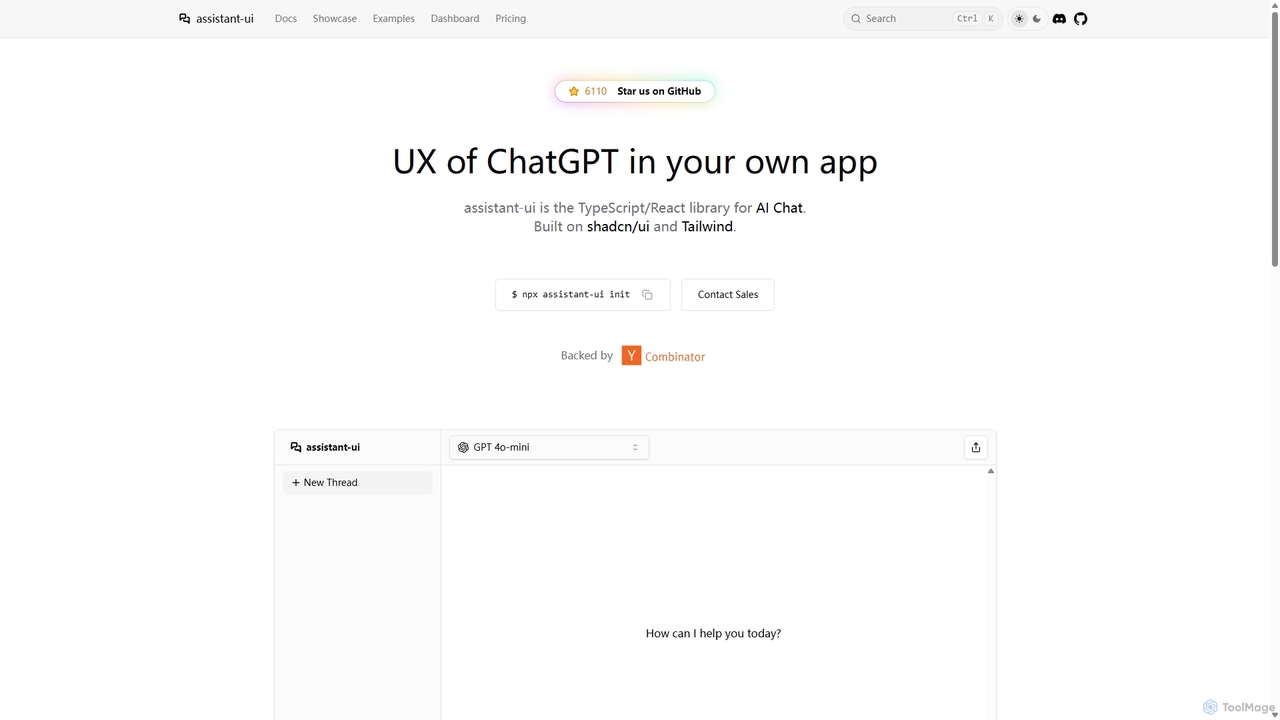
Assistant-ui is an open-source TypeScript/React library for rapidly building high-quality, customizable AI chat interfaces. Built on shadcn/ui and Tailwind CSS, it provides developers with pre-built components to integrate a ChatGPT-like experience into any application, supporting various backends and advanced features like generative UI.

Libraries
Visits 84.9KFavorites 154Likes 145
chatgpt.js
Free

chatgpt.js

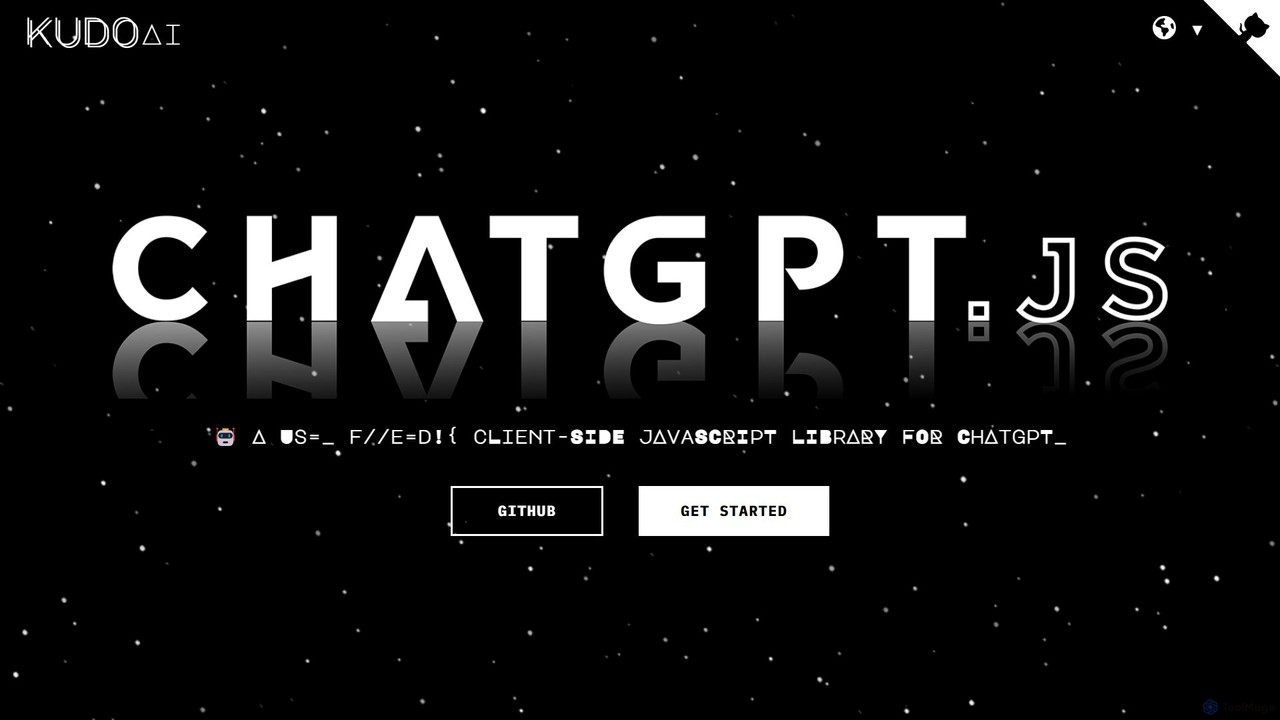
chatgpt.js is a powerful, open-source JavaScript library for developers. It simplifies interaction with the ChatGPT web interface's DOM, enabling the rapid creation of browser extensions, userscripts, and other applications that enhance or automate the ChatGPT experience.

Toolkits
Visits 6.6KFavorites 139Likes 140
Novel
Free

Novel

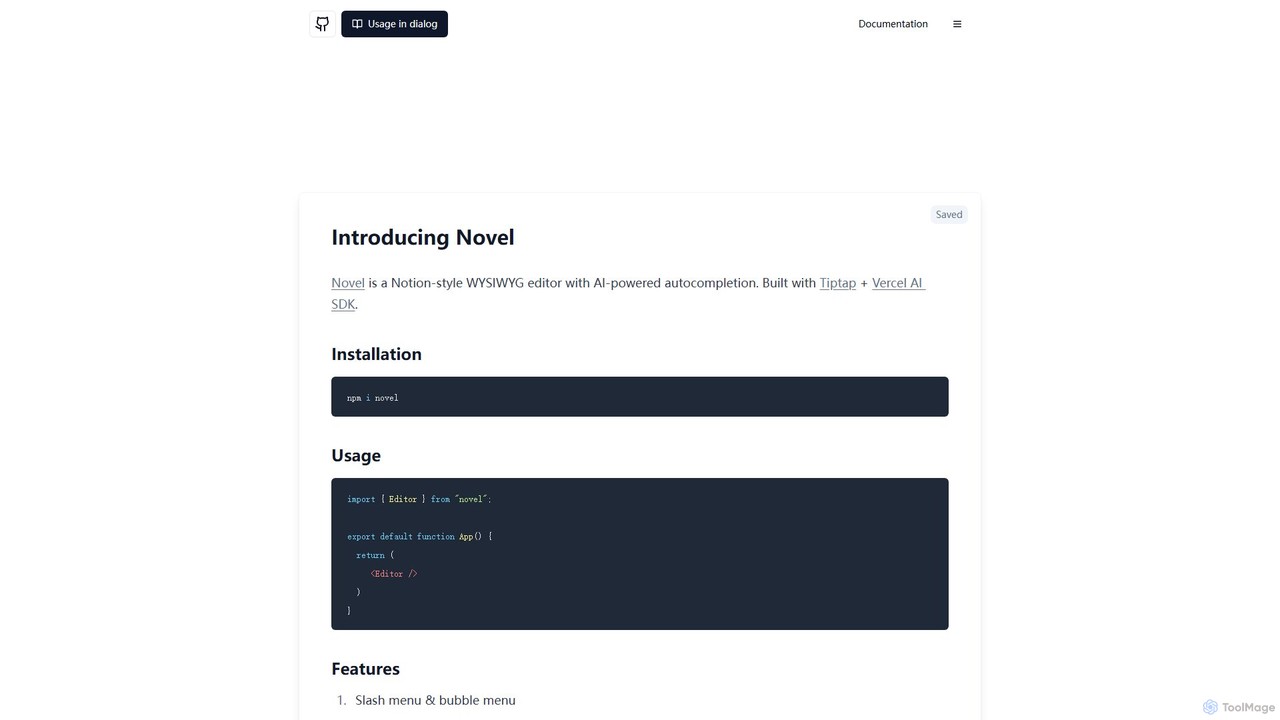
Novel is an open-source, Notion-style WYSIWYG editor component with AI-powered autocompletions. Built for developers using Tiptap and the Vercel AI SDK, it allows for easy integration of a rich text editor with advanced features like slash commands, image uploads, and real-time AI assistance into any web application.

Sdk
Visits 35KFavorites 166Likes 168

About Libraries

AI libraries are collections of pre-written code that provide developers with the essential building blocks for creating artificial intelligence applications. They encapsulate complex algorithms and functions, allowing developers to implement machine learning or natural language processing features without writing everything from scratch. By leveraging these libraries, development teams can significantly accelerate project timelines and build upon proven, optimized code. These tools are fundamental resources in the AI development ecosystem, enabling both rapid prototyping and the creation of robust systems.

Core Features

  • Pre-built Algorithms: Access a wide range of tested machine learning models for tasks like classification, regression, and clustering.
  • High-Level APIs: Simplify the process of building and training complex models, such as neural networks, with intuitive interfaces.
  • Optimized Performance: Benefit from low-level optimizations for high-speed data processing and model training.
  • Data Handling Utilities: Utilize specialized data structures, like tensors, and tools for efficient data manipulation and preprocessing.
  • Extensive Documentation: Rely on comprehensive guides, tutorials, and a strong community for support and learning.

Use Cases

AI libraries are used by developers, data scientists, and researchers across various industries. They are essential for building custom machine learning models for financial forecasting, developing natural language understanding systems for chatbots, creating computer vision applications for medical image analysis, and powering recommendation engines in e-commerce platforms.

How to Choose

Selecting the right AI library depends on your project's needs. Key factors include the programming language (Python is most common), the specific AI task (e.g., NLP, computer vision), the library's ecosystem and community support, performance requirements, and the team's existing expertise. Also, consider the trade-off between high-level libraries for ease of use and low-level ones for greater flexibility.

Libraries use cases

1

Build a Custom Image Classifier

A machine learning engineer uses a library like PyTorch or TensorFlow to construct and train a convolutional neural network (CNN). The goal is to classify images of products for an e-commerce inventory system. The library provides tools for data loading, model architecture definition, training loops, and performance evaluation, reducing development time from months to weeks.

2

Develop a Natural Language Chatbot

A software developer leverages a library such as Hugging Face Transformers to integrate a sophisticated language model into a customer service application. The library offers pre-trained models that can be fine-tuned to understand user intent, answer questions, and maintain context in a conversation, enabling the creation of a helpful and responsive AI assistant.

3

Forecast Sales with Predictive Analytics

A data analyst employs the scikit-learn library to analyze historical sales data. They use its regression algorithms to build a model that predicts future sales based on factors like marketing spend and seasonality. The library's simple API allows for rapid experimentation with different models to find the most accurate one for business planning.

4

Create a Recommendation Engine

A developer at a streaming service uses a library like LightFM or Surprise to build a personalized recommendation system. These libraries provide implementations of collaborative filtering and other recommendation algorithms. This allows the platform to suggest relevant movies or music to users, improving engagement and retention.

5

Power Scientific Computing Research

A university researcher uses libraries like NumPy and SciPy as the foundation for their AI experiments. These tools provide powerful N-dimensional array objects and a vast collection of mathematical algorithms. They are essential for manipulating large datasets and implementing custom AI algorithms for academic publications and discoveries.

6

Prototype AI Features Rapidly

A startup's product team needs to validate a new AI feature idea quickly. They use a high-level library like Keras to build a functional prototype in just a few days. The library's modular and user-friendly design allows them to test the concept with minimal code, enabling faster iteration and data-driven decision-making before committing significant resources.

Libraries FAQ

What are AI libraries?

AI libraries are collections of pre-written, reusable code designed to help developers build AI applications more efficiently. They provide ready-to-use modules, functions, and algorithms for common tasks like machine learning and data processing. Instead of starting from scratch, developers use these libraries as foundational building blocks for their projects.

How do I choose the right AI library?

Choosing the right library depends on several factors. Consider the following:

  • Programming Language: Ensure it's compatible with your team's primary language (e.g., Python, R, C++).
  • Task Specificity: Select a library specialized for your goal (e.g., Hugging Face for NLP, OpenCV for computer vision).
  • Ecosystem & Community: A large community means better support, more tutorials, and more pre-trained models.
  • Performance vs. Ease of Use: High-level libraries (like Keras) are easier to start with, while low-level ones (like TensorFlow) offer more control.

What is the difference between an AI library and an AI framework?

The terms are often used interchangeably, but there's a technical distinction. A library is a collection of functions that your code calls to perform specific tasks. A framework is a larger structure that dictates the overall flow of your application, and it calls your code. For example, you call functions from scikit-learn (library), whereas TensorFlow can act as a framework that manages the entire model lifecycle.

What are some popular examples of AI libraries?

Some of the most widely used AI libraries include TensorFlow and PyTorch for deep learning, scikit-learn for general machine learning, Pandas for data manipulation, NumPy for numerical computation, and Hugging Face Transformers for natural language processing. Each has its own strengths and is suited for different types of projects.

Are AI libraries only for expert developers?

While AI libraries are developer tools, their accessibility varies. Libraries like scikit-learn and Keras have a relatively gentle learning curve and are suitable for beginners in machine learning. More complex libraries like PyTorch or TensorFlow require a stronger understanding of both programming and machine learning concepts. However, extensive documentation and tutorials make them accessible to dedicated learners.