Advent AI
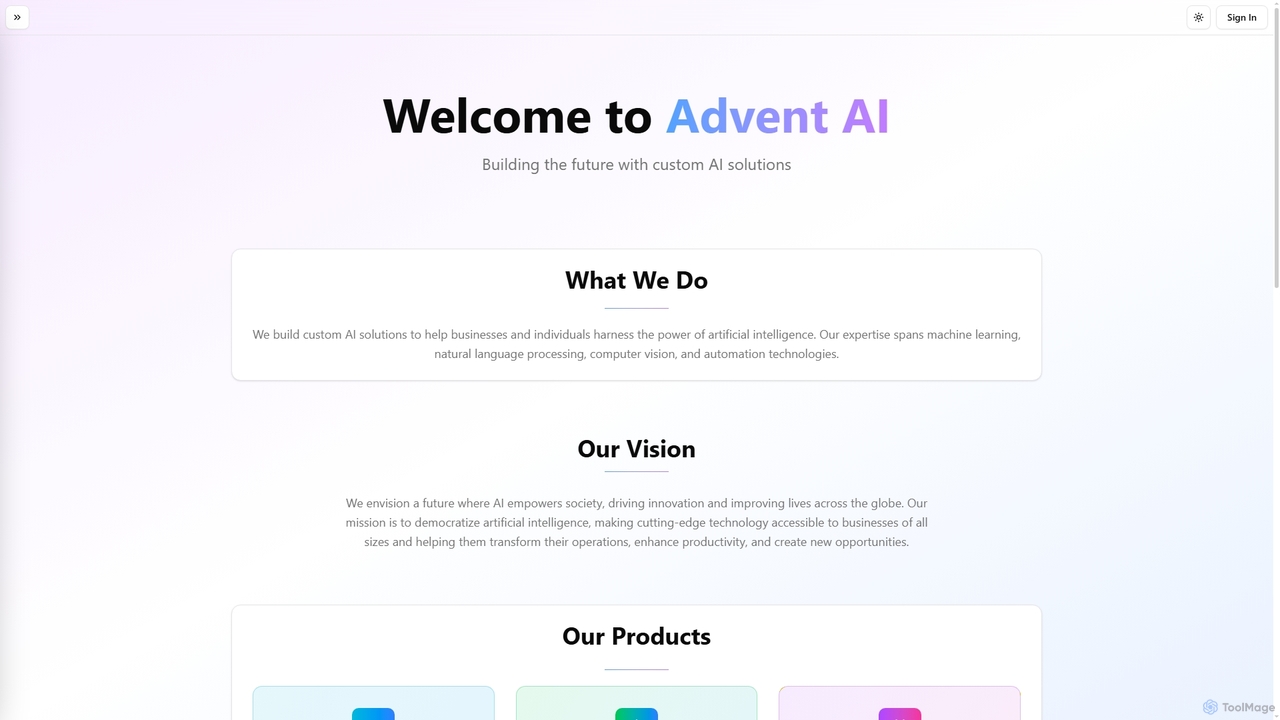
Advent AI specializes in building custom artificial intelligence solutions for businesses and individuals, leveraging expertise in machine learning, …
Advent AI specializes in building custom artificial intelligence solutions for businesses and individuals, leveraging expertise in machine learning, natural language processing, computer vision, and automation technologies. Their offerings include AI agents for customer support, tax optimization tools, and personalized fashion recommendations.
Runexo
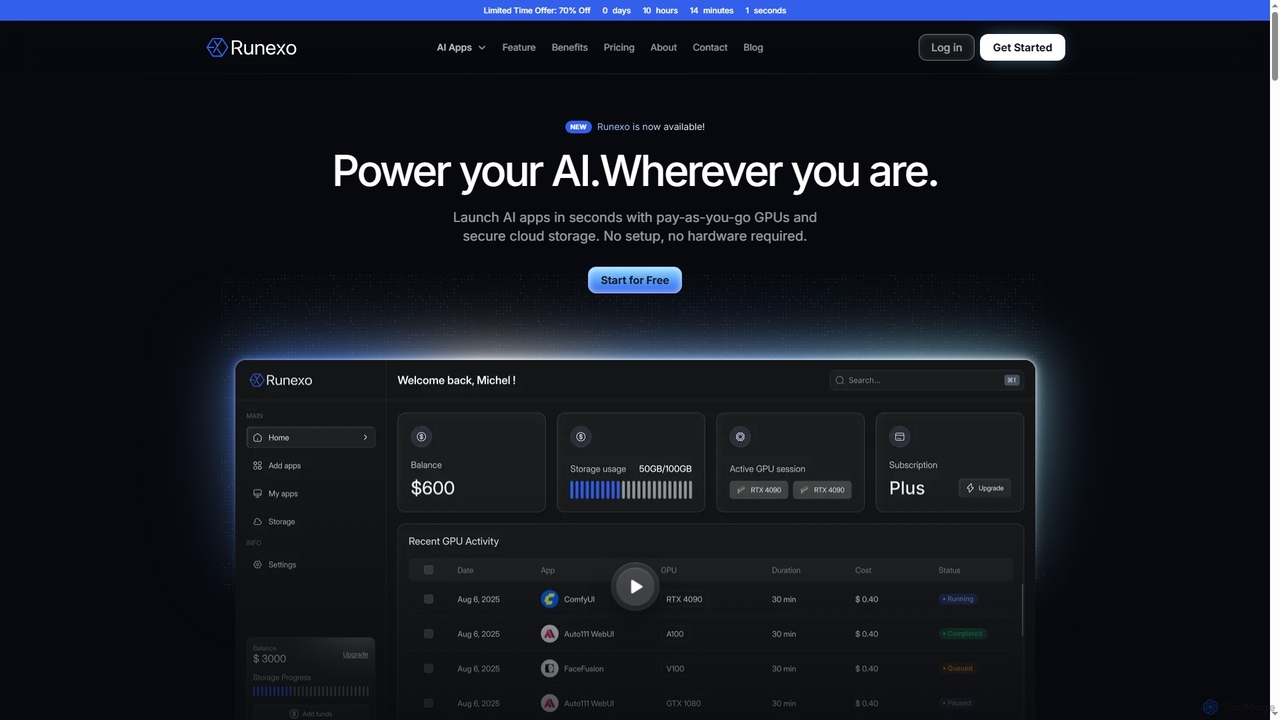
Runexo is a cloud GPU platform designed to empower AI development, training, and inference. It offers instant access …
Runexo is a cloud GPU platform designed to empower AI development, training, and inference. It offers instant access to high-performance, pay-as-you-go GPUs and secure cloud storage, enabling developers, researchers, and enterprises to launch AI applications like Stable Diffusion, ComfyUI, and Fooocus in seconds without setup or hardware requirements.
PyTorch
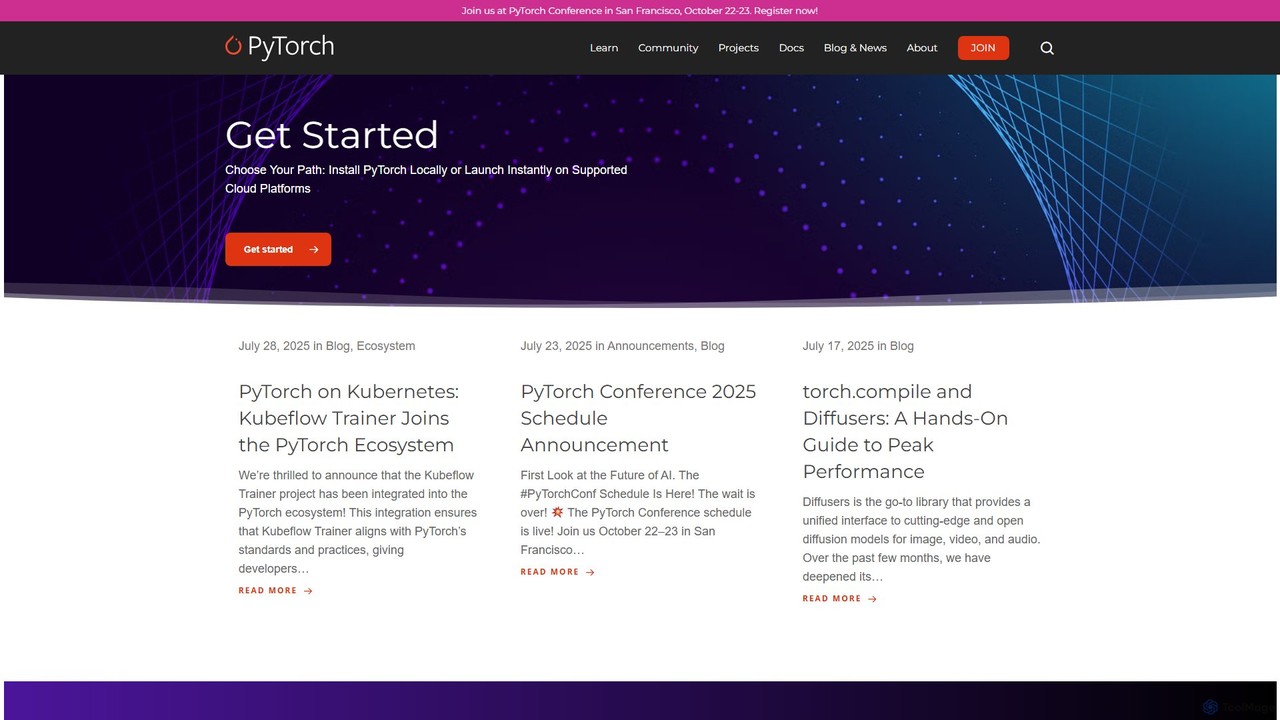
PyTorch is an open-source machine learning framework based on the Torch library, used for applications such as computer …
PyTorch is an open-source machine learning framework based on the Torch library, used for applications such as computer vision and natural language processing. It offers a flexible, Python-first environment that accelerates the path from research prototyping to production deployment.
Gradio
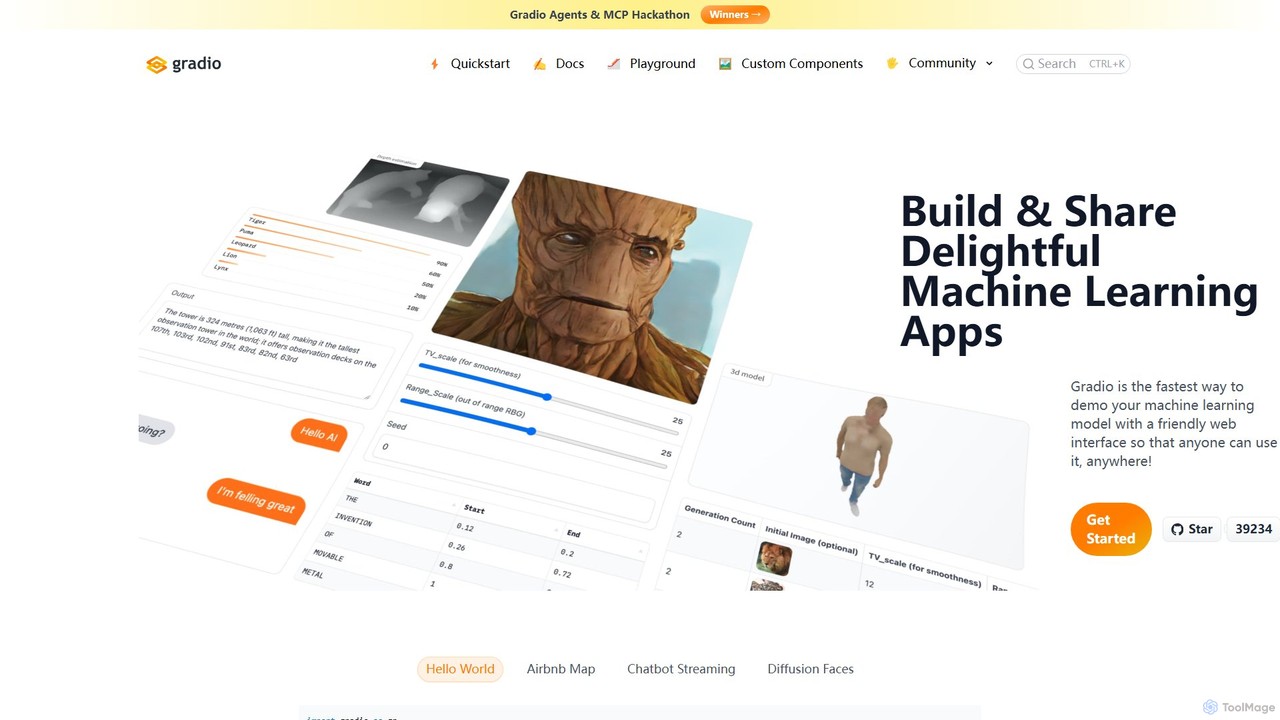
Gradio is an open-source Python library that allows you to quickly build and share user-friendly web interfaces for …
Gradio is an open-source Python library that allows you to quickly build and share user-friendly web interfaces for your machine learning models, APIs, or any Python function. No web development experience is required.
PyBrain
PyBrain is a modular and flexible open-source Machine Learning Library for Python. It provides powerful, easy-to-use algorithms for …
PyBrain is a modular and flexible open-source Machine Learning Library for Python. It provides powerful, easy-to-use algorithms for machine learning tasks, with a particular focus on neural networks, reinforcement learning, and unsupervised learning. It is designed to be accessible for beginners while remaining powerful enough for research purposes.
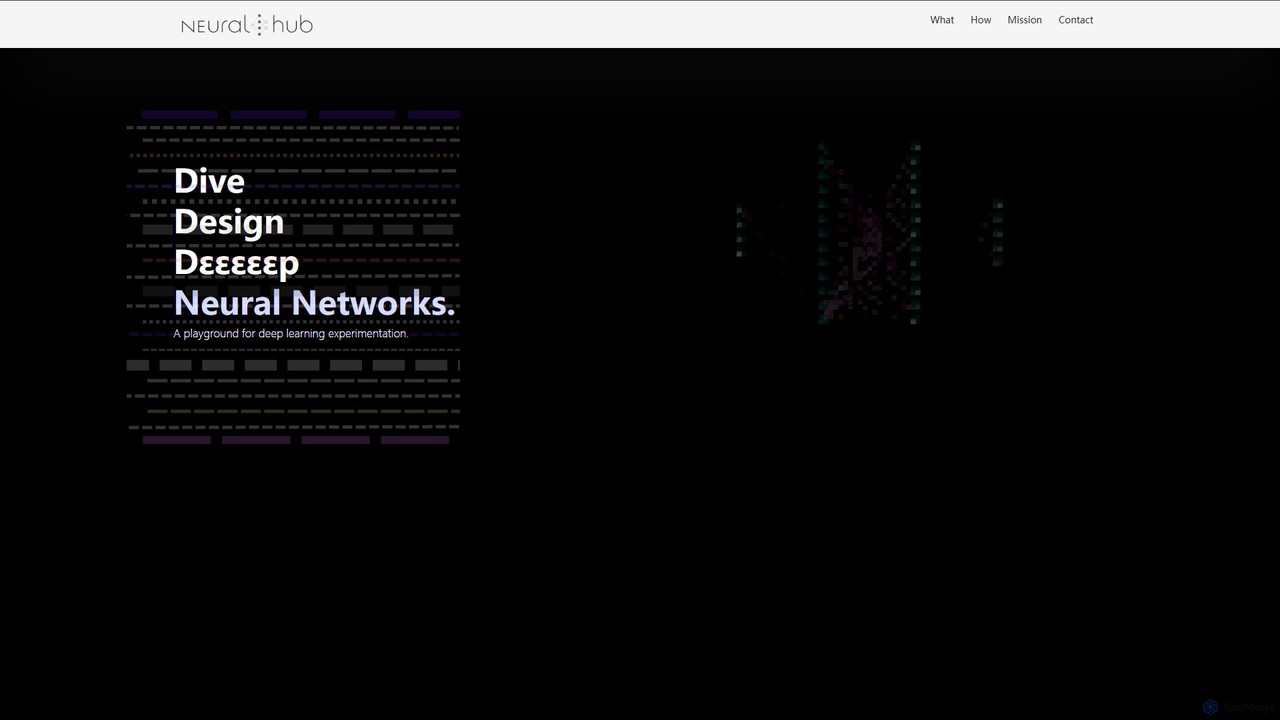
Neuralhub
Neuralhub is a collaborative platform designed to simplify neural network development. It provides an integrated environment for AI …
Neuralhub is a collaborative platform designed to simplify neural network development. It provides an integrated environment for AI enthusiasts, researchers, and engineers to build, experiment, and share deep learning models, featuring a visual builder and an extensive library of pre-built components.

Bolt Foundry
Bolt Foundry provides open-source tooling for developers to perform unit tests on Large Language Models (LLMs). It transforms …
Bolt Foundry provides open-source tooling for developers to perform unit tests on Large Language Models (LLMs). It transforms prompt engineering into a scientific, data-driven process by using structured, testable prompts called 'graders'. This ensures reliable, consistent, and measurable AI outputs, making it ideal for building production-grade applications.
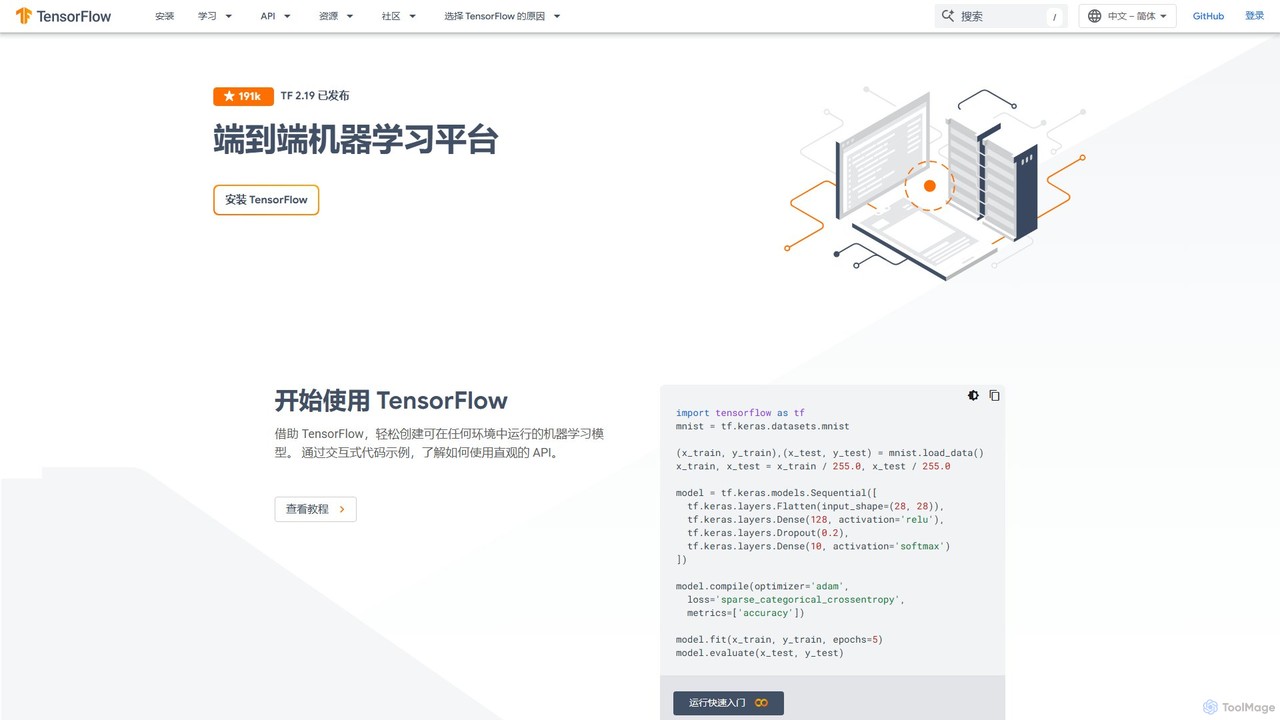
TensorFlow
TensorFlow is an end-to-end open-source platform for machine learning developed by Google. It provides a comprehensive, flexible ecosystem …
TensorFlow is an end-to-end open-source platform for machine learning developed by Google. It provides a comprehensive, flexible ecosystem of tools, libraries, and community resources that lets researchers and developers build and deploy ML-powered applications. From beginners to experts, TensorFlow offers intuitive high-level APIs for easy model building and powerful low-level APIs for advanced research, enabling deployment across servers, edge devices, and browsers.

Weights & Biases
Weights & Biases is the leading MLOps platform for developers to build better models faster. It helps machine …
Weights & Biases is the leading MLOps platform for developers to build better models faster. It helps machine learning teams track experiments, version datasets, manage model lifecycles, and collaborate seamlessly. Ideal for everything from academic research to enterprise-level AI development.

MLflow
MLflow is an open-source platform for managing the end-to-end machine learning lifecycle. It enables developers and data scientists …
MLflow is an open-source platform for managing the end-to-end machine learning lifecycle. It enables developers and data scientists to track experiments, package code into reproducible runs, version and share models, and deploy them to production, supporting both traditional ML and modern GenAI applications.
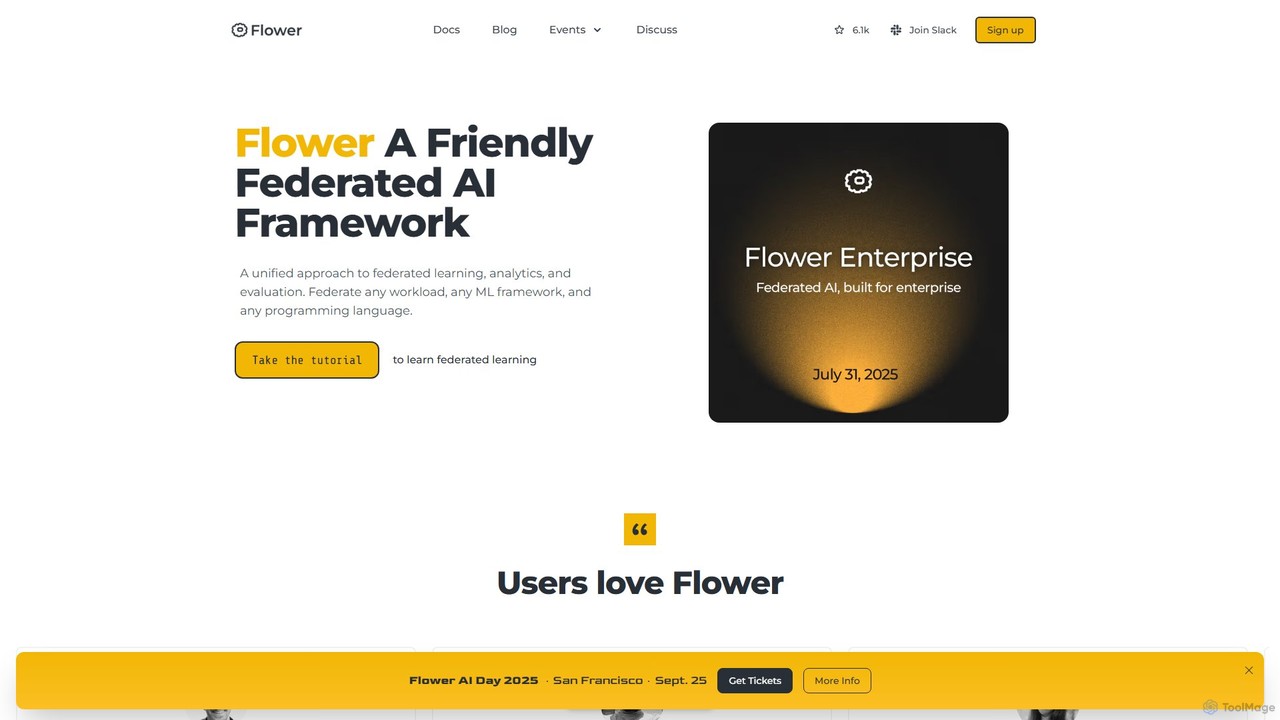
Flower
Flower is a friendly, open-source framework for federated learning, analytics, and evaluation. It enables training AI models on …
Flower is a friendly, open-source framework for federated learning, analytics, and evaluation. It enables training AI models on decentralized data across various devices and platforms without compromising privacy, supporting numerous ML frameworks like PyTorch, TensorFlow, and Hugging Face.
About Machine Learning
Machine Learning tools are specialized development platforms for creating systems that learn from data without being explicitly programmed. They provide algorithms, frameworks, and environments to build, train, and deploy predictive models. These tools analyze historical data to identify patterns, enabling applications to make forecasts, classify information, and automate complex decisions. As a core component of modern development, they empower developers to build intelligent applications that adapt and improve over time.
Core Features
- Model Training & Validation: Provides environments and algorithms (e.g., regression, classification) to train models on datasets and evaluate their performance.
- Data Preprocessing: Offers functionalities for cleaning, transforming, normalizing, and preparing raw data for effective model training.
- Feature Engineering: Includes tools to select, extract, and create relevant features from data to improve model accuracy.
- MLOps & Deployment: Facilitates the deployment of trained models into production environments and manages their lifecycle, including monitoring and retraining.
- Algorithm Libraries: Offers a collection of pre-built and optimized machine learning algorithms for various tasks.
Use Cases
Machine Learning tools are widely used across various industries. In finance, they are used for algorithmic trading and fraud detection. E-commerce platforms use them to power product recommendation engines and predict customer churn. In healthcare, these tools assist in disease diagnosis from medical imaging and predict patient outcomes. Manufacturing sectors apply them for predictive maintenance and quality control.
How to Choose
When selecting a Machine Learning tool, consider the scope of your project and the required algorithms. Evaluate its data integration capabilities and scalability for handling large datasets. Assess the MLOps features for model deployment and management. Finally, consider the team's technical expertise, choosing between code-centric frameworks (like TensorFlow, PyTorch) and low-code/no-code platforms that offer more accessible graphical interfaces.
Machine LearningUse Cases
Develop a Product Recommendation Engine
An e-commerce data scientist uses a machine learning platform to build a personalized product recommendation system. They begin by ingesting user browsing history and purchase data. Using the platform's data preprocessing tools, they clean the data and engineer features like user preferences and item similarities. They then train a collaborative filtering model using the platform's built-in algorithms. After evaluating and tuning the model, they deploy it via an API, integrating it into the website to provide real-time suggestions, which can increase user engagement and sales conversion rates.
Build a Real-Time Fraud Detection System
A financial analyst at a bank uses an ML tool to create a system for detecting fraudulent credit card transactions. They train an anomaly detection model on a massive dataset of historical transactions, labeling them as legitimate or fraudulent. The tool's powerful processing capabilities allow for rapid training on millions of records. Once deployed, the model analyzes new transactions in real-time, assigning a fraud risk score. Transactions exceeding a certain threshold are automatically flagged for review, significantly reducing financial losses and protecting customers.
Predict Customer Churn for a SaaS Business
A marketing manager at a SaaS company aims to reduce customer churn. Using a low-code machine learning platform, they upload customer data including usage metrics, subscription plans, and support ticket history. The platform's AutoML feature automatically selects the best classification algorithm and hyperparameters to predict which customers are likely to cancel their subscriptions. The manager receives a list of at-risk customers, allowing the marketing team to launch targeted retention campaigns, such as offering discounts or proactive support, thereby improving customer lifetime value.
Optimize Manufacturing with Predictive Maintenance
An operations engineer in a factory uses an ML platform to implement predictive maintenance. They collect real-time sensor data (e.g., temperature, vibration) from critical machinery. Using a time-series forecasting model within the platform, they analyze this data to predict when a machine is likely to fail. Instead of relying on a fixed maintenance schedule, the system generates alerts for specific machines needing attention. This data-driven approach minimizes unexpected downtime, reduces maintenance costs, and extends the lifespan of the equipment.
Automate Sentiment Analysis of Customer Feedback
A product manager wants to understand customer sentiment from thousands of app reviews. They use a machine learning tool with Natural Language Processing (NLP) capabilities. They feed the review text into a pre-trained sentiment analysis model provided by the tool. The model automatically classifies each review as positive, negative, or neutral and can even extract key topics or themes. This process automates what would take hundreds of hours to do manually, providing the manager with actionable insights to prioritize product improvements and feature requests.
Classify Medical Images to Assist Diagnosis
A medical researcher uses a deep learning framework, a specialized type of machine learning tool, to build an image classification model. Their goal is to assist radiologists by automatically identifying potential anomalies in X-ray images. They train the model on a large, labeled dataset of X-rays. The platform's GPU acceleration capabilities are crucial for training the complex neural network. Once validated, the model can act as a second opinion, highlighting areas of concern for human experts to review, potentially leading to earlier and more accurate diagnoses.